
Guide: How to Get Paid to Write for IEEE Spectrum (Step by Step)
This guide shows you, in simple steps, how to plan, write, and pitch articles for IEEE Spectrum — even if you are a beginner freelance writer, as long as you love technology and can report clearly.
You will learn what IEEE Spectrum is, what kinds of stories they buy, how much they pay, how to introduce yourself to editors, and how to build a small portfolio that leads to assignments. Sentences are simple. Treat this like a small, practical SOP you can follow.
Section 1 · Understand the publication
What IEEE Spectrum actually wants from writers
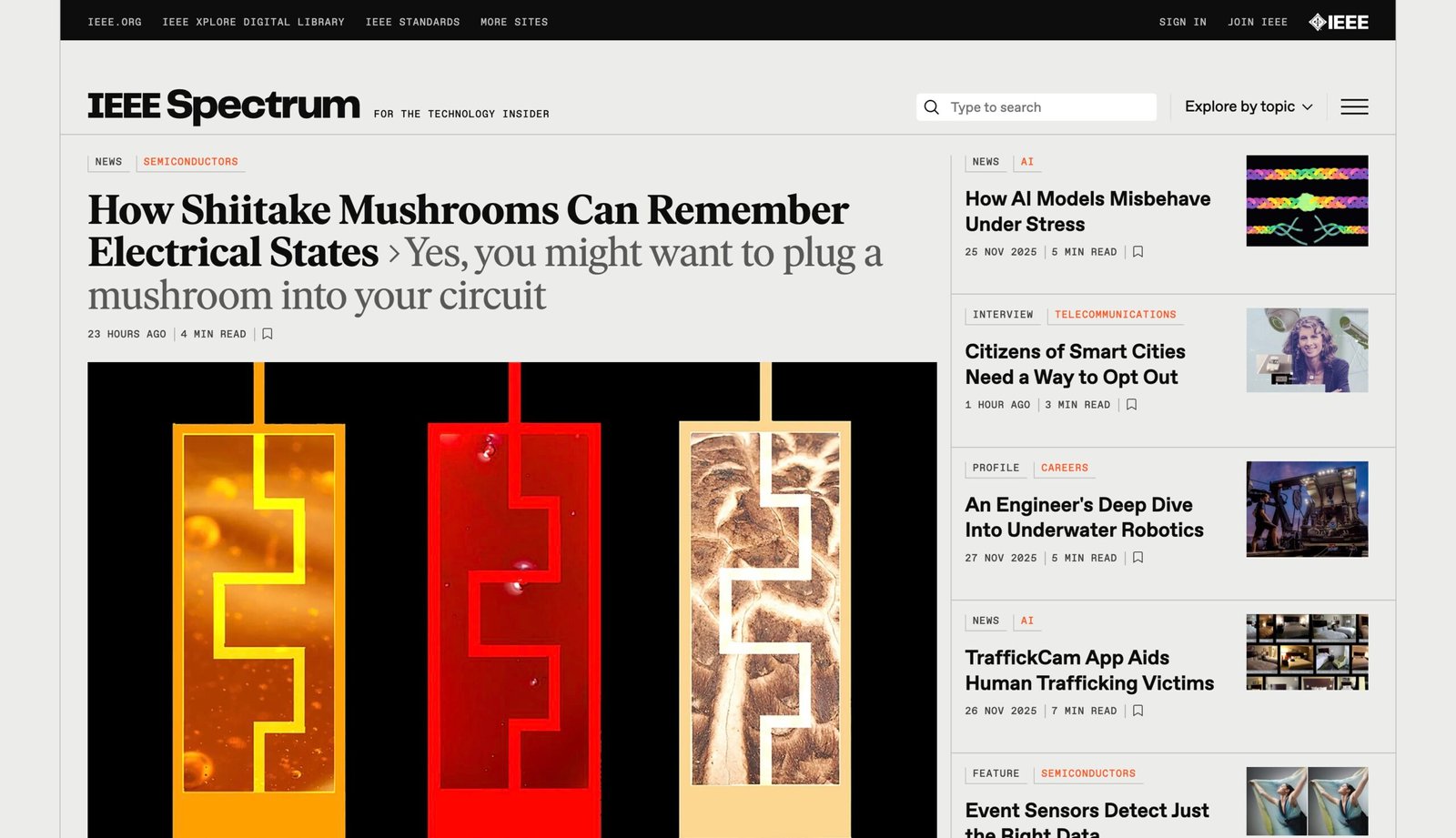
IEEE Spectrum is the flagship magazine of the IEEE, the world’s largest professional organization for engineers. It calls itself a magazine “for the technology insider” and covers how cutting-edge tech, science, and engineering really work in the world.
Its readers are mainly electrical, computer, and electronics engineers, along with technologists, students, and professionals who want deeper reporting than normal news sites. They visit Spectrum for news, features, explainers, DIY projects, and career coverage.
A freelance market guide from the Association of Health Care Journalists explains that editors are looking for a specific subset of science and technology stories. Their “rule of thumb” is often summarised as: if there are moving electrons in the story, there might be a Spectrum angle.
On the site, you’ll see topic buckets like:
- Core topics: Aerospace, AI, Biomedical, Computing, Consumer Electronics, Energy, Semiconductors, Telecommunications, Transportation.
- Regular sections: News, Features, Opinion, DIY, Careers.
- Formats: reported news, in-depth features, explainers, profiles, and hands-on builds.
Your story must land clearly in one of these zones, not “any science story in the world”.
The typical reader is:
- An engineer, technologist, or student who already understands basic science and math.
- Interested in how things work and why they matter, not just flashy headlines.
- Busy, so they want clear structure, strong reporting, and minimal hype.
Your article should feel smart but readable, with real sources, numbers, and explanations.
| Article type | Where it fits on Spectrum | Depth | Best use |
|---|---|---|---|
| Short reported news (600–800 words) | News | 1–2 main sources, fresh development | Fast coverage of a new study, product, policy, or project |
| Meatier news story (800–1,200 words) | News / Journal Watch style | Multiple sources, context, impact | Explaining why a new result or technology really matters |
| Feature (2,000–2,500+ words) | Features | Deep reporting, several expert voices, narrative arc | Big story on AI, chips, climate tech, robotics, etc. |
| DIY or Hands-On | DIY / Hands On | Step-by-step project, photos, parts list | Showing readers how to build or test something themselves |
Section 2 · Fit your idea
Does your idea follow the “moving electrons” rule?
IEEE Spectrum doesn’t want “any cool science”. It wants tech, engineering, and systems where you can literally or metaphorically see the moving electrons: chips, networks, devices, robots, sensors, power systems, software infrastructure, and so on.
Where are the circuits, code, or systems?
Ask: “What is the engineering core of this story?” Good ideas might involve:
- A new AI chip architecture or semiconductor process.
- A novel sensor network for climate, health, or industry.
- A robotic system, telecom upgrade, or power grid design.
If your idea is only about policy, general health, or pure biology with no tech, it may not fit Spectrum.
Does it land in a clear topic area?
Match your idea to at least one Spectrum topic: Aerospace, AI, Biomedical, Energy, Semiconductors, Transportation, etc.
Make the angle specific. For example:
- “How quantum sensors in satellites could transform climate monitoring.”
- “Why humanoid warehouse robots struggle when the real world gets messy.”
- “Inside a new AI chip that cuts datacenter energy use by 30%.”
Before you pitch, search Spectrum to check what they’ve already published on the topic and find your fresh angle.
Can you support it with solid reporting?
You need more than enthusiasm. You should have:
- Access to experts (engineers, researchers, founders, policymakers).
- Links to papers, technical documents, or real-world deployments.
- A clear way to show impact: performance, cost, safety, scale, or social effect.
If you can’t imagine at least one engineer you might interview, the idea is not ready for Spectrum yet.
Section 3 · Prepare yourself
Build a small base before editors onboard you
According to the freelance market guide, editors usually do not green-light a detailed story pitch from a brand-new writer right away. The onboarding process for contracts can take a few months, so they first want to know who you are and what you can cover.
- Publish tech stories on your own blog, or on platforms like Medium, Dev.to, or smaller tech magazines.
- Write reported or explainer pieces on topics close to Spectrum’s beats (AI, chips, energy, robotics, telecom, transportation, etc.).
- Show you can interview experts, read papers, and explain systems clearly.
These links become your “clips” when you introduce yourself to Spectrum editors.
- Read a mix of news, features, and explainers in your target topic.
- Note how many sources each story uses, how they open, and how they balance technical depth with plain language.
- Look at bylines of freelancers. Search their names to see other outlets they write for and how they shape pitches.
When you later describe “the kinds of stories you want to do”, you’ll sound aligned with Spectrum’s style.
| Stage | Where to write | Main goal |
|---|---|---|
| Start | Your blog · Dev.to · Medium · niche tech blogs | Practice reported tech stories and clear explainers |
| Build | Other paying outlets in science/tech | Collect clips and learn to work with editors and deadlines |
| Specialise | IEEE Spectrum & similar high-level magazines | Become “the person” editors call for certain beats |
Section 4 · Practical workflow
Step-by-step IEEE Spectrum approach plan (for beginners)
IEEE Spectrum does not have a simple “guest post form”. Instead, you usually introduce yourself to the right editor, go through onboarding, then start pitching or receiving assignments. Here is a beginner-friendly workflow.
Identify the right editor and beat
Use the AHCJ freelance guide plus Spectrum’s masthead and About/Contact pages to see who covers what. For example:
- For news stories, the market guide lists the News Manager (e.g. Michael Koziol).
- For biomedical engineering features, it lists a specific features editor (e.g. Eliza Strickland).
- Other beats (AI, chips, robotics, climate tech) will have their own editors, visible on the About Us page.
Match your main beat to 1–2 editors you might work with long term, not just for one story.
Send a “here’s who I am” introduction email
The freelance guide suggests that new writers should not start with a long, detailed story pitch. Instead, send a short email that:
- Introduces you (where you are, what you cover, any technical background).
- Mentions the beats you want to write on (for example AI safety, grid-scale batteries, humanoid robots, etc.).
- Links to 3–6 of your best clips (even if they are from smaller sites).
- Gives 2–3 sample story areas you’re interested in, not full pitches.
Keep it under about 300–350 words, friendly and professional.
Prepare for a follow-up call (if they’re interested)
If the editors like your background, they may invite you to a quick call to understand:
- Which topic areas you are strong in.
- What kind of reporting you enjoy (news, features, explainers, DIY, careers).
- How comfortable you are with reading papers, talking to engineers, and handling numbers.
Before the call, have 2–3 fresh story ideas ready and be ready to talk about your past work.
Complete onboarding and paperwork
Once they decide you’re a good fit, they’ll start onboarding you as a regular contributor (contracts, payment setup, etc.). This can take a while, so be patient.
During this time, keep improving your reporting, reading Spectrum, and watching for stories that fit their beats.
Pitch specific news and feature ideas
After onboarding, you can send concrete ideas. For a news pitch, include:
- 1–2 clear lines describing the news (“what happened”).
- Why Spectrum’s readers should care (engineering/technical angle + impact).
- Who you would talk to (companies, labs, experts, affected users).
- Any docs or papers you’ve already found.
For a feature, add more detail: multiple possible sources, an outline, and a sense of story arc or structure.
Start with news (best place to break in)
The freelance guide notes that news stories are usually the best entry point, simply because there are more of them each month than long features. Aim to become reliable on one beat:
- Keep a personal watchlist of conferences, preprint servers, company blogs, and regulatory updates.
- Send short, sharp news ideas regularly (not spammy, but consistent).
- Show that you can hit deadlines and handle edits calmly.
Over time, this can lead to bigger assignments and features.
Section 5 · Money side
How IEEE Spectrum pays – and how to think about it
The AHCJ freelance market guide lists detailed fees. At the time of the latest revision, it reports roughly: $500–$650 for 600–800-word reported posts (often short news with one main source), and about $1.25–$2.00 per word for 800–1,200-word news stories and for features, depending on experience. Features are typically around 2,500 words.
These numbers can change, and your exact rate will be agreed with editors. Always confirm the fee and word count for each assignment in writing before you start.
- Short news posts: Good for getting onboarded, proving reliability, and earning hundreds of dollars per piece.
- Meatier news: Higher total fee; more sources and reporting time.
- Features: Higher overall checks, but more weeks of work and heavy editing.
A few well-chosen Spectrum pieces can be both income now and portfolio gold for years.
- Estimate your hours for research, interviews, transcription, drafting, revising, and fact-checking.
- Divide the fee by total hours to see your effective hourly rate.
- Use your Spectrum clips as proof when pitching higher-paying corporate clients, teaching, or consulting work.
IEEE Spectrum is not “cheap content”. It’s a high-prestige outlet that can lift all your other rates.
| Type of piece | Approx. length | Approx. fee picture* | Best strategy for you |
|---|---|---|---|
| Short reported news | 600–800 words | $500–$650 | Best place to start once onboarded; practice process and pace |
| Meatier news story | 800–1,200 words | ~$1.25–$2.00 per word | Use when you have multiple sources and strong analysis |
| Feature story | ~2,500 words (sometimes more) | Similar per-word rate, higher total | Turn a big, timely question into a deeply reported narrative |
Section 6 · Ethics & AI
Trust, accuracy, and careful AI use
IEEE Spectrum’s reputation depends on accurate, fair, and well-sourced reporting. As a contributor, you share that responsibility. AI tools are normal now, but you must use them carefully and never let them replace real reporting.
- Do not make up quotes, numbers, or case studies.
- Do not copy paragraphs or graphics from other outlets without permission and clear attribution.
- Do not let AI tools invent sources or hallucinate technical details.
- Do not cover a topic as if you are an expert if you have never worked with the tech and spoke to no experts.
Editors notice generic, shallow, or suspicious copy. It can close the door on future work.
- Use AI to brainstorm outlines or possible questions to ask sources (then refine them yourself).
- Use it as a grammar and clarity checker after you have written the draft.
- Use it to summarise long technical PDFs for your own understanding, then write in your own words.
Final rule: you are the author. Your name is on the line. Never publish anything you wouldn’t defend in front of an engineer and an editor.
Section 7 · Micro-SOP
Final checklist before you email an editor
Use this checklist every time you reach out to IEEE Spectrum (or any similar engineering magazine). Tick each box honestly before you press send.
Section 8 · Quick answers
FAQ: Beginner questions about writing for IEEE Spectrum
- IEEE Spectrum Freelance Market Guide – Association of Health Care Journalists
- About IEEE Spectrum – official description and mission
- Contact IEEE Spectrum – how to send ideas and questions
- IEEE Spectrum News – see how news stories are structured
- IEEE Spectrum Features – deep dives for inspiration
- IEEE Author Center – general guidance for publishing with IEEE