


Guide: How to Get Paid to Write Environmental Stories for Grist
This guide breaks down exactly how to research, structure, and pitch articles for Grist — a beacon in the smog for climate journalism. You will learn to move beyond “climate doom” and write stories that sell.
You will learn what Grist editors want, how to spot a “green” story that hasn’t been told yet, how to craft a professional email pitch, and how to get paid for your reporting. Sentences are simple. Treat this as your journalism career starter pack.
Section 1 · Understand the Publication
What Grist actually wants from writers
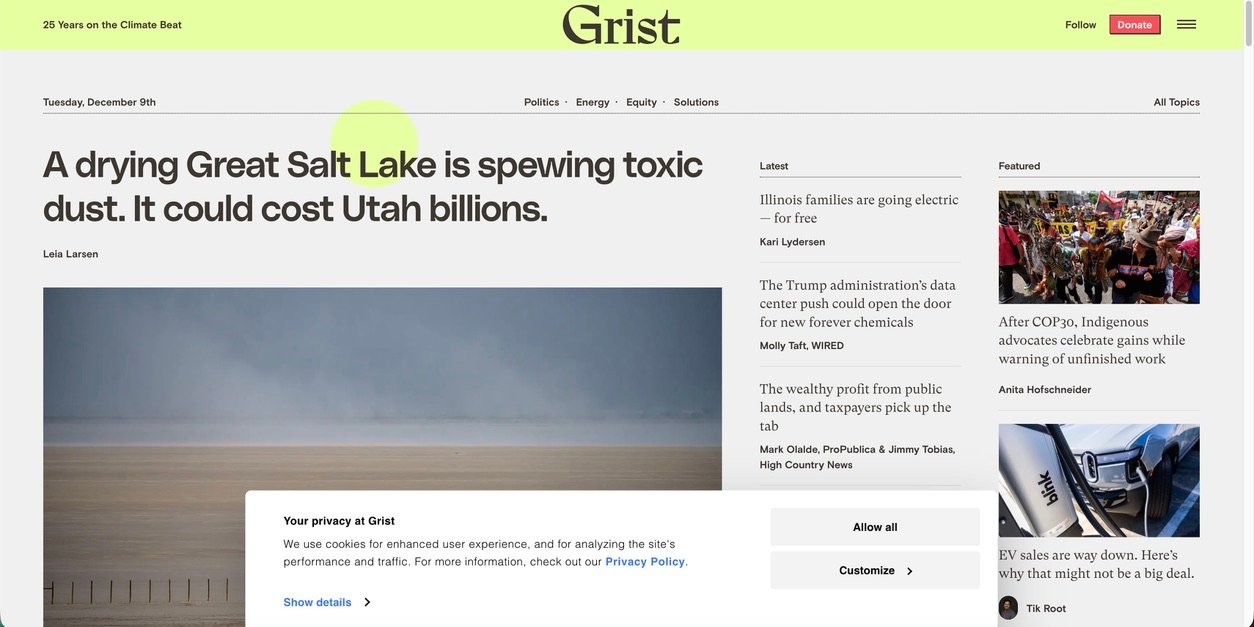
Grist is an independent media organization dedicated to telling stories of climate solutions and a just future. They are famous for their unique tone: they take the planet seriously, but they don’t take themselves too seriously. They avoid “eat your vegetables” journalism.
Their official Pitch Grist page emphasizes that they want stories that show how the world is changing, who is changing it, and how we can move toward a greener, fairer future. They cover politics, energy, equity, and culture.
Strong pitches usually fit these buckets:
- Solutions Journalism: Not just “this river is polluted,” but “how this community used oyster shells to clean the river.”
- Environmental Justice (EJ): Stories about how climate change disproportionately affects marginalized communities and how they are fighting back.
- Culture & Lifestyle: How climate connects to food, fashion, art, and internet culture.
- Politics & Policy: Breaking down complex bills or local laws that affect the environment.
Ask: “Does this story offer a path forward or expose a hidden injustice?”
The typical Grist reader is:
- Climate-conscious but tired of “doom-scrolling.”
- Interested in systemic change rather than just individual actions (like plastic straws).
- Looking for smart, witty, and rigorous reporting.
Your article should feel grounded in fact but engaging to read. It shouldn’t feel like a dry academic paper.
| Story Type | What it is | Examples | Difficulty |
|---|---|---|---|
| The Explainer | Breaking down a complex topic | “What is the grid, really?” or “Why everyone is talking about heat pumps” | Medium |
| The Feature | Deep dive with characters | Reporting on a specific town fighting a pipeline | Hard (Requires interviews) |
| The Profile | Focus on one change-maker | Interview with an inventor or activist | Medium |
| Culture Essay | Opinion mixed with reporting | “Why Solarpunk is the new Cyberpunk” | Hard (Need strong voice) |
Section 2 · Fit your idea
The “Grist-y” Story Test
Don’t pitch general topics like “Climate Change is Bad.” That is too broad. Grist wants specific, surprising angles. Use these three checks to see if your idea is ready for Grist.
Is it a “Solution” or just a Problem?
Grist prioritizes “solutions journalism.” If you are writing about a problem (e.g., rising sea levels), you must also explore:
- Who is trying to fix it?
- Is the fix working?
- What are the limitations of the fix?
Avoid “Cheerleading” (saying everything is perfect) but also avoid pure despair.
Is there an “Environmental Justice” angle?
Grist looks at the world through an equity lens.
- Does this issue affect poor communities or people of color more?
- Is the solution accessible to everyone, or just the wealthy?
A story about $100,000 electric cars might be less interesting to Grist than a story about electric bus fleets in a low-income neighborhood.
Is it timely (The News Hook)?
Why does this story need to be published now?
- Did a new report just come out?
- Is a bill being voted on?
- Is there an anniversary of a major event?
Editors need a “peg” (a reason) to run the story this week rather than next year.
Boring: “Solar panels are getting cheaper.”
Grist-y: “How a coalition of grandmothers in Puerto Rico is building a solar grid that hurricanes can’t destroy.”
Section 3 · Prepare Yourself
Build a small base before you pitch
While Grist is open to new voices, they expect professional reporting standards. If you have never published a news article before, it helps to practice.
- Write for your local newspaper or smaller eco-blogs (like Earth Island Journal or local alt-weeklies).
- Publish on Medium or your own Substack, but ensure you do real reporting (interview people), not just opinion.
- Save these links (clips) to show Grist editors you can finish a story.
Before pitching, you must know:
- Who you will interview (have names ready).
- What the main conflict is.
- Where the data comes from.
You don’t need to write the whole article yet, but you must know enough to prove the story exists.
Section 4 · Practical Workflow
Step-by-step Grist Pitch Plan
This is the standard industry workflow for pitching journalism. Follow this to look like a pro.
Identify the specific “Desk” (Section)
Grist is divided into sections. Don’t just email “general”.
- Politics: Policy, bills, voting.
- Energy: Renewables, fossil fuels, grids.
- Equity: Justice, health, community action.
- Culture: Books, movies, food, internet trends.
Find the editor for that specific desk on their “Staff” or “Pitch” page.
Write the “Headline” in your Subject Line
Editors get 100s of emails. Make the subject line a potential headline.
Bad: Pitch regarding environment story
Good: PITCH: The Kentucky miners turning coal fields into lavender farms
Draft the Pitch Email (The 3 Paragraph Rule)
Your email should be short:
- Para 1 (The Hook): Describe the story’s opening scene or surprising fact. Grab their attention.
- Para 2 (The Nut Graf): Why does this matter? What is the bigger picture? Why now? Mention your sources/data here.
- Para 3 (You): Who are you? Link to 2-3 previous clips (articles).
Send and Follow Up
Send the email. If you don’t hear back in 1-2 weeks, send a polite follow-up:
“Hi [Name], just bumping this pitch on [Topic] to see if it’s a fit for Grist. Thanks!”
If no reply after that, assume it’s a “no” and pitch it elsewhere.
Section 5 · Getting Paid
Money: How payment roughly works
Grist is a non-profit, but they pay professional rates. While specific rates can vary by budget and complexity, here is what is generally expected in the environmental journalism industry for mid-to-high tier publications.
| Article Type | Estimated Range | Work Required |
|---|---|---|
| Short News Brief / Blog | $200 – $350+ | Quick turnaround, 1-2 sources, 500-800 words. |
| Feature / Reported Story | $0.50/word – $1.00/word (varies) | Deep research, multiple interviews, 1200+ words. |
| Fellowships | Stipend / Salary | Grist offers Fellowships for early-career journalists. This is a 6-month paid program. |
Section 6 · Integrity
Ethics, AI, and Honest Reporting
Grist holds high journalistic standards. To write for them, you must adhere to strict ethics.
Section 7 · Ready to Launch
Final Pre-Pitch Checklist
Before you hit send on that email to a Grist editor, ensure you have:
- Read the last 2 weeks of Grist stories to ensure they haven’t already covered your topic.
- Identified the specific editor for your topic (don’t email the CEO).
- Verified that your “news hook” is current (don’t pitch a story about an event that happened 3 months ago unless there is a new update).
- Kept your email pitch under 300 words.