


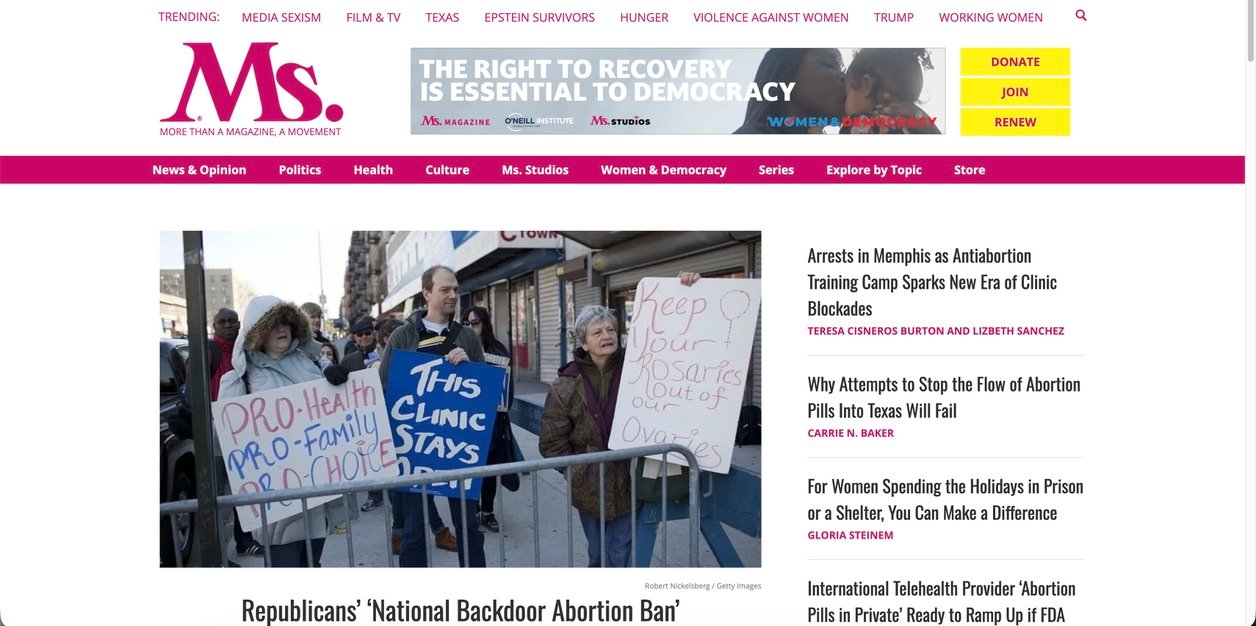
Guide: How to Write, Research, and Pitch for Ms. Magazine
This guide provides a comprehensive workflow for beginners looking to successfully pitch, write, and submit their work—including feature articles, analysis, and opinion pieces—to the renowned feminist publication, Ms. Magazine.
You will learn to understand the magazine’s **mission and intersectional lens**, develop a powerful pitch idea, conduct feminist-informed research, structure your article for impact, and navigate the submission process. The focus is on crafting high-quality, impactful journalism.
Section 1 · Understand the publication
Ms. Magazine’s Mission, Voice, and Intersectional Lens
Before you draft a single sentence, you must fully grasp what Ms. Magazine is. Founded by Gloria Steinem and others in 1972, it is not merely a lifestyle magazine with women’s interests; it is a **trailblazing feminist, political, and investigative journal**. Its mission is to make the world a better, more equitable place for *all* women and girls, utilizing an **intersectional lens**.
The publication operates under the Feminist Majority Foundation, which confirms its core focus is on activism, policy, and global human rights. Your piece must contribute to this larger, activist mission.
The Ms. tone is:
- Authoritative: Backed by facts, statistics, and expert/lived experience.
- Intersectional: Always considering how race, class, sexuality, and disability impact gender issues. Avoid ‘white feminism.’
- Forward-Looking: Not just reporting a problem, but analyzing its causes and advocating for policy solutions or actions.
- Urgent: The topics matter now. Why should the reader care today?
Read the Online Latest section to internalize the current tone and urgency.
Ms. publishes content across several deep, policy-driven areas:
- U.S. Politics & Policy: Reproductive rights, voting rights, women in leadership.
- Global Feminism: International human rights issues, reports from the field.
- Feminist Arts & Culture: Analysis of media, literature, and culture through a feminist lens (not just reviews).
- Health & Environment: Health disparities, climate justice as a feminist issue.
- Opinion & Analysis: Strong, evidence-based commentary on current events.
Your idea must fit squarely into one of these buckets, showing a clear connection to **feminist policy or advocacy**.
| Piece Type | Ms. Focus | Key Elements | Goal |
|---|---|---|---|
| News Analysis | Current Events | Timely, well-sourced, explains the *why* and *what’s next* | Inform and contextualize policy changes |
| Investigative Feature | Deep-Dive Topic | Original reporting, multiple sources, primary data | Uncover systemic injustice |
| Opinion/Essay | Personal Tie-in | Strong voice, personal experience links to larger policy issue | Persuade and catalyze action |
| Book/Media Review | Arts & Culture | Deep feminist critique, context in the movement | Frame cultural products through a political lens |
Section 2 · Deconstructing the submission guidelines
Reading Between the Lines of the Ms. Pitch Request
The official submission page, Ms. Magazine Submissions, is the single most important document you must study. Unlike casual blogs, Ms. has specific needs.
Is your idea “news-pegged” or “evergreen”?
Most pitches should be **news-pegged**, meaning they respond to a recent event, court ruling, legislative debate, or cultural moment.
- Good: Analysis of how the recent state bill on childcare subsidies affects single mothers of color.
- Bad: A general essay on why childcare is important.
If it’s an **evergreen** feature (deep history, profile), it needs to be *so* original and necessary that it must be done now. Always ask: “Why Ms.? Why now?”
Different sections need different lengths.
While the guidelines don’t always specify exact numbers, professional publications follow common length conventions:
- **Online News Analysis:** 800–1,200 words. These are frequent and fast-paced.
- **Opinion/Personal Essays:** 1,000–1,500 words. Must connect personal narrative to policy.
- **Feature Articles (Print/Online):** 2,500–5,000+ words. These are reserved for deep, original, investigative reporting. **Beginners should start with analysis/opinion.**
Your pitch must include a **target word count** to show you understand the scope.
Filter out non-Ms. ideas.
Avoid pitching generic content that could be published anywhere. Specifically, avoid:
- General self-help, non-political lifestyle tips.
- Complaining about feminism without offering a policy-driven critique or solution.
- Articles based only on personal feelings without linking to systemic issues or data.
Ms. is an authoritative source. Your submission should reflect graduate-level analysis and professional-level journalism, even if you are a beginner writer.
Section 3 · Pitch Development
Crafting a Powerful, Timely Pitch Email (for the Editor)
A pitch for a magazine like Ms. is a professional sales letter. You are selling your idea, your authority, and your ability to deliver clean, finished copy.
Grab the Editor’s Attention Instantly
Editors get hundreds of emails. Your subject line must be immediately clear, urgent, and professional.
- Format: PITCH: [Short, Catchy Headline] – [Your Name]
- **Example:** PITCH: The Digital Divide in Rural Abortion Access – Jane Doe
- **Bad:** Article Idea! OR Submission for Ms.
Brevity and urgency are key. Assume the editor will read nothing else but this line first.
The First Paragraph Sells the Story
Immediately introduce your core idea and the **news-peg**. This should be 3–5 sentences maximum.
Example: “I am writing to pitch an 1,100-word analysis on the implications of the new Texas Supreme Court ruling on medication abortion access. The ruling, handed down last Friday, creates a dangerous legal gray area that specifically impacts poor women who rely on telemedicine for care. My piece will explain the legal mechanism and outline the short-term impact on reproductive justice organizations.”
Show Your Article’s Structure
Use a bulleted list to show the editor exactly how your article will flow. This proves you’ve thought the piece through.
- Introduction: The court ruling and the urgent problem for low-income patients.
- Section 1: Explaining the legal loophole (citing relevant law/case).
- Section 2: Data on how telemedicine disproportionately serves rural and low-income patients (cite 2-3 sources).
- Conclusion: Policy remedies and action items for reproductive justice advocates.
Mention your **sources** (e.g., “I have an interview scheduled with an expert from the ACLU”).
Prove Your Authority and Reliability
Briefly explain *why* you should write this piece. This is where you include your “clips” (links to past published articles).
- **Bio:** 2–3 sentences. Focus on relevant background (e.g., “I am a women’s health policy researcher with a Master’s degree…” or “I am a journalist specializing in policy affecting marginalized communities…”).
- **Clips:** Provide **2–3 strong links** to published work. They don’t need to be in major publications, but they must show your ability to write clean, researched copy. If you have no clips, offer to write the full piece on spec (unassigned) for their review.
End with a polite closing: “Thank you for your time. I look forward to hearing from you. [Your Name], [Phone], [Portfolio Link].”
Section 4 · Research & Sourcing
The Art of Feminist Research and Ethical Sourcing
A Ms. article is built on a foundation of unimpeachable facts. If you pitch a topic, you must be able to back it up with data, quotes, and primary source material. This is the difference between a blog post and a magazine feature.
Your research should rely on the highest quality sources:
- Policy: Official government documents, court filings, legislative texts (e.g., Congress.gov).
- Data: Reports from non-partisan think tanks, academic studies, or recognized NGOs (e.g., WHO, Pew Research, ACLU, Guttmacher Institute).
- Expert Interviews: Speak directly with academics, lawyers, activists, and policymakers. A quote from an expert always elevates a piece.
**Never rely solely on Wikipedia or popular news sites.** Use them to find the primary sources and then cite the primary source.
Ms. demands ethical reporting, especially when dealing with marginalized or vulnerable populations:
- **Consent:** Get explicit, informed consent when quoting someone’s lived experience.
- **No Trauma Porn:** Avoid focusing gratuitously on suffering; focus on systemic failures and solutions.
- **Diverse Sources:** Actively seek out sources from **BIPOC, queer, disabled, and low-income communities** to ensure your article reflects an intersectional reality. A piece on women’s labor that only quotes white, middle-class sources is not an Ms. piece.
**[External Link: Poynter’s Journalism Ethics]** is a great resource for learning ethical reporting standards.
Section 5 · Writing & Structure
Writing and Structuring Your Ms. Magazine Article
Every successful Ms. article follows a journalistic structure, even opinion pieces. The goal is to inform, analyze, and then provide a call to action or a path forward.
The Lede (The Hook)
The first 1–3 paragraphs must grab the reader. Start with an urgent anecdote, a shocking statistic, or a direct reference to the news-peg.
- **Goal:** To draw the reader in emotionally or intellectually and make them care about the topic.
- **Tip:** Make it as specific as possible. Don’t say “Women are struggling.” Say: “Maria, a mother of three in rural Oklahoma, lost her job last week after the nearest clinic offering childcare subsidies closed.”
The Nut Graf (The Thesis)
The **Nut Graph** (around paragraph 3–5) is the core of the piece. It tells the reader, “This is what the article is about, and this is what it will prove.”
- **Goal:** State the feminist argument and the political significance of the topic.
- **Structure:** [Problem] is happening because of [Systemic Failure], and my article will show that [Proposed Solution] is necessary.
The Body (Evidence and Analysis)
Each section of the body should support the Nut Graf with evidence: data, quotes, and expert analysis.
- **Analysis is Key:** Don’t just report a quote; analyze its meaning in the context of feminist policy.
- **Sourcing:** Integrate your research naturally. Example: “This disparity is not accidental; a 2024 report by the National Women’s Law Center shows…”
- **Paragraph Length:** Keep paragraphs short (2–4 sentences) for online readability.
The Kicker (The Conclusion)
The conclusion must feel satisfying and, critically, **forward-looking**.
- **Return to the Lede:** Loop back to the opening anecdote or statistic, showing how the systemic issue impacted it.
- **Call to Action (CTA):** What should the reader do now? Vote, donate, lobby, call their representative, or change their own behavior. Ms. is an activist publication, and the end should reflect this.
Section 6 · Payment & Rights
Understanding Payment, Kill Fees, and Contracts
While specific rates for Ms. Magazine are generally competitive but not publicly listed (and may vary based on experience, article type, and length), understanding professional payment terms is crucial for a freelance career. **Never discuss money in your initial pitch.** Wait until the editor expresses interest and offers a commission.
Once your pitch is accepted, the editor will discuss the budget. As a beginner:
- **Industry Standard:** Competitive pay for quality feature journalism often falls between $0.50/word to $1.50+/word, but rates for online analysis/opinion vary widely. **Never accept less than $100 for an online piece, and ideally much more.**
- **Negotiation:** You can negotiate the rate, but be professional and base your counter-offer on your proven experience or the exceptional amount of research required.
- **Invoice:** Be prepared to submit a professional invoice with all required information (your name, address, tax ID, payment rate, word count).
Your best leverage is a **well-researched, clean, submitted-on-time article**.
When you accept a commission, you will sign a contract. Pay attention to the following terms:
- **Kill Fee:** A kill fee (usually 25–50% of the agreed rate) is paid if the magazine commissions your piece but then decides not to publish it. **Always confirm a kill fee is in the contract.**
- **Rights:** Ms. will usually ask for **First North American Serial Rights (FNASR)**. This means they get to publish it first. After publication, the rights revert back to you (the author) to re-publish the work elsewhere (e.g., your portfolio, blog) after a specified period (the “non-compete window”).
**[External Link: Sample Freelance Contract]**: Review sample freelance contracts to understand the standard legal language.
Section 7 · Final Polish
Final Pre-Submission Checklist and Formatting
Once your piece is written and polished, use this checklist before you hit send. Remember that professional submissions require professional formatting.
**Formatting Tip:** Submit the manuscript as a **clean .doc or .docx file**. Do not submit PDFs, Google Drive links requiring permissions, or specialized file formats unless requested.
Section 8 · Additional Support
FAQ and Resources for Aspiring Feminist Journalists
📚 Key Resources for Feminist Writing & Journalism
- **Ms. Magazine Online Archive** (Crucial for tone and topic research)
- **Women’s Writing Resources & Fellowships** (Find opportunities to build clips)
- **Nieman Lab** (Excellent resource for journalistic best practices and industry trends)
- **National Lawyers Guild** (Source for legal and policy analysis, often crucial for Ms. pieces)
- **Dart Center for Journalism & Trauma** (Ethical reporting on sensitive topics)
- **Freedom Forum’s First Amendment Resources** (Understanding press freedoms and responsibilities)