


Guide: How to Pitch, Write, and Get Paid by In These Times (Step by Step)
This full guide shows you, step-by-step, how to research In These Times, choose an editor-ready idea, craft a strong pitch, and manage the payment and rights process so you can earn money writing for In These Times even as a beginner with reporting or lived-experience to share.
We include examples, a pitch template, sample outlines, what to expect on pay and contracts, and many useful links so you can learn fast and act confidently.
Section 1 · Understand the publication
What In These Times actually publishes and who reads it
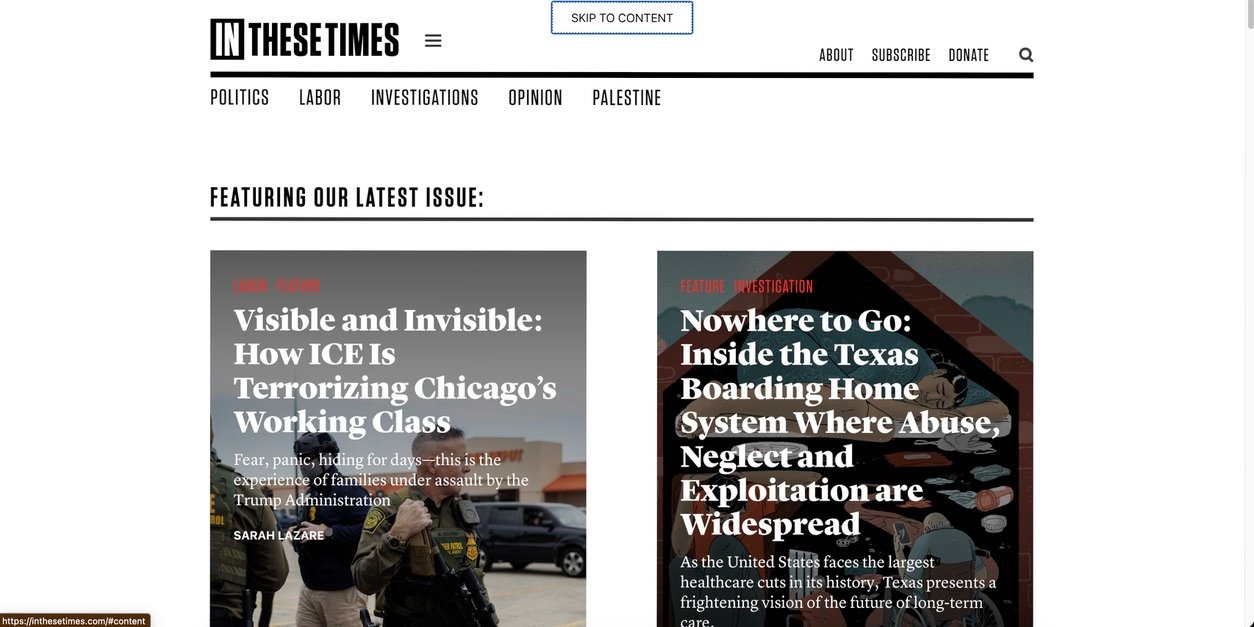
In These Times is a progressive, reader-supported magazine and website that focuses on labor, social movements, politics, culture, and investigative reporting. Over its decades of publishing, the magazine has become a key outlet for movement reporting, labor analysis, grassroots politics, and first-person dispatches from protests, strikes, and community struggles.
Because the site’s audience is deeply engaged with labor and justice issues, strong pitches usually combine original reporting, careful sourcing, and a politics-aware perspective. Pieces that simply summarize press releases or repurpose other outlets’ reporting rarely do well.
Typical formats include:
- Features: reported, narrative-driven pieces covering labor, movements, investigations (often long-form).
- Dispatches: field reports, on-the-ground first-person accounts of protests, strikes, and community struggles (shorter).
- Viewpoints / Opinion: persuasive essays connecting politics to lived experience and movement strategy.
- Culture: reviews and essays connecting arts to politics and social movements.
If you’re new, start by studying recent Dispatches and recent features to see tone, sourcing, and how reporters balance narrative with politics.
The audience includes labor leaders and rank-and-file union members, organizers, activists, progressive policy readers, and people who follow social movements closely. Articles should therefore assume a politically literate reader who values analysis rooted in sources and movement context.
This means your piece should answer: what does this reporting mean for organizing, strategy, or public understanding — not just “what happened.”
| Article type | Typical length | Core ingredients | When to pitch |
|---|---|---|---|
| Dispatch | ~700–900 words | First-person, scene, 1–3 sources, urgency | When you are on the ground or have direct reporting |
| Viewpoint / Essay | 600–1200 words | Argument + personal context + links to reporting | When you have a clear political argument and evidence |
| Feature / Investigative | 1,200–3,500+ words | Reporting, documents, quoted sources, narrative arc | When you have reported sources, documents, and time to investigate |
Section 2 · Fit your idea
Is your idea an In These Times idea?
In These Times centers movements and labor struggles. So instead of “I want to write about X,” start with a clear problem or scene: a strike, a contract fight, a community defense, an organizing tactic, or a policy that affects workers.
Use these three checks to shape a pitch that speaks to ITT editors and readers.
Does it illuminate movement strategy or change?
Editors prefer pieces that help readers understand how a campaign or struggle is happening and what it means for organizing. Ask: what can leaders or organizers learn from this story?
Is the angle specific and sourced?
A good ITT angle is narrow: a single strike, policy battle, chain of events, or a startling finding from documents. You must have at least one direct source (organizer, worker, document, dataset, video) to support the piece.
Can you back it up with sources and context?
You’ll need names, quotes, basic verification (documents, social posts with time stamps, union statements) and ideally follow-up contact info for your sources. If the piece requires deep reporting you should propose a timeline and explain how you’ll get the sources.
Section 3 · Reporting & prep
What editors will expect before they assign (and how to prepare)
Even for Dispatches, editors look for accuracy. For features they expect reporting plans. Here’s a short prep list that will make editors trust your pitch.
- Collect contact info for 2–4 primary sources (name, role, phone or email, how you reached them).
- Save screenshots or time-stamped social posts you will cite.
- Prepare a short timeline of events and a list of documents you will reference (union letters, filings, FOIA docs, court records).
- Have a one-paragraph summary of the piece and a 5–7 point outline of sections.
- Create a realistic word-count target and estimate how long reporting will take.
Editors like when you show you have already done groundwork — it reduces risk and speeds commissioning.
- Direct quotes from workers or organizers (with permission and correct attribution).
- Public documents (union contracts, meeting minutes, filings).
- Embedded links to social posts or public statements with timestamps.
- Short audio/video clips or transcripts (for dispatches from the field).
- Numbers (membership, dates, fines, economic figures) with sources.
| Prep item | Why it helps | How to show it in your pitch |
|---|---|---|
| Source list | Shows verifiability | Include short bullet list: Name — role — confirm contact |
| Document links | Demonstrates primary evidence | Paste links to PDFs or public filings |
| Reporting timeline | Shows feasibility | “I will report in 2 weeks and expect to finish a draft in 5 days” |
Section 4 · Pitches & Templates
How to craft an editor-ready pitch (plus copy-paste templates)
Most pitches should be short and factual: a 3–5 sentence lede, a 3–5 bullet outline, and the reporting evidence list + desired word count. Below are templates you can adapt.
Subject line
[Dispatch] STRIKE: Bakery workers win first contract — Chicago (On the ground)
Pitch body (email or form)
Hello editors —
I’m writing from Chicago where the 120-person bakery worker strike won a first contract after 11 days on the picket line. I can file a 700–900 word dispatch with first-person reporting and 3 worker quotes within 48 hours.
- Why this matters: Local contract sets a model for small food-service shops using tiered scheduling.
- Sources: Maria Lopez (steward, 312-xxx-xxxx), union press release, picket photos (link), two worker interviews done on 2025-07-01.
- Access: I’m on site and can confirm quotes and publish-ready images.
Proposed length: 700–900 words. Sample of my work: [link to published dispatch]. Thanks for considering — happy to adapt the angle. Best — [Your name], [short byline — organizer/reporter/local contact]
Subject line
[Feature pitch] How a small union used consumer pressure to win hazard pay — (1,500–2,500 words)
Pitch body (email or form)
Hello editors —
I’d like to pitch a reported feature about how a coalition of gig workers and local unions used coordinated social pressure (boycotts, worker testimony, city council hearings) to force a chain store to adopt hazard pay across 25 locations. This story shows an organizing model that can be replicated in other cities.
- Reporting plan: interviews with union lead, three worker stories, company response, city council minutes, and internal campaign documents (I have them).
- Why In These Times? The piece centers labor strategy and movement-building lessons for organizers and readers.
- Proposed length: 1,800–2,500 words. Timeline: reporting complete in 3 weeks; draft in 10 days after final interviews.
- Samples: [link1], [link2]. Contact: [email, phone]
Thanks for considering — I can provide a more detailed outline on request. Best, [Your name]
Subject line
[Viewpoint] Why local unions must prioritize rent-strike solidarity — 800–1,200 words
Pitch body (email or form)
Hello editors —
I’d like to submit a 800–1,200-word viewpoint arguing that unions should integrate rent-strike tactics into local bargaining strategy, drawing on recent campaigns in [City]. I’m a longtime tenant organizer who coordinated the campaign and can supply reporting and sources.
- Core points: 1) The legal and organizing mechanics; 2) Case study of [City]; 3) Practical advice for union leaders.
- Sources & proof: campaign materials, organizer quotes, three tenant interviews.
- Sample work: [link].
Happy to submit the full piece if you’d like — thanks for considering. — [Your name]
Section 5 · Money, rates & union agreement
How In These Times pays and what to expect
Official rates: In These Times maintains a public Submissions & Rates page listing current fees. As of the latest posted update, examples include a $400 fee for a web-only story up to ~1,500 words and $375 for web-only viewpoints up to ~1,200 words. Print pieces and longer features have per-word or negotiated fees listed on that page. (Always check the live page for the latest numbers.)
In addition, In These Times has an agreement with the National Writers Union (NWU) that establishes minimums and other freelance protections. That agreement and NWU guidance can affect kill fees, minimum pay, and freelance rights — check the NWU/In These Times pages for details if you are negotiating a larger assignment.
- Pay is usually a flat fee per assignment (editor negotiates; sometimes per-word for print features).
- For web-only assignments, budgets are often in the $375–$400 range for short to medium pieces (see submissions page for exact categories).
- Editors may offer a higher fee for particularly time-consuming reporting or long features; negotiate respectfully and with a clear reporting plan.
- Ask about kill fees (part of NWU agreements) if you worry about being assigned and later canceled.
- Estimate how many hours the story will take and divide the offered fee by those hours to see your effective hourly rate.
- If the piece requires extensive reporting (travel, FOIA requests, document review), explain this in the pitch and ask for a higher fee or a partial advance.
- Keep records: save email assignments, dates, and any negotiated terms so you can invoice correctly.
| Piece type | Public rate (example) | Negotiation advice |
|---|---|---|
| Web-only story (~1,500 w) | $400 (as listed) | Ask for more if reporting time >20 hours; offer a clear reporting timeline |
| Web-only viewpoint (~1,200 w) | $375 (as listed) | Good for well-sourced essays; propose 600–1,200 words |
| Print feature (long) | Per-word rate (see submissions page) | Negotiate for higher per-word or flat fee, especially if exclusive |
Section 6 · Ethics & safety
Sourcing, protecting people, and using lived experience responsibly
Because In These Times covers vulnerable communities, workers, and movement struggles, ethics matter. Editors will ask: did you get informed consent, did you verify claims, and are you protecting anyone who could be harmed by publication?
- Publishing unverified allegations or raw claims without corroboration.
- Using a source’s name or photo when they asked for anonymity.
- Overstating your access or inventing quotes.
- Relying on AI-generated ‘‘reporting’’ without verification — editors expect human verification and sourcing.
- Offer anonymity clearly and explain to the editor how you verified key claims.
- Use written consent, especially when using images of people in protests or picket lines.
- Keep backups of documents and permission statements (email or recorded consent).
- If a story could expose people to legal risk, discuss it with the editor before publishing.
Section 7 · After you pitch
Follow-ups, revisions, and building trust with editors
Editors at small progressive outlets are often juggling many tasks. Here’s a simple guide to follow-up and collaboration.
Wait for an initial response
If you submitted via the form or email, expect a human reply sometimes within 1–4 weeks depending on volume and news cycles. If you have breaking on-the-ground reporting, flag it as “time-sensitive” in the subject line.
Be explicit and quick
When an editor asks for changes, detail what you will change, send a timeline, and stick to it. Clear communication builds trust and leads to repeat assignments.
Reuse and recycle
If your pitch is declined or ignored, adapt the idea for another outlet, a personal blog, or an email newsletter. Keep the reporting — it’s valuable.
Section 8 · Checklist, templates & resources
Final pre-pitch checklist + handy templates
Copy this checklist each time you prepare to pitch In These Times. It ensures you are editor-ready and reduces surprises after assignment.
- Invoice promptly after publication with the agreed fee and payment instructions.
- Ask whether they pay via check, ACH, or other methods and provide necessary details.
- Ask about timing: typical payment windows vary, ask if payment is 30/45/60 days after publication.
- Submissions & Rates — In These Times
- In These Times — Homepage
- Dispatches — Example pieces and tone
- Agreement with the National Writers Union (NWU)
- Example contributor page (author profile)
- Example feature: coverage of large strikes
- Example: labor reporting & industry analysis
- Third-party pay roundups referencing ITT (context)