


Guide: How to Submit to Shenandoah & Turn Publication Into Income
This guide walks a beginner step-by-step through: what Shenandoah publishes, how to prepare a clean submission via Submittable, what to expect on pay & rights, and how to use an acceptance to build a real income stream (freelance work, teaching, contests, readings, and more).
It includes practical templates (cover letter / bio), a submission SOP, tracking tips, and a curated list of resources and links so you can do everything from reading their guidelines to filing the submission in one session.
Section 1 · Publication overview
What Shenandoah is — quick, practical portrait
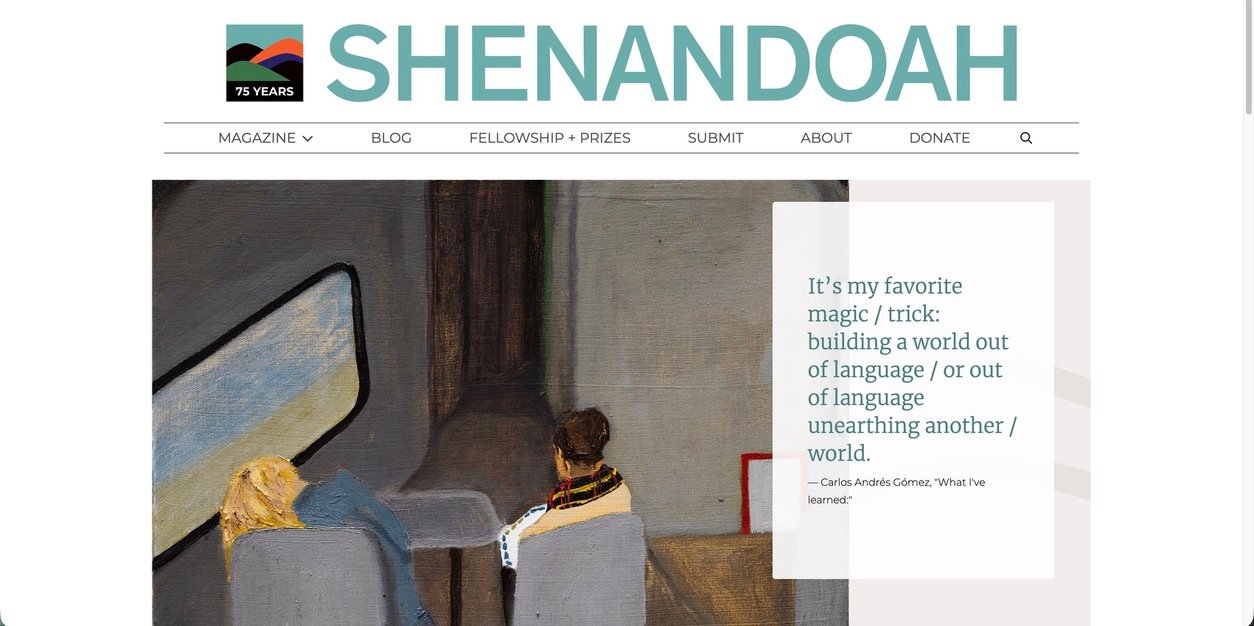
Shenandoah (also styled “Shenandoah: The Washington and Lee Review”) is a long-established, biannual literary magazine based at Washington & Lee University in Virginia. It publishes fiction, poetry, creative nonfiction, comics/graphic narrative, translations, and visual art — and it places emphasis on diverse voices and work that earns readers’ attention for craft and imagination. :contentReference[oaicite:0]{index=0}
Important to know right away: Shenandoah uses an online submission manager (Submittable) for most genres; they run specific reading periods for sections (poetry, fiction, nonfiction, comics, translations) and occasionally open special calls, fellowships, and prizes. The site is the canonical source for up-to-date reading windows and editor names. :contentReference[oaicite:1]{index=1}
- Fiction (short stories, flash, and occasional excerpts).
- Creative nonfiction (essays, hybrids, under 8,000 words typical).
- Poetry (3–5 poems per submission, usually under 10 pages total).
- Comics/graphic narrative (reading windows apply).
- Translations and visual art (follow specific instructions).
Distinctive voices, formal risk, work that surprises or deepens how we see things — and writing attentive to context (not assuming white readers as the default). They look for work that can stand in a well-edited literary journal and that contributes to a diverse table of voices. :contentReference[oaicite:2]{index=2}
Sources: Shenandoah homepage & submissions pages. :contentReference[oaicite:3]{index=3}
Section 2 · Reading windows & submission basics
Where to submit (Submittable) and short facts you must memorize
Shenandoah’s primary submission system is their Submittable manager. Use the Submittable listing for the section you plan to send to (fiction, creative nonfiction, poetry, comics). Submittable lets you track status and withdraw if your piece is accepted elsewhere. :contentReference[oaicite:4]{index=4}
Quick facts to keep handy (these change, so double-check before sending): many prose submissions should be under 8,000 words; poetry submissions usually ask for 3–5 poems, no more than ~10 pages total; simultaneous submissions are generally accepted but must be promptly withdrawn if accepted elsewhere. Shenandoah sometimes caps the number of submissions they accept each month, and they publish reading-period notices on their submissions page. :contentReference[oaicite:5]{index=5}
| Item | What to do |
|---|---|
| Where to submit | Shenandoah Submittable |
| Length (prose) | Generally up to 8,000 words (check slip by section). |
| Poetry | 3–5 poems; up to ~10 pages total. |
| Simultaneous submissions | Usually allowed; withdraw immediately if accepted. |
Read the official Shenandoah submissions page before you make the final click. :contentReference[oaicite:6]{index=6}
Section 3 · Prepare publication-ready work
Format, polish, and small demos that editors respect
Literary editors read for craft. Your submission must do three things well: (1) be cleanly edited (no obvious typos or malformed sentences), (2) be properly formatted and easy to read on screen, and (3) have a clear and compelling opening — the first page matters a lot.
- Send a single-file (DOCX preferred) or follow Submittable file-type rules.
- Use 12pt serif or sans-serif, 1.15–1.5 line spacing, standard margins.
- Number pages and include your name or title in header (only if requested).
- Do not include author bio or contact info inside the manuscript (cover letter field covers that).
- Proofread for clarity; read aloud to catch rhythm and errors.
- Poetry: submit 3–5 poems (or number stated on the Submittable form); don’t exceed page limits.
- Comics/graphic narrative: check specific file, size, and panel instructions on Submittable.
- Translations: include translator note and original-language credit as instructed.
If you’re unsure about whether work is “ready,” treat a trusted first reader or a paid editor as an investment. A single strong acceptance pays that editorial cost many times over.
Section 4 · Submission SOP (step-by-step) — Templates included
Exactly what to do, click-by-click
Follow this SOP each time you submit to Shenandoah. It minimizes errors and increases professionalism.
Read the official submission page carefully
Open Shenandoah’s submissions page and the specific Submittable listing for your genre. Make a checklist of any requested materials (cover letter, bio, title list, translations note, images). :contentReference[oaicite:7]{index=7}
Polish offline, then final proof
Finalize your manuscript file (DOCX or preferred), run a last grammar check (human eyes > automatic), and export a clean final file. Ensure image files are named clearly (if sending comics or art).
Create your Submittable entry
Log into Shenandoah Submittable. Fill in the form fields: title, author name, short bio (2–3 lines), cover letter text, and attach your file(s). Remember: be concise in the cover letter — editors receive hundreds (or thousands) of submissions. :contentReference[oaicite:8]{index=8}
Double-check metadata & submit
Verify genre selection, file attachments, and that you checked “simultaneous submission” if you are using it (and have a plan to withdraw). Submit and save the confirmation email or screenshot.
Record the submission
Add the submission to your tracking sheet (date, story title, word count, fee if any, Submittable link, notes). Keep a filing system for each draft and the version you sent. (Spreadsheet template below.)
Cover letter template (for Shenandoah)
Dear Shenandoah editors —
Please consider my [story/essay/poems/comic] titled “[Title]” for [fiction / creative nonfiction / poetry / comics]. The piece is [___ words / [X] poems].
A short bio: [One sentence — your current position or what you do, one recent publication if any].
I am submitting this work simultaneously / not simultaneously. Thank you for your time and consideration.
Sincerely,
[Your Name]
[Email] • [City, Country] • [Link to work sample or website — optional]
Short author bio template (2 lines)
[Your Name] is a [profession or writer descriptor] living in [City]. Work has appeared in [publication1] and [publication2] (or “is forthcoming in…”). Find more at [website link or ORCiD].
Section 5 · Money, prizes, rights
How Shenandoah pays and how to turn a byline into income
Public records and market directories indicate Shenandoah pays professional-rate fees for prose and poetry. Duotrope lists a common rate of roughly $80 per 1,000 words up to $400 for prose and reports poetry payment figures in earlier notices (rates can change and are confirmed per-assignment by editors). Use this as a planning guide and always confirm in the editor’s email/contract. :contentReference[oaicite:9]{index=9}
- Flat fee per accepted piece agreed on assignment.
- Poetry often paid per poem (historical samples: $50–$100 per poem in past listings — verify in their current communications).
- Prizes & fellowships: Shenandoah runs prizes (some include honoraria) and sometimes fellowship opportunities; check their prizes page.
Always check the contract or acceptance email for exact payment terms. :contentReference[oaicite:10]{index=10}
- Use a Shenandoah byline as a calling card when pitching paid essays, speaking gigs, or freelance editing.
- Turn a long essay into a class, workshop, or newsletter paid product.
- Apply to contests or grants that require a publication track record — a big journal credit opens doors.
Note: Payment amounts and prize rules change. Duotrope and aggregator sites publish current reported figures, but you should confirm in Shenandoah’s acceptance message or their official pages. :contentReference[oaicite:11]{index=11}
Section 6 · After acceptance — what editors expect and what you can do
Rights, edits, promotion, and reprints
If Shenandoah accepts your piece, expect editorial edits (light to substantial) and a rights agreement. Many journals buy first serial rights and reserve the right to publish; reprint rights and author reposting policies are negotiated or stated in the acceptance. Ask your editor about the timeline for print/online publication and reposting rules. If you plan to repost on your own site, save the acceptance email and confirm the allowed reprint window before reposting. :contentReference[oaicite:12]{index=12}
When the piece is scheduled, promote it: share the magazine’s link, schedule a reading (library, bookstore), and consider a short thread or essay about the process. Editors appreciate promotion; it helps your piece reach readers and boosts your relationship with the magazine.
Many magazines allow authors to post non-exclusive versions after a period (e.g., six months to a year), or they allow the author to post a ‘substantial excerpt’. Always get permission in writing before reposting elsewhere or using the piece in a paid product.
Section 7 · Submission tracking & healthy habits
How to keep sane while submitting and what metrics matter
Treat submissions like a small project. Track: date sent, genre, title, word count, link to Submittable entry, response date, outcome, and any notes (editor feedback). Build a spreadsheet with filters for “Awaiting / Accepted / Rejected / Withdrawn”. Update it weekly.
| Field | Why it matters |
|---|---|
| Date submitted | Helps you estimate response time |
| Reading window | Some windows close early; track if a window closes before you submit |
| Outcome | Collect data on which venues accept what kind of work |
| Notes (editor feedback) | Use feedback to improve future drafts |
Healthy habits: send only your best, keep rejections as data, and submit consistently. Even renowned journals publish very few pieces — focus on growth instead of instant wins. :contentReference[oaicite:13]{index=13}
Section 8 · Checklist, FAQs & a 30-day action plan
Everything you should do in one month
Read & research
Read Shenandoah’s submissions page and 3 recent pieces in the section you want to submit to. Open the Submittable listing and note all required fields. :contentReference[oaicite:14]{index=14}
Polish your piece
Revise the manuscript using editorial feedback from peers or a paid proofreader. Format document for Submittable. Create final DOCX/PDF and prepare a short bio and cover letter.
Prepare submission assets
Finalize the cover letter (short), author bio (2 lines), and metadata. Prepare any image files if relevant. Fill out your submission tracker template.
Submit
Submit via Submittable. Save confirmation. Add to tracker.
Plan next moves
Draft a plan for simultaneous submissions, a second piece to send next, and channels to monetize (workshops, newsletter, freelancing pitches using the byline).
- Q: Can beginners be published? A: Yes—Shenandoah publishes new writers; craft and a strong submission matter more than pedigree. :contentReference[oaicite:15]{index=15}
- Q: Are simultaneous submissions allowed? A: Yes, but withdraw immediately if accepted elsewhere. Check the Submittable form for any exclusivity notes. :contentReference[oaicite:16]{index=16}
- Q: How long until a reply? A: Response times vary widely (weeks to months). Record dates in your tracker and be patient. :contentReference[oaicite:17]{index=17}
Section 9 · Resources — open every link
Direct links you should open now
- Shenandoah — Submissions (official). This is your single source-of-truth for reading windows, editor names, limits, and special calls. :contentReference[oaicite:18]{index=18}
- Shenandoah on Submittable. The manager where you upload files and track your submission. :contentReference[oaicite:19]{index=19}
- Shenandoah home / about. Read the magazine’s mission, history, and staff bios before you submit. :contentReference[oaicite:20]{index=20}
- Duotrope — Shenandoah entry. Useful for reported payment ranges and practical submission info (user-reported). :contentReference[oaicite:21]{index=21}
- The Submission Grinder — Shenandoah. Another aggregator for reading periods & community notes. :contentReference[oaicite:22]{index=22}
- Washington & Lee Columns — Shenandoah 75th anniversary. Useful background on scale and submission volume. :contentReference[oaicite:23]{index=23}
- Poets & Writers — submission advice and tools for writers.
- Submittable help — how to submit. Practical guide to using Submittable if you are new. :contentReference[oaicite:24]{index=24}
- NewPages — Shenandoah listing. Magazine summary and contact info. :contentReference[oaicite:25]{index=25}
- Author resources & market lists. Use these lists to build a submission ladder.
Tip: Open 3 Shenandoah pieces in the genre you aim to write in and outline their structure before finalizing your draft. Editors notice when submission voice & structure fit the magazine’s tone. :contentReference[oaicite:26]{index=26}