

Guide: How to Learn From The Atlantic’s World/Global Coverage, Pitch Smartly, and Earn Money (Step by Step)
This is a clean, practical guide that shows you how to: (1) study The Atlantic’s World/Global stories, (2) turn that learning into your own blog posts and guest posts, and (3) pitch The Atlantic (and similar magazines) with professional structure.
You do not need to be “famous.” But you do need clarity, originality, and proof. The Atlantic’s Global desk says they want smart, original stories about what’s going on in the world, with formats like analysis, essays, reflections, and history lessons — written for a curious general reader. They also say they pay for all stories and that fees depend on length and type.
Quick links to start reading now: World · International / Global feed · Global pitching guide (official) · Desk emails (official)
Section 1 · Understand the publication
What “World/Global” means at The Atlantic (and why that matters for your pitch)
Start with a simple truth: The Atlantic is not a “post anything” guest-post blog. It is a magazine brand with strong editing, limited space, and high standards. So you win by pitching the right kind of idea to the right desk, and by showing you can execute it.
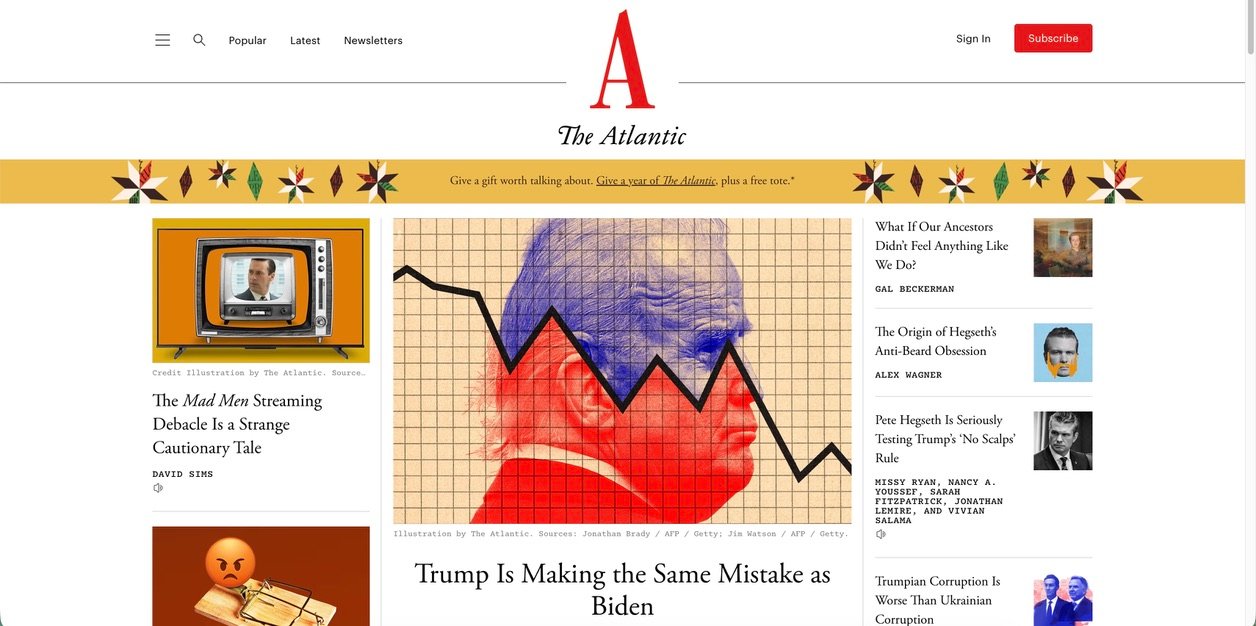
The page you shared — The Atlantic World — is the “reader doorway.” The editorial “home” for many world stories is the International/Global feed and the Global desk pitch inbox global@theatlantic.com.
The Global desk’s own freelancer guide is very useful because it shows the tone: global stories should help readers think, not only react. That means: big ideas, surprising places, and human meaning, not just breaking updates.
Copy the method, not the sentences.
- Copy the clarity: short paragraphs, clean headings, direct claims.
- Copy the structure: hook → “why it matters” → evidence → meaning.
- Copy the reader respect: explain context like the reader is smart but busy.
- Do NOT copy their story topic line-by-line. You must bring a fresh angle.
- Do NOT pitch “topics.” Pitch one specific story with a clear frame.
The Atlantic help center lists desk emails. Use one desk per pitch. If it is a world/global story: start with Global.
- Global: global@theatlantic.com
- Politics/National Security: politics@theatlantic.com
- Ideas: ideas@theatlantic.com
- Culture & Books: culture@theatlantic.com
- Science/Tech/Health: science@theatlantic.com
- Family: family@theatlantic.com
Official desk list: “Submit a piece for editorial consideration”
| You want to write… | Best “home” page to study | Likely desk email | Your beginner goal |
|---|---|---|---|
| A world story with a big idea + human meaning | International/Global · World | global@theatlantic.com | Pitch one focused story with frame + plan |
| A policy-heavy U.S. + world power analysis | National Security | politics@theatlantic.com | Show expertise + explain for general readers |
| A big “why” essay (culture, meaning, history) | Ideas | ideas@theatlantic.com | Write a strong argument with evidence |
| A tech-and-society story (human side of tech) | Technology | science@theatlantic.com | Bring originality + reporting + meaning |
Section 2 · Fit your idea
What The Atlantic Global desk LOVES (and what they avoid)
If you only remember one thing, remember this: Global stories must have a clear frame (“the big idea”). The Global desk itself explains what it loves, and it also lists what it rarely accepts. Your job is to fit your idea before you write 4,000 words.
Here are the Global desk “story buckets” (with examples you can click). Read them like a student. Ask: “What is the frame?” and “What is the human meaning?”
| Global desk story type | What it feels like | Example links (from the Global desk guide) | Beginner translation |
|---|---|---|---|
| Analysis that provokes or advances a debate | Clear argument + context + why it matters now |
The War Photo No One Would Publish The Thucydides Trap |
Pick one debate and move it forward with evidence + clarity |
| Stories that shift perspective | “You thought X. Here is a better way to see it.” |
The Bad American Habits I Kicked in Finland ISIS, but Buddhist |
Show a familiar thing in a new light using lived detail + thinking |
| Interrogations of big ideas | Deep “why” questions, explained simply |
What’s a Language, Anyway? How ISIS Spread |
Choose one hard concept and make it understandable for general readers |
| Analysis that demystifies news | “Confused person’s guide” style: readable context |
Confused Person’s Guide to the Syrian Civil War Watch What Putin Does |
Explain the “moving parts” clearly, then show the bigger meaning |
| Comparative context | Compare nations, habits, and systems to teach something |
Why Americans Call Soccer “Soccer” Japan Schools the East Coast on Snow |
Use comparison to help readers see their own world differently |
Ideas the Global desk says it rarely accepts
The Global desk warns against certain categories. As a beginner, use this like a filter. If your idea matches these patterns, reshape it before you pitch.
- Newspaper-style op-eds aimed at policymakers with explicit calls to action.
- Deep travel-heavy investigations (unless there is a partner or grant support).
- Dispatches that report events but have no “big idea” or lesson.
- Overly narrow technical pieces with limited appeal to general readers.
Beginner fix: add a frame. Turn “event report” into “what this shows about ____ and why it matters.”
What they want inside a good pitch
The Global desk guide also gives practical notes: have a clear frame, an exciting headline-style summary, an execution plan, and keep the general reader in mind.
- One-sentence frame (your “big idea”).
- Suggested headline (shows focus and tone).
- How you will report it (sources, access, method).
- Why a curious general reader will care (without needing your background).
- Why your location/angle adds value (geographic diversity matters).
Pro tip: a focused pitch is short. Contently’s Atlantic Tech interview also advises: keep pitches short and precise, and pitch story ideas, not topics.
Is your story “Atlantic-level” yet?
Ask these 5 yes/no questions:
- Do I have a frame that can be said in one sentence?
- Do I have evidence (documents, interviews, data, on-the-ground knowledge)?
- Do I bring something new (not already obvious from mainstream coverage)?
- Can a general reader understand this in one sitting?
- Is it “bigger than the event” (meaning, context, lesson, insight)?
If you answered “no” to 2 or more, don’t panic. It just means you build first (next sections).
Section 3 · Build your base
Your beginner “Reading-to-Writing” system (how to learn fast without copying)
Beginners often do one of two mistakes: (1) read randomly, or (2) write without a system. You will do better if you create a simple loop: Read → Map → Write → Publish → Improve → Pitch.
Use this system with The Atlantic’s World/Global pages: World, International/Global, plus the “Latest” page for variety: Latest.
When you open an Atlantic story, don’t read like a fan. Read like a writer. You are hunting for “how this works.”
- Write the frame in one sentence.
- Find the turn: where it becomes “bigger than news.”
- List the evidence types: interviews, documents, history, data, scenes.
- Note the structure: how the author moves from idea to proof.
Tip: create a “Story Map” note template and reuse it for every article.
After reading, you will write a small “shadow outline” (not a copied draft). It is an outline that teaches you structure.
- 1-line hook concept (not the author’s exact hook).
- Nut graf: “Why this matters now.”
- 3–5 sections: each section = one claim + proof.
- Ending: “what changes in how we see the world.”
Your blog post later uses the same structure, but your own topic and evidence.
| Daily time | What you do | Output | Why it helps you earn |
|---|---|---|---|
| 20 minutes | Read 1 Atlantic World/Global story with a “Story Map” note | 1 story map (frame + structure + evidence) | You learn magazine-level thinking quickly |
| 20 minutes | Write a “shadow outline” in your own words | 1 outline | Outlines become pitches and blog drafts |
| 20 minutes | Write 300–500 words about your own related topic | Micro-draft | Small daily writing builds real portfolio |
| 10 minutes | Collect 5 sources (official docs, studies, interviews) | Source stack | Editors trust writers who show evidence |
Section 4 · Find winning angles
How to find Atlantic-level angles (without copying topics)
The simplest way to build a strong angle is to use a formula. A good global pitch is not “topic = war” or “topic = elections.” It is a story frame that creates curiosity and promises insight.
The “Surprising Place → Big Question” angle
Template: “In [place/community], people are doing [unexpected thing], which answers [big question] about [global issue].”
- Place/community: not just “a country,” but a real group.
- Unexpected thing: behavior, policy, practice, tradition, workaround.
- Big question: something general readers care about.
This is “Atlantic-style” because it turns a local story into a general insight.
The “Confused Person’s Guide → Clear Meaning” angle
Template: “Everyone is hearing about [event]. Here is what it actually means, using [3–5 moving parts] and one simple model.”
- Great when news is noisy and confusing.
- Requires strong sourcing and calm clarity.
- Ends with “what changes in how we see the world.”
The Global desk guide itself highlights demystifying analysis as a strong type.
The “Comparison teaches humility” angle
Template: “Country A does [habit/policy] differently than Country B, and that difference reveals [hidden assumption].”
- Use comparison to teach, not to mock.
- Keep it human. Use real voices and lived detail if possible.
- Make it useful: “what readers can see differently now.”
The “History lesson that fixes today’s misunderstanding” angle
Template: “People talk about [idea] today, but they forget [historical fact]. That missing history explains [current confusion].”
- Works well for global myths and repeated headlines.
- Requires careful citations and clear storytelling.
- Must avoid being a textbook: make it narrative and relevant.
| Angle | Best evidence | Best beginner move | Common mistake |
|---|---|---|---|
| Surprising place → Big question | Interviews + scenes + local facts | Start with one community you truly know | Writing general claims without proof |
| Confused person’s guide | Primary sources + explainers + expert quotes | Build a “5 moving parts” diagram in your notes | Too many facts, no structure |
| Comparison angle | Two systems + cultural context + examples | Use one strong contrast, not 10 | Turning it into stereotypes |
| History lesson angle | Archives + papers + historians | Write a “timeline in 8 bullets” first | Academic tone that loses readers |
Section 5 · Build credibility
Build your “Proof Pack” (the fastest way to look professional to editors)
Editors decide fast. They ask: “Can this person actually deliver?” Your Proof Pack makes the answer “yes” without long explanations. It also helps you earn money beyond one magazine because it becomes your portfolio.
A Proof Pack is a small set of links + facts you include in a pitch. It shows: (1) you can write, (2) you have real access or knowledge, (3) you can report responsibly.
- 2–3 best writing samples (published links).
- Short bio (2–3 lines) and why you are credible for this story.
- Access notes (who you can interview, documents you can get).
- Source list (5–10 high-quality sources you will rely on).
- One “mini outline” (so the editor sees the shape).
If you have no clips, start small but strong. Your goal is not 20 posts. Your goal is 3 posts that prove skill.
- Write 3 blog posts (1,200–2,000 words each) using strong structure.
- Each post should include at least 5 sources and a clear “big idea.”
- Publish them on: your blog, Medium, Substack, or LinkedIn Articles.
- Share them and collect 2–3 feedback comments to improve.
Then you pitch The Atlantic with a real portfolio, not only hope.
| Proof Pack element | What you include | Why editors care | Beginner example |
|---|---|---|---|
| Clips | 2–3 best links | Shows you can finish high-quality writing | One global explainer + one essay + one analysis |
| Credibility line | 2–3 lines about your connection to topic | Shows access and honest expertise | “I grew up there / I report on this field / I speak the language” |
| Execution plan | Sources + reporting method | Proves your story is real and doable | “3 interviews + document review + data check” |
| Outline | 5–7 bullet sections | Shows you understand structure and focus | Hook → frame → evidence 1/2/3 → conclusion |
| Safety/ethics notes | How you protect sources if needed | Professional responsibility | “No minors named; consent; sensitive details handled” |
Section 6 · Pitch SOP
Pitch SOP: exactly how to email the right desk (with templates you can copy)
The Atlantic help center says journalists who want to pitch reported stories or commentaries should reach out to the relevant news desks. For Global stories, use global@theatlantic.com.
Important mindset: you are not “asking for a chance.” You are offering an editor a clean, doable story with value for their readers.
Keep it short. Contently’s Atlantic pitch advice says: if you can’t sell the idea in under a paragraph, it is not focused enough.
- Subject: proposed headline + 1 sharp hook phrase
- First line: one-sentence frame (the big idea)
- Then: why now + what you will show + how you will report
- Proof Pack: 2–3 clips + 1 credibility line
- Close: timeline + word count guess + availability
Use the official desk emails. Do not mass-email the entire company. Choose the best desk and send one clean message.
- Global: global@theatlantic.com
- Politics/National Security: politics@theatlantic.com
- Ideas: ideas@theatlantic.com
- Culture/Books: culture@theatlantic.com
- Science/Tech/Health: science@theatlantic.com
- Family: family@theatlantic.com
Official list: Help Center desk emails
| Pitch part | What to write | What to avoid |
|---|---|---|
| Subject line | Proposed headline + clear hook | “Hello sir/ma’am” or vague subjects like “Story idea” |
| Frame | One sentence: “This story argues/shows…” | Big topic lists (“I want to write about geopolitics”) |
| Execution plan | How you’ll report and what you’ll use as evidence | “I will research online” only (too weak) |
| Reader value | What a general reader learns or sees differently | Expert-only jargon or narrow insider details |
| Proof | Clips + credibility + access | Long life story or CV dump |
Pitch templates (copy/paste and edit)
Short Global pitch email
To: global@theatlantic.com
Subject: [Proposed headline] — [one short hook phrase]
Body (example structure):
- Frame: In one sentence, this piece argues/shows that [big idea] using [place/community] as a case.
- Why now: [1–2 lines on why readers care this month].
- What I will deliver: A reported/analytical essay (~[word count]) that explains [3 key points].
- Reporting plan: I will interview [types of sources] and use [documents/data/history]. I have access to [access note].
- Proof Pack: Clips: [link 1], [link 2], [link 3]. Credibility: [2-line bio relevant to story].
- Timeline: I can file within [X days]. Happy to adjust angle/length.
Close with: “Thanks for your time — happy to revise the frame to fit your needs.”
Demystifying analysis pitch
To: global@theatlantic.com
Subject: The confused person’s guide to [event] — what it actually means
- Frame: This guide explains [event] through 5 moving parts: [A/B/C/D/E].
- Reader promise: A general reader will understand what matters, what is noise, and what changes next.
- Evidence: Primary documents, timelines, expert interviews, and one simple model.
- Why me: [credibility line].
- Clips: [links].
Tip: In this format, structure is everything. If your outline is clean, the editor feels safe saying yes.
How to pitch “with a theme” (useful even outside Tech)
Your Contently resource describes The Atlantic Tech channel using monthly themes and the editor’s preference for originality, strong reporting, and the “human side.” You can reuse the same mindset for Global:
- Choose a theme like: “borders,” “translation,” “trust,” “workarounds,” “small talk,” “illegal not to vote,” etc.
- Pitch one story that fits the theme and reveals something larger about people and systems.
- Keep the pitch short, precise, and headline-shaped.
Read the Contently piece here: The Atlantic Is Asking for Themed Pitches. Here’s What They Want.
Section 7 · Writing SOP
Writing SOP: how to write a world/global piece that feels magazine-quality
The Atlantic’s Global desk says it loves stories that stay in the mind after the news cycle ends. That happens when your story has: (1) a clear big idea, (2) concrete evidence, and (3) meaning that helps readers think again.
A simple Atlantic-style structure (beginner version)
| Part | What to do | How long | Beginner checklist |
|---|---|---|---|
| 1) Hook | Start with a concrete detail, question, or surprising fact | 2–5 sentences | Does it create curiosity without clickbait? |
| 2) Frame | State the big idea clearly (what this story proves) | 1–3 sentences | Can you say it in one sentence? |
| 3) Why now | Explain why readers should care today | 1 short paragraph | Is it connected to real events, debates, or confusion? |
| 4) Evidence sections | 3–5 sections, each = one claim + proof + meaning | Most of article | Do you show sources, context, and real voices? |
| 5) Counter / complexity | Show the other side or the uncertainty | 1 short section | Do you avoid being one-dimensional? |
| 6) Ending | Return to big idea; show what changes in how we see the world | 1–2 paragraphs | Does it land with meaning, not slogans? |
Write like you are explaining to a smart friend
The Atlantic’s Global desk wants stories that a curious general reader can enjoy. That means: explain terms, avoid insider jargon, define acronyms, and build the story in layers.
- If you must use technical terms, define them in one sentence.
- Use short paragraphs (2–5 lines).
- One paragraph = one main point.
- Use headings that promise value (“What changed,” “Why it matters,” “What people miss”).
Use evidence in “layers”
Magazine writing does not depend on one type of proof. It mixes evidence like a strong meal:
- Layer 1: a real scene or human moment
- Layer 2: a document or data point
- Layer 3: an expert voice or historical context
- Layer 4: your interpretation (careful and fair)
This makes your writing trustworthy and memorable.
Write a headline that states the frame
The Global desk guide says it helps to have a winner headline. The Contently pitch advice also says offering a suggested headline shows focus.
- Good: “What [local story] reveals about [big global question]”
- Good: “The real reason [thing] is happening is [frame]”
- Avoid: vague poetic titles with no meaning
End with insight, not activism
The Global desk says it rarely accepts op-eds with explicit calls to action. So end with understanding, complexity, and meaning.
- Show what your reporting suggests.
- Show what is still uncertain.
- Show what the reader should now see differently.
Section 8 · Quality & ethics
Editing, fact-check, ethics, and safe AI use (so editors trust you)
The fastest way to lose editors is to submit work that is sloppy or untrustworthy. The fastest way to build a paid career is to become “the writer who is clean.” Clean means: correct facts, clear sourcing, fair framing, and respectful reporting.
- Verify names, spellings, titles, and dates.
- For each major claim, save one source link in your notes.
- Quote people accurately and keep your raw notes.
- When using numbers: show where they come from.
- Check that your story is not “too narrow” for general readers.
Habit: after writing, read the article like a skeptical editor. Ask: “Which sentence is weakest?” Then fix it.
You can use AI for outlines and language polishing. But you must never use AI as a “fact generator.”
- Safe: brainstorm sections, tighten sentences, suggest headlines.
- Safe: ask AI to find weak logic, missing counterpoints, unclear parts.
- Risky: asking AI “what happened” and trusting it without sources.
- Never: invent quotes, sources, or experiences.
Your byline is your reputation. Treat it like a bank account. Protect it.
Section 9 · Money side
Money: how you earn now, and how one Atlantic clip can multiply your income
The Global desk guide states clearly: they pay for all stories, and the fee depends on type and length. The Contently piece also notes Atlantic freelance rates vary by scope and are negotiated. So do not treat this like a “fixed rate per word” platform.
But here is the real earning logic: even one strong Atlantic byline can become a “career lever.” It can help you earn via: more assignments, better clients, higher rates, and other publications that trust your clip.
- Assignment fee for your Atlantic piece (agreed with editor).
- Follow-up assignments if your work is clean and useful.
- Referrals from editors to other desks or outlets.
Many writers fail not because the idea is bad, but because their execution is late or messy. Reliability is money.
- Use your clip in a portfolio to win corporate writing projects.
- Pitch other magazines with “As published in The Atlantic…”
- Offer paid newsletters, workshops, or consulting in your niche.
- Turn your reporting into a series: blog → guest posts → magazine pitches.
A strong clip is not only money today. It is trust you can reuse.
| After your article publishes… | Do this (simple) | Why it grows income |
|---|---|---|
| Week 1 | Update your portfolio page + pin the clip on your social profile | New clients instantly see your credibility |
| Week 2 | Write a “behind the reporting” blog post (not copying content) | Shows process; builds trust; attracts opportunities |
| Week 3 | Pitch a follow-up angle (same theme, new question) | Series = repeated income + deeper expertise |
| Week 4 | Repurpose into: 1 newsletter, 1 LinkedIn post, 1 short explainer thread | Audience growth = long-term monetization |
Section 10 · Action plan
30-day + 90-day plan, final checklist, FAQ, and mega-resources
30-day plan (beginner, realistic)
| Week | Daily habit | Output | Goal |
|---|---|---|---|
| Week 1 | Read 1 Atlantic World/Global story + write 1 Story Map | 7 Story Maps | Learn structure + voice |
| Week 2 | Write 1 blog post using Atlantic-style structure (1,200–2,000 words) | 1 published post + sources | Start portfolio |
| Week 3 | Write 2nd post + build Proof Pack folder | 2nd post + Proof Pack v1 | Look professional |
| Week 4 | Write 3rd post + draft 2 pitch emails (not sent yet) | 3rd post + 2 pitch drafts | Be ready to pitch |
90-day plan (toward pitching The Atlantic)
| Month | Main focus | What you build | Result |
|---|---|---|---|
| Month 1 | Read + write + publish 3 strong pieces | Clips + source habits | You stop being “unproven” |
| Month 2 | Improve reporting: 3 interviews per piece | Better evidence + credibility | You look like a journalist, not only a blogger |
| Month 3 | Pitch 2–4 outlets (one desk per pitch) | Focused pitches + follow-up discipline | Paid assignments start appearing |
Final pre-pitch checklist (use every time)
FAQ (beginner questions)
- The Atlantic World doorway: https://www.theatlantic.com/world/
- International / Global feed: https://www.theatlantic.com/international/
- Official Global pitching guide (must read): https://www.theatlantic.com/international/archive/2016/04/freelancer-guide-pitch-global-stories/476544/
- Desk emails (official help center): Submit a piece for editorial consideration
- Global desk email: global@theatlantic.com
- Politics desk email: politics@theatlantic.com
- Ideas desk email: ideas@theatlantic.com
- Culture desk email: culture@theatlantic.com
- Science/Tech/Health desk email: science@theatlantic.com
- Family desk email: family@theatlantic.com
- Send a news tip (official): Help Center: tips
- Tip line email: tips@proton.theatlantic.com
- Submit a Letter to the Editor (official): Help Center: letters
- Letters email: letters@theatlantic.com
- Correction request (official): Help Center: corrections
- The Atlantic latest: https://www.theatlantic.com/latest/
- The Atlantic newsletters: https://www.theatlantic.com/newsletters/
- The Atlantic site map: https://www.theatlantic.com/sitemap/
- Your provided pitch resource (Contently): The Atlantic Is Asking for Themed Pitches. Here’s What They Want
- Global desk example set (from the official guide):