


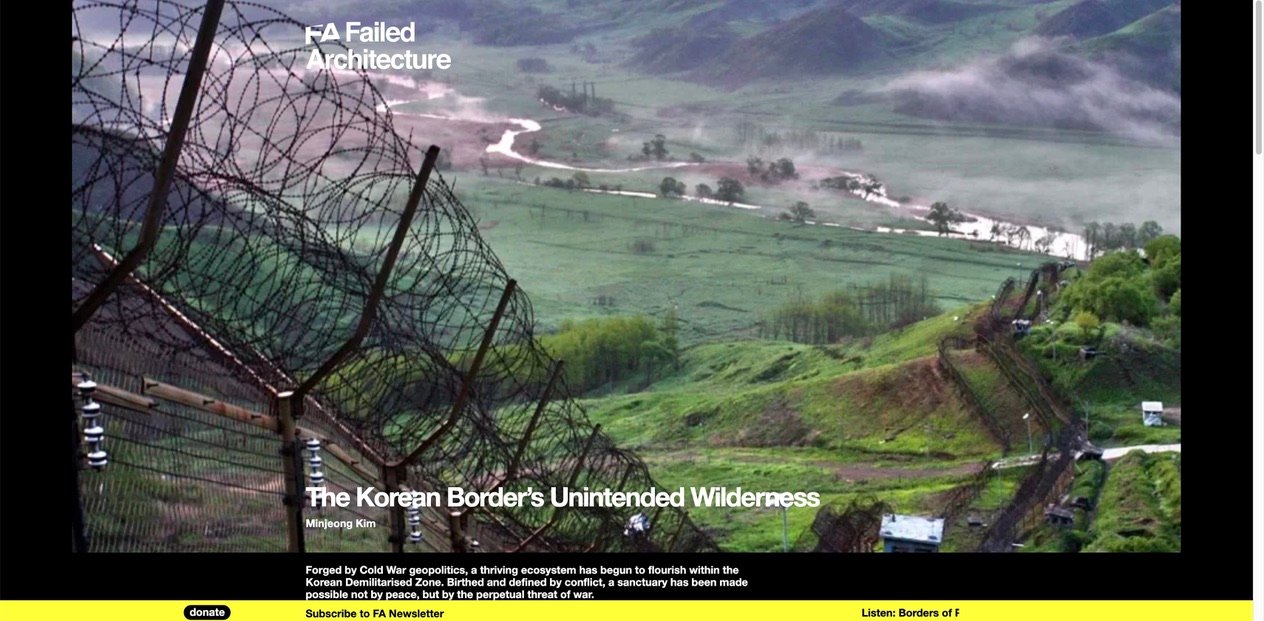
How to Write for Failed Architecture — A Beginner’s Guide to Pitching, Publishing, and Getting Paid
This practical guide walks you, step by step, through learning what Failed Architecture publishes, how to craft a critical urban/architectural piece, and how to submit it so even a first-time writer can prepare a compelling pitch and (if accepted) receive the editorial fee. It bundles sample outlines, a pitch template, and lots of helpful links.
Use the included checklists and templates to speed up your process. Read the official contributor information on Failed Architecture before you send anything. :contentReference[oaicite:1]{index=1}
Section 1 · Know the publication
What Failed Architecture publishes and why it matters
Failed Architecture is an independent online magazine that aims to reconnect architecture with the real world by publishing critical, politically-minded perspectives on urbanism, architecture, and related social issues. Its content ranges from essays and investigative pieces to photo-essays, interviews, podcasts, and event reports. :contentReference[oaicite:2]{index=2}
Why this matters for you as a writer: the site privileges critical analysis, evidence, and narratives that link built form to broader social, economic, and political forces. That means strong submissions are not mere how-to’s or celebratory PR pieces — they are reflective, evidential, and often activist in tone. :contentReference[oaicite:3]{index=3}
- Critical framing: situate architecture within power, labor, environment, or policy.
- Original research or reporting: case studies, interviews, archival work, or field observations.
- Multimedia-friendly: photo essays, maps, audio, or video can strengthen a piece.
- International and local: contributors are global, but clear local evidence helps impact.
Readers include architects, urbanists, activists, students, and engaged citizens. They come for critical insights, investigative stories, and ideas that connect design to social justice — not product marketing or PR. :contentReference[oaicite:4]{index=4}
| Content type | Why it fits Failed Architecture | Best practice |
|---|---|---|
| Critical essay / thinkpiece | Fresh interpretation of a contested building or policy | Use evidence, cite sources, include scoped argument |
| Case study / investigative report | Documents a failure or revealing pattern in urban practice | Primary sources (interviews, planning docs, photos) |
| Photo essay | Visual storytelling about urban conditions | High-res images, captions, and rights clearance |
| Review / event report | Critical take on exhibitions, books, or projects | Contextualize and link to broader debates |
Section 2 · Formats & topics they accept
What to pitch — practical list
The official contributor page explicitly lists the range of acceptable submission types — essays, case studies, photographic essays, reviews, interviews, and multimedia work. They welcome different formats as long as the piece aligns with the site’s critical aims. If you want to contribute, read the Contribute page and follow its instructions. :contentReference[oaicite:6]{index=6}
Urban justice & displacement
How housing policy, redevelopment, or mega-projects affect communities. Use local data, interviews, and maps to support claims.
Infrastructure, mobility, and everyday failure
Transit deserts, broken public spaces, or infrastructure neglect — with practical documentation and local testimony.
Architectural politics & labor
Stories about labor conditions, planning decisions, or the relationship between firms, clients, and the public.
Climate, resilience & adaptation
How design decisions interact with climate risk; case studies showing successes and failures.
Section 3 · Prepare before you pitch
Build research, samples, and a small portfolio
Editors at independent publications like Failed Architecture will probably ask for evidence of your ability to research, document, and write clearly. Publish 2–4 samples first: one long-form essay (1,200–2,500 words), one photo-essay or visual project, and one short report or review. These can live on a personal blog, Medium, Substack, or an academic repository — but make them public and easily accessible. (This prepares you to supply links in the submission form.) :contentReference[oaicite:8]{index=8}
- Choose a local case with sources (planning docs, council minutes, news reports).
- Interview one or two people with direct experience if possible.
- Include images, captions, and a short methods note.
- Medium or Substack — easy and visible.
- Personal blog (WordPress) — more control over formatting and assets.
- Institutional repositories — useful for academic-style pieces.
| Sample type | Length & assets | Why |
|---|---|---|
| Long essay | 1,200–2,500 words + images | Shows you can develop an argument with sources |
| Photo essay | 10–20 images + captions | Demonstrates multimedia storytelling |
| Short report | 600–1,000 words + data snippet | Good for policy / planning topics |
Section 4 · A step-by-step submission plan
From idea to submitted pitch — practical workflow
Read the official Contribution page
Open Failed Architecture → Contribute and follow instructions exactly: find the preferred contact method (email or form), note the kinds of work they accept, and confirm current payment information. The page currently states a fee of €150 per published article (this can change; check the live page before submitting). :contentReference[oaicite:10]{index=10}
Draft a one-paragraph pitch + a short outline
Your pitch should contain: (a) a one-line headline, (b) a one-paragraph hook that shows the piece’s claim and why it matters now, (c) a 4–6 bullet outline of sections, and (d) links to 1–3 writing samples and related sources. Keep it concise — editors read many pitches.
Prepare assets to attach
If you have photos, prepare high-res JPGs with captions and credits. If you’re citing planning documents, include links or PDFs. If you propose an interview, include a brief plan and sample questions. Provide a short author bio (1–2 lines) and any relevant affiliation or contact details.
Send the pitch (via form or email)
Use the contact method on the Contribute page. If they ask for multiple ideas, provide 2–3, but include a fully-fleshed outline for one. Be polite and succinct. Sign with your full name, location, and a short bio line.
Follow up once (politely) after 2–3 weeks
If you hear nothing in 2–3 weeks, send a very short follow-up: “Hi — checking in on my pitch below. Happy to expand the outline or provide more samples.” Avoid multiple reminders; if it’s a no, adapt your idea elsewhere.
Section 5 · Money, rights, and logistics
What to expect: payment, rights, and timelines
The Contribute page states: “Based on our current income from supporters, we pay €150 for every published article.” That is the clearest public fee statement available on the site at the time of writing. Treat this as the baseline; editors sometimes negotiate fees depending on complexity, length, and multimedia requirements. Always confirm payment and rights with the editor before you begin major production. :contentReference[oaicite:12]{index=12}
- Payment is usually a flat fee per published article (the site lists €150 currently).
- Confirm invoicing details, contributor tax/fees, and payment method (bank, PayPal, etc.).
- Ask the editor whether payment happens on acceptance or after publication.
- Ask whether the piece needs to be exclusive for a period or if you can cross-post immediately.
- If required, negotiate a non-exclusive short period (e.g., 2–4 weeks) if you need to host the piece on your portfolio.
- Keep a copy of all correspondence about rights and payment for your records.
| Question | Suggested action |
|---|---|
| How much do they pay? | Site lists €150 per published article; confirm in email. :contentReference[oaicite:13]{index=13} |
| Can I repost? | Ask the editor for the specific agreement; get permission in writing. |
| How long until payment? | Ask the editor — timelines vary depending on admin and funding cycles. |
Section 6 · Ethics, images & fieldwork
How to ethically report and use images, interviews, and data
Failed Architecture publishes critical work; editors value factual accuracy, respectful treatment of interviewees, and clear sourcing. If your piece documents vulnerable communities, follow ethical reporting practices: informed consent, anonymization if requested, and careful contextualization of quotes and photos. :contentReference[oaicite:15]{index=15}
- Prefer your own photos. If you use others’ images, secure written permission and credit correctly.
- For street/people photos, consider model releases for close-ups; if not possible, blur faces or anonymize.
- Use CC-licensed images only if you follow the license (attribution, share-alike, etc.).
- Provide captions that explain what the image shows and who took it.
- Link to primary documents (planning files, council minutes, maps) whenever possible.
- Keep screenshots and save original URLs in case links change.
- Cite news coverage for events and cross-check facts.
Section 7 · Plug-and-play templates
Pitch template, outline template, and a short bio you can copy
1) Short pitch (email / form)
Copy, paste, and edit the bolded fields.
Subject: Pitch — “[Short punchy headline]”
Hi Failed Architecture team,
I’d like to pitch a [essay / case study / photo-essay / review] titled: “[Headline — 8–12 words]”. This piece argues that [one-sentence argument — what is the central claim?] and shows this through [method — e.g. interviews with residents, planning documents, site photos, data].
Outline (short):
• Intro — [hook + claim + why now];
• Section 1 — [evidence or case context];
• Section 2 — [key quotes / data];
• Section 3 — [analysis / link to broader system];
• Conclusion — [what this implies for design/policy/activism].
Links: [1–3 writing samples or related reporting].
Assets: I can provide high-res photos (XX), maps, and a short audio clip if useful.
Bio: [1–2 lines — who you are and why you’re writing].
Estimated length: [~1,200–2,000 words].
Thanks for considering this — happy to expand the outline or provide sources.
Best, [Your name] — [Location] — [Email] — [Short website link]
2) Outline — example (copyable)
Title: “When the Park Disappeared: The Social Costs of Privatized Public Space in [City]”
- Intro (200–300w): Hook with a short scene; claim the park’s privatization shows broader policy failures.
- Background (200–300w): Planning history, developer & council decisions, short timeline with links.
- Voices (300–500w): 2–3 short interviews with residents / workers; quotes and context.
- Evidence (300–400w): Photos, maps, data (e.g., public usage stats, lease terms).
- Analysis (300–500w): Explain how design + policy + finance produce exclusion; connect to larger trends.
- Conclusion (150–250w): Policy fixes, design alternatives, call to action.
- Assets: 10 photos, map PNG, links to planning PDFs.
3) Short bio (one line + extended)
One-line: [Name] is a writer and urban researcher based in [City].
Extended (2 lines): [Name] researches housing and public space. Their work appears on [site names] and they are currently working on a project about [topic].
Section 8 · Final checklist before you hit send
Micro-SOP: Last-minute checks
Section 9 · FAQ, resources & links (useful links)
Extra resources to research, practice, and publish
- Failed Architecture — Contribute (submission page & fee). :contentReference[oaicite:19]{index=19}
- About Failed Architecture — mission, editorial stance, and history. :contentReference[oaicite:20]{index=20}
- FailedArchitecture.com — homepage & recent pieces. Explore to learn tone. :contentReference[oaicite:21]{index=21}
- Organisational / contact information (includes general email and Amsterdam address). :contentReference[oaicite:22]{index=22}
- Editorial collections & archives — read past series and examples. :contentReference[oaicite:23]{index=23}
- Unsplash / Pexels — free images (check license & attribution).
- JSTOR and Google Scholar — background academic sources for policy and history.
- Internet Archive — archived documents and reports.
- Wikimedia Commons — images with clear licensing metadata.
- Freelance markets & tips — practice getting paid elsewhere and learning editorial workflows.
- Failed Architecture on X (Twitter) — follow editors and announcements. :contentReference[oaicite:24]{index=24}
- Instagram (visual work & calls). :contentReference[oaicite:25]{index=25}