


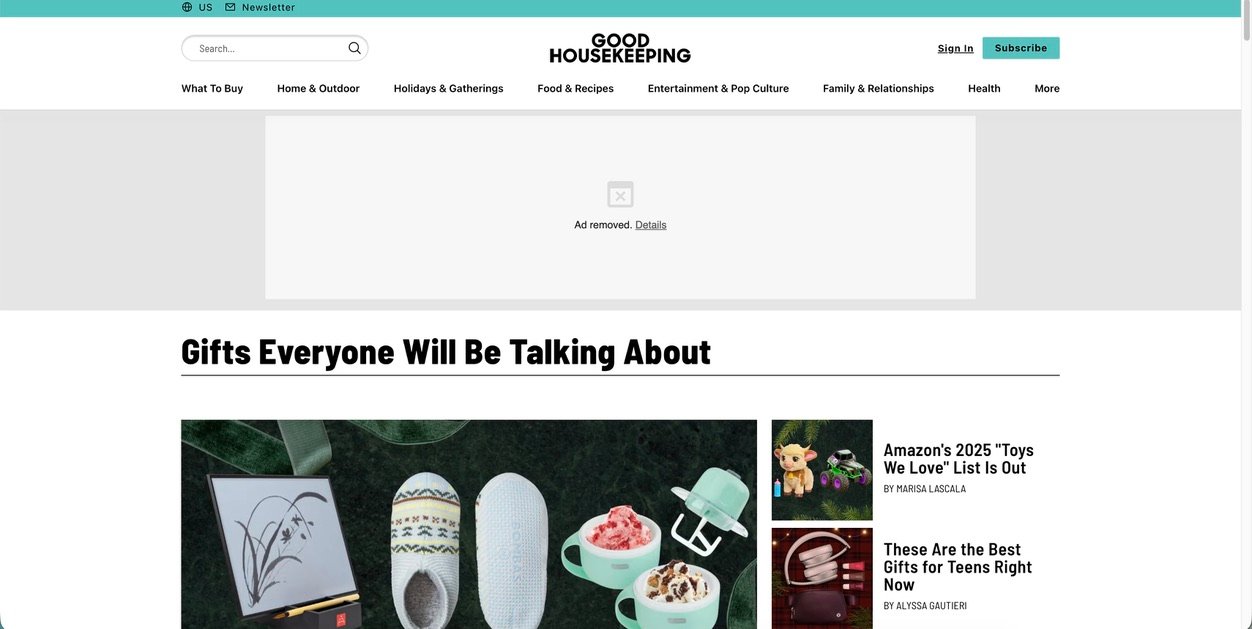
Guide: How to Pitch & Get Paid to Write for Good Housekeeping (Beginner-friendly)
This step-by-step guide shows a complete beginner how to research Good Housekeeping, build targeted samples, craft a professional pitch, and follow up — with real examples, templates, and links so you can act today. The guide is focused on editorial (not PR) freelance pitching and uses Good Housekeeping’s own contributor guidance as the source of truth.
Quick note: Good Housekeeping accepts freelance editorial pitches and provides a dedicated contact for freelance submissions. Use the links in the Resources section to open the official pages while you work through the checklist below.
Section 1 · Understand the publication
What Good Housekeeping actually publishes (and who reads it)
Good Housekeeping is a consumer-lifestyle publication with a strong focus on product testing, home and living, food, health, parenting, beauty, and practical household advice. It produces editorial features, how-to guides, product reviews and roundups, and lifestyle service journalism such as gift guides and seasonal buys. The site reaches a broad audience that values trustworthy, tested recommendations and clear step-by-step advice.
As a freelance writer pitching editorial stories, your best fits will be pieces that offer actionable help — real recipes, product-tested roundups, step-by-step cleaning or repair guides, seasonal planning advice, or well-researched features that explain trends to everyday readers.
- Practical how-tos: cleaning methods, food how-to, maintenance steps with photos.
- Product roundups & reviews: “best” lists that compare many options and explain testing criteria.
- Features & trend explainers: seasonal gift guides, trend pieces, investigative consumer stories.
- House tours / design features: they accept home tours through a submission form (see Resources).
The average reader is a person who shops, cares about products and reliability, and seeks practical, trustable advice. Good Housekeeping’s voice is clear, authoritative, and geared toward everyday decisions: “Which vacuum should I buy?” or “How do I clean [X] without damage?” Your pitch must show how your piece helps readers choose, act, or understand.
| Piece type | Typical sections | Why it works |
|---|---|---|
| Product roundup | Intro, testing criteria, top picks, pros/cons, buying tips | Readers want comparisons & guidance |
| How-to guide | Problem, step-by-step, tools, photos, troubleshooting | Practical and repeatable |
| Trend/feature | Context, expert quotes, examples, what readers can do | Analysis that leads to action |
Tip: Browse GoodHousekeeping.com and open 3–5 recent articles in the vertical you want to write for (home, food, health, beauty). Notice headings, tone, how they list product criteria, and how they structure step-by-step advice. This makes your pitch feel familiar to editors.
Section 2 · What they expect in pitches
How Good Housekeeping asks freelance pitches to arrive (format & contact)
Good Housekeeping explicitly asks freelance editorial pitches to be sent through a designated freelance submissions channel. In many of their public guidance pages they give an email specifically for freelance pitches and say not to send PR or product marketing pitches to that inbox. When you pitch, treat it as an editorial ask, not as a marketing message.
Where to send your pitch
Use the freelance submissions contact that Good Housekeeping lists for editorial pitches (do not send press releases or PR outreach to this editorial mailbox). Include a succinct subject line and a short, clear outline inside the email body. (See Resources for the official contact and form links.)
Crucial elements editors want
- A subject line with STORY PITCH and a one-line summary.
- A suggested working headline and a one-sentence dek (what the story delivers).
- A 3–6 bullet outline of the piece with section headings and a short note on sourcing or testing.
- Links to relevant clips or writing samples, and a brief bio line (what you do, the reporting or testing you can bring).
Why a tight outline matters
Editors often decide based on whether the idea can be executed quickly and whether it has a clear reader benefit. A working outline shows you understand the scope and gives editors confidence you can deliver a finished piece with editing support.
When to pitch
Timeliness helps. For seasonal topics (holidays, back-to-school, spring cleaning), pitch at least 6–10 weeks before the season. For evergreen product roundups, emphasize your testing method and whether you can get product access quickly.
Practice: draft one pitch using the template in Section 4 and send it to your own email. Edit it until the outline can be skimmed in 10–15 seconds and the reader benefit is obvious.
Section 3 · Build a small base before you pitch
How to build credibility and strong writing samples
Big consumer outlets can and do work with new freelance writers, but editors prefer to see demonstrable work: published clips, clear testing, or hands-on project experience. You can create this evidence quickly by publishing solid samples on your own blog or on platforms that accept tech or lifestyle content.
- Write a full how-to or product roundup on your blog, Medium, or a platform like Medium or Dev.to (if technical) — include photos and a clear conclusion.
- For product roundups, create a short testing methodology paragraph and label sample sizes, time spent testing, and key tradeoffs.
- If you have real-life projects (decorating, renovations, a recipe you developed), make a photo-forward article showing process and results.
Pick 3–5 recent Good Housekeeping pieces in your chosen vertical and outline their structure (heading sequence, where images appear, how many products are in roundups, how pros and cons are demonstrated). When you pitch, your outline should echo that structure without copying language.
| Goal | Where | What to produce |
|---|---|---|
| Samples | Your blog / Medium | Complete how-to or mini roundup with images |
| Testing proof | Photos / short video / written notes | Document your methodology (time, steps, results) |
| Clips | Smaller lifestyle sites | Published pieces that show editing experience |
Quick hack: if you lack product access, do a “best of free or low-cost” roundup that uses community-vetted options or public data (be transparent about limitations). Transparency is better than overclaiming.
Section 4 · Practical pitch workflow
Step-by-step — from idea to a clean pitch you can send today
Below is a compact, repeatable SOP you can follow for Good Housekeeping pitches. It includes an editable pitch template you can copy/paste into your email.
Step 1 — Research live GH articles
Open five recent Good Housekeeping pieces related to your topic. Save their URLs. Note the average word length, how images are captioned, and how product picks are explained. This helps you choose a unique angle.
Step 2 — Write a one-sentence promise
Create a single sentence starting with “This story tells readers how to…” or “This roundup helps readers choose…” That sentence becomes your opening pitch line and shapes the rest of your outline.
Step 3 — Create a 3–6 bullet outline
Make section headings for the article and include a short note on what each section will contain (e.g., “Testing method: two-week wear test, three machines compared”). Editors want to know you can deliver specifics.
Step 4 — Gather sample evidence
Add links to any published work, GitHub, Instagram shots of your project, or short video demos. If you have product test notes or lab-style notes, offer to send them if requested.
Step 5 — Send the pitch using the editorial channel
Put STORY PITCH: and a short headline in the subject line. Keep the email body short: one-sentence hook, one-sentence bio, 3–6 bullet outline, and links to clips. See templates below.
Step 6 — Follow up politely
If you hear nothing in 2–3 weeks, send a polite 1–2 sentence follow-up. Keep records of all pitches you send, the date, and any responses.
Copy-paste Pitch Template — Short version (one paragraph)
Subject: STORY PITCH: [Working headline — short]

Hello [Editor name / Good Housekeeping editorial team],

I’d like to pitch a short feature for Good Housekeeping called “[Working headline]”.
This story tells readers how to [one-sentence promise — what readers will gain].

Outline (bullets):
• Intro — why this matters now
• Section 1 — [what you will cover, e.g., testing method or step-by-step]
• Section 2 — [main evidence / products / how-to steps]
• Section 3 — [final tips, summary, or buying advice]

Why I’m right for this: I [one-line bio — relevant experience, e.g., "test kitchen experience," "home renovation + photos," "health reporter with X clips"].
Clips: [link to your best published sample] — [link 2] — [link 3]

Happy to share test notes, photos, or a sample draft on request. Thanks for considering this idea.

Best,
[Your name] — [short bio line] — [email] — [phone (optional)]
Longer pitch (feature or complex roundup)
Use this when you need to show the full plan, sources, and access to testing. Include estimated word count, specific expert interviews (if any), and whether you can provide all photos. Editors appreciate clarity on scope and deliverables.
Subject: STORY PITCH: [Working headline — concise]

Hello [Editor name],

Working headline: [Your headline]
Proposed word count: ~[1200–2000] words (flexible)
Angle / hook (2–3 sentences): [Why this story is timely and useful]

Planned structure (short outline):
1) Intro — [context, trend, or problem]
2) Method / sources — [how you will test, who you will interview, sample size]
3) Main sections — [three–five section headings with 1–2 sentence notes]
4) Conclusion + action items — [what the reader can do]

Access / assets: [I can source/borrow X products / I already own Y / I have photos from Z / I can provide step photos.]
Clips & samples: [link 1] — [link 2] — [link 3]
Bio: [1–2 sentences about your experience and why you’ll deliver]

Thanks for your time. I’m happy to provide a full draft or test notes if desired.

Best, [Name] — [email] — [phone]
Use the short template for quick pitches and the longer template for pieces that require testing or reporting. Keep everything honest: if you cannot test products physically, say so and offer alternative verification approaches.
Section 5 · Money & rights
How freelancers get paid, usage rights, and ways to boost income
Payment amounts and policies are editorially negotiated and can vary by assignment. Some public marketplaces and writer reports list a wide range of freelance rates for consumer outlets; actual rates will depend on the assignment, the author’s experience, and the publication’s budget for that piece. Always confirm payment and usage rights before you submit a full piece.
- Flat fee per piece: Common for single features and roundups. The fee is agreed before assignment or upon acceptance.
- Per-word: Less common for consumer roundups but used by some outlets — always clarify.
- Work-for-hire vs. syndication: Confirm whether you retain the right to repost later or if the piece is exclusive for a period.
- Build a relationship: repeat work and series can lead to higher pay.
- Pitch complex, heavily reported features or seasonal gift guides (these often pay more).
- Use your published clips to negotiate either higher fees or to get client work from readers.
| Piece | Payment type | Strategy |
|---|---|---|
| Short consumer how-to | Flat fee (lower) | Good beginner piece to build relationship |
| Large roundup / gift guide | Higher flat fee or negotiated | Requires testing or shopping expertise; can be lucrative |
| Investigative feature | Negotiated premium | Requires reporting time; valuable for portfolio |
Always get the fee and rights in writing. If an editor asks for an exclusive, ask how long that exclusivity lasts and whether you may repost after that window. Better to clarify before you accept an assignment.
Section 6 · Ethics, product coverage & avoiding PR
How to keep your pitches editorial and trusted
Good Housekeeping’s editorial voice depends on trust: accurate claims, tested recommendations, and transparency about sponsorship or conflicts. That means you must not send PR pitches masked as editorial ideas. If you represent a brand, the right path is to work with the PR team and propose branded content, which follows a different workflow.
- Don’t send pitches that are simply product marketing or press release copy.
- Don’t exaggerate testing results or claim lab-level tests if you did not perform them.
- Don’t submit AI-generated content without careful verification and disclosure if the editor requests policy info.
- Material connections: if you received free product, note it.
- Testing limitations: be specific about sample sizes and test conditions.
- Photo sourcing: note if photos are from you, the PR team, or stock sources.
If you’re unsure whether an idea is editorial or PR, frame it as a question in the pitch: “Is this format of testing helpful for editorial?” Editors will tell you if it’s appropriate.
Section 7 · Final pre-pitch checklist
Everything to confirm before you hit send
Keep a spreadsheet of all pitches you send (date, editor, subject, links, response). This becomes your pitching CRM and shows which ideas gained traction.
Section 8 · Quick FAQ & Resources
Short answers and links to official pages and helpful guidance
- Good Housekeeping — homepage (read examples & sections)
- Good Housekeeping — Freelancers Pitch Guidelines (official editorial guidance)
- How to pitch house tours / design submissions (form)
- Good Housekeeping — Contact & editorial email pages
- How To Pitch: Good Housekeeping — third-party tips & examples
- Freelance Market Guide — Good Housekeeping (editor tips and pitch formatting)