


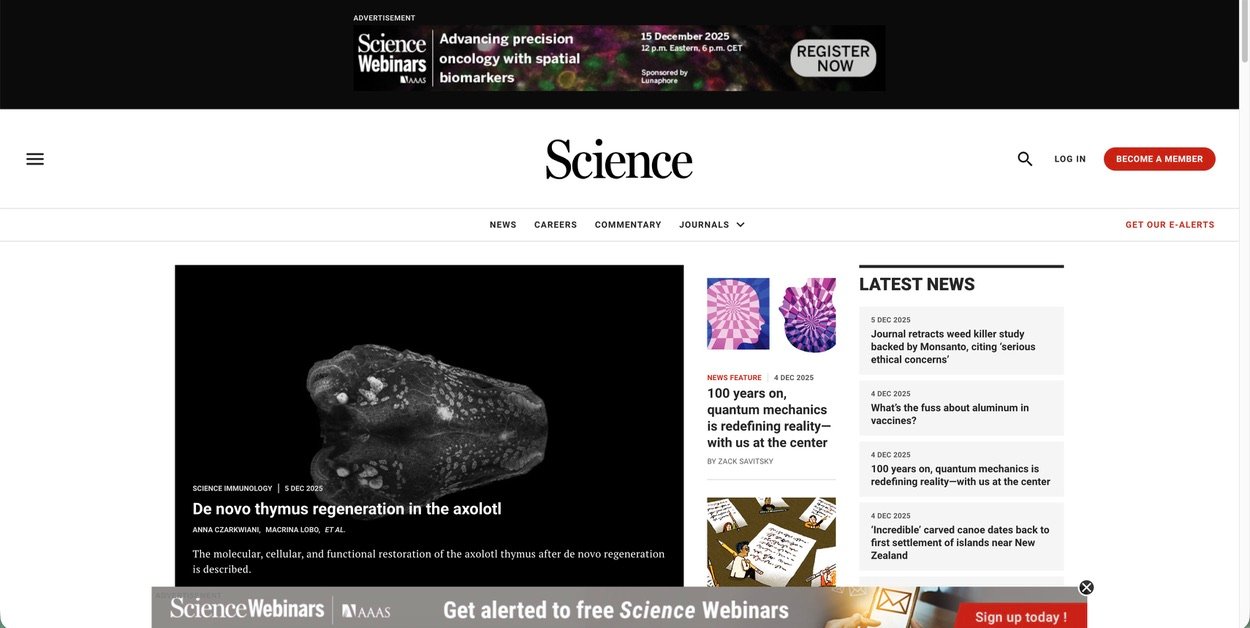
Guide: How to Pitch, Write, and Get Paid for Science (news at science.org)
This long guide walks you — step by step — through preparing a pitch and article for Science (science.org), using the official freelancer notes and common editorial expectations as a map. It collects practical examples, a pitch SOP, ethics checking, and many links so you can learn fast and act confidently. :contentReference[oaicite:1]{index=1}
You’ll find: what editors want, how to shape an idea they will buy, a sample pitch template, how to produce publishable text and checked facts, and a checklist you can use before you hit “send”. This is written for beginners who can do small reporting tasks and are ready to learn journalism craft.
Section 1 · Know the outlet
What Science (News from Science) actually publishes
Science.org (the website producing the journal Science and “News from Science”) runs original reporting, breaking science news, investigative features, profiles, policy coverage, and explainers aimed at scientists, policymakers, and a well-informed public. They publish everything from short news briefs to multi-thousand-word features. For the news pages and editorial standards, consult Science’s site directly. :contentReference[oaicite:2]{index=2}
Real journalism: not promotional items or press release rewrites. Strong pitches show:
- What is new or different and why it matters.
- Main sources and how you will reach them (interviews, documents, data).
- Reporting plan and a clear hook for readers beyond a single paper or press release.
- Links to recent clips or published samples demonstrating your ability to explain science clearly.
- Breaking news (short, quick-turn, source-driven pieces)
- News analysis and explainers (context, broader implications)
- Features and profiles (longer reporting + reporting on people and institutions)
- Investigations and data-driven stories (deep reporting; may be commissioned)
When preparing a pitch, match your idea to one of these types and explain the reporting you’ve already done or will do.
| Section | Why it matters | How to present it in a pitch |
|---|---|---|
| Breaking news | Timely, scoops, embargoed studies | Short pitch; sources, context, and exclusivity |
| Explainers | Readers need context and clarity | Show sources, outline sections, and why you are right person |
| Feature/Profile | Human stories and deep context | Characters, access, timeline, and reporting plan |
Section 2 · Idea fit
Is your idea shaped for Science’s readers?
Before you pitch: refine the problem, the novelty, and why the piece is timely. Science editors prefer pitches that relate to:
- New, robust findings that matter beyond a single niche.
- Policy implications, controversies, or changes in consensus.
- Underserved angles on major science stories (global south, underreported methods, human impact).
If your idea is “a paper says X,” ask: What larger question does X change? Who is affected? Who can speak to it? What new information will my piece uniquely add?
Section 3 · Build a reporting ladder
How to create clips and samples that editors trust
Science editors expect demonstrated reporting chops. If you are starting out, build a ladder of clips:
- Short explainers on your blog or Medium / Dev.to (clearly labeled as opinion or explainer).
- Short news briefs or small features for local outlets, university magazines, or science blogs.
- One strong long-form feature or investigative piece published somewhere (this becomes your flagship clip).
Include links to GitHub or data repositories if you used data; include audio or video if you gathered interviews. Clips should demonstrate sources, attribution, and clear reporting — not just summarizing other people’s work.
- One short news brief (300–600 words)
- One explainer or how-it-works piece (800–1,500 words)
- One long feature or deeply reported post (1,500+ words)
- Links to reporting notes, datasets, or GitHub (if used)
- Turn a blog explainer into a short pitch that promises reporting and fresh interviews.
- Use a longer piece to show you can handle complex subjects and find sources.
- Always be transparent about prior publication; Science wants to know your clip history and conflicts. :contentReference[oaicite:4]{index=4}
Section 4 · Pitch SOP + templates
Step-by-step: write a pitch that editors will understand (and like)
A pitch to Science should be tight, evidence-based, and show access. Use this workflow and the two templates below.
Find the right editor & page
Start at the Science site. Use the News & Features pages to identify which editor covers your subject. If you can’t find a specific editor, use the general pitch/contact link in the freelancer guidelines page. Include the editor’s name in the subject line when possible. :contentReference[oaicite:5]{index=5}
Subject line & hook (1 short sentence)
Make the subject line a one-sentence hook that answers: what is new, why it matters, and where you will report. Example subject: “New evidence of coral reef migration — exclusive reporting from island field teams”.
Pitch body (3 short paragraphs)
Paragraph 1 (hook, nut graf): 2–4 lines — what the story is and why Science readers should care.
Paragraph 2 (reporting & sources): 3–6 lines — who you will interview, access, documents, data, and evidence you already have.
Paragraph 3 (logistics & clips): 2–4 lines — estimate of length, timeframe, and 2–3 links to your best clips.
One-paragraph outline (optional but powerful)
Add a small outline of sections you plan to write (for features) or a timeline for reporting (for investigations). This shows you’ve thought through the reporting steps.
Bio, conflicts, and transparency
Always disclose potential conflicts of interest (past PR work, institutional ties, funding) and list your bio (past relevant reporting or scientific training). Science requires disclosure. :contentReference[oaicite:6]{index=6}
Follow-up politely
If you haven’t heard after 2–3 weeks (for features) or 3–4 days (for breaking news), send a short polite follow-up. Do not badger. If you receive a “no” — ask for feedback and adapt the idea for another outlet.
Subject: [Short hook — what & why it matters]
Hi [Editor name],
I’m pitching a short news piece on [what happened]. Quick nut graf: [2 lines — new finding, impact]. I have access to [primary sources, interviews, documents]; planned sources include [X, Y, Z]. I can file in [24–48 hrs / X days]. My recent clips: [link 1], [link 2]. My bio: [1 sentence]. Conflicts: [if any]. Thanks — [Name, phone/email]
Subject: [Hook + short angle line]
Hi [Editor name],
I’d like to propose a feature titled “[working title]” that explores [brief nut graf — what you will show the reader and why it matters]. I have reported [X interviews completed, Y documents, Z data analysis], and have access to [unique source / lab / dataset]. Outline (brief): 1) lead and scene-setting; 2) evidence and main characters; 3) explanatory context; 4) implications. Estimated length: [1,500–2,500 words]. Clips: [link 1], [link 2]. Bio: [short]. Conflicts/disclosures: [short]. Proposed timeframe: [weeks to report + turnaround]. Thanks for considering — [Name]
Section 5 · Money and contracts
How payment and contracts typically work (what beginners should expect)
Payment rates and terms change by assignment. Public reports and job boards indicate that Science has historically paid professional freelance rates and — in many cases — used per-word rates for feature/news pieces (for example, ranges reported around $1/word for web and higher for print), though assignments and flat fees are negotiated by editors per story. Always confirm payment when an editor offers an assignment. :contentReference[oaicite:7]{index=7}
- Confirm fee and method (flat fee or per-word rate).
- Check payment timing (net 30 / net 45 / upon publication).
- Ask about rights and exclusivity: can you post the story elsewhere later?
- Clarify whether the fee covers reported expenses (travel, access) or whether the outlet reimburses them separately.
- Get assignment terms in writing (email is fine).
- Invoice promptly and include agreed PO or assignment reference if provided.
- Keep copies of reporting receipts if the editor agreed to reimburse expenses.
Section 6 · Facts, embargoes & ethics
How to keep your reporting legally and ethically sound
Science has strict editorial standards: conflict-of-interest rules, requirements for transparent sourcing, and policies about embargoed material. Read the editorial standards carefully when you plan reporting on a newly published paper or a press release; Science often receives embargoed materials through institutional PR channels and expects freelancers to respect embargo rules and to disclose prior involvement with institutions that could create conflicts. :contentReference[oaicite:9]{index=9}
- Disclose conflicts or PR work; editors rely on transparency.
- Do not accept payment or gifts from subjects you cover.
- Attribute data and images; get permission for nonpublic materials.
- Verify all claims and numbers from original sources whenever possible.
- If you receive an embargoed paper, clarify whether you can work on it and what the embargo terms are.
- Never break an agreed embargo; editors track leaks and it damages future trust.
- When in doubt, ask the Science editor handling the story for guidance.
Section 7 · Produce publishable drafts
A micro-SOP for turning reporting into a Science-ready draft
This SOP assumes you already have interviews and primary reporting. Follow it to prepare a draft that an editor can edit and publish with minimal additional reporting.
Lead and nut graf
Write a strong lead (30–120 words) that places a human or concrete scene at the front. Then write the nut graf that summarizes the story’s main news or argument in one tight paragraph.
Support with sourcing
Directly follow claims with source attribution (name, affiliation). Save quotes for color and authority. Use data or document citations for technical claims.
Explain why it matters
Science readers want implications: policy, research directions, methodological caveats, reproducibility. Add a paragraph that spells out implications and tradeoffs.
Provide reporting notes
At the end of your draft include a short “Reporting notes” list: names interviewed, affiliations, method of contact (email/phone/in person), and links to docs or datasets you used.
Fact-check and mark uncertain points
Flag any numbers, dates, or claims you could not independently verify. Editors appreciate honesty and will assign fact-checkers accordingly.
Section 8 · Final checklist & resources
Checklist — use this before sending any Science pitch or draft
Helpful resources (open these and save them)
- Science — home (news, features, editorial pages). :contentReference[oaicite:11]{index=11}
- Freelancer guidelines — Science (official). Read carefully before pitching. :contentReference[oaicite:12]{index=12}
- News editorial standards — Science (ethics, conflicts, sourcing). :contentReference[oaicite:13]{index=13}
- The Open Notebook — reporting tips and interviews with experienced science journalists.
- NASW — Pitch Publish Prosper resources — training and pitch examples.
- The Scientist — how to pitch (science-focused pitching tips).
- Freedom With Writing — market summaries (useful for pay and market info; not official).
- Make a Living Writing — magazine pay guides (survey-style resources).
- Science Media Centre — background and expert contacts (regional).
- SciDev.Net — pitching and global science coverage tips.