


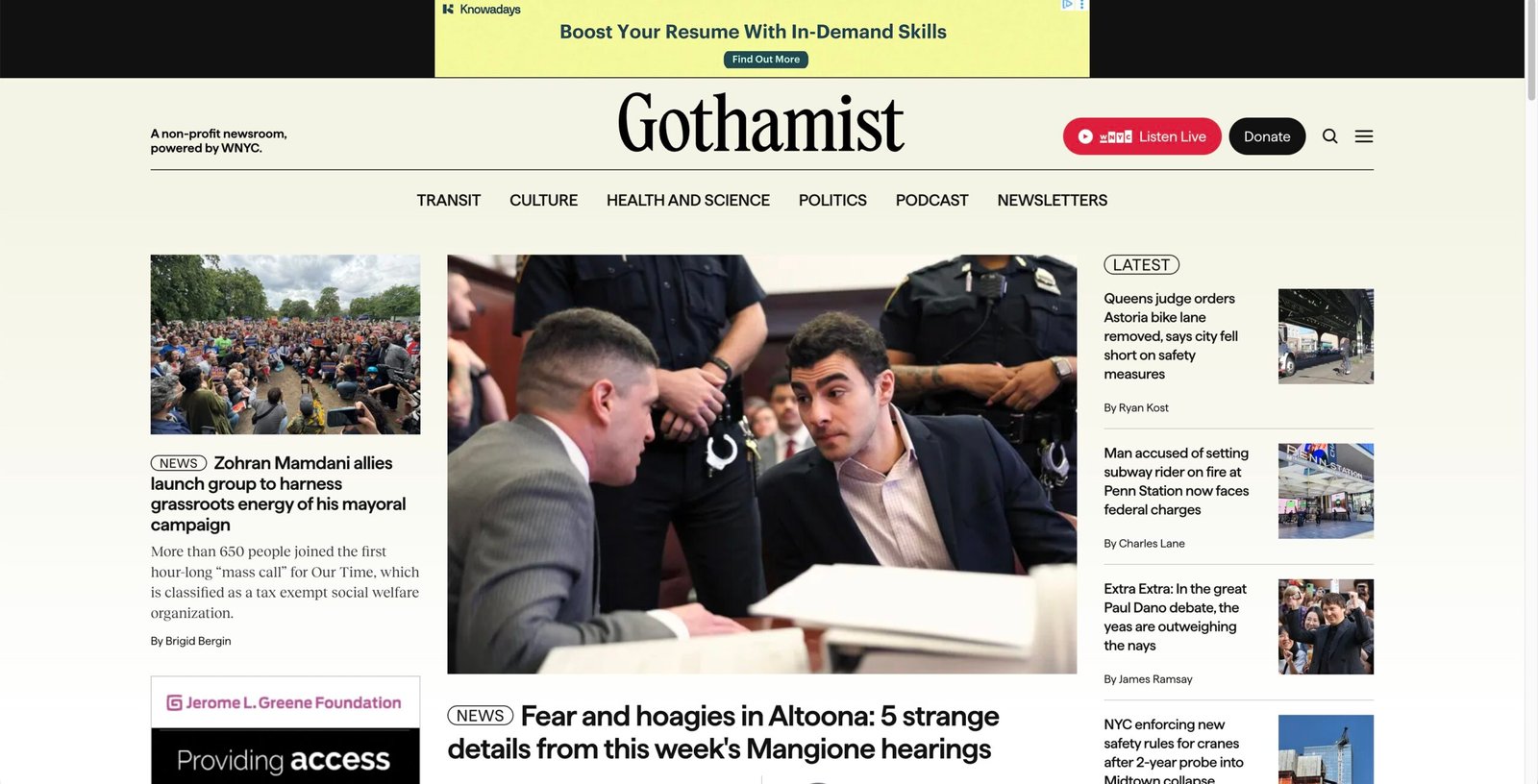
Guide: How to Pitch & Get Paid to Write for Gothamist — step-by-step (Beginner friendly)
This practical guide walks a beginner through understanding Gothamist, shaping an idea that fits, preparing publishable samples, filling the Submittable pitch, and increasing your odds of being paid. It contains example pitch text, checklist items, and links to the official submission pages and contact points so you can act immediately.
Key live references: Gothamist editorial calls & submission portal. See the inline sources after each main statement. :contentReference[oaicite:0]{index=0}
1 — What Gothamist actually wants from contributors
Gothamist runs local news, features, culture, and investigative pieces that help readers understand New York City (and city life in its network). They have publicly asked for freelance submissions and long-form features at times, and maintain a Submittable submission manager where pitches and open calls are handled. If you want to pitch, start from their editorial interests: local reporting, explainers, true-life features, investigations, and smartly reported cultural pieces. :contentReference[oaicite:1]{index=1}
- Local news explainers and how-things-work stories (transportation, housing, city services).
- Feature stories and deeply reported long-form pieces about people and systems.
- Neighborhood culture, events, arts, food, and profiles.
- Investigative or accountability reporting when supported by strong sourcing and evidence.
When Gothamist issued calls they emphasized original, compelling, and well-reported work — not reprints or thin commentary. :contentReference[oaicite:2]{index=2}
Gothamist uses Submittable for formal pitches/submissions and maintains a tips & contact page for quick ideas or time-sensitive leads. If Submittable has no open call, the site sometimes asks for email pitches to editor addresses for special feature calls. Always check the Submittable page first. :contentReference[oaicite:3]{index=3}
| Audience | Best match |
|---|---|
| City residents & commuters | Actionable explainers, service guides |
| Readers of culture & food | Profiles, local cultural reporting |
| Policy & accountability | Investigations, explanatory reporting |
2 — Shape an idea that fits Gothamist
Instead of “I want to write about X”, start with a local problem, service gap, neighborhood issue or cultural angle. Good Gothamist pitches answer: who is affected, why it matters to New Yorkers, and what reporting or sources you can access.
- Is it local or broadly relevant to city life? (Transit hacks, housing policy, local service changes.)
- Can you add original reporting? (interviews, records, FOIA requests, data scraping, on-the-ground observation.)
- Is the outcome meaningful? (Will readers act differently or understand something new?)
- “How a borough’s neighborhood policing plan changed response times — and what residents say.”
- “A beginner’s guide to getting an NYC permit for X — step-by-step with checklist and forms.”
- “From bodega to app: small businesses adopting QR menus after pandemic shifts.”
Quick exercise: write one sentence that starts with “This Gothamist piece shows New Yorkers how to…” If it’s clear, the idea is close.
3 — Prepare samples and a mini reporting kit
Editors want to know you can finish stories and verify facts. If you’re a beginner, build a short portfolio of 2–4 examples: blog posts, published local pieces, or in-depth posts on platforms like Medium or Substack — with at least one piece showing reporting chops.
- One published sample (medium, blog, local paper) showing reporting or explained local topic.
- Links to interview transcripts, helpful documents, or a demo dataset (if relevant).
- Contact info and short bio: relevant beats, languages, neighborhood ties, and reporting experience.
Tip: Keep one well-formatted “reporting sample” ready — a 800–1,200 word mini-piece with 2–3 interviews and clear sourcing.
4 — Fill the Submittable pitch: step-by-step workflow
Gothamist’s formal submissions are processed through Submittable. Visit their submission page and follow the requested fields. If Submittable shows “no open calls,” you can still use tips/contact emails or wait for new calls — check frequently. :contentReference[oaicite:4]{index=4}
- Open the official submission page:
- Gothamist Submittable — check whether an open call exists.
- Prepare the data they ask for:
- Short pitch title (5–12 words) and a 1–3 sentence summary of the piece.
- Target word count, reporting plan (which sources you’ll interview), and why it’s newsworthy now.
- Links to your best writing samples and any relevant docs (transcripts, records, photo access).
- Include a concise reporting timeline:
- Example: “2 weeks reporting, 1 week writing — able to start interviews immediately, will provide clips within 10 days.”
- Attach a brief bio & local credibility:
- Mention neighborhood ties, language skills, or prior experience reporting on similar topics.
- Optional: A short sample paragraph:
Sample lede (for Submittable): "When the M15 added weekend-only service last year, riders across East Harlem saw commute times climb — I spoke to eight riders, two transit advocates, and obtained scheduling logs that show a 12% delay increase. This piece explains why it happened and what riders can do next." - Submit & follow the form rules:
- Submittable will email you a confirmation. Track your submission in Submittable and watch for editor replies.
If Submittable has no live call, use Gothamist’s Tips page (tips@gothamist.com) for time-sensitive leads and short tips. For longer features, watch Gothamist’s newsroom or call-for-features posts for special email addresses like features@gothamist.com (used historically). :contentReference[oaicite:5]{index=5}
5 — Money & pay expectations
Gothamist’s pay can vary by assignment, length, and whether the piece is a short reported article or a long-form feature sold across network outlets. Historically, feature calls sometimes included flat fees or revenue-sharing arrangements; exact payments are negotiated per assignment. Always confirm payment in writing with the editor before starting reporting. :contentReference[oaicite:6]{index=6}
- Ask: “Is this a one-off short piece (news/explainer) or a long-form feature (investigative/ebook)?”
- For short, expect a flat per-piece rate; for long features the outlet may offer higher upfront pay or a split of revenues.
- Always get the agreed rate, payment schedule, and rights (first serial, exclusive, reprint) in email.
Even modest pay + a Gothamist byline helps build credibility that can lead to higher freelance rates or client work.
6 — Ethics, sourcing & AI (what editors will check)
Gothamist values trustworthy, verifiable reporting. Your piece must have: clear sourcing, permission to publish quotes or photos, factual accuracy, and transparent methodology for any data used. If you use AI tools in drafting, heavily fact-check and attribute where appropriate — do not submit unverified AI-generated content as finished reporting.
- Named sources or documented records for factual claims (public records, FOIA, government websites).
- Interview notes and contact info kept in case the editor asks for verification.
- No plagiarism — always credit earlier reporting and link to it.
AI can help brainstorm or proofread, but the writer is responsible for facts, quotes, and accuracy. Editors will expect you to verify everything you claim.
Golden rule: if you would not defend a fact or quote in a live call, do not include it. Editors take accuracy seriously.
7 — Final checklist & copyable pitch templates
Copyable pitch templates
Title: How [X] is affecting [Neighborhood] commuters

Pitch (2–3 sentences):
This piece explains why [issue] is causing [impact] in [neighborhood/borough]. I'll interview 6 riders, two transit advocates, and obtain public scheduling logs from [agency]. Draft length: ~900–1,200 words. Timeline: 10 days reporting, 3 days writing. Sample: [link to published sample]
Bio: [Your name], neighborhood resident & freelance reporter. Links: [sample links]
Title: [Provocative clear phrase that signals reporting]

Pitch (3–5 sentences):
Why it matters, what you'll reveal, and why you can do it. Example:
This feature will trace how [policy/practice] produced [harm/benefit] across [communities]. I have preliminary documents (FOIA request pending), commitments from two city officials to interview, and a network of impacted residents. Proposed length: 2,500–5,000 words. Timeline: 6–10 weeks reporting. Sample: [links]. Payment: please advise on typical fee range for a long-form feature.
Use these as the body of the Submittable pitch or the email to features@gothamist.com if instructed by a call-for-pitches post. Keep language direct and reporter-focused.
8 — FAQ & resources
Check the official Submittable page: gothamist.submittable.com/submit. If Submittable shows “no open calls,” you can still use the Tips page (tips@gothamist.com) for short leads. :contentReference[oaicite:7]{index=7}
Yes — Gothamist has paid freelancers for pieces and has run paid feature calls (terms vary). Always confirm fee and rights before you start reporting. Historical calls offered flat fees or revenue-sharing for long features; specifics change over time. :contentReference[oaicite:8]{index=8}
Use Gothamist’s Tips page or tips@gothamist.com — editors check that inbox regularly. For special calls, watch Gothamist’s news posts for dedicated editor emails. :contentReference[oaicite:9]{index=9}
- Gothamist home — read recent stories to learn tone and beats.
- Gothamist Submittable (official submissions). :contentReference[oaicite:10]{index=10}
- Send a tip / contact. :contentReference[oaicite:11]{index=11}
- Gothamist call for freelance submissions (example). :contentReference[oaicite:12]{index=12}
- Call for long-form features (example). :contentReference[oaicite:13]{index=13}