


Practical Guide — How to Write for CloudDefense.AI and Earn (Step-by-step)
This guide is built so any beginner with basic cybersecurity knowledge, hands-on demos, or willingness to learn can: research CloudDefense.AI, craft a publishable article, submit it properly, and get paid.
The guide includes sample pitch templates, an outline you can copy, content & sourcing rules, and many useful links to authoritative resources to help your research and citations. Key official details (pay, submission email, length, and response time) come from CloudDefense.AI’s contributor page. :contentReference[oaicite:0]{index=0}
Section 1 · Understand CloudDefense.AI
What CloudDefense.AI publishes and who reads it
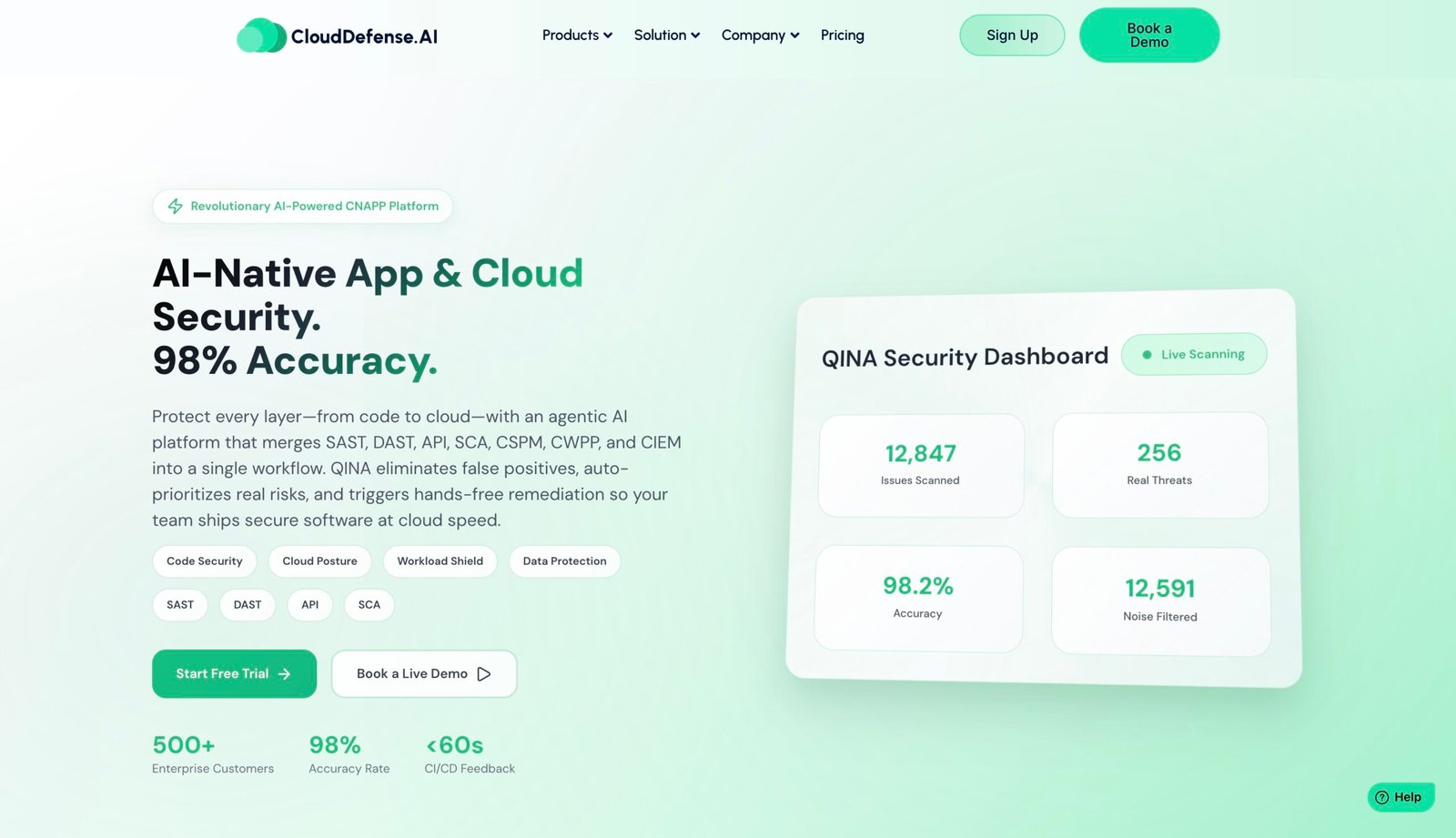
CloudDefense.AI positions itself as a unified CNAPP / App & Cloud security platform and publishes content focused on application security (SAST, DAST, SCA), cloud posture (CSPM, CIEM, CWPP), threat remediation, compliance and developer-first security workflows. Their product pages and homepage describe an AI-native platform (QINA) used to reduce false positives and speed feedback into CI/CD. :contentReference[oaicite:1]{index=1}
Who reads CloudDefense.AI?
- Security engineers (AppSec, CloudSec), DevOps/DevSecOps teams.
- Security-conscious engineering managers and architects.
- Security product buyers and startup/enterprise decision-makers.
- How-to tutorials: e.g., “Scan IaC with SAST rules in CI/CD and auto-fix”
- Case studies / post-mortems: concrete lessons learned (sanitized)
- Tool integrations: “Using CloudDefense with GitHub Actions” or “Automating AWS remediation”
- Explainers & best practices: “Cloud security posture for startups”
- Original, practical content readers can act on (scripts, code, commands).
- Working demos or reproducible steps (GitHub, snippets, or screenshots).
- Clear citations for facts and vulnerability stats; no made-up numbers.
- Readable structure — short paragraphs and clear headings.
gtm@clouddefense.ai; typical article length requested is ~800–1500 words. Their page also requests originality and relevant images when possible. :contentReference[oaicite:2]{index=2}
Section 2 · Does your idea fit?
Quick idea-fit checks (3 questions)
Use these three checks to quickly validate your idea before you write an outline.
Does it solve a concrete security problem?
Good: “How to detect exposed secrets in GitHub Actions using open-source scanners and a CI policy” — this is specific and actionable. Bad: “What is cloud security?” — too broad and likely rejected.
Can you show a demo, snippet, or sanitized log?
Editors prefer reproducible steps: a small repo, a CI YAML snippet, commands to run, or before/after screenshots. If you can include a tiny demo on GitHub or CodeSandbox, your chance of acceptance rises.
Is your angle unique and timely?
Make the angle narrow: security for Node-based serverless functions, securing Terraform secrets, or runbooks for incident triage. Tie ideas to standards or reports when possible (e.g., OWASP Top 10 or SANS trends) to show relevance. :contentReference[oaicite:3]{index=3}
Section 3 · Build a small sample
How to prepare a reproducible demo in 6 steps
Editors want working steps. Here’s a minimal workflow to produce a publishable demo that takes a few hours.
Pick a narrow task
Example: “Preventing leaked AWS keys in commit history using a GitHub Action + pre-commit hook.”
Create a tiny repo
Include a README, a script or workflow YAML, and a short demo README showing expected output. Host it on GitHub.
Sanitize sensitive data
Never publish real secrets, IP, or PII. Replace secrets with placeholders and label any simulated data clearly.
Document commands
Write the exact commands a reader should run (or a sample CI run). Include expected outputs and short troubleshooting notes.
Capture screenshots / logs
Take clear screenshots of the important steps. Add alt text and short captions for editors.
clouddefense-demo-detect-secrets and add a LICENSE (MIT or Apache-2.0). Keep the demo to a few files so editors can quickly review.
Section 4 · Pitch & submit
Step-by-step submission plan (copy-paste friendly)
CloudDefense.AI requests submissions via email — below is a practical, stepwise plan and two ready-to-send templates.
Prepare your materials
- One-paragraph pitch (topic + why it helps readers).
- Bulleted outline (4–7 sections).
- Link to writing sample (published tutorial) and demo repo.
- Short author bio (50–100 words) and headshot optional.
- Attach article as Google Doc or Word doc when ready. CloudDefense.AI asks for Word or Google Doc submission. :contentReference[oaicite:5]{index=5}
Use a clear subject line
Example subject lines:
Guest Post Submission: Detecting Exposed AWS Keys in CI/CD — [Your Name]Guest Post Proposal: GitHub pre-commit + Action to block secrets — [Your Name]
Short pitch email template (proposal)
Use this when you have an outline and sample but haven’t written the full article.
To: gtm@clouddefense.ai
Subject: Guest Post Submission: [Short topic headline] — [Your Name]

Hi CloudDefense editorial team,

I'm [Your Name], a [role — e.g., "security engineer"] at [company or independent]. I'd like to propose a practical article for CloudDefense.AI titled:

"[Short headline — e.g., Prevent Exposed AWS Keys in CI/CD: pre-commit + GitHub Action]"

Why this helps your readers:
• Engineers and DevOps teams frequently ship secrets in commits; this article shows a reproducible pattern to detect and block leaked keys in CI using open-source tooling, with a small demo repo and sample GitHub Action.

Outline (short):
1) Problem: how leaked keys happen in real projects
2) Quick detection: scan history + pre-commit
3) Prevent: GitHub Action + PR checks (YAML + commands)
4) Recovery & rotate keys (playbook)
5) Summary & recommended config

Writing sample: [link to demo article or GitHub]
Demo repo: [link to GitHub]

If this sounds useful, I can send a full draft (800–1500 words), images, and a short author bio. Thanks for considering it.

Best,
[Your Name] — [Twitter / LinkedIn] — [short bio link]
Full submission template (when the draft is ready)
To: gtm@clouddefense.ai
Subject: Guest Post Submission: [Exact article title] — [Your Name]

Hi CloudDefense editorial team,

Please find attached my article titled:
"[Exact article title]"

Attached: Google Doc (or Word doc), images (separate)
Byline: [Your Name — 50–100 word bio + social links]
Estimated length: ~[e.g., 1,200 words]

Short description:
[One-sentence summary for editors / social]

Links included in article:
• Demo repo: [GitHub link]
• Supporting docs: [OWASP / SANS / vendor pages]

I confirm this article is original and not published elsewhere.

Thank you,
[Your Name]
Note: CloudDefense.AI asks for Word or Google Doc attachments and promises a response in ~3 business days on their page (editorial timelines may vary). :contentReference[oaicite:6]{index=6}
What to expect after submission
Editors typically review submissions and may reply asking for edits, code verification, or clarification. CloudDefense.AI’s page indicates they will review and respond (they state a ~3-business-day response window). If you don’t hear back within that period, a single polite follow-up is fine. :contentReference[oaicite:7]{index=7}
Section 5 · Money & Licensing
How writers earn and what to negotiate
CloudDefense.AI publicly notes a payment of up to $100 per approved article for contributors on their write-for-us page. This is a flat fee model (confirm with the editor for any changes). :contentReference[oaicite:8]{index=8}
- One-time flat fee for the piece (unless otherwise negotiated).
- Editing and publication on CloudDefense.AI channels.
- Possible promotion on social; confirm specifics during acceptance.
- If you plan a long investigative piece or a multi-part series, mention that during pitch — larger assignments may be negotiated separately.
- If CloudDefense offers full-time or recurring opportunities for top writers (they state top writers can be offered full positions), be open to discussing scope. :contentReference[oaicite:9]{index=9}
| Item | Typical | Writer advice |
|---|---|---|
| Payment | Up to $100 per approved article | Use the fee as seed income; treat it as portfolio + exposure too. |
| Rights | Check editor email for rights & republication rules | Ask about repost policy (some outlets allow repost after a period). |
| Promotion | Site social + homepage mentions possible | Ask how they promote accepted pieces and whether they add canonical links. |
Section 6 · Research & Citations
Authoritative sources to cite in security articles
Security editors expect sources that are credible. Good go-to references include:
- OWASP Top Ten — baseline for web vulnerabilities. :contentReference[oaicite:11]{index=11}
- SANS reports and newsletters — practical threat trend analysis. :contentReference[oaicite:12]{index=12}
- Vendor docs for tools mentioned (e.g., GitHub Actions docs, Terraform docs).
- Academic papers or CVE advisories for specific vulnerabilities (CVE / NVD entries).
When quoting numbers (e.g., “X% of incidents are due to misconfigured S3 buckets”), link to the original report and include the publication date. Editors will verify claims.
Section 7 · Ethics, AI & Testing
Rules you must follow (short & firm)
Trust is everything. Use these rules as your baseline:
- Run and verify every command and code sample you publish.
- Label simulated data and never publish live secrets.
- Cite authoritative sources (OWASP, SANS, CVE/NVD).
- Disclose any conflicts of interest (you work for a vendor, you sell a product mentioned).
- Don’t submit AI-only drafts without thorough manual review and testing.
- Don’t invent numbers, case studies, or user statistics without attribution.
- Don’t include PII, internal logs, or security-sensitive breadcrumbs that could help attackers.
Section 8 · Final checklist & Templates
Pre-submit checklist + sample author bio
Sample 60–80 word author bio
Jane Doe is a security engineer specializing in cloud-native app security and DevSecOps. Jane builds developer-friendly runbooks for CI/CD and publishes open-source tools for scanning IaC. She writes about secure-by-default workflows and has spoken at local security meetups. (Twitter: @janedoe)
Section 9 · FAQ & Resources
Quick answers & links to learn more
- CloudDefense.AI — Home — product info and resources. :contentReference[oaicite:18]{index=18}
- CloudDefense.AI — Write For Us (submission details). :contentReference[oaicite:19]{index=19}
- CloudDefense.AI Blog (read recent topics). :contentReference[oaicite:20]{index=20}
- OWASP Top Ten — authoritative vulnerability catalog. :contentReference[oaicite:21]{index=21}
- SANS Institute — reports and security newsletters. :contentReference[oaicite:22]{index=22}
- DEV Community — publish quick tutorials and get feedback. :contentReference[oaicite:23]{index=23}
- Draft.dev — Technical writing & paid opportunities. :contentReference[oaicite:24]{index=24}
- How to write a cybersecurity blog — practical tips on tone and credibility. :contentReference[oaicite:25]{index=25}