


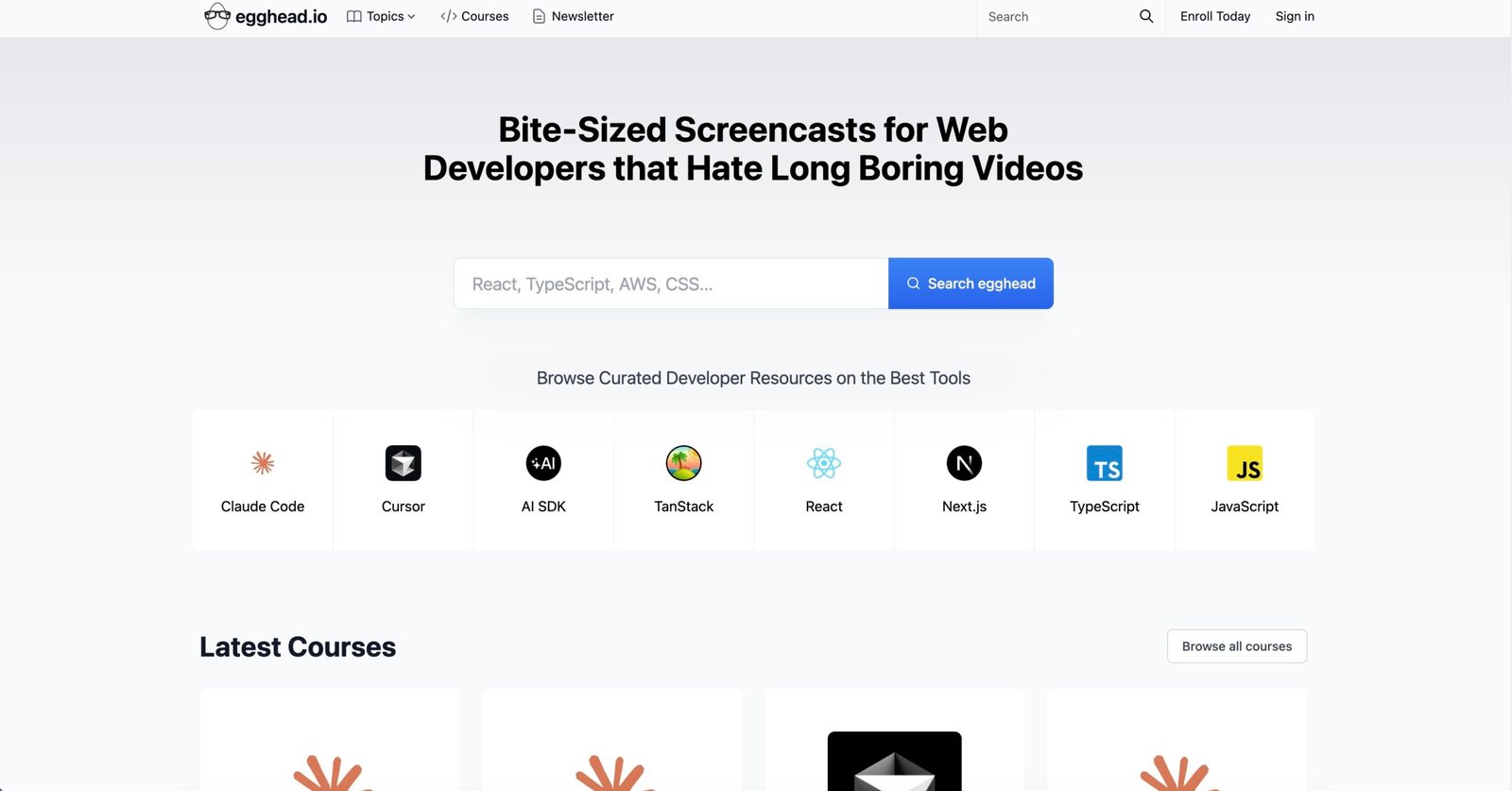
Guide: How to Teach or Write for egghead.io — a beginner-friendly playbook
Use this guide to learn what egghead values, how to prepare lessons or written tutorials, how to get invited, and practical steps to earn money as an instructor or contributor. The guide collects official pages, community-run how-tos, and practical workflow steps with links you can open in new tabs. :contentReference[oaicite:1]{index=1}
This is practical: pick one idea, build a tiny demo or short screencast, collect 2–4 polished samples, and then follow the “invitation / proposal” path egghead uses. Wherever I reference policies or pay, you’ll find a citation to the source so you can confirm current terms. :contentReference[oaicite:2]{index=2}
Section 1 · The place & the format
What egghead is and what the platform accepts
egghead.io is a learning platform focused on short, practical developer lessons and courses — typically compact screencasts that teach a single idea or workflow. They also host editorial content and accept proposals for tutorials and written articles in some cases; check their “Write for egghead” resource for the current process. :contentReference[oaicite:3]{index=3}
Two distinct contributor paths appear repeatedly in public docs and community guides:
- Instructor / video author — usually invited; instructors create short, focused lessons or full courses. The community-driven “How to egghead” and instructor guides describe workflows and expectations. :contentReference[oaicite:4]{index=4}
- Written contributor / editorial proposals — egghead maintains a page for written submissions and editorial proposals; they accept proposals for articles, tutorials, and other editorial formats. See the official “Write for egghead” page for the submission method. :contentReference[oaicite:5]{index=5}
Short (<10 minute) screencast lessons, tightly focused on one idea, often collected into courses. Lessons are practical and demo-driven — not long, theoretical lectures.
Clarity, a useful demo, clean code that runs for the viewer, and concise teaching that respects learners’ time. Community guides stress that instructors should be hands-on and produce reproducible results. :contentReference[oaicite:6]{index=6}
Section 2 · Fit your idea
Is your idea egghead-shaped?
egghead lessons and articles tend to be problem-driven and concise. Use these three checks to shape an idea that fits:
Does it help someone finish a small job?
Good egghead lessons solve a single problem — e.g., “How to debounce a search input in React” or “Deploy a Next.js API route to Vercel.” If you can show a before-and-after or a tiny demo, you’re on the right track.
Can it be taught in a short lesson or a short article?
Egghead values compact teaching. If your idea requires a long theoretical treatment, break it into a series of short lessons or a focussed written tutorial with practical steps and runnable code. :contentReference[oaicite:7]{index=7}
Do you have runnable code or a small repo/CodeSandbox?
Even a one-file demo helps. Upload a tiny repo to GitHub, a CodeSandbox, or a minimal example that viewers can run themselves. Community resources and instructor guides emphasize real, runnable examples. :contentReference[oaicite:8]{index=8}
Section 3 · Build a sample base
Make 3–5 short samples (video or written)
Before you ask to join as an instructor or submit a written proposal, build a small portfolio of short samples. These don’t need professional studio polish — clarity and correctness matter more than expensive editing.
- Record a 2–6 minute screencast teaching a single trick or pattern.
- Clear narration + short code demo is sufficient.
- Host on YouTube (unlisted), Vimeo, or a personal site; attach a repository or CodeSandbox.
Tip: use a simple recording tool (OBS, QuickTime, Loom). Focus on pacing and a clear result the viewer can run. :contentReference[oaicite:9]{index=9}
- Write a concise tutorial (800–2,000 words) with code blocks and a link to runnable code.
- Structure it: intro, steps (with headings), code examples, short conclusion.
- Publish on your blog, Dev.to, or another tech site so editors can review a completed piece.
Having at least one full written tutorial plus 1–2 short videos makes your case stronger when requesting an invitation or pitching editorial content. :contentReference[oaicite:10]{index=10}
| Sample type | Where to host | Why it matters |
|---|---|---|
| Short screencast (2–6 min) | YouTube (unlisted) / Vimeo / personal site | Shows you can teach clearly, speak, and demo code |
| Written tutorial (800–2,000 words) | Your blog / Dev.to / Medium | Shows you can structure an explanation and provide runnable code |
| Small repo or sandbox | GitHub / CodeSandbox / StackBlitz | Provides reproducible examples editors and learners can open |
Section 4 · How to get invited & propose
Paths: invitation for instructors vs. written proposals
Two realistic approaches:
- Get invited to be an instructor — egghead historically invites instructors and runs small cohorts; community guides explain how invitations and onboarding work. To increase your chances, be active in the developer community, publish clear samples, and reach out to existing instructors. :contentReference[oaicite:11]{index=11}
- Submit a written proposal — egghead’s editorial page accepts proposals for written content. Follow the submission instructions on the official “Write for egghead” page and include a clear outline, links to samples, and runnable demos. :contentReference[oaicite:12]{index=12}
Open the official pages right now
Read Write for egghead (the editorial submission page) and the community “How to egghead” instructor guides to see current steps and contact points. Editors and community maintain the canonical process. :contentReference[oaicite:13]{index=13}
Prepare a short proposal
Include: short bio, one-sentence summary of the lesson/article, a 4–8 item outline, links to samples (video & repo), and an explanation of the target audience (e.g., “Intermediate React developers maintaining dashboards”). Keep it concrete and demo-focused. :contentReference[oaicite:14]{index=14}
Contact / follow-up
If you submitted a proposal or reached out about being an instructor, allow a couple of weeks for response. If community guides or the write page provide a contact or form, use that channel rather than cold DMs. If you are active in public communities (Twitter, GitHub, Discords), politely share your samples and invite feedback. :contentReference[oaicite:15]{index=15}
Section 5 · Money & how payments work
How instructors and contributors get paid (overview)
Payment models can vary by role (instructor vs. editorial contributor). Public community guides and archived resources indicate that egghead pays instructors via royalties from membership and may send checks once royalties exceed a threshold; other revenue shares or one-off payments may apply for courses or workshops. Always confirm exact terms with egghead staff during onboarding. :contentReference[oaicite:16]{index=16}
Community guides note royalties are pooled and paid when a minimum threshold is reached; for example, some instructor docs describe sending a check after monthly royalties reach a minimum amount (historically around $100). Confirm current payout details with egghead. :contentReference[oaicite:17]{index=17}
- Create multiple short lessons (a catalog helps).
- Write keyword-rich summaries and titles so lessons surface in search.
- Promote your lessons and collect feedback — more views = more royalties over time. :contentReference[oaicite:18]{index=18}
Section 6 · Production checklist
Practical pre-production & production checklist — video & written
Plan the lesson
One idea per lesson. Write a micro-outline: (1) problem, (2) show broken state, (3) fix/solution, (4) recap. Aim for 2–7 minutes per lesson for short topics. :contentReference[oaicite:20]{index=20}
Record minimum viable quality
Good audio is more important than perfect video. Use a quiet room, a decent microphone, and a clear screen. Use simple jump cuts and captions if helpful. Editors care more about content clarity than studio polish. :contentReference[oaicite:21]{index=21}
Structure a short technical tutorial
Headings, short paragraphs, code blocks, and a runnable demo link. Include versions, quick setup steps, and a concise example that readers can copy-and-run. :contentReference[oaicite:22]{index=22}
Accessibility & captions
Provide closed captions or a transcript for videos; add alt text for images; make code examples copyable. This improves reach and editorial acceptance. :contentReference[oaicite:23]{index=23}
Section 7 · Ethics, AI & licensing
Be honest, test everything, and declare AI help
Egghead’s reputation depends on accurate, working examples. Do not publish unchecked code, invented performance numbers, or materials you don’t have rights to. If you used AI to draft text or code, treat it as a helper and thoroughly verify, rewrite, and test everything before submission. (This is a common editorial expectation across technical platforms.) :contentReference[oaicite:24]{index=24}
Section 8 · Pitch checklist & resources
Final mini-SOP: what to send and where to check
- Write for egghead — official editorial page. :contentReference[oaicite:29]{index=29}
- egghead.io — homepage (courses & lessons). :contentReference[oaicite:30]{index=30}
- How to egghead — community instructor guides. Useful explanation of “invited instructor” workflows. :contentReference[oaicite:31]{index=31}
- egghead’s “how to egghead” GitHub (guides & docs). :contentReference[oaicite:32]{index=32}
- Community notes on royalties & payouts (community-maintained guide). Check for current terms with egghead staff. :contentReference[oaicite:33]{index=33}
- Joel Hooks (founder) — notes on how egghead works (background & philosophy). :contentReference[oaicite:34]{index=34}