


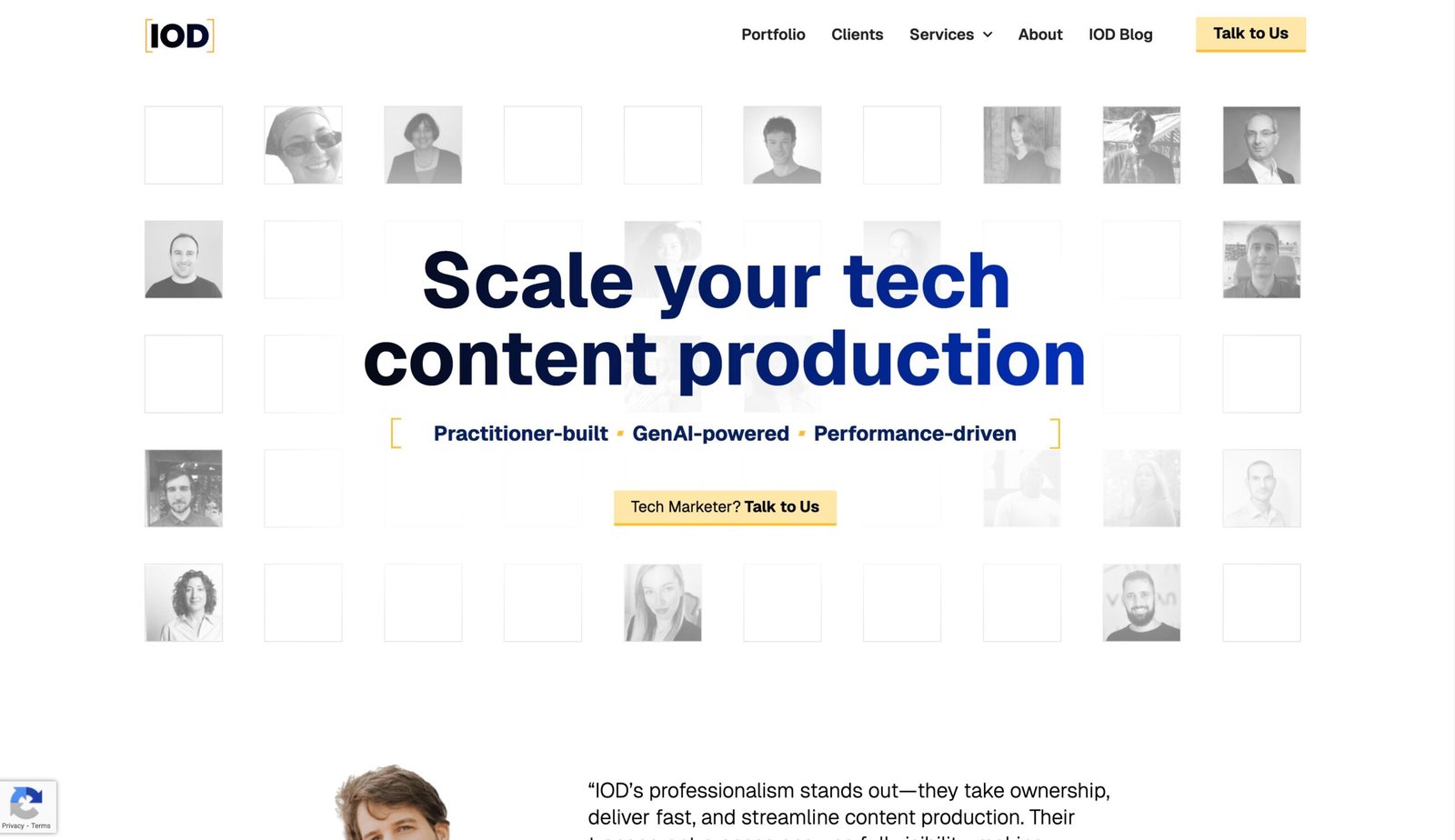
Guide: How to Join IOD’s Talent Network and Get Paid to Write (Step-by-step)
This long-form guide will help a beginner learn the who, what, and how of working with IOD (I Am On Demand) — including where to apply, how to prepare writing samples, what topics sell, and a practical pitch + follow-up plan.
You will find direct links to IOD pages (home, blog, talent network, content types, contact) and other resources so you can copy/paste the SOP and start applying today.
Section 1 · What is IOD
Who is IOD (I Am On Demand) and what do they do?
Why this matters to you: IOD hires freelancers and experts to write or edit technical content for their clients. That means if you have real experience in cloud, DevOps, cybersecurity, data engineering, or related fields — even if you’re not a professional journalist — you can get paid for your knowledge by joining their Talent Network. See the official invitation: IOD Talent Network page.
IOD’s clients are typically enterprise or cloud technology brands that need:
- Accurate technical explainers and how-to blog posts (cloud, DevOps, data, security)
- Case studies and customer stories that translate technical work into business impact
- White papers and ebooks that demonstrate thought leadership
- Short-form content, cheat sheets, and SEO-focused blog posts to drive organic traffic
IOD often needs subject-matter experts (SMEs) and hands-on engineers who can explain concepts practically — not just theorize. Their talent network includes cloud architects, DevOps engineers, data specialists, technical marketers, and experienced technical editors.
Section 2 · The Talent Network
What the IOD Talent Network is — and why apply
The Talent Network (page: https://iamondemand.com/iod-talent-network/) is a public call for writers, editors, and technical experts to join IOD’s freelance pool. Members get invited to assignments that match their skills, from writing SEO blog posts to editing technical whitepapers and contributing to case studies.
Benefits they advertise include: visibility with enterprise clients, flexible remote work, building a portfolio, and competitive compensation. Testimonials on the page show long-term freelancers praising the process, mentorship, and steady work.
Why apply?
If you have hands-on experience (cloud, DevOps, security, data engineering, or product experience in software) and can explain it clearly, joining IOD is a path to paid writing with enterprise exposure. It’s particularly good if you want to build a technical-writing portfolio while earning.
Do you meet the basic requirements?
Most IOD listings ask for: fluent English, prior content or speaking experience (blogging, tutorials, talks), and the ability to explain complex ideas simply. They often require availability of 7–20 hours/month for active contributors.
How to apply (quick)
On the network page there is a “Join Now” prompt and short form. Fill the form with your bio, links to samples (GitHub, blog posts), and areas of expertise. Keep one or two tight examples ready (blog link + GitHub demo if applicable).
Section 3 · Roles
What roles does IOD hire for (writers, editors, SMEs)?
IOD typically looks for these contributor types (examples pulled from the talent network and job listings):
Writes SEO-friendly technical blog posts, how-to guides, and thought leadership. Should be able to research, cite vendor docs, and produce clear step-by-step content. Example: cloud migration how-to or DevOps tutorial.
Edits for clarity, accuracy, and audience fit. Works with SMEs and authors to bring articles to publishable quality, corrects technical errors, and verifies claims.
Subject Matter Experts (engineers, architects) who contribute sections, review technical accuracy, or co-author pieces. SMEs often provide the deep technical detail editors and writers need.
Section 4 · Build your starter portfolio
Concrete sample pieces that make you attractive to IOD
You don’t need a book deal. You need 3–5 strong, public writing samples that show you can explain real technical work. Here’s a starter list you can produce in weeks (not months).
Short how-to (800–1,200 words)
Pick one practical task you’ve done: “Deploying a Flask app to AWS Fargate” or “Set up a GitHub Actions pipeline for Python tests.” Include commands, short code blocks, screenshots, and a result section.
Deeper tutorial or case study (1,500+ words)
Write a deeper tutorial or a mini case study: problem → options considered → solution you implemented → results. If you have metrics (time reduced, cost saved), include them.
Explainer for non-experts (SEO-friendly)
Write a clear explainer: “What is observability vs. monitoring” or “How role-based access works in AWS” — aim for clarity and good structure. IOD clients like pieces that convert engineers to buyers.
Repo or demo (GitHub / Gist)
If an article includes code, host a small demo on GitHub, CodePen, or a live URL. IOD editors appreciate runnable examples. Link repo commits in your sample.
Section 5 · Application SOP (copy/paste)
Exact step-by-step plan to apply and pitch — copyable
Follow these steps in order. Don’t skip the small ones — editors notice care.
Read the IOD Talent Network page carefully
Open: IOD Talent Network. Note open roles, required skills, and the submission URL. Keep their contact links handy: Contact.
Prepare your application bundle
Bundle these items into a short document or email:
- 1–2 sentence bio (current role, main tech stacks, and a quick note about writing experience)
- Links to 3–5 public writing samples (blog posts, LinkedIn articles, GitHub repos)
- One-line list of what you can do (e.g., “Cloud architecture explainers, AWS & Kubernetes, CI/CD tutorials”)
- Availability (hours/week or month)
- Location & timezone (helps with scheduling)
How to submit (form vs email)
Use the “Join Now” or submission flow on the talent page. If a personal email is provided, send a concise message with the bundle above and a subject line like: “Application: Tech Writer — [Your Name] — Cloud & DevOps”.
Sample bio (copy & edit)
“I’m [Your Name], a Cloud Engineer with 5 years building scalable services on AWS and Kubernetes. I write practical tutorials and case studies — here are a few samples — and I’m available 8–12 hours/week for freelance writing and editing.”
Pitch idea(s) — short and focused
If the form asks for topic ideas, include 1–3 tight ideas (one-sentence hook + 3–5 section bullets). Example:
Idea: "Save $X/month: cost-optimizing EKS workloads with autoscaling + right-sizing"
Outline:
- Quick primer: why EKS costs grow (pod density, over-provisioned nodes)
- Tools: Karpenter vs Cluster Autoscaler
- Step-by-step: set min/max, metrics, and test with a demo app (link to GitHub)
- Results: expected cost reduction and monitoring checks
Send and follow up
After submission, wait 10–14 business days. If you don’t hear back, send a polite follow-up: one sentence reiterating interest and asking if they need additional samples or availability info.
Section 6 · Money & contracts
How payment, scopes, and contracts usually work
IOD works with enterprise clients and typically engages freelancers per assignment. Payment terms vary by project size and client — some common patterns you’ll encounter:
| Assignment type | Typical pay model | What editors expect |
|---|---|---|
| Short blog post (800–1,200 words) | Flat fee (one-off) | Research, 1–2 expert quotes, 1–2 images/screenshots |
| Long tutorial / white paper | Higher flat fee, sometimes milestone payments | Deeper research, technical review, revisions |
| Series / multi-article projects | Per-piece or retainer-style agreement | Consistent tone, adherence to editorial calendar |
– Ask about deliverables: word count, number of revisions, whether you must provide images or code repos. – Clarify payment terms (net 30/45) and invoicing process. – If asked to give an estimate, provide a realistic hour estimate and a flat fee. Editors prefer predictability.
Section 7 · Writing & editing tips
Practical advice IOD editors love
IOD emphasizes practitioner-driven, trustworthy content. Use these rules as you write your samples and assignments.
Write for a busy engineer: short paragraphs, subheadings, and copy-paste-ready commands. Where possible, show exact CLI commands, config snippets, or YAML/JSON examples.
Cite official docs (AWS, GCP, vendor docs). Editors check factual accuracy — link the source and include the version you used.
Use small code blocks
Avoid pasting massive dumps. Break code into runnable chunks with comments and a short explanation of what each piece does.
Include a results section
Show real impact: time saved, cost reduced, improved latency — even approximate numbers help editors and clients see value.
Expect technical review
Most articles will be reviewed by an editor and an SME. Be ready to accept feedback and correct factual errors.
Section 8 · AI & ethics
Using AI responsibly when writing for IOD
IOD uses GenAI in their workflows, but freelancers must remain responsible for accuracy and originality. Here’s how to use AI safely.
You may use AI to brainstorm outlines or rewrite sentences, but always run and verify code, confirm facts, and rewrite outputs in your own voice.
AI hallucinations happen. Verify any commands, versions, or performance numbers with vendor docs or your own tests before submitting.
Section 9 · Grow beyond one article
How to turn a single piece into ongoing work and higher pay
Your first paid article can lead to: regular assignments, project lead roles, editing opportunities, or even being a named SME on a client site. Here’s how to build that path.
Be reliable and communicative
Deliver on deadline, respond promptly to editors, and handle revisions gracefully. Reliability is one of the top reasons freelancers get repeat work.
Ask for feedback and improvement areas
After a piece is published, ask the editor what you could do better. Implementing feedback shows growth and helps you command higher rates.
Offer to take on adjacent tasks
Offer short editing stints, research support, or help creating a demo repo. Expanding your role deepens your relationship with the agency.
Section 10 · Final checklist & templates
Copy/paste checklist, follow-up template, and resource links
Subject: Application — Tech Writer / Editor — [Your Name]
Hi [IOD contact name],

I applied to the IOD Talent Network on [date] and wanted to introduce myself. I'm [Your Name], a [role] with experience in [cloud/devops/data/etc.]. Here are 3 samples that show my work:

- [Sample 1 title] — [link]
- [Sample 2 title] — [link]
- [Sample 3 title] — [link]

I’m available ~[hours/week] and would be thrilled to contribute to client projects in [areas]. Please let me know if you need more samples or a short trial assignment.

Thanks for your time,
[Your Name]
[LinkedIn] · [GitHub] · [Email]
- IOD Talent Network — join page
- IOD Blog — recent posts and case studies
- IOD Content Types (what they produce)
- How to Get Published on the AWS APN Blog — IOD guide (example resource)
- Contact IOD — use this if a form link is not available
- Dev.to — publish writing samples
- Medium — publish samples
- GitHub — host demo repos and code samples
- CodePen — demo front-end snippets
- LinkedIn — publish articles and network
- freeCodeCamp News — other tech writing outlet
- A one-page portfolio HTML you can paste on your personal site (ready-made template),
- A tailored pitch email for a specific role (paste your bio & samples), or
- A step-by-step editing checklist to use when you submit drafts to IOD.