


Guide: How to Write for Insteading (and Use It to Earn Money)
This guide shows you how to write a blog post, article, magazine-style feature, or guest post that fits Insteading — and how to turn that writing into income, even if you are a beginner.
You will learn Insteading’s topic fit, writing style, “do / don’t” rules, research method, and a simple pitch system. Then you will learn a practical money plan: get published → build clips → pitch paid outlets + clients.
Keep these tabs open while you work: Writer Guidelines, About Insteading, Community Rules, Contact, Copyright / Republishing.
Section 1 · Understand the publication
What Insteading is (and how to “write like Insteading”)
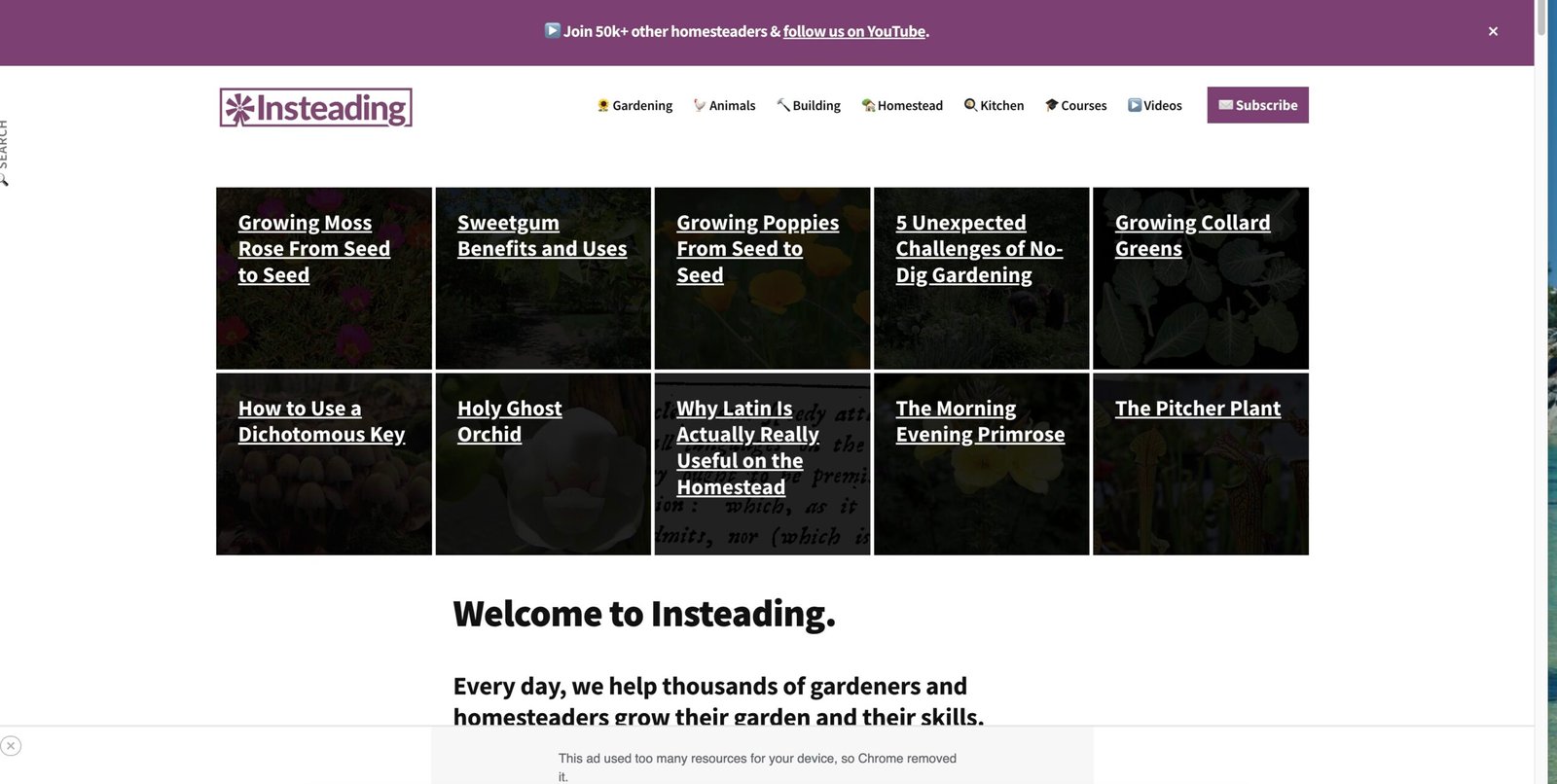
Insteading is a homesteading and sustainability website. They publish practical content that helps readers live more self-sufficiently: growing food, caring for animals, building smarter, living off-grid (or semi off-grid), and making eco-friendly choices that are realistic.
This is important: Insteading’s writer guidelines say they want writing that promotes sustainable, environmentally-friendly, and pragmatic lifestyle choices. They also mention they discourage wasteful consumerism and they are cautious about content that is mostly “buy this product.” So your writing must feel useful and grounded, not salesy.
Insteading content usually has:
- A real reader problem (“How do I start composting?” “How do I store water off-grid?”).
- Real steps, not only opinions.
- Practical tradeoffs (cost, time, safety, climate, space).
- Honest voice (what worked, what failed, what you learned).
- Eco + human friendly choices that are actually doable.
Quick test: would this help a reader do something meaningful this weekend (plant, build, repair, learn)?
These hubs help you study the style and choose your section:
- Gardening (vegetables, compost, soil, pests, foraging)
- Green Building (plans, materials, off-grid design thinking)
- Homestead Living (self-sufficiency basics, off-grid life, systems)
- Courses (webinars / learning links — good for research)
- Companion Planting Chart & Guide (example of evergreen resource page)
Study 5 posts from the hub you want. Notice the structure, subheads, and how they explain choices.
| Reader intent | Best Insteading-style format | What you must include | What to avoid |
|---|---|---|---|
| “Help me start” | Beginner guide / checklist | Simple steps + safety notes + common mistakes | Vague inspiration only |
| “Help me decide” | Comparison / tradeoff guide | Pros/cons, costs, climate constraints, maintenance | One-sided “one true way” |
| “Help me build” | How-to / plan breakdown | Materials list, tools, stages, photos/diagrams | Unsafe instructions |
| “Teach me the why” | Explainer + practical examples | Simple explanation + real-world application | Scientific claims without sources |
Section 2 · Fit your idea
Choose a topic that fits Insteading (and avoids fast rejection)
If you want to write for Insteading, don’t start with “I want to write about gardening.” Start with a specific reader situation. A good Insteading idea usually fits one of their core categories (gardening, building, homestead living, animals, off-grid systems) and it should help a reader make progress in real life.
Insteading’s guidelines also mention they do not want posts that are mostly about selling products. That means: if your outline is “Top 10 gadgets you must buy,” it will not feel like Insteading. Instead, write about methods, skills, and low-waste choices — and if you mention a product, mention it as one option, not the main point.
Does your topic match a real Insteading bucket?
Use these buckets (and click examples to see tone + formatting):
- Gardening: Gardening hub, Realistic Garden, No-Dig Challenges
- Soil & compost: write about composting steps, mistakes, and easy systems (not only theory).
- Off-grid / self-reliance: Off-Grid Water System, Living Off-Grid Checklist
- Building: Green Building hub (plans, materials, “how it works,” safety, tradeoffs)
- Foraging / wild food: Eating Acorns
- Homestead living basics: Homestead Living hub, What Is Homesteading?
If you can’t place your topic into a bucket, refine the idea before pitching.
Can you write it in a way that feels fresh?
“Fresh” does not always mean “never written before.” It often means: you add a realistic constraint (small space, low budget, drought climate, winter, urban backyard), and you write from experience.
- Bad: “Composting 101” (too broad)
- Better: “Composting in a small yard without stink: a simple weekly system”
- Bad: “Off-grid living is great” (too motivational)
- Better: “Off-grid water: what to plan first, what you can DIY, and the common mistakes”
When you pitch, include the constraint and your experience. That makes editors trust you.
Does it avoid wasteful consumerism?
Insteading encourages sustainable choices. So your article should:
- Prefer “use what you already have” and “repair” when possible.
- Explain low-cost options (DIY, salvage, secondhand, borrowed tools).
- Be careful with “buy these 10 items” lists.
- Offer safety notes and realistic limitations.
If you include products, keep them as optional suggestions, not the main content.
| Idea scorecard (quick) | Ask yourself | Good answer example |
|---|---|---|
| Problem clarity | What pain does the reader have? | “My compost is wet and smelly.” |
| Actionability | Can the reader follow steps? | “Do this weekly schedule + bin setup.” |
| Trust | Do you have experience or sources? | “I tested 2 methods + citations.” |
| Sustainability | Does it reduce waste / harm? | “Use local materials; minimize chemicals.” |
| Fit | Is it in Insteading’s wheelhouse? | Gardening, building, self-reliance, etc. |
Section 3 · Build your system
Idea → outline → proof: the easiest way to look professional
Beginner writers often fail because they jump straight into writing without a structure. Editors want to see: clear idea, clear sections, and proof (photos, a small experiment, credible sources, or real-life experience).
Insteading’s guidelines include “best practices” such as keeping sentences and paragraphs short, using headings, avoiding fluff, and ensuring you can legally use any images you include. Use that as your quality checklist.
Write this in a note:
- Reader: “Who needs this?”
- Goal: “What will they achieve?”
- Context: “Where (climate/space/budget)?”
Example: “Backyard gardeners with small space → want compost without stink → hot climate + limited time.”
Your outline is your “map.” If you can’t outline it, you can’t write it. Use a simple flow:
- Intro (problem + promise)
- What you need (tools/materials)
- Step-by-step method
- Common mistakes
- Safety / ethics
- Maintenance / next steps
Pro tip: “proof” is not always a perfect photo shoot. Proof can be: your own pictures, a simple measurement, citations to credible sources, or even a “here’s what failed” story (readers love real learning).
Gather “proof” in the simplest way
Pick at least 2 of these:
- 2–6 original photos (your garden, build, system, tools).
- 1–3 reputable sources (universities, extension offices, government, trusted orgs).
- A mini experiment (“I tried method A for 2 weeks vs method B”).
- A cost estimate (budget vs mid-range vs “do it for free” option).
Keep the proof inside your article so the reader trusts you.
Build a “one-sentence promise”
Write a sentence that starts like this:
set up a low-smell compost system that works in a small yard, using a weekly routine and simple fixes.
This sentence becomes your intro, your pitch summary, and your mental anchor when writing.
Study 3 “style models” on Insteading
Pick 3 posts in your category and note what they do:
- How long is the intro?
- How quickly do they get to actionable steps?
- Do they use short paragraphs and subheads?
- How do they cite sources or link to related posts?
Examples to model: Off-Grid Water System, Eating Acorns, Realistic Garden.
Create a “pitch packet” (simple + powerful)
Your pitch packet can be one document with:
- Working title + 1-sentence promise
- 6–9 bullet outline
- Proof list (photos + sources)
- Short bio (2–3 lines)
- Links to 1–3 writing samples (your blog, Medium, etc.)
Now you look like a writer who can deliver. That changes how editors treat you.
Section 4 · Write the article
Write a beginner-friendly Insteading article (structure you can reuse)
Here is a structure that works for almost every Insteading-style topic. This is written in plain English. If you follow this, your article becomes easy to read and easy to edit.
Intro: problem + promise (keep it short)
Do not write a long life story first. Insteading guidelines encourage clarity and short paragraphs. So do this instead:
- 1–2 lines: what problem the reader has.
- 1–2 lines: what you will help them do.
- 1 line: who you are and why you know this (simple proof).
Example intro: “Compost should not smell like a swamp. In this guide, I’ll show you a weekly system that works in a small yard, plus fixes if it gets wet. I’ve used this routine for two summers in a hot climate.”
“What you need” section (tools, materials, time)
Insteading readers love practical details. Add:
- Materials list (with low-cost alternatives).
- Time estimate (realistic).
- Safety notes (if needed).
Keep it non-salesy. If you mention a tool, add: “Borrow if you can” or “secondhand works.”
Step-by-step (the core of your article)
Write steps as a sequence. Each step should have:
- A short heading (“Step 1: Choose the location”).
- 2–5 short paragraphs (no wall of text).
- Optional bullet list (for sub-steps).
- A “why” sentence when needed (helps beginners).
This section should be the longest. If you are not sure what to write, write the steps you actually did.
Fixes + mistakes (this is what makes it “real”)
Beginners love troubleshooting. Add:
- “If it smells…” fix list.
- “If pests show up…” safe options.
- “If it’s too dry…” simple adjustment.
- “If you live in winter…” seasonal note.
This section increases trust and saves the reader time.
Copy-and-paste outline template:
[Working title that includes a real outcome]
<!– Intro –>
Problem (2 lines). Promise (2 lines). Proof (1 line).
<!– Section: What you need –>
Tools / materials / time / safety.
<!– Section: Step-by-step –>
Step 1… Step 2… Step 3… (6–9 steps max).
<!– Section: Common mistakes + fixes –>
Mistake → Fix (5–10 bullets).
<!– Section: Sustainable options –>
Low-waste, repair, reuse, local materials.
<!– Conclusion –>
Summary + next steps + related reading links.
| Writing rule | Why it matters | How to do it |
|---|---|---|
| Short paragraphs | Mobile readers | 2–4 lines max; break often |
| Useful headings | Easy scanning | Use “Step 1… Step 2…” or “Mistakes…” |
| Pragmatic tone | Matches Insteading | Be honest about limits; avoid hype |
| Links to learn more | Builds trust | Link to Insteading hubs + reputable sources |
Section 5 · Proof + ethics
Photos, sources, links, and ethical writing (super important)
Insteading’s guidelines clearly emphasize that you must have legal rights to any images you submit. That means: your own photos, or properly licensed images with correct credit. This is non-negotiable. If you ignore this, your submission can be rejected instantly.
- Best: use your own photos. Even phone photos are okay if they are clear.
- If not yours: use Creative Commons / public domain images and follow the license rules.
- Always: add credit under the image (photographer + source).
- Never: copy images from Google Images, Pinterest, or other blogs without permission.
Helpful sources for legal images (still check the license): Unsplash, Pexels, Wikimedia Commons.
- Use internal links to Insteading hubs and related posts (helps readers learn more).
- Use external links to reputable sources for claims (universities, government, trusted orgs).
- If you mention a statistic or safety claim, add at least one credible source link.
- Avoid spammy links, affiliate-only pages, or “thin” product pages.
Example internal links that fit many topics: Gardening, Building, Homestead Living.
How to cite simply (without being academic): In a practical homesteading article, you do not need formal citations. Just link your sources in natural language. Example: “According to a university extension guide, compost needs a carbon-to-nitrogen balance…” Then link to the guide.
| Claim type | What to do | Best source links |
|---|---|---|
| Safety (fire, gas, water, toxins) | Add a credible source link + caution note | CDC, EPA |
| Gardening science (soil, pests, plants) | Use extension office / university guides | Extension.org, USDA |
| Energy / solar / batteries | Link to technical explainers, not sales pages | NREL, U.S. DOE |
| Health topics | Be careful; avoid medical promises | MedlinePlus |
Section 6 · Pitch + submit
Pitch and submission: what to do right now (simple + realistic)
Here is the honest situation: the live, official page we can point to is the Writer Guidelines. Some older Insteading posts mention a “Write For Us” page, but that page may not currently load. So the safest beginner move is: prepare a pitch packet and contact the team using the public Contact page.
- Subject: “Article Pitch: [Your Title] (Insteading)”
- Summary: 2–3 sentences (problem + promise + proof)
- Outline: 6–9 bullet headings
- Proof: photos + sources + experience
- Bio: 2–3 lines
- Samples: 1–3 links
Attach nothing heavy in the first email. Send links instead. If they want files, they will ask.
Use this as your base and customize it:
Hi Insteading team,
I’m pitching a practical article for your readers: [TITLE].
In 1 sentence: By the end, readers will be able to… [PROMISE].
Why it fits Insteading: It supports sustainable, pragmatic living and focuses on actionable steps.
Outline (draft):
– [H2 #1]
– [H2 #2]
– [H2 #3] …
Proof: I can include [X] original photos and I’ll reference [Y] reputable sources.
About me: [2–3 lines bio].
Writing samples: [Link 1] · [Link 2] · [Link 3]
Thanks for your time — happy to adjust the angle or outline to better match your needs.
[Your Name]
After you send your pitch, be patient. If you don’t hear back, wait a couple of weeks and send one polite follow-up. If it still doesn’t work, don’t waste the article — publish it on your own blog, then pitch a refined version elsewhere.
Section 7 · Money plan
How to earn money from this (without guessing or depending on one site)
You asked for a guide that helps you “earn money.” Here is the most reliable truth: your income becomes stable when you use a portfolio + multiple revenue paths, not one website. That said, some freelance writing directories have historically listed Insteading as a market that may pay (rates can change, so you must confirm in your current communication).
- Pitch an article that clearly helps readers (practical, sustainable, beginner-friendly).
- Ask politely about compensation after interest is shown (or if they reply with assignment details).
- Be flexible: sometimes outlets pay for some types and not others.
If a market pays, keep records (fee, word count, rights, deadlines). This helps you grow into a pro freelancer.
- Published clip = proof you can write for a real publication.
- Add it to your portfolio and LinkedIn.
- Pitch other outlets with a stronger “I’ve been published” angle.
- Offer services (content writing, SEO writing, editing) to small farms, eco brands, local businesses.
One clip can lead to multiple clients — if you present it correctly.
| Income stream | What you do | Beginner example |
|---|---|---|
| Assignment fees | Write for outlets that pay | Pitch 2–4 outlets/month |
| Client work | Write for brands (blogs, guides) | Local nursery wants SEO posts |
| Repurposing | Turn 1 article into 5 assets | Blog post → email → PDF → 3 social posts |
| Digital product | Sell a checklist or mini guide | “Backyard Compost Starter Kit” PDF |
| Affiliate (careful) | Only where allowed + ethical | Your own blog, not forced into a guest post |
Do this for 4 weeks (simple + realistic)
- Week 1: Read Insteading guidelines + pick 1 topic + collect proof + outline.
- Week 2: Write the full draft + add photos + add sources + tighten paragraphs.
- Week 3: Pitch Insteading + publish a similar “sister post” on your own blog (portfolio).
- Week 4: Pitch 3 more outlets in related niches + offer 5 cold emails to local eco businesses with your clip link.
Even if Insteading doesn’t respond quickly, your month still produces portfolio + momentum.
One simple sentence (use after interest)
After they show interest or request a draft, you can ask:
This is professional. It’s not pushy. And it protects you.
Section 8 · Rules + rights
Community rules + republishing basics (protect your work)
Insteading has community rules and site policies. Even if you are “just a writer,” your post becomes part of their community. You should read these pages so you understand tone, respect, and how they handle content: Community Rules, Copyright / Republishing & Syndication, Policies.
The community rules encourage kindness and respect. This matters for your writing too. Avoid insulting language, avoid culture-war bait, and write as if you are helping a neighbor.
- Use inclusive language (“many people,” “in my experience,” “this can vary”).
- Be careful with controversial claims; focus on practical steps.
- Be respectful when discussing choices (organic, off-grid, etc.).
Republishing policies differ by outlet. Some allow reposting after a time period; some want exclusive rights. Insteading has a page about copyright / republishing.
- If you want to reuse your article, ask the editor what is allowed.
- Keep copies of emails and agreements.
- Do not repost the same text elsewhere unless you have permission.
Safe move: repurpose the ideas (not the same full text) into a new piece for your own blog.
Section 9 · Micro-SOP
Final checklist + ready-to-use templates
Use this checklist every time you pitch Insteading or any similar publication. It keeps your writing aligned with the guidelines and makes you look professional.
I’ve been practicing [skill] for [time] and I share practical, beginner-friendly guides with real photos and tested steps.
Keep it honest. Editors prefer a simple bio over a “marketing bio.”
- How to [do outcome] (without [pain])
- Beginner guide: [topic] (step-by-step)
- Checklist: [topic] checklist for [context]
- Mistakes: [X] mistakes beginners make in [topic]
- Realistic: What I wish I knew before [topic]
Section 10 · FAQ + Resources
FAQ for beginners + resource library (lots of links)
- What Is Homesteading?
- Getting Started With Off-Grid Water System
- Eating Acorns: From Foraging To Cooking & Recipes
- A Toast to the Realistic Garden
- 5 Unexpected Challenges of No-Dig Gardening
- 6 Reasons You Should Have Flowers in Your Vegetable Garden
- How To Make the Most of Garden Failure
- Living Off The Grid (Checklist)
- Extension.org (practical agriculture + gardening knowledge)
- USDA (agriculture, food, and gardening references)
- EPA (environment and safety references)
- NREL (renewable energy basics)
- U.S. Department of Energy
- Wikimedia Commons (images with licenses)
- Unsplash (stock images, check license)
- Pexels (stock images, check license)