


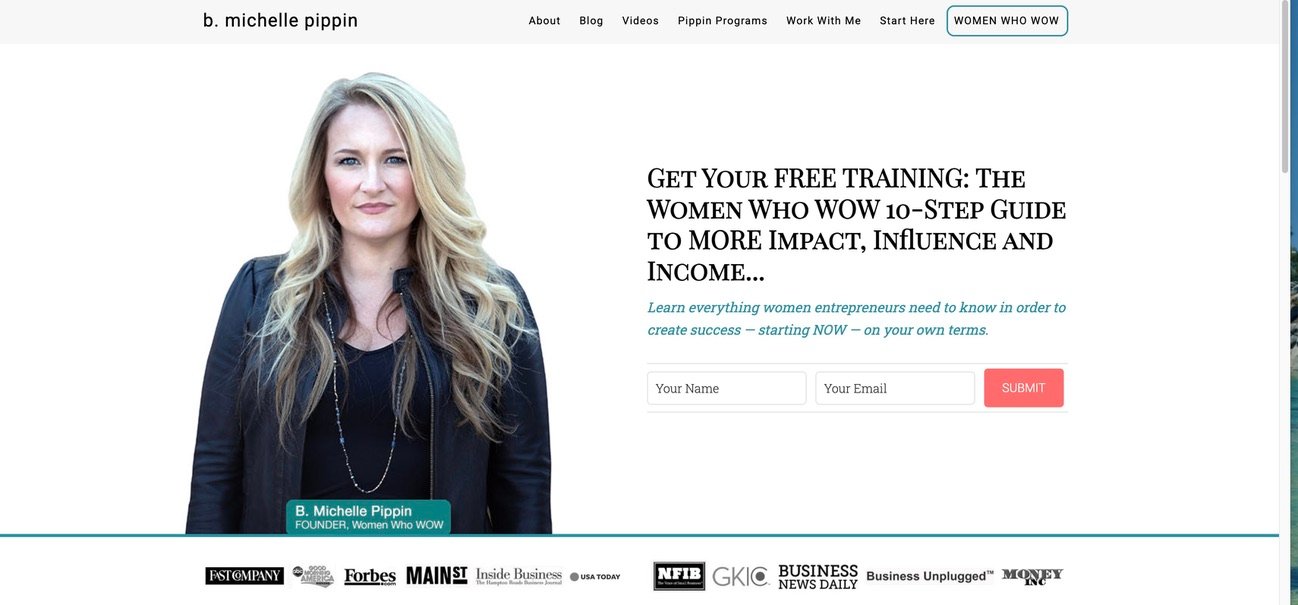
Guide: How to Get Paid to Write for B. Michelle Pippin (Step by Step)
This is a practical “write & earn” guide to help you create a strong article for BMichellePippin.com using the official contributor page Get Paid to Share Your Expertise With Us.
You will learn: what topics fit, how to pick a winning angle, how to build a simple “expertise packet”, how to write in the site’s style, how to submit correctly, and how to turn one accepted article into more income (portfolio, clients, speaking, newsletter growth, consulting).
This guide is beginner-friendly (simple sentences, clear steps), but it still aims for a professional result. You can reuse this same workflow for other paying blogs later too.
Section 1 · Understand the platform
What this site is (and what it is not)
Before you write anything, do this first: study the site like a guest, not like a writer. Your goal is to understand what the readers want, what the voice feels like, and what “wins” on this platform.
Open these pages in new tabs and skim them: Homepage Start Here Blog About Videos Women Who WOW Programs Contact Sitemap
Think “busy women entrepreneurs” who want:
- more leads (without fluff)
- better sales (without pressure games)
- stronger mindset (mental toughness + clarity)
- time control (productivity that actually works)
- money decisions (profit, pricing, taxes, systems)
So your article should feel like: “Here is the truth. Here is the system. Now take action.”
This platform tends to reward writing that is:
- direct (no long warm-up, no fake motivation)
- practical (steps, examples, scripts, checklists)
- experienced (first-hand proof beats theory)
- honest (what failed, what finally worked, why)
Your job is not to “sound smart”. Your job is to be useful.
| What they publish | What you should write | What to avoid |
|---|---|---|
| Business + marketing strategy | Step-by-step playbooks + real examples | Generic “10 tips” with no proof |
| Mindset + mental toughness | Clear decisions, boundaries, tough-love clarity | Overly emotional, vague inspiration |
| Productivity + time systems | Systems, routines, templates, automation | Unrealistic “wake up at 4 AM” advice |
| Sales + conversion | Messaging, offers, follow-up workflows | Pressure tactics, manipulation |
Section 2 · Fit your idea
Pick a topic that fits (and gets accepted)
The fastest way to get rejected is to pitch a topic that is too broad, too basic, or too promotional. The fastest way to get accepted is to pitch an article that solves a painful business problem with a clear system and first-hand proof.
Start here: read the blog categories and scan what the audience already consumes. Your goal is not to copy. Your goal is to find the missing “next step” article.
Does this help someone make money or save time?
A strong pitch usually connects to profit, leads, conversion, pricing, offers, time control, or visibility. If your idea does not improve one of those, it might not be strong enough for this audience.
Is your angle specific and “doable”?
“Marketing tips” is too broad. Better: “A 7-day content rhythm to generate leads without daily posting.” Specific means you can show steps, scripts, templates, and a simple timeline.
- Bad: “How to succeed in business”
- Better: “How to fix a weak offer in 60 minutes: a 3-part audit”
- Best: “The ‘Offer Clarity Page’ template + examples (copy/paste)”
Do you have first-hand proof?
Proof can be simple: a result you got, a mistake you fixed, a client story (with permission), a before/after screenshot (analytics, email replies, sales calls booked), a workflow you personally use, or a method you tested.
You do not need to be “famous.” You just need to be honest and real.
| Category “bucket” (from the site) | What readers want | Example angles you can pitch |
|---|---|---|
| Marketing / leads / visibility | More leads without burnout | YouTube, content strategy, media exposure, partnerships |
| Sales / conversion | Better conversion and follow-up | Offer positioning, sales scripts, objection handling, DMs |
| Time / productivity | Systems that save hours | Weekly planning, automation, SOPs, task batching |
| Mindset / mental toughness | Clarity, discipline, boundaries | Decision frameworks, “no excuses” behaviors, focus rules |
| Money / operations | Profit, pricing, taxes, structure | Pricing rebuild, expense audits, tax prep checklists |
Section 3 · Prepare yourself
Build your “expertise packet” (so you look like a safe yes)
Editors (and site owners) say yes faster when you look like a “safe bet.” A safe bet means: you can write clearly, you can finish, and your advice is real. That’s what this “expertise packet” does.
- Short bio: 2–4 lines (who you help + what you’ve done)
- 2–3 sample links: published articles OR strong LinkedIn posts OR a blog post
- Proof points: simple results, outcomes, or case snapshots
- Topic list: 3 article ideas (each with a clear angle)
- One outline: bullet outline for your best idea
Keep it clean. Keep it real. Keep it readable.
- Write one strong post on your own blog (or Medium) and publish it.
- Write one “how-to” LinkedIn post with a checklist and a template.
- Write one short case story: problem → decision → result.
Tip: if you do not have a website yet, create one simple “Samples” page using Google Docs or Notion, then share the public link.
| Proof type | Beginner-friendly example | How to use it in your article |
|---|---|---|
| Client outcome (with permission) | “We improved conversion from 1% to 2% after changing the offer page.” | Add a short “What changed / why it worked” box |
| Your own result | “I booked 6 calls in 14 days using a simple follow-up script.” | Show the script + timeline + what you tracked |
| System you use | “My weekly plan takes 20 minutes using a 3-list method.” | Give the method + a printable template |
| Before/after screenshot | Email replies, calendar bookings, YouTube analytics snapshot | Use it to prove your steps are real |
Section 4 · Write the content
How to structure your article so it feels like a perfect fit
Your structure matters more than your “writing talent.” A great structure makes even a beginner sound strong. Use this simple blueprint for most blog posts, guest posts, and magazine-style features.
Hook with a painful truth (not fluff)
Start with a short, direct problem statement. You can use tough-love clarity, but stay respectful.
- “You’re not inconsistent. Your system is broken.”
- “If your offer is confusing, your leads will stay cold.”
- “Your calendar is full, but your bank account is not. That’s a strategy problem.”
Then promise the outcome: what the reader will be able to do after reading.
Prove you are credible (fast)
Add 2–3 sentences that show first-hand experience. Not a long biography. Just proof.
- “I used this to book X calls in Y days.”
- “I learned this after wasting months doing it the ‘normal’ way.”
- “Here is what changed when I applied this.”
Credibility is not ego. It is clarity.
Teach the system (steps + examples)
Now deliver the playbook. Use headings, short paragraphs, and checklists. Add scripts, templates, and examples.
- Step-by-step workflow
- Do/Don’t list
- Example messages / scripts
- Mini case story (before → after)
End with action + a simple next step
Don’t end with “hope this helps.” End with a clear action: what the reader should do today, this week, and this month.
- “Do the 15-minute audit today.”
- “Implement the script on your next follow-up.”
- “Track one number for 7 days.”
| Article type | Best for | Recommended length | Must include |
|---|---|---|---|
| Blog-style how-to | Leads, conversion, productivity | 1,200–2,500 words | Steps + scripts + checklist |
| Guest-post “framework” | Mindset + decision-making | 1,500–3,000 words | Framework + examples + action plan |
| Magazine-style feature | Story + lessons + systems | 2,000–3,500 words | Case story + lessons + templates |
Section 5 · Submission workflow
How to submit correctly (and look professional)
Use the official submission page: Get Paid to Share Your Expertise With Us. Read it slowly first. Then submit through the method they request.
The easiest way to fail is to submit the wrong thing (wrong format, wrong topic, promotional content, or unfinished ideas). The easiest way to succeed is to submit exactly what the page asks for, in a clean, simple way.
Choose ONE strongest topic (not five weak ones)
Beginners often submit too many ideas. That looks unfocused. Pick one main idea, plus 1–2 backups.
- Main idea: the one you can prove with first-hand experience
- Backup idea: similar category, different angle
- Backup idea: different category, same quality
Prepare a mini-outline (bullets, not paragraphs)
Your outline should show the full journey of the reader. Use 6–10 bullets max. Make each bullet a section.
Example outline:
- Why your offer is “confusing” (and how to spot it)
- The 3-question offer audit
- Rewrite your promise (template + examples)
- Rewrite your “who it’s for” statement (template)
- Fix your call-to-action (script)
- Simple 7-day test plan
- Common mistakes (and quick fixes)
Write a short, strong bio (copy/paste ready)
A good bio is about the reader’s trust, not your ego. Keep it tight:
- Who you help
- What you help them do
- One credibility proof
- One link (website or portfolio)
Submit with a clean message (template below)
Don’t write a long emotional story. Write like a professional: clear, respectful, direct.
Hello! My name is [Your Name]. I help [who] achieve [result]. I’m submitting an article idea for BMichellePippin.com.
Proposed title: [Title]
One-line promise: This article helps [reader] do [outcome] using [method].
Why I’m qualified: [1–2 sentences of first-hand proof / outcomes].
Outline:
– [bullet 1]
– [bullet 2]
– [bullet 3] …
Samples: [Link 1], [Link 2], [Link 3]
Thank you for your time — I can deliver the piece in [X] days after approval.
Section 6 · Money side
How you earn money (and how to earn more from the same article)
The public pay range shared by multiple writing-job roundups is typically $50–$150 per piece. Payment method and timing are usually described on the official contributor page.
But here is the smart writer mindset: the fee is only the first layer. A published byline on a respected business/marketing platform can also produce: clients, consulting leads, newsletter subscribers, and speaking invitations.
- Estimate hours: research + writing + editing + examples
- Divide pay by hours → your “effective rate”
- If your rate feels low, shorten the article or reuse assets
Example: If you earn $120 for 4 hours, that’s $30/hour. But if you repurpose the same article into 5 assets, the rate improves.
- Turn the outline into a LinkedIn carousel
- Turn one section into a newsletter email
- Turn examples into a short YouTube script
- Create a “lead magnet” checklist as a PDF
- Create a paid mini-workshop from the same system
One good article can power your content for 30 days.
| Asset | Time to create | What it gets you |
|---|---|---|
| LinkedIn post (summary + CTA) | 20 minutes | Visibility + leads |
| Checklist PDF (1 page) | 45 minutes | Email subscribers |
| Client script pack | 60 minutes | Product idea / upsell |
| Short workshop outline | 60–90 minutes | Paid speaking / coaching offer |
Section 7 · Ethics & AI
Trust rules: originality, AI use, and “no hidden agendas”
This platform works because readers trust it. That trust is your biggest asset as a contributor. So your article must be honest, original, and focused on the reader’s results.
- Don’t submit copied content (even if rewritten).
- Don’t invent results or “case studies.”
- Don’t hide promotions inside “education.”
- Don’t write vague inspiration with no steps.
- Don’t use AI to generate the whole article and publish it “as is.”
If your content feels generic, it will not match the site’s style.
- Brainstorm headlines and outlines, then rewrite in your voice.
- Ask for clarity edits: “make this simpler and more direct.”
- Generate alternate scripts, then choose one you can prove.
- Use AI as a checklist: “what did I forget?”
Final rule: you are responsible for accuracy and honesty.
Section 8 · Tools + FAQ
Final checklist, beginner FAQ, and a big link library
Use this section like your “before I submit” toolbox. If you follow the checklist and use the links, you will avoid the most common beginner mistakes.
Day 2: Draft outline + add one template or script.
Day 3: Write the first draft fast (don’t edit yet).
Day 4: Add examples, proof points, and “common mistakes” section.
Day 5: Edit for clarity and remove fluff.
Day 6: Create a short bio + gather sample links.
Day 7: Submit using the exact process on the official page.
- Homepage
- Get Paid to Share Your Expertise With Us (submission page)
- Blog (browse topics + style)
- Start Here (tone + philosophy)
- About (audience + positioning)
- Videos (content themes + teaching style)
- Women Who WOW (community context)
- Programs (what readers care about)
- Contact
- Sitemap (find more pages fast)