


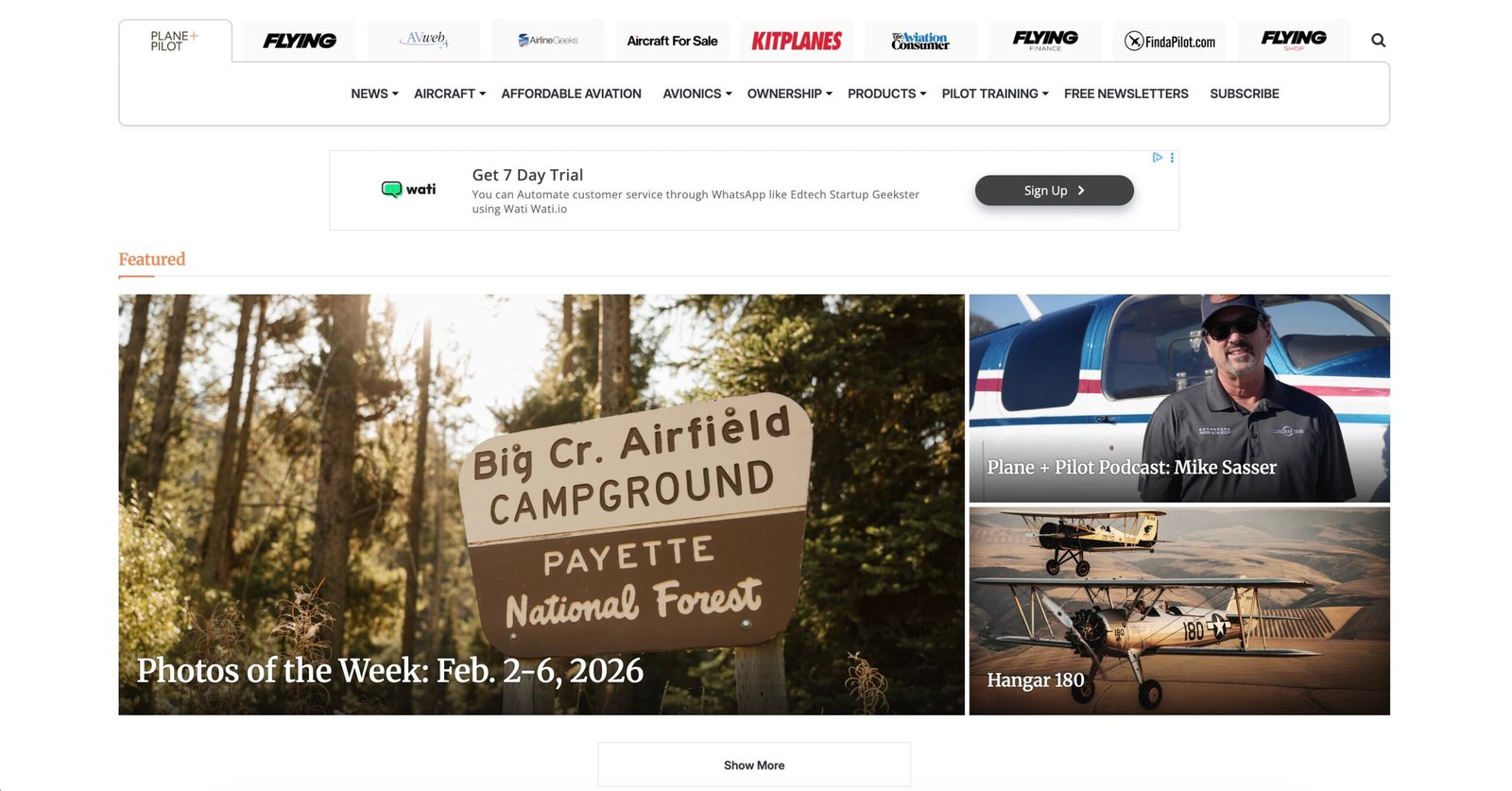
Guide: How to Get Paid to Write for Plane & Pilot (Step by Step)
This guide shows you, in simple steps, how to research, pitch, and write aviation content for PlaneAndPilotMag.com — so you can publish blogs, articles, magazine-style stories, and guest posts, and gradually build an income.
You will learn what kinds of stories fit the brand, how to pick a strong idea, how to write an editor-friendly pitch, how to structure an aviation article (safely and accurately), and how to turn one published byline into more paid work.
Key links you will use again and again: Submissions · editor@planeandpilotmag.com · News · Pilot Training · Ownership
Section 1 · Understand the publication
What Plane & Pilot really is (and why that matters for your pitch)
Plane & Pilot is a long-running aviation brand focused on today’s general aviation. The simplest way to think about it is: “pilot-first writing that helps GA pilots fly smarter, buy better, train better, and stay safer.”
On the site you’ll see categories like Pilot Training, Ownership, Aircraft, Avionics, Products, and a stream of practical posts under “The Latest.” If your pitch does not fit one of these reader needs, it will feel “off.”
Typical readers include:
- Student pilots and low-time pilots building confidence.
- CFIs and safety-focused pilots who enjoy risk-reduction content.
- Aircraft owners and buyers comparing models, mods, and maintenance paths.
- People upgrading avionics, choosing gear, and learning new procedures.
- GA enthusiasts who like real stories with a lesson (not fiction, not fluff).
That means your writing should be clear, practical, and honest. If you use jargon, you must explain it like you are teaching a friend.
Editors usually say “yes” to pitches that have:
- A real story (first-person moment, decision, lesson).
- A real skill (you can teach a procedure or mindset).
- A real reader benefit (safer, cheaper, smoother flying).
- Good boundaries (no promotional content, no fiction).
- Accurate details (airspace, weather, regs, performance).
You are not “trying to sound smart.” You are trying to help a pilot make better choices.
Section 2 · What they publish
Formats you can pitch (and how to pick the easiest one first)
You can pitch Plane & Pilot in more than one way. Many writers think “I must write a huge feature.” That is not true. A smarter beginner path is: start with a smaller format, learn the editorial process, then upgrade to longer stories.
A public summary of their contributor options (from a past opportunity write-up) lists these common slots: Lessons Learned (story + lesson), Airfare (a day in an aviation job), Risk (safety / risk reduction), Bucket List (short story about a goal), and Tip Line (one practical tip). It also shares typical word counts for each. Treat this as a guide, and confirm any current details with the editor or the official submissions page.
| Format (common) | What it looks like | Typical length | Best beginner strategy |
|---|---|---|---|
| Tip Line | One clear tip (safer / cheaper / smoother flying) | ~400 words | Start here if you’re nervous. One idea. One tip. Very focused. |
| Bucket List | Short story + context (“what is X?” + why it mattered) | ~700 words | Great if you have one memorable flying moment but not a full feature. |
| Lessons Learned | First-person flight story + lesson for readers | ~1400–1600 words | Best “signature” beginner piece: story-driven, emotional, and useful. |
| Risk | One safety topic explained deeply (risk reduction) | ~1400 words | Best for CFIs/pro pilots or safety-obsessed writers with clear frameworks. |
| Airfare | First-person “aviation job” story (day-in-the-life with meaning) | Varies | Great if your aviation job is unique and you can show real detail. |
Section 3 · Fit your idea
How to find a “Plane & Pilot-shaped” idea (even if you are new)
Your idea does not need to be dramatic. It needs to be useful and honest. A Plane & Pilot-shaped idea is usually a moment + decision + lesson OR a procedure + common mistake + fix.
Can a pilot do something better after reading it?
Examples of “better” outcomes:
- They plan weather better and avoid bad decisions.
- They brief better and reduce surprise in the cockpit.
- They fly a maneuver more safely (with proper training context).
- They buy gear that fits their mission instead of wasting money.
- They manage risk with a simple tool (PAVE, IMSAFE, 3P, personal minimums).
If the outcome is only “they feel inspired,” that’s not enough. Inspiration is nice, but this brand usually wants actionable learning.
Is it general aviation (GA) and not promotional?
A public guide to their contributor slots noted they focus on today’s GA flying and avoid certain topics (like promotional material). That means:
- No “press release” writing.
- No “my company is amazing” brand story.
- No fiction/poetry.
- No academic paper tone.
If you mention a product, you must do it in a useful, honest way (what worked, what did not, what to watch out for).
Can you provide specific details (without violating privacy)?
Editors love specifics because it signals the story is real. Good specifics include:
- Aircraft type/class, mission type, airport environment (busy towered vs rural strip).
- Weather overview (VFR/IFR conditions, winds aloft, visibility trend).
- Your decision points (why you continued, diverted, delayed, canceled, or turned back).
- What you learned (rule, habit, checklist change, or training plan change).
You can keep people anonymous. You can change airport identifiers if needed. But do not remove the technical “truth” of the scenario.
Use the “3 lists” method (fast)
Make three lists in your notes:
- Moments: times you felt unsure, surprised, or proud in flying.
- Skills: skills you improved (landings, radio, weather, avionics, planning).
- Costs: things you paid for or avoided paying for (gear, training, maintenance).
Then combine them: “A moment + a skill + a cost” often becomes a publishable angle. Example: “My first windy crosswind day + how I improved my technique + the cheapest gear that actually helped.”
Section 4 · Research like a pro
How to research Plane & Pilot quickly (and avoid repeating old topics)
Research is where beginners lose confidence. Don’t overthink it. Use this simple research workflow so your pitch feels “already edited.”
Browse the site like a reader (10 minutes)
Open the homepage and click around like a pilot would. Use the main topic pages:
- News and The Latest for current issues.
- Pilot Training for training and proficiency content.
- Ownership for buying, maintaining, and owning decisions.
- Avionics for cockpit upgrades and practical tech.
- Products for gear, headsets, apps, and training tools.
While browsing, write down 5 headlines you personally clicked. That list becomes your style reference.
Search your topic on the site (avoid repeats)
If the site has a search box, use it. If not, use a search engine like this: site:planeandpilotmag.com “your keyword”.
Example keywords: “crosswind”, “go-around”, “weather briefing”, “ADS-B”, “checklist”, “Rusty pilot”, “transition training”, “ownership partnership”.
If they already have 10 similar posts on your topic, your pitch must offer a different angle: a new framework, a new scenario, or a clear beginner path.
Collect sources you can cite (accuracy)
Aviation writing gets respect when you cite reliable sources. Build a small “sources bank” before you write. Here are safe, common starting points:
- FAA Handbooks (great for fundamentals)
- FAA Air Traffic publications (procedures, system info)
- FAA STC info (ownership/mods context)
- NTSB (accident reports, safety trends)
- NASA ASRS (real-world “lessons” and human factors)
- AOPA (training/safety/advocacy resources)
- EAA (community, ownership, building, safety)
You don’t need to cite 20 sources. You need a few strong ones that keep your advice grounded.
Pick your “one promise” (your article’s core)
Write one promise: “In this article, the reader will learn ___ and avoid ___.”
This keeps your draft focused. Editors love focused drafts because they are easy to publish. Most rejected pitches are rejected because they are too broad.
Section 5 · Pitch SOP
How to pitch Plane & Pilot like a professional (without sounding spammy)
A good pitch is not “Please publish my article.” A good pitch is: “Here is a strong idea that fits your readers, and here is why I can deliver it safely and clearly.”
Start with the official submissions page: planeandpilotmag.com/submissions/. Many publications prefer a query (idea) first, rather than a full draft. If you don’t see a clear instruction, the safest approach is to send a short query + outline, then write after approval.
- Working title (clear, not clickbait).
- Format (Tip Line / Bucket List / Lessons Learned / Risk / Web feature).
- One-paragraph summary (problem + what reader learns).
- Outline (4–7 bullets, not 30 bullets).
- Why you (pilot background, training role, ownership experience).
- Proof (1–3 links to your writing samples, blog, or portfolio).
- Timeline (when you can deliver a draft).
- Disclosure (any conflicts, product relationships, sponsorships).
Keep the email readable. Use short paragraphs. Make it easy to skim.
- Sending a 2,500-word draft without asking if they want it.
- Vague topic: “I want to write about safety.” (Too broad.)
- No outline, no angle, no reader benefit.
- Heavy self-promotion (“I am the best pilot ever”).
- Product marketing (“Please review my product”).
- Unsafe tone: advice that sounds like instruction without caveats.
The editor wants to feel: “This writer is safe, clear, and easy to work with.”
Your simplest query email template (copy/paste)
Subject: Pitch: [Format] – [Clear Title] (GA training/safety/ownership)

Hi [Editor Name or “Plane & Pilot Editorial Team”],

I’m [Your Name]. I’m a [student pilot / private pilot / instrument pilot / CFI / aircraft owner / aviation professional]
and I write clear, practical aviation pieces.

Idea (1–2 sentences):
[In one sentence, explain the problem or scenario.]
[In one sentence, explain what the reader will learn and why it matters.]

Proposed format & length:
[Tip Line (~400) / Bucket List (~700) / Lessons Learned (~1400–1600) / Risk (~1400) / Web feature (length TBD)]

Outline (bullets):
- [Section 1 – setup / context]
- [Section 2 – the moment / the problem]
- [Section 3 – the decision points]
- [Section 4 – what worked / what didn’t]
- [Section 5 – key lesson + practical takeaways]
- [Optional: simple checklist / tool]

Why I’m a good fit:
[1–3 lines about your direct experience, training, or ownership context.]

Samples:
- [Link 1]
- [Link 2]
- [Link 3]

I can deliver a first draft by [date], and I’m happy to revise quickly.

Thanks for your time,
[Your Name]
[City/Country]
[Phone (optional)]
[Website / LinkedIn (optional)]
Section 6 · Writing SOP
How to write a Plane & Pilot-style article (clean, useful, and publishable)
Think of your article like a flight: brief, plan, execute, debrief. The writing process is the same.
| Stage | What to do | Output | Beginner tip |
|---|---|---|---|
| Brief | Pick one reader + one promise | 1-sentence promise | Write it at the top of your doc and never delete it. |
| Plan | Outline 4–7 sections, list sources, list safety caveats | Outline + sources list | If outline looks messy, article will be messy. Fix outline first. |
| Execute | Write the story/procedure with simple headings and short paragraphs | Draft 1 | Write fast first. Edit later. Don’t polish too early. |
| Debrief | Fact-check, tighten, add “key takeaways,” remove fluff | Draft 2 | Read aloud once. Aviation writing must sound human. |
The “key takeaways” block (steal this structure)
Many popular aviation posts work better when you give the reader a quick “map” first. Add a mini block near the top like this:
KEY TAKEAWAYS
- [One sentence takeaway that is useful]
- [One sentence takeaway that warns about a common mistake]
- [One sentence takeaway that tells what to do next / practice / discuss with CFI]
Choose the right structure for your format
Lessons Learned (1400–1600 style)
Goal: tell a real story that teaches a lesson without shame or ego.
- Hook: the moment you realized something was “off.”
- Setup: mission, aircraft, your experience level, environment.
- Decision points: what options you had, what you chose, why.
- What you missed: the small signals you didn’t respect.
- What saved you: a checklist, a habit, a go/no-go rule, a mentor.
- Lesson: a clear rule you now follow + how readers can apply it.
- Debrief: what you changed (training plan, minimums, briefing style).
Beginner tip: your story becomes powerful when you admit uncertainty and show how you corrected it. Do not try to look perfect. Try to look honest.
Risk (safety framework, ~1400)
Goal: teach one safety topic deeply, with a framework the reader can reuse.
- Problem: “Pilots underestimate ___.”
- Why it happens: human factors, pressure, normalization of deviance.
- Framework: simple tool (PAVE/IMSAFE/3P/minimums matrix).
- Examples: 2–3 scenarios with different outcomes.
- Countermeasures: specific habits, briefings, and training suggestions.
- Checklist: a short “before you go” list.
Beginner tip: if you’re not a CFI, you can still write safety, but focus on “what I learned + what the handbook recommends,” not “here is how you must fly.”
Tip Line (one tip, ~400)
Goal: deliver one sharp tip and end quickly.
- The tip: one sentence.
- Why it matters: 2–3 sentences (risk, cost, comfort).
- How to do it: 3–5 bullet steps.
- Common mistake: one warning.
- Next step: practice plan or “ask a CFI.”
Beginner tip: don’t add second and third tips. One tip only.
Bucket List (short story, ~700)
Goal: explain “what is this kind of flying/aircraft” + why it mattered to you.
- What is it? simple explanation (for new readers).
- Why I wanted it: personal reason.
- How it happened: training / planning / preparation.
- Best moment: the one scene the reader will remember.
- Lesson: what the reader can learn or try safely.
Beginner tip: keep it warm, humble, and specific. Avoid “I’m amazing.”
Section 7 · Accuracy & safety
Aviation writing rules: be accurate, be safe, and protect readers
Aviation writing is different from general blogging because a reader may try something based on your words. That means you must be careful with: procedures, numbers, regulations, and tone.
- Verify any regulation references (don’t guess the FAR number).
- Verify performance claims (don’t invent speeds or distances).
- Clearly label what is “personal technique” vs “published guidance.”
- Use “discuss with a CFI” when describing training maneuvers.
- When describing weather, avoid pretending you can forecast outcomes.
- Be honest about your experience level (“student pilot,” “new IR,” etc.).
Pro tip: when in doubt, link to an official handbook or a trusted safety resource.
- Use calm, non-ego language.
- Explain acronyms on first use (IMSAFE, PAVE, ATIS, ADS-B).
- Use “I learned…” and “what helped me…” for personal lessons.
- Avoid shaming other pilots. Focus on systems and choices.
- Offer “if/then” thinking, not absolute commands.
The editor wants content that is confident but not arrogant. Helpful but not reckless.
Simple “safety disclaimer” lines you can use
- This is not flight instruction. Always follow the POH/AFM, applicable regulations, and your instructor’s guidance.
- Procedures vary by aircraft, training environment, and conditions. Discuss technique changes with a qualified CFI.
- If you are not comfortable, delay, divert, or cancel. There is no shame in choosing the safe option.
Section 8 · Visuals
Photos, diagrams, and permissions (make your article feel real)
Aviation readers love visuals. Even a simple article becomes more valuable with a few clean pictures, a simple diagram, or a checklist graphic. But you must handle permissions correctly.
Use your own photos first
The easiest path is: use your own images from your phone or camera. Examples:
- Your preflight setup (without sensitive info visible).
- Weather planning screenshot (remove personal data).
- Instrument panel photo (avoid showing tail numbers if you want privacy).
- Airport environment shot (ramp, runway environment, safety signs).
- Gear photo (headset, kneeboard, flashlight, iPad mount).
Add captions that teach. A photo without a lesson is wasted.
Never “borrow” images from other sites
If you didn’t take the photo, you need permission or a license. Safe options:
- Ask the photographer for explicit permission (keep it in writing).
- Use official public domain / government images where permitted.
- Use a paid stock image (and keep proof of purchase).
Even if a photo is “easy to copy,” it can create a legal problem later.
Make a simple diagram (no fancy tools)
You can draw a simple diagram in: Canva, Google Slides, or even PowerPoint.
Good diagrams for aviation posts:
- Decision tree (“If weather does X, I do Y.”)
- Checklist flow (“Brief → Plan → Fly → Debrief”).
- Risk matrix (Likelihood × Severity).
- “Before takeoff briefing” template.
A diagram is not decoration. It is a teaching tool.
Write captions that teach in one line
Caption formula:
- What is shown + why it matters + what to watch out for.
Example caption:
“This is the checklist item I skipped on my first windy day—now it’s circled in my pre-takeoff flow so I never miss it.”
Section 9 · Money + rights
How earning works (and what to ask before you write)
Getting paid for writing is not only “fee.” It is also: rights (who owns the work), reprints (can you repost later), credit (your byline), and portfolio use (can you show it to clients).
A public 2018 write-up shared that some columns had set rates at that time and that payment was made after publication. That may have changed. Still, it gives you a practical mindset: ask about pay and rights early, before you do heavy work.
- Is this a flat fee or pay-per-word?
- When is payment made (on acceptance, on publication, net 30/60)?
- What rights do you need (first rights, exclusive period, etc.)?
- Can you link the article in your portfolio?
- Can you republish later on your blog (after a time window)?
- Do you need to invoice? If yes, what details should be on it?
You can ask these politely after your pitch is accepted. Don’t sound demanding; sound organized.
If you’re new, don’t try to “win a negotiation.” Try to build a relationship and build your portfolio.
- Deliver clean drafts on time.
- Respond quickly to edits.
- Be easy to work with.
- Then later you can ask for bigger assignments.
Editors love reliable writers. Reliability is leverage.
Invoice basics (if they ask you to invoice)
Invoice
Name: [Your Name]
Email: [Your Email]
Address: [Your Address]
Invoice #: [Unique Number]
Date: [Date]
Bill To: [Company / Publication Name]
Description: Writing fee for “[Article Title]”
Amount: $[Fee]
Payment method: [Bank / PayPal / etc.]
Notes: Thank you!
Section 10 · Grow your income
Turn one Plane & Pilot byline into more money (ethical, simple)
The biggest mistake new writers make is this: they treat a byline as “one-time cash.” A smarter approach is to treat it as a career asset.
Use your byline to pitch other aviation outlets
After you publish once, you can pitch similar publications and say: “I recently wrote for Plane & Pilot; here is my clip.”
That single sentence increases your acceptance rate because it proves you can finish. Build a small “clips page” on your blog that lists your published links.
Create a small product from your article (not spam)
You can ethically create a helpful freebie or mini product:
- A printable checklist PDF (preflight mindset, briefing checklist).
- A “weather planning” note template.
- A personal minimums worksheet.
- A “first aircraft purchase questions” worksheet.
Then you can sell it on your own site or use it to build an email list. This is how many writers build long-term income without depending on one publication.
Offer freelance writing to aviation businesses (carefully)
Aviation companies (flight schools, avionics shops, insurers, brokers) often need content. Your published aviation clip shows you understand the audience.
Keep it ethical: do not pretend your sponsored content is editorial. Always disclose conflicts and follow publication rules.
Repurpose your writing into YouTube / newsletter (easy)
Turn each article into:
- A 3-minute “key takeaways” video.
- A 5-slide Instagram carousel.
- A newsletter issue with 3 tips + 1 story.
You don’t need a huge following. You need consistency. Consistency is how writers get clients and opportunities.
Section 11 · Beginner plan
Your 30-day plan to pitch and publish (no overwhelm)
If you follow this plan, you will have: one strong idea, one strong pitch, and one strong draft. Even if you don’t get accepted immediately, you will have a portfolio piece you can use elsewhere.
| Week | Goal | Tasks | Output |
|---|---|---|---|
| Week 1 | Choose a topic + format | Browse site categories; pick one format (Tip Line/Bucket List/Lessons Learned/Risk); write 10 idea bullets; select the best one; write your “one promise.” | One promise + one-page outline |
| Week 2 | Research + gather sources | Collect 3–6 reliable sources; write safety caveats; collect 3 example links from Plane & Pilot; draft a short pitch email using the template. | Pitch draft + sources list |
| Week 3 | Pitch + start draft | Send pitch through the official submissions method; start drafting your article using the structure blocks; add “key takeaways.” | First draft (70%) |
| Week 4 | Finish + polish | Fact-check; remove fluff; improve headings; add photos/captions if needed; do a final read aloud; prepare for edits. | Clean submission-ready draft |
Final pre-pitch checklist (interactive)
Section 12 · FAQ + Resource library
FAQ for beginners + a big link library to learn faster
- Homepage
- Submissions (official)
- Editor email: editor@planeandpilotmag.com
- News
- Opinion
- The Latest
- Pilot Talk
- Aircraft
- Brands/Models
- Buyer’s Guide
- Affordable Aviation
- Avionics
- Avionics: Glass Cockpits
- Avionics: Auto-Pilots
- Avionics: Legacy Instruments
- Avionics: Navigators
- Avionics: Safety Systems
- Avionics: ADS-B
- Ownership
- Ownership: Maintenance
- Ownership: Insurance
- Ownership: Financing
- Products
- Products: Apps
- Products: Headsets
- Products: Pilot Gear
- Pilot Training
- Pilot Training: Proficiency
- Pilot Training: Ratings
- Free Newsletters