


Guide: How to Write for :contentReference[oaicite:1]{index=1} — a beginner’s step-by-step playbook
This guide takes you from idea → demo → pitch → published feature, specifically for writers who want to contribute to the grassroots aviation publication above. It explains what editors typically want, how to shape strong story ideas, how to prepare publishable samples, how to handle images and permissions, and practical tips to make money writing aviation features.
Everything below is written so a beginner can follow it: real templates, example outlines, an editable pitch email, and a compact checklist you can use before you submit. Useful links are included so you can open the most important pages directly.
Section 1 · Quick facts
Who publishes the paper and what they accept
Briefly: :contentReference[oaicite:2]{index=2} is a long-running national grassroots aviation newspaper aimed primarily at pilots and aircraft owners. It publishes feature stories, human-interest aviation pieces, pilot reports, restoration stories, operator profiles, local chapter news and photo features. For writers this means there’s steady demand for clear storytelling that connects flying with people and practical aircraft usage. :contentReference[oaicite:3]{index=3}
They accept freelance submissions for feature stories and run a Writers’ Guidelines page that explains how to submit and what editors look for; that page is the single most important starting point when preparing a pitch. Read the official Writers’ Guidelines carefully before preparing your sample. :contentReference[oaicite:4]{index=4}
- Feature stories (human-interest, flying experiences, aircraft histories)
- Pilot reports and aircraft owner profiles
- Local chapter news, event writeups, and charity flying stories
- Restoration and vintage airplane narratives
- Photo-rich galleries such as “Picture of the Day”
Use the paper’s official contact/submissions pathways (their contact page lists phone, mail, and online submission forms). If you plan to send a feature pitch by email or post a photo submission, use the addresses on the contact page and follow the Writers’ Guidelines for file formats and caption info. :contentReference[oaicite:5]{index=5}
| Question | Short answer |
|---|---|
| Do they accept unsolicited pieces? | Yes — they accept freelance submissions for features (see Writers’ Guidelines). :contentReference[oaicite:6]{index=6} |
| Common length | Many features run ~700–1,000 words; pilot reports and longer features may be longer. Editors give guidance during assignments. |
| Do they pay? | Yes — historically the paper pays freelance fees; public reports indicate common feature fees in a modest range that can start around $75–$250 depending on complexity. (See resources section.) :contentReference[oaicite:7]{index=7} |
| Photo submissions | Photo features and Picture of the Day submissions are accepted via a dedicated page. :contentReference[oaicite:8]{index=8} |
Section 2 · Shape a publishable idea
How to choose the kinds of stories editors at the paper want
Editors for a national grassroots aviation paper want stories that connect flying to people — not abstract industry news. To shape ideas that are worth pitching, use these three tests:
Is the story useful, interesting, or emotional?
Good stories have clear value: they teach, inspire, or move. Ask yourself: will a pilot or aircraft owner walk away with new knowledge, a how-to trick, a human story, or a restoration checklist after reading this piece?
Local chapters → national relevance
Local flying chapters and events are great fodder. If the angle can show lessons other pilots can use (safety tips, how a charity flight was organized, or restoration steps that others can replicate), it scales from local to national interest.
Do you have photos, logbook notes, or a demo?
Editors prefer submissions that include supporting materials: original photos (high resolution), pilot interviews, logbook entries, maintenance receipts, or a demonstrable restoration timeline. If you can supply these, you increase your chance of acceptance.
Section 3 · Build a small portfolio before pitching
How to create samples and a demo that prove you can deliver
If you are new to paid aviation writing, publish 3–5 strong samples before pitching to the national paper. These prove you can finish a piece and supply photos and captions. Good sample homes: your own blog, Medium, Dev.to (for technical how-tos), local flying club newsletters, or aviation forums that accept longer posts.
- Clear headline and deck (one-sentence summary of the story).
- Lead paragraph that hooks and states the one easy takeaway.
- Human detail (a named pilot, location, or aircraft).
- At least 3–6 original photos with captions and photographer credits.
- Working, concise structure (700–1,200 words for a typical feature sample).
- Your own blog (good control; put photos on the article and add a downloadable zip of high-res images).
- Local aviation group newsletter (with permission to reuse the piece elsewhere).
- Aviation forums or community sites that allow long-form posts and linkbacks to your portfolio.
- Photo projects: use Flickr, SmugMug, or Google Drive (links in the pitch) for full-res images.
| Task | Why it matters |
|---|---|
| Publish one full feature on your blog | Shows editors you can carry a story from idea to publishable article with photos. |
| Prepare a photo zip (high-res) | Editors often ask for original images; providing them speeds up acceptance. |
| Collect 2–3 small clips | Smaller published pieces prove you can meet deadlines and work with editors. |
Section 4 · Exact submission steps & a ready-to-send pitch
Step-by-step: how to prepare your pitch and what to send
Below is a compact SOP you can follow for any General Aviation News pitch — followed by an editable pitch template you can paste into an email or the contact form.
Read the Writers’ Guidelines in full
Open the official Writers’ Guidelines page and the Contact page. Note their preferred word counts, image rules, and whether they prefer queries first or full drafts. Editors will appreciate submissions that follow these instructions exactly. :contentReference[oaicite:9]{index=9}
Send a concise query (unless they ask for full drafts)
A query should include: 1–2 sentence pitch (what the story is), 3–4 bullet outline points, why it matters to readers, and links to your samples + photo zip. Keep the email short — editors are busy.
If they want a full draft, deliver a clean file
Send a Word doc or clean HTML, with images attached as separate files. Include photo captions, credits, and a brief author bio (20–40 words). Provide phone and email for quick clarifications.
Be ready to edit — editors will ask for changes
Most accepted pieces are edited. Be responsive, polite, and fast when editors request revisions — that builds a good working reputation and increases repeat invitations.
Editable pitch template (copy & paste)
Subject: Query: Feature idea — [Short headline] (for General Aviation News)
Hi [Editor name],
I’m [Your name], a [pilot / A&P mechanic / aviation photographer / writer] in [city, state]. I’d like to pitch a feature for General Aviation News titled: “[Working headline]”.
- One-sentence idea: [Why this matters — what readers will learn/feel]
- Outline (3–5 bullets):
- Lead / anecdote
- Context / background
- How-to or main lesson (step-by-step)
- Result / takeaway
- Materials I can provide: high-res photos (X), interview quotes from [names], a demo checklist, and a downloadable resources PDF.
- Samples: [link to your best feature], [link to another sample]
- Bio: 1–2 lines (pilot certs, relevant experience), phone: [phone], email: [email]
Happy to send a full draft if you’d prefer. Thank you for your time — I appreciate any guidance on fit or timing.
Best —
[Your name]
Section 5 · Photos, captions, and legal permissions
How to supply images editors will accept (and avoid rights problems)
Photos are often the difference between “maybe” and “yes.” The paper runs a Picture of the Day feature; they expect high-res, well-composed images with accurate captions and photographer credits. If you submit images, follow the same naming and caption rules editors ask for. :contentReference[oaicite:10]{index=10}
- Supply JPEG or PNG, highest quality (no heavy compression).
- Include an image caption for each photo: who, what, where, when (one sentence) + credit line.
- If people are identifiable, obtain written model release (simple form) and state it in the pitch.
- Supply alt text for accessibility (1–2 sentences describing the image).
- Provide an image ZIP with filenames and a single TXT file listing captions & credits.
Section 6 · Money, rights, and payment expectations
How much you might earn and what rights editors will ask for
Pay rates for regional and national aviation magazines vary. Publicly available writer roundups and directories list General Aviation News among aviation outlets that pay features and pilot reports, often with starter fees in the modest range and larger fees for in-depth pilot reports or exclusive pieces. Exact payment is negotiated per piece; always confirm in writing before assuming a fee. :contentReference[oaicite:11]{index=11}
- Payment: flat fee per piece (negotiated based on length and exclusivity).
- Rights: editors may request first serial rights or exclusive first publication; many outlets allow reprints after a set period but confirm.
- Invoices: provide a simple invoice (name, address, tax info, article title, agreed fee) after acceptance.
- Timescale: payment can take 30–90 days after publication depending on the outlet’s payment cycle.
- Start modestly for a first assignment to build the relationship (e.g., request a customary fee but accept the editor’s first offer if modest).
- After two successful pieces, ask for higher fees based on your published clips and audience engagement.
- Offer add-ons (extra photos, a follow-up Q&A) for additional pay when appropriate.
Section 7 · Ethics, accuracy & safety
Important: aviation writing requires fact-checking and safety awareness
Aviation is safety-sensitive. When you report on incidents, procedures, or maintenance, verify all facts with primary sources (maintenance logs, FAA documents, or direct interviews). Never publish unverified claims about accidents or causes — if you’re reporting on an incident, rely on official reports or clearly attribute claims to sources.
- Confirm aircraft type, registration (N-number), and location.
- Quote interviews precisely and identify the interviewee.
- For technical processes, run the steps yourself or get validation from a qualified mechanic or flight instructor.
- When in doubt, editors will prefer conservative language and clear attribution.
- AI is fine for brainstorming or grammar checks — but don’t use AI to invent quotes, flight experiences, or technical instructions you haven’t verified.
- If you use AI to help draft text, disclose to your editor if the publication requests disclosure.
- You are responsible for verifying any AI-suggested technical steps on an aircraft or flight operation.
Section 8 · Final checklist, sample outlines & resources
Wrap-up: checklist, two example outlines, and a large resources list
Two sample outlines you can copy
- Headline: “Flying for a Cause: How a Small Chapter Raised $20K for Vet Care”
- Lead: Anecdote (the morning of the fly-in; a memorable pilot or beneficiary).
- Background: Why the event started; local chapter history.
- How it worked: logistics, costs, volunteer organizing (practical tips).
- Results: money raised, community impact, quotes.
- Takeaway / tips box: 5 quick tips for running a similar event.
- Photos to include: arrival shots, crowd, check presentation, volunteer team.
- Headline: “How We Restored a 1940s Piper — A Step-by-Step Owner’s Guide”
- Lead: Owner’s motivation and a before/after photo.
- Parts & sourcing: where parts were found, costs, tips.
- Step-by-step: key restoration stages (airframe, engine, avionics), tools used.
- Pitfalls: what surprised the team and how to avoid it.
- Result: airworthiness inspection, flight test, final words from owner.
- Photos: restoration sequence, closeups, certificate from inspector.
Handy resources & links (open these before you pitch)
- Writers’ Guidelines — General Aviation News. :contentReference[oaicite:14]{index=14}
- Contact & submission info — General Aviation News (phone, mail, form). :contentReference[oaicite:15]{index=15}
- Picture of the Day — image submission page. Useful to study image standards. :contentReference[oaicite:16]{index=16}
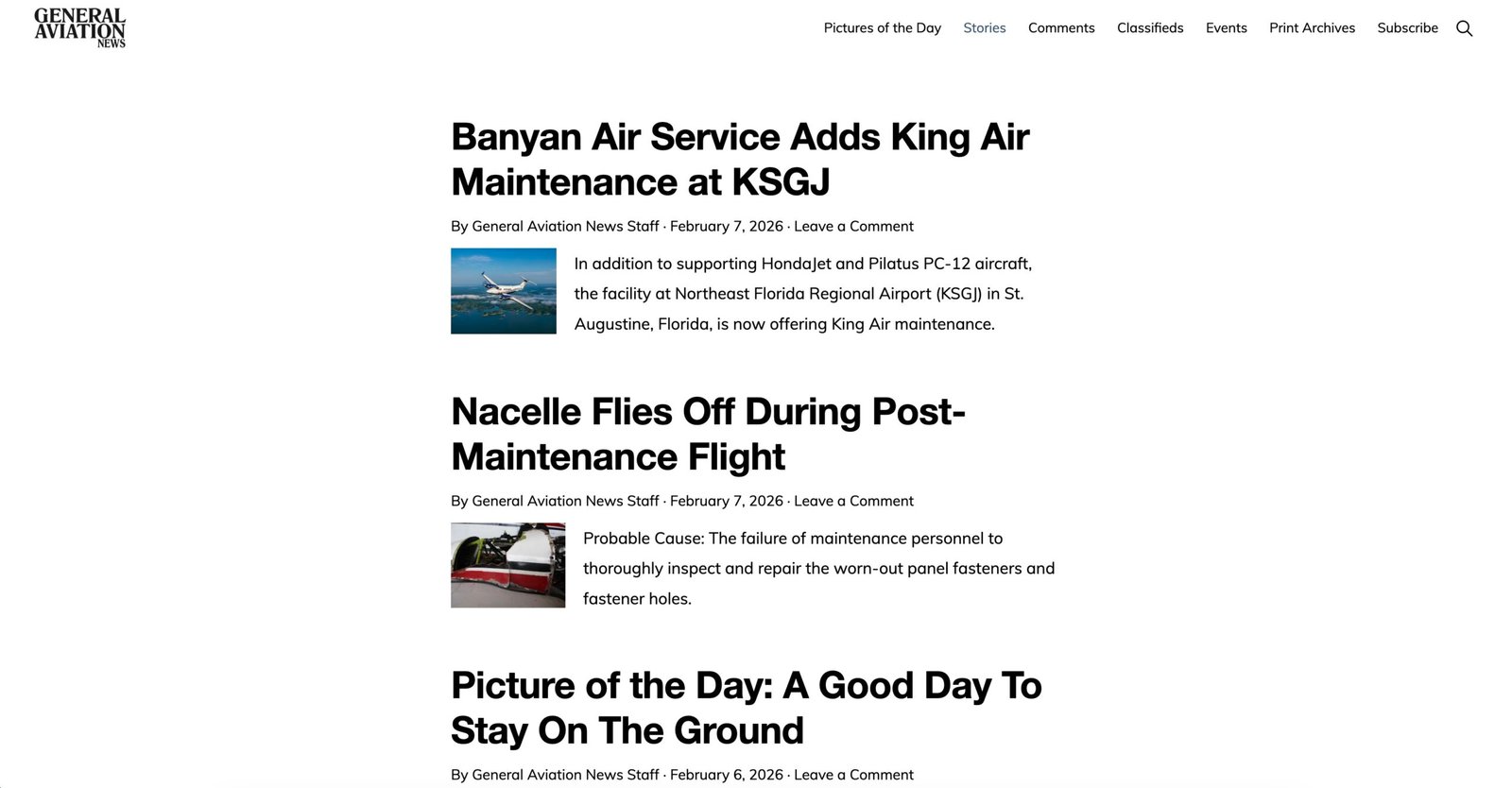
- General Aviation News main site — recent stories to study. Read 3–5 pieces in the category you want to write for. :contentReference[oaicite:17]{index=17}
- Aviation markets that pay writers — WritersWeekly roundup (useful for pay context). :contentReference[oaicite:18]{index=18}
- Plane & Pilot — another aviation outlet with submission guidance
- AOPA — examples of magazine writer guidelines
- Editorial guidelines (example resource suggested by you) — Inside Precision Medicine — use this as a model for editorial ethics, disclosures, and author responsibilities when you craft your own disclosure statements in pitches.
- FreedomWithWriting — publishing & payment tips for freelance writers
- Flickr (host photos) — useful for sharing galleries to editors