


Guide: How to Research, Pitch, and Write for AsianScientist (Beginner → Paid Contributor)
This guide takes you, step-by-step, from “what is AsianScientist?” to a finished pitch and sample templates you can adapt. It assumes you are new to pitching magazines but willing to build small demos, strong samples, and a clear pitch. Practical checklists and sample email text are included.
Key files to keep open while you work: AsianScientist’s Contribute / Join Us page and their Contact page. Use those to contact editors and to confirm current submission instructions. (Links in the resources section below.)
Section 1 · Know the publication
What AsianScientist is, why it matters, and where to find contributor info
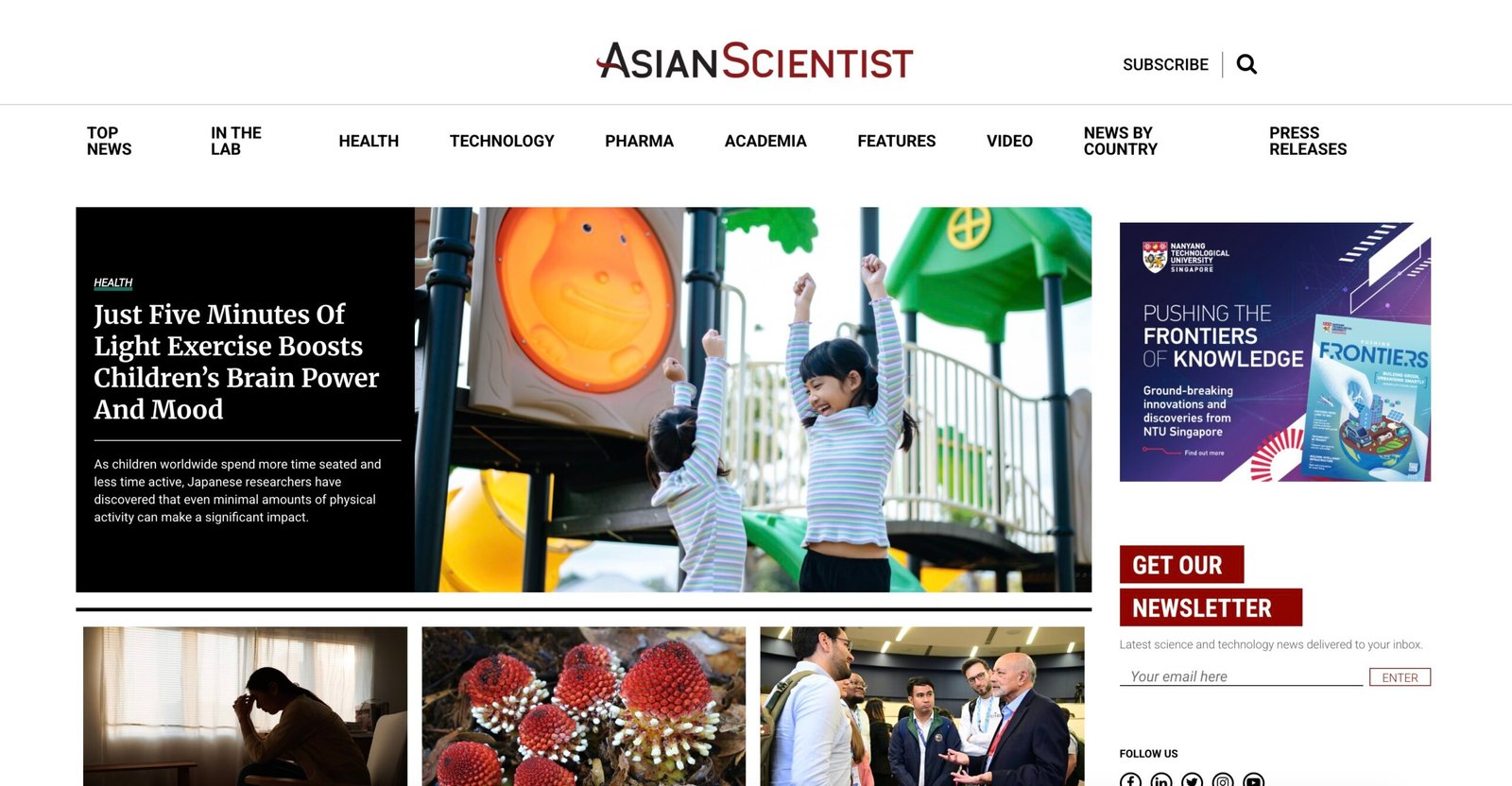
Asian Scientist Magazine is a Singapore-based online science & technology magazine that highlights research, breakthroughs, and R&D stories across Asia. It is run by a professional editorial team and publishes news, features, interviews, and profiles of scientists and research institutions. Use the magazine’s own pages to learn how to contact editors or pitch: see their Contribute / Join Us and Contact pages for the most up-to-date details on tipping, submissions, and editor contact info.
Quick facts you should note immediately:
- AsianScientist focuses on Asia-based research stories and profiles.
- The editorial team lists a contact email and phone number on their website and invites tips and submissions via the contribute page.
- They run features like the “Asian Scientist 100” and editorial lists that spotlight regional researchers.
- Contribute / Join Us — use this to find how the team accepts tips and submissions.
- Contact — their general contact page lists an email (editor@asianscientist.com) and phone for the office.
- About — mission, editorial focus, and publisher information.
An AsianScientist story succeeds when it does one or more of the following:
- Explains the significance of a piece of research to readers outside that lab or subfield.
- Connects a paper, technique, or discovery to regional health, policy, or industry implications.
- Tells the scientist’s story: background, motivation, and impact on local research ecosystems.
| Piece type | Length & style | Why it works for AsianScientist |
|---|---|---|
| News brief | 300–700 words; clear lede; tight quotes | Quickly covers new papers, grants, policy updates in Asia |
| Feature / profile | 800–1800 words; narrative + quotes + context | Humanizes researchers; links lab work to impact |
| Explainer / deep dive | 1200–2500 words; visuals, simplified methods | Breaks down complex methods for an informed, non-specialist audience |
Section 2 · Fit your story
Is your idea shaped for AsianScientist’s readers?
Before you write, shape your idea into a short “mission sentence” — one crisp line that says who benefits, what they will learn, and why it matters in Asia. Examples:
- “How researchers in Singapore used wastewater surveillance to detect local COVID variants, and what that means for public health monitoring.”
- “A profile of an early-career neuroscientist in India who built low-cost electrophysiology tools for field labs.”
- “Explainer: How CRISPR base-editing differs from classic CRISPR-Cas9, with visuals and a short glossary for non-specialist policymakers.”
Is it regionally relevant?
If your story has a direct connection to Asia (research location, regional impact, an Asia-based team, or an Asia-specific policy angle), it’s already a strong match. If the work is global, emphasize the Asia angle: case studies, collaborators, or implications for Asian health, environment, or industry.
Is the science accurate and verifiable?
Editors expect you to link to the original paper, to quote authors or press officers, and to avoid overclaiming results. If your idea relies only on speculative opinion, deepen it with interviews or published evidence.
Can you access sources?
Make a mini-source list: the corresponding author, a second independent expert, the paper (or preprint), and any related press release or institutional note. Editors like to see that you already know who to call.
Section 3 · Build samples & credibility
How to make a small writing ladder that wins trust
Even as a beginner, you can create 3–5 polished samples that show editors you finish work, follow structure, and verify facts. Use free or low-barrier platforms to publish your practice pieces.
- Working headline and 2–3 short subheadings.
- A clear lead paragraph answering: who, what, where, why it matters.
- Links to primary sources (paper DOI, institution news release).
- At least one short quote you sourced: an author or independent expert.
- One image or a figure (with credit), or a link to a small demo if relevant.
| Sample | Length | Why it helps |
|---|---|---|
| News brief based on a recent paper | 400–700 words | Shows you can summarize results and cite correctly |
| Feature/profile of a researcher or lab | 900–1600 words | Demonstrates interview and narrative skills |
| Explainer of a technique (with visuals) | 1200–2200 words | Proves you can simplify methods for informed readers |
Section 4 · Pitch workflow & templates
A repeatable workflow for science pitches — step-by-step
Read AsianScientist’s Contribute and Contact pages
Open: https://www.asianscientist.com/contribute/ and https://www.asianscientist.com/contact/. Note any explicit submission instructions, contact emails, or phone numbers. If they ask for “tips” to be emailed, use the given editor email and follow the format requested (short pitch first, documents only if asked).
Prepare a short pitch (50–150 words)
Editors are busy. Start with a single-paragraph pitch that contains:
- Headline idea (short, descriptive)
- One-sentence hook — why it matters to Asian readers
- What you will deliver (interviews, sources, figures)
- Links to 1–2 writing samples
Submit the pitch via the method they request
If they provide a form, use the form. If they request tips via email, send a concise email with the pitch, and attach or link to samples (not full drafts unless requested). Include availability for interviews and any potential embargo constraints.
Follow up politely and prepare a full outline
If you haven’t heard in 2–3 weeks, send one polite 2-line follow-up. Meanwhile, prepare a detailed outline (500–800 words) with section headings and key sources. If the editor asks for a draft, you’ll be ready.
Pitch Templates
Short email pitch (for tips or first contact)
Subject: Pitch — [Headline idea] — [Your name, location]

Hello [Editor name or "Asian Scientist team"],

I’m [Your name], a science communicator / researcher based in [city, country]. I’d like to pitch a short feature for Asian Scientist:

Working headline: [A concise, informative headline]

Hook (1 sentence): [Why this matters to Asian readers — policy, health, environment, industry]

What I'll deliver: interviews with [lead author name + independent expert], link to the paper ([DOI or URL]), one explanatory figure, and a 900–1,200 word feature.

My samples: [link1], [link2]
Short bio: [1 sentence — what you do, where you write/work]

Thanks for considering this. I’m available for interviews and can send an outline on request.

Best,
[Your name] — [email] — [phone (optional)]
Longer pitch / outline (paste if requested)
Title: [Headline idea]

Proposed length: 1,000–1,500 words

Lead / lede: [2–3 short paragraphs that set the scene and the human or regional hook]

Sections (brief):
1) Background: the research question and why Asia cares (2–3 paragraphs)
2) The find: what the paper shows (evidence, methods in plain language)
3) Voices: who we’ll interview (lead author + independent expert + policy/practice voice)
4) Implications: how this affects healthcare/industry/policy/next research in Asia
5) Visuals & data: proposed figure/table and photo ideas

Sources & access:
- Paper: [DOI or link]
- Lead author: [name, email or affiliation] — (I have contacted / I will contact)
- Other sources: [list]

Why Asian Scientist: [1–2 lines — fits Asia-focused readership because...]

Samples: [link1], [link2]

Timeline: I can deliver a draft within [X] days of commission. Happy to provide a shorter news brief if you prefer.

[Your name, affiliation, contact details]
Section 5 · Money, rights, and expectations
What to expect on payment, rights, and timelines
Public data about exact pay rates for AsianScientist contributors is limited; many specialty publications negotiate fees per assignment. The safest approach is to treat initial commissions as scope-confirmation conversations: ask the editor about the fee and rights before you begin a long piece, or indicate in your pitch that you’re available for a short paid brief or a longer paid feature.
- Ask: Is this paid? What is the fee? Is it a flat fee or per-word?
- Ask: What rights do I retain (first publication, archive, republication on personal site)?
- Confirm: The payment method (bank transfer, PayPal) and payment schedule (on publication, 30 days after invoice, etc.).
- If no pay info is provided, ask before you write a full-length feature.
- Offer a short, paid news brief if the editor is unsure about a long feature.
- For unpaid or low-paid first pieces, make sure the exposure and byline value are worth the time.
- Use any published piece as a portfolio asset to land better-paid freelancing work.
| Scenario | Suggested approach |
|---|---|
| Editor confirms payment upfront | Agree terms in writing (email) and deliver per agreed timetable |
| No payment policy published | Politely ask for payment info in reply. If unpaid, consider writing a short piece or ask for syndication rights. |
| Commission with edits | Expect editorial changes — ask if major rewrites affect pay |
Section 6 · Ethics, verification & AI
Trust, accuracy and using AI responsibly
Science publications live on trust. AsianScientist’s readers expect citations to original publications, correct author affiliations, and honest representation of findings. When using AI tools, do so only to speed editing or brainstorming — never to invent quotes or produce unverified claims.
- Pass off AI-generated analysis as original reporting.
- Invent quotes, affiliations, or “impact numbers”.
- Copy text from press releases or other articles without attribution or transformation.
- Use AI to suggest simpler phrasing, then verify and rewrite.
- Use AI to create checklists, or to draft interview questions — but confirm all facts with sources.
- Use AI to generate alternative headlines and subheads for editor feedback.
Section 7 · Micro-SOP / Final checklist
The final checklist before you send a pitch or draft
Tick these items before sending anything to editors:
Section 8 · FAQs & Further Reading
Quick answers and a long list of resources to learn pitching & science writing
- AsianScientist — Contribute / Join Us (editor contact & tips)
- AsianScientist — Contact
- AsianScientist — About
- The Open Notebook — pitch database & science-writing craft
- National Association of Science Writers — pitching advice and resources
- Poynter — pitching & reporting guides
- Knight Science Journalism @ MIT — practical science-journalism resources
- Science Magazine — freelancer guidelines (example of professional submission guidance)
- Dev.to — platform to publish tech/science explainers
- Medium — platform for longer explainers and practice
- Freedom With Writing — guides to paid writing opportunities
- AsianScientist — LinkedIn
- AsianScientist — Facebook