


 .
.
Guide: How to Get Paid to Write for New Lines Magazine (Step by Step)
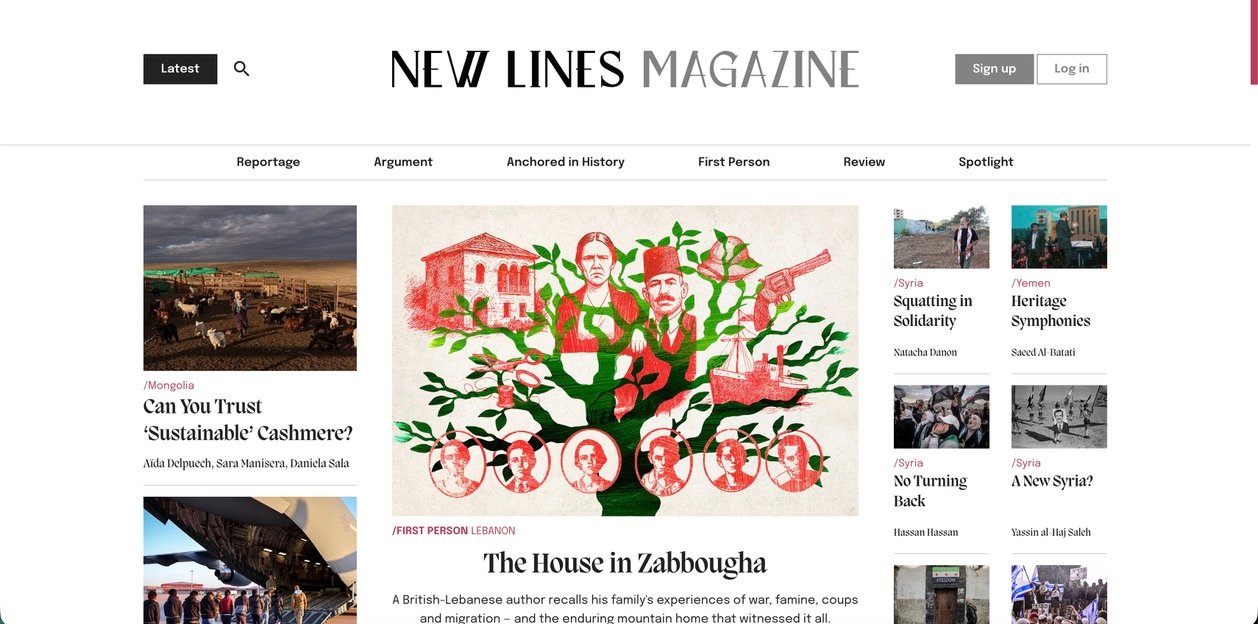
This guide shows you how to pitch, write, and publish for New Lines Magazine in a way that even a beginner can follow. You will learn how New Lines thinks about stories, what their sections mean, how to build a clean pitch, how to report and draft, and how to turn one accepted piece into a stronger writing career.
Everything is written in simple English. Treat this like a mini SOP: follow the steps, copy the templates, use the links, and you’ll know exactly what to do next.
Core official links you should keep open while reading: Pitch / Submissions, About, Newsletters.
Section 1 · Understand the publication
What New Lines Magazine publishes (and what it doesn’t)
New Lines Magazine publishes essays and reportage across a wide range of subjects, with strong coverage of the Middle East, Africa, and South Asia, plus politics/culture and major controversies elsewhere. They explicitly say they’ll consider stories from anywhere if the story is compelling, well written, and accurate.
The easiest beginner mistake is pitching a topic. New Lines wants a story: a specific situation, a character or community, real tension, and a reason it matters now. So “This explores culinary heritage” is too broad. But “Young New York chefs fighting to keep vanishing cuisine alive” is a story-shaped pitch (New Lines gives a similar example).
- New Lines = narrative + reporting (not quick news rewrites).
- Bring the reader somewhere: a place, a community, a hidden system, a forgotten history.
- Explain clearly: avoid jargon, avoid academic abstracts.
- Be accurate: your sources matter, your details matter.
If you can write like you are guiding a smart friend through a complex reality, you are already closer than you think.
- Vague “issue explainers” with no story spine and no new reporting.
- Academic paper summaries that read like a journal abstract (New Lines warns against this).
- Generic op-eds that repeat conventional wisdom (their “Arguments” section is not standard op-eds).
- PR pieces for a brand, product, or personal promotion.
New Lines is open to many formats, but they want fresh thinking + real narrative.
| What the editor wants | What you should send | Beginner-friendly tip |
|---|---|---|
| A story with tension + relevance | A tight pitch with a proposed lead | Write your lead first (3–6 lines) |
| Evidence you can report it | Sources you plan to use + access | List 6–12 sources before pitching |
| Clarity for general readers | Plain English, no jargon | Explain every “insider” term in 1 line |
| Professional structure | Bio + length + deadline | Always include word count & timeline |
Section 2 · Fit your idea
Pick the right section (New Lines has 5 core sections)
New Lines publishes five distinct sections. As a beginner, the fastest way to get accepted is to match your pitch to the right section. Below is a simple “fit guide” you can copy.
For narrative reporting + investigations
Reportage is closest to a classic feature, but deeper and more nuanced. This is where longform investigations can fit: corruption, intelligence operations, war, cultural trends, financial/political networks, and more.
- Best angle: “Here’s what’s really happening inside X, and here’s proof.”
- Best pitch proof: show access + sources + documents + OSINT trail.
- Beginner move: start with one city/community/system you can access.
Provocative editorials — but not standard op-eds
New Lines says this is not an op-ed section. They want arguments that undercut conventional wisdom by presenting something new, or recasting a key historical event in a new light.
- Best angle: one sharp claim + evidence chain + a fresh frame.
- Beginner move: write a “mini-thesis” in 2 sentences, then list 7 proof points.
Historical narratives that illuminate the present
This section takes an undercovered or misunderstood historical episode and recasts it to understand modern conflicts and trends. New Lines also highlights a “History Project” linked to this section.
- Best angle: “A forgotten event from the past is shaping today’s reality.”
- Beginner move: pick one event, 2–3 primary sources, and 3 modern echoes.
- Tip: Read their History Project explainer essay linked on the pitch page.
Personal stories that become bigger than the writer
First Person is for highly personal essays that still touch universal themes: war, love, grief, hope.
- Best angle: “My story is a door into a larger truth.”
- Beginner move: keep it grounded: scene, detail, stakes, and meaning.
Thoughtful review essays (ideas + themes)
Review essays are about ideas and themes, drawing from books, films, television, music, art. This is great for beginners who read deeply and can connect art to politics, memory, identity, and society.
- Best angle: “This work matters because it reveals X about our world.”
- Beginner move: pick 3 themes, 5 supporting scenes/quotes, and 1 larger claim.
Section 3 · Beginner setup
Build your “Proof Pack” (so editors trust you)
New Lines asks you to include your bio, any unusual access, and why you’re the right person to write it. That means: your pitch must carry proof. You don’t need a famous name, but you do need a clean “proof pack”.
- 2–5 published samples (even on Medium/Substack/your blog) showing narrative clarity.
- A short bio (2–4 lines) + location/time zone.
- Access proof: interviews lined up, travel plan, language ability, archives access, etc.
- Source list: 6–12 sources (people, documents, data, FOIA, court records, research).
- Story map: what you’ll reveal in section 1/2/3/4 (even if it evolves).
When editors feel you can actually deliver, your acceptance odds go up fast.
- Write 1 local story (800–1,500 words) with 2 interviews.
- Write 1 explain-by-story piece (1,500–2,500 words) with 1 document trail.
- Write 1 “profile with stakes” (1,200–2,000 words).
- Publish them in a clean place: Medium, Substack, or a simple blog.
Your goal is not “viral”. Your goal is: clear narrative + evidence + clean structure.
| Proof item | What it looks like | How to build it this week |
|---|---|---|
| Samples | Links to 2–5 published pieces | Publish 1 strong post on your platform |
| Access | Names (or roles) of sources, places, archives | Message 5 sources; confirm 2 interview slots |
| Document trail | Court docs, reports, budgets, datasets, FOIA | Collect 8–15 documents; highlight 10 key lines |
| Story spine | Beginning → middle → turn → ending | Write a 6-bullet “scene list” |
Section 4 · Practical workflow
Step-by-step New Lines pitch plan (copy/paste templates)
New Lines wants pitches emailed to [email protected]. They recommend you keep a cold pitch under ~300 words and follow their “Anatomy of a Pitch” structure: the story (lead + 1–2 paragraphs), brief lit review, your bio, length + deadline.
They also advise writers to avoid jargon and avoid pitching an academic abstract. This section gives you a clean, beginner-safe process and templates.
Read the official pitch page and copy the skeleton
Open: newlinesmag.com/pitch and copy their four required blocks into your notes:
- Story (start with the lead you envision)
- Brief lit review (where covered + how yours differs)
- Your bio (access/expertise/why you)
- Length + deadline (word count + delivery date)
This is your pitch “container.” Now you fill it with a story.
Write a headline and a 4–6 line lead (before anything else)
New Lines explicitly says: “Come up with a catchy title for your pitch, and put it in the email subject line.” That means your subject line matters.
- Subject template: PITCH — [SECTION] — [Working Title]
- Lead template: 1 scene + 1 reveal + 1 stake + 1 reason now
- Beginner trick: write your lead like you’re opening a documentary scene
Add proof: sources, access, and what you will newly reveal
Editors say “yes” when they believe you can deliver something new. Make it obvious:
- Access: who you can interview, where you can go, what languages you can use
- Evidence: documents, data, court filings, budgets, leaked files, OSINT trail
- Novelty: what you will reveal that readers won’t get elsewhere
You don’t need to include every detail. Just enough proof that this is real reporting.
Do a “lit review” in 8 minutes (beginner-safe)
New Lines asks you to briefly explain whether the story was covered elsewhere and how yours will differ. This is where beginners panic. Keep it simple:
- List 3–6 relevant articles (title + outlet + year).
- Write 1 sentence: “Most coverage focuses on X. This story focuses on Y.”
- Write 1 sentence: “New: interviews with A/B, documents C, on-the-ground D.”
This shows you did your homework and you’re not repeating old work.
| Template | Copy/paste version |
|---|---|
| Email subject | PITCH — [Reportage/Arguments/History/First Person/Review] — [Working Title] |
| Lead (4–6 lines) | [Scene] … [Character/community] … [Tension] … [Reveal] … [Why it matters now] … |
| Lit review (2–3 lines) | Covered by: [Outlet, Year] (focus: X), [Outlet, Year] (focus: X). This piece differs by focusing on Y and using [sources/docs/access]. |
| Bio (2–4 lines) | I’m [Name], a writer based in [City]. I’ve reported/written on [topic]. I have access to [sources/place/language]. Samples: [link 1], [link 2]. |
| Length + deadline | Estimated length: [1,800–3,000 / 3,000–5,000] words. Filing date: [date]. |
Section 5 · Delivery workflow
Reporting & drafting workflow that editors trust
New Lines emphasizes compelling, well-written, accurate work. Accuracy and clarity are not “nice to have” — they are what keep you in the editor’s good books. Use this workflow for any New Lines-style longform writing.
Build a source map before interviews (30 minutes)
- Write your core question in one line.
- List 3 stakeholder groups (who benefits, who suffers, who controls).
- For each group, list 3 sources (people) + 2 sources (documents).
- Decide what you must verify (dates, money amounts, legal claims, locations).
This stops you from doing “random interviews” that don’t connect to a clear narrative.
Interview like a storyteller (not like a questionnaire)
- Start with scenes: “Take me back to the moment when…”
- Ask for details: sounds, objects, time, sequence, decisions.
- Ask for proof: photos, docs, messages, receipts, names of witnesses.
- Close with: “Who else should I talk to?”
Your job is to capture scenes and facts that can be verified, not just opinions.
Draft with a “spine” (outline that never collapses)
- Hook: 1 scene or 1 sharp claim.
- Nut graf: what the story is really about + why now.
- Body: 3–5 sections (each reveals something new).
- Turn: a surprising fact, contradiction, or new consequence.
- Landing: what changes, what continues, what this means.
If you write like this, your editor’s job becomes easy — and that is how you get repeat assignments.
Fact-check yourself (beginner method)
- Highlight every number, date, and proper noun.
- For each highlight, paste a link or a note explaining the source.
- Mark each claim: Observed / Documented / Attributed.
- If a claim is not one of those three, rewrite it or remove it.
This method makes accuracy visible, and editors love visible accuracy.
Section 6 · Money side
Money, rights, and professional habits (what beginners miss)
New Lines’ public pitch page explains how to pitch and what sections they publish, but it does not publicly list a fixed pay rate. So you should expect payment terms to be confirmed during the assignment conversation. This section teaches you the beginner-safe habits that protect your time and help you get paid smoothly.
- Fee: flat fee or per-word? (confirm in writing)
- Kill fee: what happens if the story is canceled?
- Expenses: travel/records requests/tools (what’s reimbursed?)
- Rights: first publication rights, exclusivity window, reprint rules
- Timeline: draft date + edit rounds + expected publish window
Even as a beginner, you can ask these calmly and professionally. It signals you take the work seriously.
- Use the byline as a credibility signal in future pitches.
- Add it to your portfolio + LinkedIn + media kit.
- Pitch related follow-ups (same region/topic) — editors like continuity.
- Offer a repurposed talk, panel, or newsletter cross-post later (only if allowed).
Think of each accepted piece as both money now and career leverage.
| Habit | Why it matters | Simple way to do it |
|---|---|---|
| Keep receipts & a reporting log | Supports reimbursements + accuracy | One folder + one running timeline document |
| Confirm quotes & spellings | Reduces corrections and trust loss | Read names back; double-check titles |
| Send clean drafts | Editors prioritize writers who save time | Headings, short paragraphs, clear sourcing notes |
| Be transparent about risks | Protects you and the publication | Tell editor if sources might disappear / security issues |
Section 7 · Micro-SOP
Final checklist before you pitch New Lines
New Lines recommends cold pitches follow their structure and stay concise (under ~300 words). Use this checklist to avoid the most common beginner pitch mistakes.
Section 8 · Quick answers + resources
FAQ (beginner) + a big research link library
- GIJN (Global Investigative Journalism Network)
- GIJN Resource Center
- ICIJ (International Consortium of Investigative Journalists)
- OCCRP (Organized Crime and Corruption Reporting Project)
- Bellingcat (OSINT reporting examples)
- ProPublica (investigative projects)
- DocumentCloud (document hosting + annotation)
- data.world (datasets)
- Our World in Data (context + charts)
- Transparency International (corruption context)
- Reporters Without Borders (press freedom + safety)
- CPJ (Committee to Protect Journalists)