


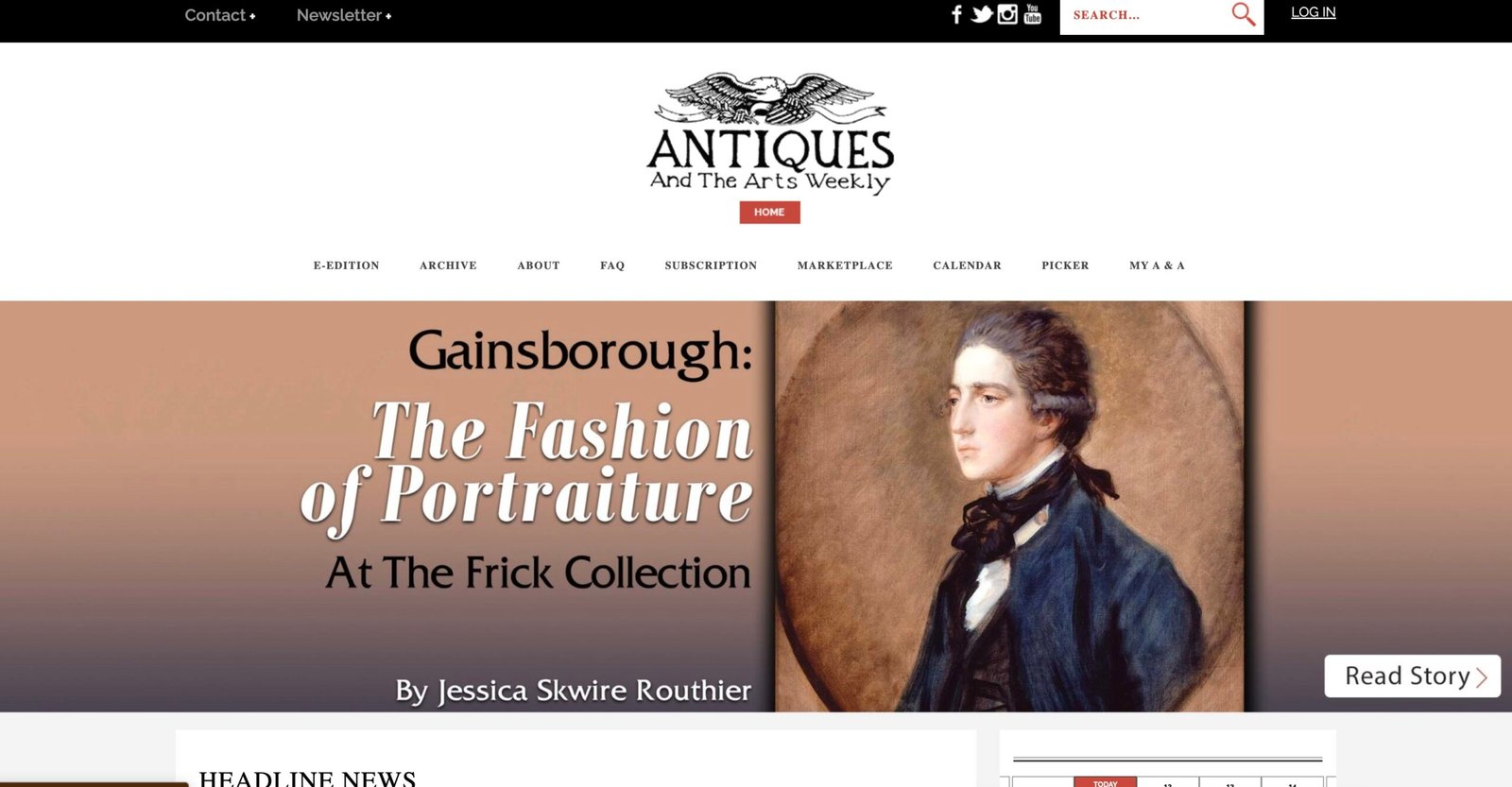
Guide: How to Research, Pitch, and Earn from Antiques & The Arts Weekly
This guide is designed so a beginner — whether a collector, dealer, auction-goer, or art student — can learn to research, write, and pitch useful articles or press for Antiques & The Arts Weekly.
You will get: how the publication works, what they publish, multiple article ideas, step-by-step pitch templates (email-ready), how to build samples, and practical ways to earn from your writing and related activities.
Section 1 · Know the publication
What Antiques & The Arts Weekly actually publishes
Antiques & The Arts Weekly is a long-running weekly publication focused on the antiques and arts trade: auctions, shows, dealers, market news, and feature profiles. It is available in both print and an online e-edition, and each issue typically runs dozens of pages covering timely auction results, exhibition news, and dealer profiles.
If you want to contribute stories about auction highlights, exhibition reviews, show reports, collecting tips, or market analysis, this is the right kind of place. Read current and recent issues and note the tone — factual reporting, auction details, clear attributions, and photos with captions are common. You can explore the site’s homepage and many back issues to get a feel for the content and rhythm. (Homepage, Article Archive.)
What you will see on the site and print edition:
- Auction reports — results, prices, and highlights from houses large and small.
- Show previews & reviews — what sold, standout dealers, and special finds.
- Feature profiles — dealers, collectors, museum exhibits, and restoration stories.
- Market analysis — trends, prices, and buying signals for collectors and dealers.
- Classifieds / Place an Ad — the site supports marketplace activity for buying and selling. (Place an Ad)
The publication is produced in Connecticut and has a national (and international) readership in the antiques trade. It mails a print edition weekly and publishes an e-edition online. Contact and editorial email addresses are published on the site for submissions, news tips, and advertising — the editorial email is antiques@thebee.com. (Contact & archive)
| Item | Why it matters to a writer | How to use it |
|---|---|---|
| Homepage / Current Issues | Shows the style and recent topics | Read 5–10 recent stories to match tone and depth |
| Article Archive | Historic coverage and sample headlines | Find similar stories, avoid duplication, and cite past results |
| Place an Ad / Classifieds | Shows how dealers and readers buy/sell | Pitch market-focused features that help buyers and sellers |
| Editorial contact | Where to send news tips, release, or story ideas | Use the editorial address for story pitches: antiques@thebee.com |
Section 2 · Find a publication-shaped idea
What kind of antiques stories get attention
Good ideas for this publication are concrete, tied to events or people, and backed by verifiable facts or images. Use these three filters to shape your idea.
Is this timely or evergreen?
Timely: auction results, show previews, exhibition openings, recently discovered objects. Evergreen: how-to restorations, collecting guides, profiles of collecting categories (e.g., folk art, Prattware, prints). Timely stories often get faster editorial interest. Evergreen pieces can become useful features in archive and packages.
Can you provide proof or reporting?
Editors value photos, auction catalogs, price lists, provenance documents, and interviews. If you have direct access to an auction house, dealer records, or a conservator, that raises your story’s value.
Is the audience a collector, dealer, or both?
Tailor your angle. Dealers want market signals and price validation; collectors want buying tips, conservation advice, and stories that make an object’s significance clear.
- Headline idea — why it matters — source (example: “Local auction records bring $200K for early American quilt — shows rising interest in textile collecting — auction catalog + dealer interview”)
Section 3 · Build strong samples
Small projects you can finish in a week
You do not need a long C.V. to start. Editors need proof you can gather facts, write clearly, and present photos. Here are concrete sample projects that become writing samples or pitch attachments.
Attend (or call) a local auction. Report 4–6 standout lots with photos, final prices, buyer identities if public, and a local quote (auctioneer or dealer). 600–900 words is fine for a sample.
Pick one interesting object (a painting, a decoy, a textile). Tell its history, what makes it valuable, and how to spot fakes. Include clear photos and captions.
A 1,500–2,000 word piece on “How to start collecting 19th-century American quilts” or “Buying a first decoy” with key terms, price ranges, and recommended shows or auction houses.
If a major fair or regional show is upcoming, write a preview: which dealers to watch, special exhibitors, and what the market interest is this year. Interview one dealer or organizer for quotes.
Section 4 · How to pitch (email templates)
Fast workflow: research → outline → pitch
Antiques & The Arts Weekly does not publish a public “write for us” form like some magazines — instead use the editorial contact and clearly labeled emails on their site for news tips and editorial correspondence. The main editorial email is antiques@thebee.com. Use it for concise, professional pitches with a clear outline and evidence (photos, links, catalog pages).
Subject line (be specific)
Good subject line format: “Pitch: Auction report — [Auction House] [date] — standout lots” or “Pitch: Show preview — [Show Name] — 400–800 words + photos”. Editors scan subject lines — be direct.
First paragraph: the story in one line
Start with the news hook. Example: “Heritage’s June 12 Americana sale featured a Prattware jug that led the auction at $68,000 — I can provide lot photos, catalog references, and a short dealer interview.” This tells the editor what you have and why it matters.
Bulleted outline & evidence
Include a concise outline (3–6 bullets) and links to proof: catalog page, your photos (hosted on Google Drive, Dropbox, or your site), and any previously published sample. Example bullets:
- Lead: one-sentence summary + price
- Background on the object/house
- Why the result matters for the market
- Sources: auction catalog URL, owner statement, photos (links)
Short author bio & contact info
One-line bio: “Jane Smith is a collector and independent researcher based in Boston; previously contributed to LocalPaper.com; reachable at (phone) and youremail@example.com.”
Sample pitch (copy/paste)
Subject: Pitch: Auction report — [Auction House], [Date] — standout lots

Hello Editor,

I’d like to pitch a 700–900 word auction report on [Auction House]’s sale held on [date]. Highlights include:
• Lot 123 — Prattware jug, est. $3k–5k, sold $68,000 (photo + catalog link)
• Lot 204 — Carved decoy, est. $500–1,000, sold $12,400 (interview with dealer)

I can supply high-resolution photos (attached or via link), the auction catalog page ([URL]) and a short quote from the auctioneer. I have previously published similar reports at [link to sample].

Short bio: [Your one-line bio]
Contact: [phone], youremail@example.com

Thanks for considering this.
Best,
[Your Name]
Section 5 · How you can earn from writing about antiques
Realistic earning paths — short and long term
Antiques & The Arts Weekly is primarily a trade & news publication — it is not primarily a paid contributor platform like some lifestyle magazines. That said, writing for magazines, local papers, blogs, and building a visible portfolio opens multiple monetization options. Here are practical ways to earn.
Some trade publications commission or pay for freelance reporting — reach out with a professional pitch that makes clear the work (reporting, travel, photos) you will do. If the editorial team has a budget, they will outline payment terms in their reply. If not, your byline and exposure still build authority.
Use published articles as portfolio evidence to offer freelance cataloguing, condition reports, or research services to dealers and collectors. Your article mentions and bylines become marketing material.
As you publish, you may be asked to give short talks at shows, run tours, or provide on-site commentary — these are paid opportunities at fairs and museums.
Write buyer’s guides (books on collecting, restoration supplies) with affiliate links, or sell digital downloads — condition checklists, photo guides, price-tracking spreadsheets. Monetize your own blog once traffic grows.
| Path | Short term | Long term |
|---|---|---|
| Freelance features | Small fees (varies) or guest byline | Higher-pay recurring columns and commissions |
| Services to dealers | Valuations and reports (paid per job) | Retainer or repeat clients |
| Content monetization | Affiliate earnings / low at first | Productized courses, ebooks, and workshops |
Section 6 · Research & ethics
Accuracy matters — how to document and attribute
The antiques trade depends on provenance, documented sales, and accurate descriptions. Editors and readers expect sources: auction lot pages, catalog numbers, museum records, dealer statements, and photos with captions. Here are practical rules.
- Link to the auction catalog page or a reputable aggregator for results.
- Keep copies or screenshots of sale pages (with timestamps).
- Record interviews (with permission) and quote accurately.
- Note condition, dimensions, and any restoration in captions.
- Disclose if you work for or sell an object’s owner.
- Do not publish sales figures you cannot verify.
- Respect embargoes — if an auction house requests a lift date, follow it.