


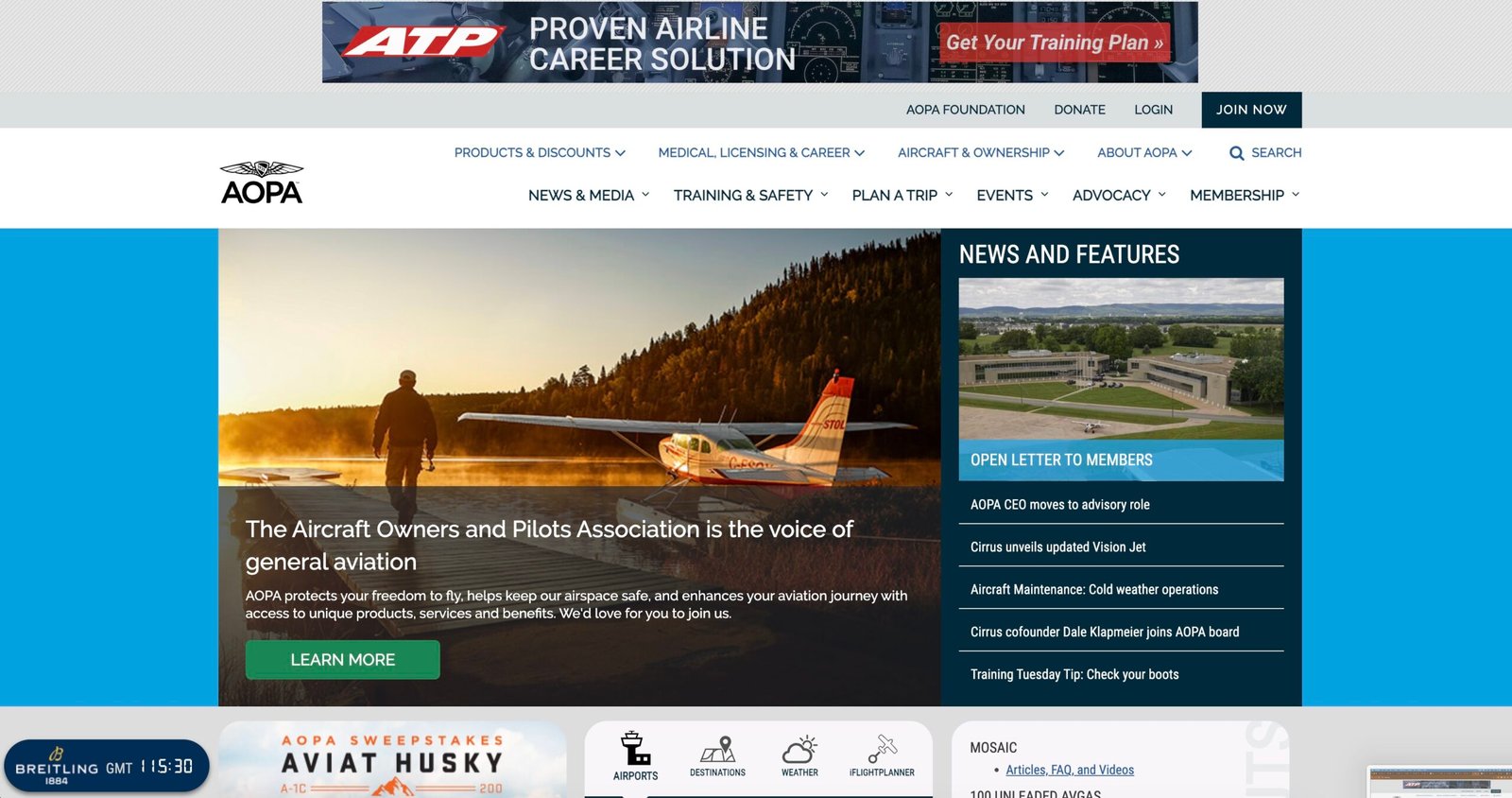
Guide: How to Write, Pitch, and Get Published by AOPA (Beginner → Paid)
This practical guide walks you through everything a beginner needs to plan, write, and pitch articles to AOPA publications. It covers what editors look for, how to format aviation content safely and clearly, a step-by-step pitch SOP, rights & payment basics, and a final pre-submission checklist.
Key resource: AOPA’s official writers’/submission page (use it for exact rules and the live submission form).
Inside: topic selection examples, demo projects you can build, sample outlines, image & caption standards, editorial ethics for aviation content, and many helpful AOPA links to follow while you prepare.
Section 1 · Why write for AOPA?
Reasons to aim for AOPA — beyond the byline
Many aviation writers start on personal blogs or community sites, but publishing with an organization like AOPA brings visibility to a broad pilot audience, editorial support, and professional credibility. AOPA reaches pilots, flight instructors, flight students, owners, and industry professionals — readers who look for trustworthy, actionable, and safety-focused reporting and tutorials.
Practical benefits of publishing with AOPA:
Your work gets placed in a high-trust environment — AOPA’s site, newsletters, and affiliated magazines. That often leads to new freelance clients, speaking invites, and stronger portfolio evidence for aviation editors.
Editors at established publications provide feedback and copyediting that improves clarity, technical accuracy, and presentation — a valuable learning step for beginners.
Quick note: always check AOPA’s live submissions / writers’ guidelines page for the newest instructions before you craft a submission. (AOPA maintains an official writers’/publications page with requirements and contact steps.)
Section 2 · Know the audience
Who reads AOPA and how to match tone
AOPA’s audience ranges from student pilots and newly licensed private pilots to long-time aircraft owners, flight instructors, and industry professionals. That mix means your writing should be:
- Clear: avoid jargon where possible; explain acronyms the first time you use them.
- Accurate: aviation readers expect technical correctness — cite official sources (FAA, manufacturer docs) where needed.
- Practical: prefer step-by-step, checklist-style or example-based guidance that a pilot can apply in training or operations.
- Safety-minded: always highlight safety considerations, limitations, and decision points; do not offer advice that could endanger readers.
Example tones: “Here’s a repeatable way to improve your crosswind technique” vs. “Crosswinds are difficult — be careful.” The first is actionable and preferred.
Section 3 · What AOPA publishes
Forms of content: magazines, digital features, training, and safety content
AOPA produces a range of content types: feature articles, safety spotlights, how-to tutorials, news, and opinion. Their larger magazine brands and digital channels include AOPA Pilot and Flight Training (each has its own editorial needs).
Long-form features often require interviews, manufacturer verification, and high-quality photos. If you pitch a feature, expect editors to ask for reporting notes and source contacts (FAA documents, NTSB reports, flight schools).
Safety content is precise and conservative. If you propose a training piece, include the exact maneuvers, altitudes, scenario setup, and safety margins you used while testing or teaching.
Helpful: AOPA publishes distinct product and advertising guidelines for magazine assets (image DPI, color space, and file formats). If your pitch will include photos or print-ready artwork, ask the editor for specs early.
Section 4 · Shape your idea
Quick idea-check: is this an AOPA-friendly story?
Use these simple filters before you outline or pitch a story to AOPA:
1 — Does it solve a pilot problem?
Make the piece a tool. Example: instead of “What is WAAS?”, write “How WAAS changes GPS approaches and what to check before your approach.”
2 — Can it be verified?
Editors want sources. Use FAA advisories, manufacturer data, flight school experience, or logged flights you conducted and can document.
3 — Is the safety angle explicit?
Even how-to pieces need to emphasise limitations and safety decisions. Include a small “safety checklist” or “what could go wrong” section.
4 — Is it original or a strong new take?
Search AOPA’s site for similar titles. If a very similar article exists, refine your angle (different aircraft, new tech, new procedure).
Section 5 · Build a demo & portfolio
How to prepare samples editors will respect
Before you pitch, have 2–4 polished samples that show you can report, explain, and format aviation content correctly. These samples can live on your blog, a reputable aviation forum, or a guest post on a smaller aviation site.
- Clear introduction explaining who the story helps and why.
- Step-by-step sections (with numbered steps where applicable).
- Technical accuracy and links to source material (e.g., FAA AIM sections).
- Good photos or annotated screenshots, with captions and photographer credit.
- A short author bio that shows your aviation experience (CFI, owner, student, AME, etc.).
- Your own blog or WordPress site (with working links and images).
- Guest posts on smaller aviation blogs, local flying club sites, or reputable community outlets.
- Community sites such as aviation subreddits or pilot forums (use these only for social proof, not as primary samples unless the quality is high).
Practical exercise: write one full tutorial (1,200–2,000 words) about a real procedure you performed, include images, and host the files on GitHub or an image CDN so the editor can view them easily.
Section 6 · Writing & formatting rules
Headlines, structure, images, and captions — a pragmatic style guide
Editorial expectations differ between outlets, but the practical rules below reduce back-and-forth with editors and raise your chance of acceptance.
- Make the headline clear and outcome-focused: “How to Preflight a Cirrus SR22: A 10-Minute Checklist.”
- First paragraph (lede): explain the main benefit and who should read this (pilot type, experience level, aircraft type).
- Keep sentences short and paragraphs 2–4 lines on web pages.
- Provide high-resolution images (editors may ask for 300 DPI for print assets).
- Always supply captions that answer: Who, What, Where, When, and Why the photo matters to the article.
- Credit the photographer and permission statement (e.g., “Photo: John Doe, used with permission”).
- For technical diagrams, include alt text and a short “how to read this” caption.
Code / numerical data: if you present performance numbers or fuel consumption estimates, show the calculation, conditions, and any assumptions (altitude, weight, winds). Editors may ask you to provide raw logs or the test conditions.
Section 7 · The AOPA pitch SOP
One practical workflow to pitch — copy & reuse
Use this repeatable SOP for pitching AOPA publications. Replace details (topic, aircraft, sample links) per pitch.
Step 1 — Open the official writers’ / submissions page
Always start by reading AOPA’s official submissions or writers’ guidelines page. Note required pitch fields and any “not accepting pitches” notices. (Editors change processes; this page is the authoritative source for how to send a pitch.)
Step 2 — Prepare a 1-line hook + 3-line angle
One-line hook (title-like): “A simple checklist to reduce bounced landings in crosswinds (C172 example)”. Three-line angle: what the reader learns, the scenario, and why AOPA readers care (safety, cost, training).
Step 3 — Attach a 4–7 point outline
List the article sections (e.g., Intro; Gear + Setup; Procedure; Common mistakes; Instrumentation; Safety checklist; Takeaways). Bullet the approximate word counts per section.
Step 4 — Add sample links & short bio
Provide 1–3 article samples (hosted on your blog or a reputable site), a GitHub repo or imagery link if relevant, and a 1–2 sentence bio highlighting aviation credentials.
Step 5 — Send the pitch via the official channel
Use the submission form or specified email; do not send full articles unless requested. Keep the pitch concise and helpful for the editor to evaluate quickly.
Step 6 — If asked, deliver a full draft quickly and cleanly
If an editor requests a draft, deliver the clean, fully sourced article with images and captions. Include links for verification and any permission statements for photos/interviews.
Section 8 · Rights, payment, and legal
What to expect and what to negotiate
Payment rates vary by publication, piece length and editor agreement. Many trade publications pay a flat fee per article; some larger magazines negotiate per-feature rates. Always confirm payment, rights (exclusive vs. non-exclusive), and reprint policy in writing before publishing.
- Ask: “What is the fee and is this for one-time, first North American serial rights, or exclusive rights?”
- Negotiate only after the editor signals interest or assigns the piece. Be professional and transparent about other commitments.
- Save copies of email agreements and the final contract for future reference.
- Never publish material that could encourage unsafe behavior (e.g., step-by-step procedures that bypass regulations).
- If you quote regs or advisories, cite the exact document and date so editors can verify updates.
- If you use testimonials or case studies, ask permission and get written releases when needed.
Important: aviation writing carries ethical responsibilities. If in doubt about safety implications, flag the concern in your draft and ask the editor for guidance.
Section 9 · Final submission checklist & FAQ
Micro-SOP: what to double-check before you hit submit
Section 10 · Resources & links
Start here — official pages, media specs, and helpful reading
Official AOPA resources (open each in a new tab):
- AOPA — Writers’ Guidelines (official submissions page)
- AOPA Pilot — magazine advertising & print specs (useful for photo/file specs)
- Flight Training Magazine — training-oriented content
- AOPA Media Kit (advertising & asset specs)
- AOPA Air Safety Institute — safety research and publications
Tip: open the writers’ guidelines first and keep it visible while you craft your pitch. Editors will expect you to follow the current format exactly.