


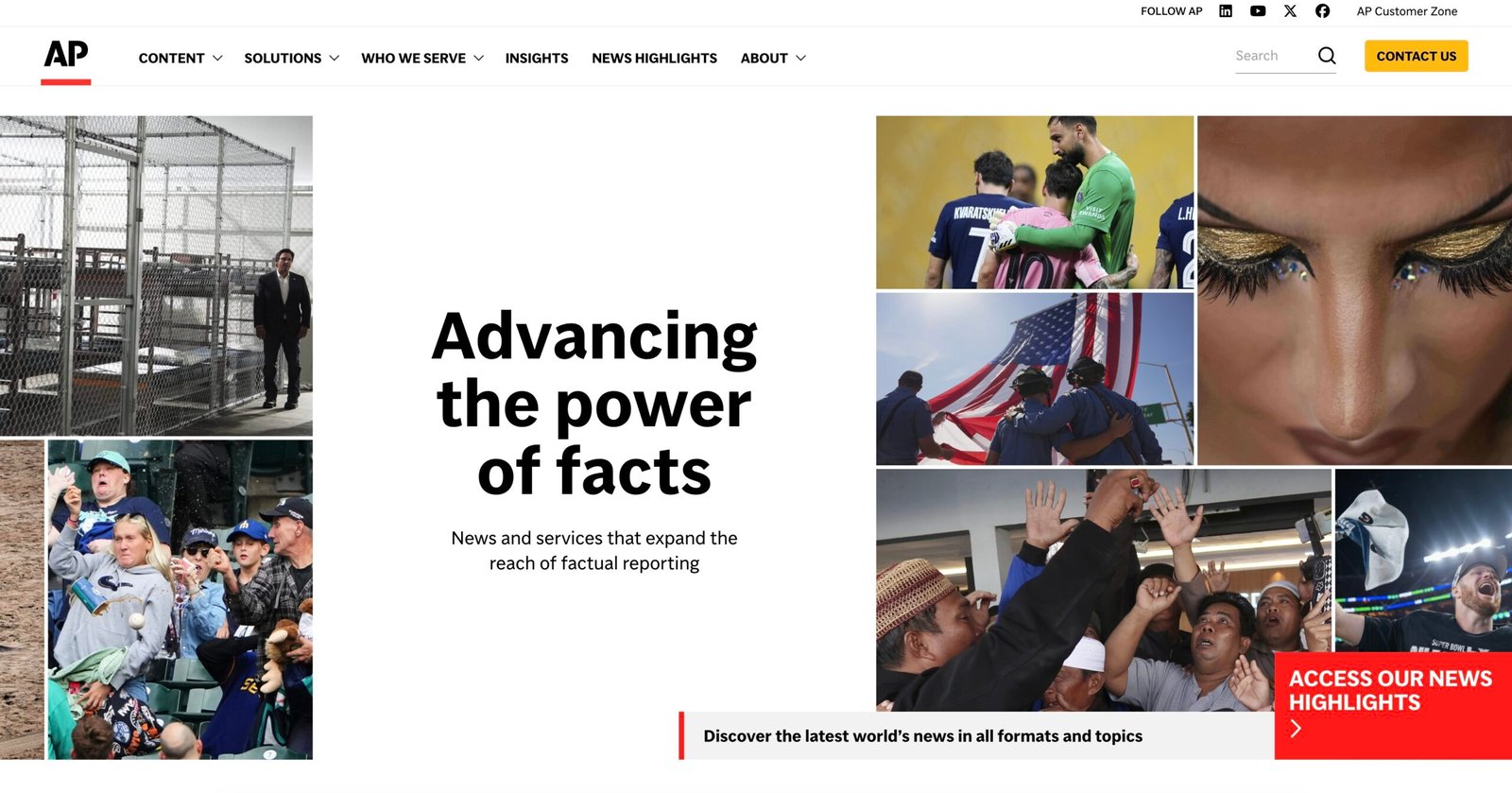
Guide: How to Research, Pitch & Write for the Associated Press (AP)
This step-by-step guide walks you from the first research (how AP works and what it values) to writing polished leads and short news pieces, preparing tips and pitches, submitting correctly, and building the skills that let you earn as a freelance reporter, photographer, or contributor. The instructions favor practical templates and links so a beginner can act fast.
Keep the AP pages open while you work: read AP’s official submit & contact pages, the AP Stylebook basics, and AP’s newsroom principles. Links are collected in the Resources section.
Section 1 · Understand the organization
What the Associated Press is — and how that affects what they publish
The Associated Press (AP) is an international news cooperative and wire service that provides fast, factual reporting to thousands of newsrooms worldwide. They publish breaking news, long-form investigations, local reporting, photos, video and explainers. Because AP serves many other news outlets, their copy is concise, attribution-forward, and built to be re-used by editors everywhere.
Practically, this means: AP is less likely to publish opinion pieces from unknown contributors and more likely to use first-hand reporting, verifiable facts, and clear sourcing. AP accepts news tips, local reporting and photographs via their submit channels — but each submission must meet journalistic standards and often needs a clear, verifiable source. (See AP’s submit pages in Resources.)
- AP writes for a global newsroom: clarity and attribution are mandatory.
- Short, clean leads matter — editors re-use AP copy directly.
- Photographers and video journalists often submit visuals separately.
- AP runs special desks (investigations, politics, sports) — target the right desk with your tip.
Open these pages while you prepare:
Quick tip: bookmark AP’s “Submit Your News” page and AP’s newsroom contact pages. Read their short guidance on how they accept tips and what they expect in a tip (contact info, verification, photos, documents).
Section 2 · News values & story types
Which stories AP uses — and why some ideas won’t fit
AP prioritizes stories that have clear public-interest value and reliable sourcing: breaking events, significant local developments that affect many people, investigative findings, official announcements, human-impact features, and vivid photojournalism. Use this “news value” checklist to evaluate your idea before pitching.
Impact & scale
Will this affect a sizable audience, public safety, government action, or a broad industry? Local quirk stories may be useful to local AP desks if they show broader relevance.
Timeliness
Is this happening now or did it just happen? AP favors timely events. Ongoing trends or investigations can also be pitched with unique data or documents.
Verifiable sourcing
Can you provide named sources, official documents, photos, video, or corroborating evidence? Anonymous tips can be accepted but are handled carefully and may require extra verification.
Freshness & uniqueness
Does your angle add new facts or reporting? AP will usually not run rehashed commentary without reporting or new evidence.
If your item fails more than one check, consider publishing it first in a local outlet, blog, or community paper, then pitch it to AP with added verification and context.
Section 3 · Writing an AP-style lead and nutgraf
The 5-sentence rule: make the first paragraph count
An AP lead is compact, fact-forward, and built to answer the reader’s primary question quickly. Strive for a single strong sentence that:
- Contains the most important fact (what happened).
- Names the who/what and where (dateline or city if known).
- Includes a time (when) if it’s relevant to the news.
- Balances brevity and clarity — avoid florid language.
Example lead (breaking)
Boston — A six-alarm fire ripped through a downtown warehouse early Sunday, sending at least three people to the hospital and forcing evacuations of nearby buildings, fire officials said.
Follow with a nutgraf (second paragraph)
The nutgraf explains why readers should care: short context, key details, what is known and what is still unclear. After the nutgraf, supply supporting details in order of importance: eyewitness accounts, official statements, numbers, and background.
- Who/What/Where/When in the first sentence whenever possible.
- Use clear attribution: “police said”, “the hospital confirmed”, “a spokesman said”.
- Avoid flowery adjectives; AP leads are factual and direct.
- If the story is developing, mark it as developing and include the last-updated time.
Tip: write a bare-bones lead first, then expand the nutgraf; save quotes and human detail for later paragraphs so editors can cut or repurpose the copy easily.
Section 4 · Verification & sourcing
How AP verifies, and how you can make verification easy
AP prides itself on verification. When you send a tip or snippet, include as many of the following as you can — it will speed up the editor’s ability to use your material:
- Named sources: full names, titles, and direct contact info (phone or email).
- Documents: public records, press releases, court filings, official memos — attach PDFs or links.
- Photos & video: high-resolution images with exact time/location metadata if possible.
- Records or data: spreadsheets, screenshots, government databases (with link or export).
- Independent corroboration: other reporters, agencies, or public statements that support the claim.
If you must provide anonymous information, explain why the source needs anonymity and what steps you took to corroborate the claim. Editors accept anonymous tips but will typically require additional evidence before publication.
Section 5 · How to submit tips, photos, and local reporting
Where to send different types of material and how to format it
Use the official channels — AP’s “Submit Your News” / News Tips pages (and newsroom contact pages) are designed to route tips to the right desks. Send what matters to the appropriate place:
Use AP’s “Share a Tip” or “Submit Your News” forms to send tips (these pages explain how to attach files safely). Include a short, factual subject line and a one-paragraph summary of your tip at the top of the message.
Attach the highest-quality originals you have (JPEG/TIFF/RAW for photos; MP4 for video). Note the date/time/location and provide caption info: who/what/where/when and photographer credit.
If your submission is time-sensitive (breaking threat, imminent danger), include “URGENT: breaking” in the subject line and give a phone number so an editor can call.
| What | Where to send | What to include |
|---|---|---|
| Breaking tip | AP News tips / Submit Your News forms | Short summary, time, location, named sources, phone |
| Local reporting with documents | Contact newsroom pages (appropriate desk) | Documents, context, public records links, local official contacts |
| Photos / Video | AP’s photo/video submission channels (see submit page) | High-res files, metadata, captions, permission info |
Section 6 · Freelance realities & pay
Can you earn money? What to expect as a freelance journalist for AP
AP does hire freelancers — especially photographers, videographers, and experienced reporters in regions where AP needs coverage. However, AP’s assignments and pay are typically negotiated per assignment; they are not structured like list-based “guest-post” payments on blogs. Pay varies widely by assignment, region, and length of work. For general orientation about freelance journalism rates consider rates resources (see Resources).
Practical advice:
- Build local clips first: publish in local papers, community outlets, or niche sites — then pitch AP with links and evidence of audience reach.
- Photographers should have a strong portfolio of published work and technical EXIF-ready images.
- When offered an assignment, confirm payment terms in writing (rate, expense reimbursement, usage rights, delivery deadline).
Section 7 · Ethics, AI & legal red flags
Journalism ethics you must follow — and how to responsibly use AI
AP’s credibility depends on accurate sourcing and transparency. When you report to AP or any newsroom:
- Do not fabricate facts or quotes. If you don’t know, say so.
- Disclose conflicts of interest (financial ties, advocacy positions, family relationships that matter to the story).
- If you used AI to help draft or research, disclose how you used it and verify every fact. AI can be a helper — not a replacement for reporting.
- Respect privacy and legal precautions: understand libel basics in your jurisdiction before publishing allegations.
If you would not be comfortable defending every sentence on a phone call with an editor, do not submit it.
Section 8 · Templates & practical examples
Copy-paste templates: short tip, full pitch, and photo submission
Short Breaking Tip (email/subject line)
Subject: URGENT: Fire downtown — multiple people injured (City, time)
Body (1–3 lines): I’m reporting a fire at 123 Main St., Anytown, starting at ~2:15 a.m. Firefighters on scene; at least three people transported. Witnesses at phone #. I can provide photos and a short video and connect you to the fire chief: Chief Jane Doe, (555) 123-4567. — Your Name, contact
Full email pitch for documented local issue
Subject: Pitch: Leaky dam leaves 2 neighborhoods evacuated, documents show delayed repairs (City)
Lead idea (1 line): Documents and interviews show the county delayed mitigation work on the Old Mill Dam for two years before flooding.
Why it matters: The dam’s condition led to forced evacuations of 1,200 residents and a state emergency declaration.
What I can provide: copies of county inspection reports (attached), 4 on-the-record interviews (names + phones), photos of flood damage, a local official willing to comment (name & contact).
Clip links: [link to published local coverage], [link to public records].
Contact: Your Name — phone — email — brief one-line CV (e.g., “I report for X local paper, 3 years”).
Photo submission caption style
File name: lastname_city_date.jpg
Caption: [Who] — What happened — Where — When. Photographer credit: [Your Name]/AP (if accepted). Contact: [phone/email]. Camera and lens: [info].
Always attach or provide links to supporting documents. Editors are busy; clear, short pitches that answer “what, why now, and what evidence” get traction.
Section 9 · Micro-SOP: final checklist before you send
Use this quick checklist each time — it will save you time and improve outcomes
Section 10 · Resources & further reading
Open these pages now — they are the foundation of good AP submissions
- Submit Your News — AP News (AP’s tips & submit page)
- Contact the Newsroom — Associated Press (ap.org)
- AP News Values & Principles — How AP reports
- AP Stylebook — essential style reference
- Society of Professional Journalists — tips for freelancers
- WhoPaysWriters — crowdsourced pay info for publications
- JournoResources — freelance journalism rates (UK-focused, but useful)
- Practical freelance journalism steps (guidance)
- Poynter — journalism ethics and reporting resources
- Nieman Lab — trends & industry analysis
Start here: open AP’s Submit page, the newsroom contact page, and the AP Stylebook. Practice writing leads and saving evidence in a single Google Drive folder (documents, photos, screenshots). Having a tidy folder with filenames and captions makes editors more likely to use your material.