


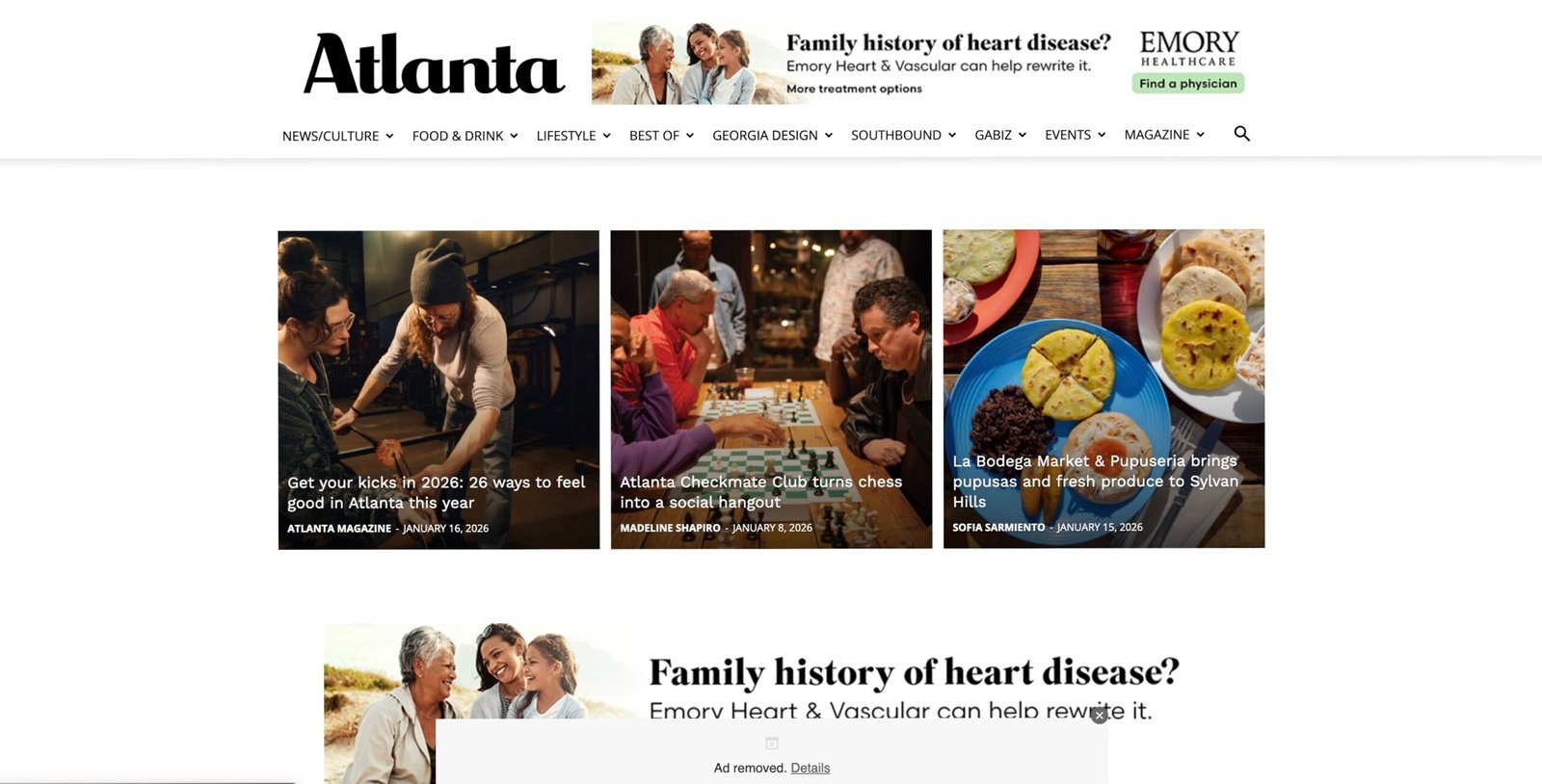
Guide: How to Pitch & Write for Atlanta Magazine — step-by-step for beginners
This guide is built so a beginner can research the magazine, develop publishable ideas, prepare writing samples, and submit strong pitches to Atlanta Magazine. It collects practical templates, a pitch SOP, expectations about pay and editing, and a big resource list you can use today.
Use this as a checklist. Read the magazine pages we link to, copy the sample pitches and outlines, attach real links to your work, and you’ll be ready to submit.
Section 1 · What Atlanta Magazine publishes
Quick orientation: beats, tones, and audience
Atlanta Magazine is a regional general-interest magazine focused on the city and metro Atlanta area: news and culture, dining, home & garden, arts, travel in the Southeast, profiles of local figures, and explanatory pieces about the region’s development and civic life.
Useful pages to scan before you pitch:
- News & Culture — features and long-form reporting
- Dining & Food — restaurant stories and local food features
- Home & Garden — homes, design, and local interiors
- Best of Atlanta — neighborhood and local lists
- Southbound — travel and Southern culture
Read at least 3 recent pieces in the section you want to write for. Note tone, length (many magazine pieces run long), and how they balance reporting, quotes, and scene-setting.
Section 2 · Fit your idea
Local angle test — is this a story for Atlanta readers?
Regional magazines succeed when they answer readers’ immediate questions about their city or region. Use the three quick tests below.
Does the story matter to Atlanta or its metro area?
If your angle can be framed with local sources, local data, or local examples (a neighborhood, an Atlanta business, a Georgia policy), it passes this test. Universal topics need a clear Atlanta hook.
Can you add local reporting or primary interviews?
Magazine pieces benefit from on-the-record quotes, a local expert, or a local dataset. If your idea is only surface-level opinion, consider reporting interviews or a small data check first.
What makes this different for Atlanta readers?
Perhaps it’s a neighborhood trend, a business pivot, a change to transit or zoning that affects daily life — find the news peg that ties the piece to a reader’s experience here.
Section 3 · Prepare the proof you’ll attach
Quick portfolio: samples and evidence editors care about
- Clips showing magazine-style narrative and reporting (not just short blog posts).
- At least one sample with reporting: interviews, named sources, or local data.
- Polished writing samples on your blog or a known platform (for example, Dev.to or Medium).
- Clear bylines, author bio, and contact info for each sample link.
- If your story involves data, provide the dataset or a link to your spreadsheet or GitHub gist.
- If it involves a demo (food, craft, design), include photos and short captions.
- Provide one clear piece (1500+ words) that shows you can hold a reader for a long-form magazine story.
Section 4 · Step-by-step pitch SOP
Exactly what to do, from idea to submitted pitch
Open the Atlanta Magazine contact/pitches page
Start at the magazine’s official pitch page to confirm they are accepting submissions and to learn the contact method they prefer. Link: Contact — Pitches.
Prepare a short, three-part pitch
Editors are busy. Your pitch should include:
- Hook (1 sentence): what this article will do for Atlanta readers.
- Why now (1 sentence): news peg or trend.
- Your credentials (2–3 lines): why you can report this (clips / local access / experience).
Include a short outline and reporting plan
Add 4–6 section headings and list three people/data points you will interview or cite. Editors love to see you’ve thought about reporting and sources.
Attach your best clip(s) and contact info
Provide direct links (not attachments) to 1–3 clips and a short bio (1–2 lines). If you have local reporting samples, highlight them first.
Send via their preferred route (form or email)
Use the magazine’s pitch form or the contact email listed on the pitches page. Subject lines like “Pitch: [Short headline] — local reporting plan” work well.
Follow up politely after 2–3 weeks
If you haven’t heard back in 2–3 weeks, send a short, courteous follow-up one-sentence note: “Following up on my pitch about X — happy to share more reporting details.” Don’t pester repeatedly.
Section 5 · Money, rights, and contracts
What to expect and what to ask about
Regional magazines often pay either a flat fee per piece or a per-word rate; the exact rate depends on assignment length and reporting required. Research reports and crowdsourced lists suggest Atlanta Magazine has historically paid competitive rates for regional magazine writing (rates vary). Always confirm fee and rights before you start reporting or accept an assignment.
- Before significant reporting, ask: How much will you pay? When is payment scheduled?
- Ask about rights: is it exclusive or first serial rights? Can you repost later on your portfolio?
- Get the agreement in writing (email confirmation is fine).
- Magazines normally pay upon publication or on acceptance; ask the editor’s standard timeline.
- You may need to send an invoice; insure you capture the correct payee name and mailing/email for accounts payable.
- Track earnings for tax reporting — keep a copy of the acceptance and payment emails.
Section 6 · Ethics, reporting, and accuracy
Regional magazines rely on trust — this is non-negotiable
Atlanta Magazine’s readers expect accurate reporting and transparent sourcing. For every reported fact or claim you make, have a named source, a document, or a public dataset to back it. Editors will fact-check; provide original links and contact information for your sources when requested.
- Named sources & contact info (email/phone) for interviews.
- Original documents, reports, or public records where relevant.
- Clear photo credits if you submit images.
- Avoid conflicts of interest; disclose relevant relationships to the editor.
- AI can help brainstorm or draft, but you must verify every fact and rewrite in your voice.
- Do not submit AI-generated reporting or invented quotes. Editors expect human-sourced reporting.
- If AI assisted heavily, disclose it when asked; be ready to show original notes and reporting.
Section 7 · Templates you can copy
Copy-paste-ready pitch, outline, and article skeletons
Subject: Pitch: [One-line story hook] — local reporting plan
Hello [Editor Name],
I’d like to pitch a feature for Atlanta Magazine about [one-sentence hook — what this article does for Atlanta readers]. Briefly: [why this matters now — 1 sentence].
Outline & reporting plan:
- Intro/lede: [what the opening scene or nut graf will show]
- Section 1: [local example / first source]
- Section 2: [data or policy context]
- Section 3: [local impact / solutions / voices]
- Conclusion: [what readers can do or expect next]
I can report this with interviews from [X, Y, Z — name local sources] and local data from [source]. I’ve attached links to my clips below.
Clips: [link 1], [link 2]
Bio: [1 line — where you work or who you are, and best email/phone]
Thanks for considering this. I’m happy to revise the angle to fit your needs.
— [Your name]
- Headline (working): [concise, local hook]
- Lede (200–300 words): Scene + nut graf (why Atlanta should care)
- Section A (300–500 words): Local example and interview
- Section B (300–600 words): Context, data, quotes from experts
- Section C (300–500 words): Solutions, what residents/businesses are doing
- Conclusion (150–250 words): Takeaway and next steps
- Sidebar / pull-quote: Contact details for sources, quick tips, or a small timeline
Section 8 · Final checklist, FAQ & big resource list
Before you send: quick checks and where to learn more
- Atlanta Magazine — Contact & Pitches (official)
- Atlanta Magazine — homepage (read sections & recent stories)
- Dining & Food
- Home & Garden
- Best of Atlanta lists
- WhoPaysWriters — crowdsourced pay information
- Freedom With Writing — marketplace & pay summaries
- Dev.to — publish technical or narrative samples
- Medium — platform for long-form samples
- GitHub — share datasets, gists, or code used in your reporting
- CodePen — quick demos if your piece needs interactive examples
- Atlanta Writers Club — local community & events
- Creative Jobs & Pitch lists (newsletters that share open calls)
- Submittable — many magazines accept pitches via Submittable forms