


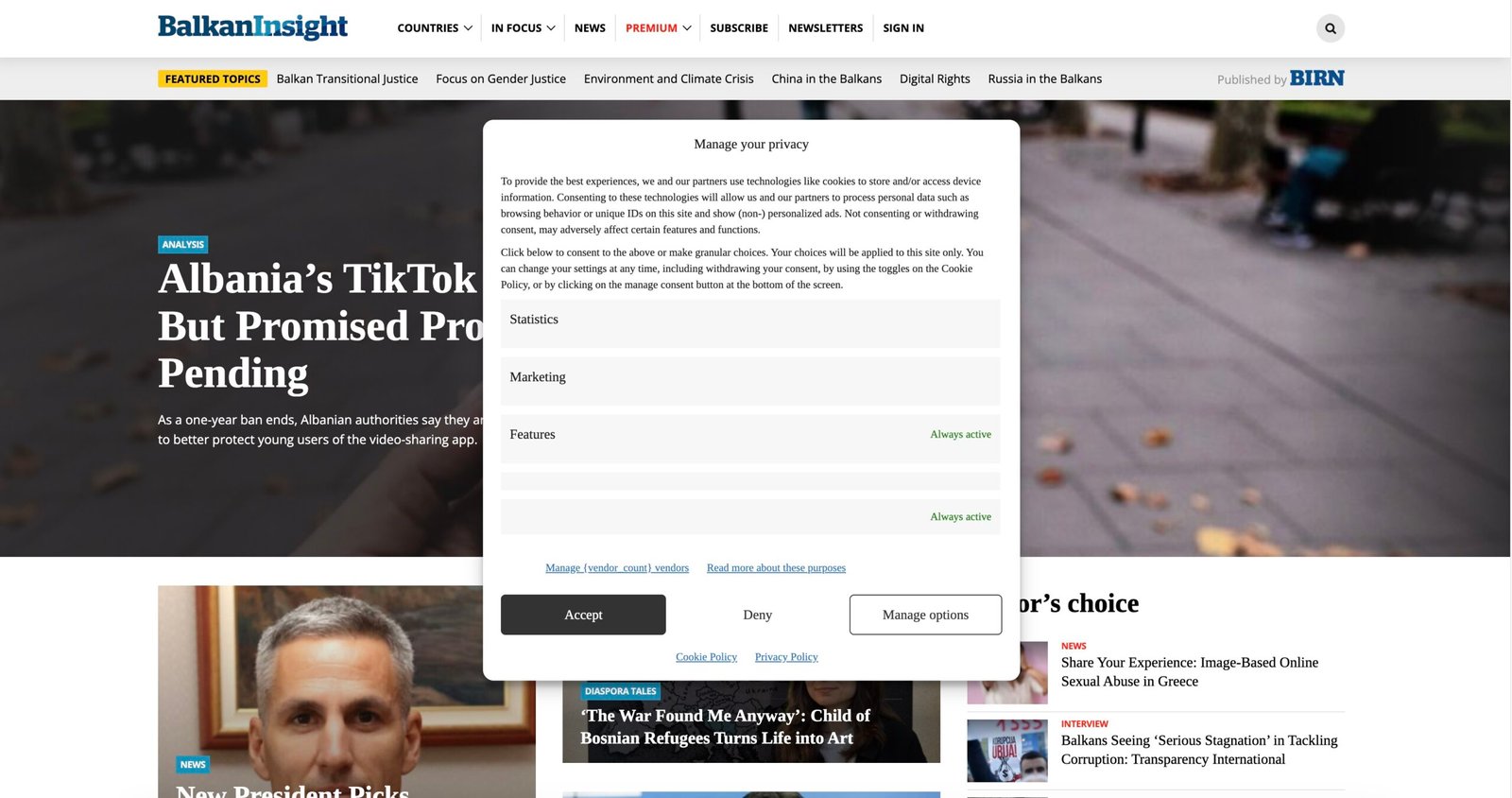
Guide: How to Research, Pitch, and Earn for Balkan Insight (Step-by-step for beginners)
This guide walks you through everything a beginner needs to research the site, prepare a pitch, write an accepted piece, and understand how to earn and republish work responsibly. It is tailored to Balkan Insight and the Reporting Democracy project, but many ideas apply to other respected outlets.
Read the official editorial guidelines and the project’s contributor pages first (links in the Resources section). This guide gives practical templates, ethics notes, sample outlines, and a checklist so you can act with confidence.
Section 1 · Understand the publication
What Balkan Insight and Reporting Democracy publish
Balkan Insight is the English-language portal from the Balkan Investigative Reporting Network (BIRN). It focuses on deep regional reporting, analysis, investigations and features about politics, the rule of law, civic space, corruption, and democratic trends across the Western Balkans and beyond.
Reporting Democracy is a project within Balkan Insight that explores threats to and opportunities for democracy across a wide part of Europe. Its editorial pages publish reporting, analysis, interviews and opinions focused on democratic institutions, political movements, media freedom and human rights.
Typical subjects Balkan Insight and Reporting Democracy look for:
- Investigative or original reporting on governance, corruption, elections, and judicial issues.
- Analytical features that explain cross-border trends (e.g., media freedom, electoral interference, civic space).
- Profiles and interviews with key public officials, activists, or experts in the region.
- Data-driven stories, explainers, or policy-focused pieces that help readers understand complex political issues.
The typical reader is an informed citizen, policymaker, researcher, academic, NGO worker, or journalist interested in political developments in Southeast and Central Europe. They expect accuracy, context, and sources.
Section 2 · Read the editorial rules
Why the editorial guidelines matter (and where to find them)
Before pitching or writing, read Balkan Insight’s editorial guidance carefully. The Reporting Democracy editorial guidelines explain what counts as opinion, how corrections are handled, and the editorial standards authors must meet. These rules help you avoid common pitfalls.
Read:
- Reporting Democracy — Editorial Guidelines (official, required reading).
- Reporting Democracy — Contribute (information about submissions and pay)
- Balkan Insight — Republishing policy (how and when you can reuse your content)
Contact details and editorial email addresses are published on the site. Use the official contact page to find the right editorial inbox (for reporting democracy there is usually a dedicated contact address). Do not send mass promotional emails.
Section 3 · Shape an idea that fits
From vague idea to an editorial-ready pitch
Your idea must solve a real information gap. For Balkan Insight, that often means one of:
- An investigative angle (new documents, FOI responses, data analysis).
- A cross-border comparison that shows how similar forces play out in different countries.
- A plain-language explainer of a complex policy decision or legal ruling.
- A human story that reveals a political trend (e.g., how civil society is responding to a new law).
What exact question will your story answer?
Instead of “Write about corruption in Country X”, make it “How did procurement changes in City Y create a new pattern of shell-company contracts between 2021-2024?” A narrower question is easier to research and sell.
What documents or sources do you need?
Make a list: official documents, court filings, tender records, interviews, datasets, FOI requests, NGO reports. If you cannot reasonably access basic sources, refine the idea or focus on an explainers/analysis piece rather than an investigative scoop.
Can you access local language material?
Balkan Insight often covers stories where sources are in local languages. If you don’t speak the language, partner with a local journalist, translator, or a fixers’ network. Editors value local sourcing.
Why will a Balkan Insight reader care?
Spell out the reader outcome: what new knowledge, documents, or perspectives will they gain? If your piece changes a reader’s understanding of a policy, it will be stronger.
Section 4 · Create samples & portfolio
Build trust before you pitch
Editors often prefer writers who can demonstrate news judgement, fact-checking, and finished work. If you are new to journalism, publish a few high-quality samples first.
- Your own blog or a simple static site (GitHub Pages or Netlify).
- Guest posts for smaller regional outlets or English-language local news sites.
- Journalism platforms such as Medium or Dev.to for explainers (if relevant).
Always make sure your sample shows source lists and how you verified facts.
- A clear lede and nut graf that explains the story’s significance.
- Named sources, documents and links to primary material when possible.
- At least 800–1,200 words for a feature or explainer sample (investigations will be longer).
- Photos, document screenshots, or datasets to show you can handle multimedia or data.
Section 5 · Pitch step-by-step
How to write the pitch editors actually read
A pitch is not a finished article. It is a promise and a demonstration that you can deliver the reporting. Keep it concise, evidence-focused and realistic.
Find the right inbox or form
Use the site’s official contact or contribute pages to locate the correct editorial email (for Reporting Democracy they provide specific contact details). Avoid sending multiple long attachments—use links and short descriptions instead.
Structure your pitch (3–6 short paragraphs)
Suggested structure:
- Subject line: Concise, specific. E.g., “Pitch: How municipal tenders in X created Y — documents + data”
- Opening line: Your single-sentence pitch: the claim and the reader benefit.
- Evidence: Brief list of key sources (documents, interviews, FOI, datasets).
- Access: How will you get more sources? Any local contacts, translators, or NGOs who will help?
- Sample & bio: One or two links to your best related work and a short bio (2 lines).
- Logistics: Ideal word length and any deadlines or time constraints.
Pitch template you can copy
Subject: Pitch — [Short claim] — [Key source / country]
Body:
Hello [Editor name],
I’d like to pitch a feature called “[Headline-if-accepted]” which shows [one-sentence summary that explains the new finding or perspective]. I can support this with [documents/interviews/dataset], including [example: “procurement records from 2019-2024; FOI reply from Municipality X; interviews with two whistleblowers”].
I can deliver ~1,200–2,000 words with supporting documents and data visualisation. Published samples: [link 1], [link 2]. Short bio: [1–2 lines: what you do, language skills, reporting experience].
Thanks for considering — I’m happy to send more detail or a full outline.
Best,
[Your name] — [Contact email] — [Phone / Telegram if appropriate]
Follow-up politely (but not too often)
Wait 2–3 weeks. If you don’t hear back, send a one-line follow-up referencing your original subject line and offering to provide more documents. If no reply after a second follow-up, move on and pitch elsewhere.
Section 6 · Ethics, sourcing & verification
Non-negotiable practices for trustworthy reporting
Balkan Insight (and Reporting Democracy) rely on credibility. Follow these steps every time.
- Prefer named, on-the-record sources when possible. If using anonymous sources, explain why anonymity is necessary and how the claim was verified.
- Keep copies/screenshots of documents and note where you obtained them (URLs, FOI response IDs, dates).
- Cite original sources in the article — link to documents or archive them (use the Wayback Machine or an internal archive).
Editors will ask for support materials; keep your evidence organised.
- Double-check names, titles, and dates against primary documents.
- Verify numeric claims (budgets, contract values) with two independent sources when possible.
- Run translations by a native speaker or professional translator and keep the original text.
- Flag potential legal concerns early and ask the editor if you have questions about defamation or safety.
Section 7 · Money, contracts & republishing
How contributors are usually paid and how to get more value
Exact payment terms can vary. Reporting Democracy publishes contributor information and may pay competitive rates for features, analyses, and investigative pieces. Payment is usually a flat fee agreed with the editor per assignment.
- Flat fee per article (most common for freelance features).
- Negotiable rate for multi-part investigations or long-form pieces.
- Special cases: some outlets offer honoraria for op-eds or travel reimbursements for on-the-ground reporting (confirm in advance).
Use crowdsourced trackers (see Resources) to learn market rates, but always confirm terms with the editor before you start.
Balkan Insight has a republishing policy that permits limited republishing under Creative Commons terms and also has syndication options. If you plan to reuse your article elsewhere, discuss this with the editor before publication so the contract is clear.
| Piece type | Payment note | Strategy |
|---|---|---|
| Short explanatory piece | Smaller flat fee | Good for first accepted pieces to build reputation |
| Investigative feature | Higher fee; may require negotiation | Invest in evidence and show cost/time estimate when pitching |
| Op-ed or commentary | Often a smaller honorarium or unpaid | Use for profile building and visibility |
Section 8 · Final checklist & sample outline
Ready-to-pitch checklist + a sample article outline you can copy
Sample article outline (investigative feature)
- Headline idea: “How Municipality X’s procurement rules paved the way for shell contracts (2019–2024)”
- Lede (30–40 words): A short, attention-grabbing sentence describing the key finding and why it matters to citizens and policymakers.
- Nut graf (1 paragraph): Explain what the story will demonstrate, the time frame, and main evidence.
- Section 1 — Background: Short context about procurement rules and why they changed.
- Section 2 — The evidence: Documents, tender values, names or companies, and a short table summarising key contracts.
- Section 3 — How it worked: Step-by-step explanation with quotes from local officials or experts.
- Section 4 — Impact: Effects on services, budgets, or public trust; include a human element (short interview with affected community member).
- Conclusion & what to watch: Policy recommendations or next steps for investigators and citizens.
- Support materials: Links to documents, data CSV, and screenshots.
Section 9 · FAQs & resources
Answers to common beginner questions & many useful links
- Balkan Insight — Homepage
- Reporting Democracy — Editorial Guidelines
- Reporting Democracy — Contribute / How to submit
- Balkan Insight — Republishing Policy
- Balkan Insight — Contact & editorial emails
- GIJN — Grants & fellowships for reporters
- Freedom With Writing — who pays writers
- Who Pays Writers — community database of rates
- GIJN — Reporting resources & data journalism tools
- Poynter — journalism training & ethics
- ICFJ — training & fellowships for journalists
