


Guide: How to Pitch, Write and Get Published on Dark Reading (Step-by-Step)
This guide helps you transform a cybersecurity idea or real-world experience into a publishable column for Dark Reading — from initial research and sample pieces to filling their submission pipeline. It includes direct links to official pages, examples, and a ready-to-use pitch checklist.
Key official references used in this guide: How to Submit a Column to Dark Reading, Dark Reading Commentary, and the recent editorial posts about the Commentary relaunch and Tech Talk guidance. (See resource list at the end.)
Section 1 · Know the publication
What Dark Reading is, and who reads it
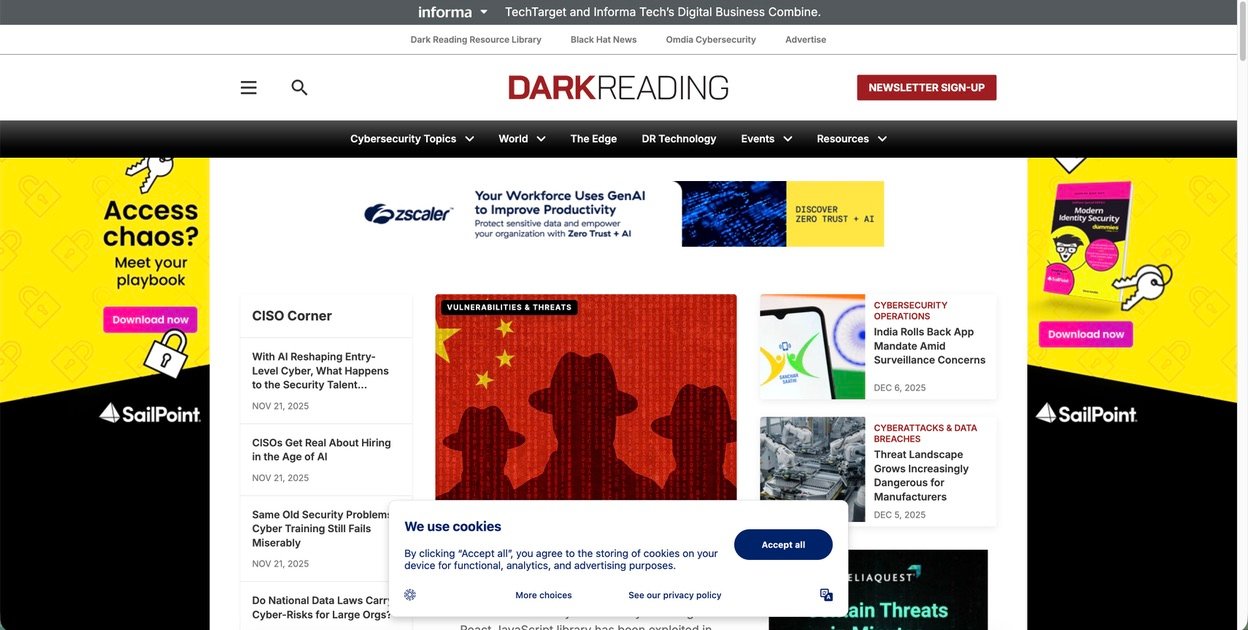
Dark Reading is a leading cybersecurity news and analysis site focused on enterprise security, threats, vulnerabilities, operations, and risk. Its readers are primarily security practitioners, CISOs and security teams, security engineers, and technology decision-makers who rely on practical, timely, and informed content to guide real decisions. See Dark Reading’s official homepage and “About” pages for the site scope. Dark Reading — homepage. :contentReference[oaicite:0]{index=0}
The site is organized into topical sections (Analytics, Attacks & Breaches, Application Security, Cloud Security, Endpoint, Threat Intelligence, Vulnerabilities & Threats, and more) — pick the section that matches your topic and read several recent stories there before you pitch. About Dark Reading (sections). :contentReference[oaicite:1]{index=1}
- Are you writing for a security practitioner (engineer, analyst, ops) or a manager/CISO? Name them.
- Do you assume basic cybersecurity literacy? (Yes — use technical terms, but explain briefly.)
- Will the piece give a reader a concrete action or decision to make? (Focus on utility.)
Section 2 · Accepted contribution types
What kinds of columns and pieces Dark Reading wants
Dark Reading publishes a mix of news, analysis, features, and a revived Commentary section focused on practitioner opinion and Tech Talks (practical explainers). The editorial team has specifically invited industry voices to submit Commentary, Tech Talks, and Ask the Expert pieces — each with slightly different emphasis but the same editorial goals: clarity, specificity, and value for practitioners. See their recent editorial notes on relaunching Commentary and welcoming Tech Talks. Commentary relaunch — editorial note. :contentReference[oaicite:2]{index=2}
Short, pointed arguments about urgent cybersecurity topics. Focus on one strong angle, backed by examples and practitioner perspective.
Tool-focused articles that show “how to” use, configure, or deploy a security control or workflow. Be concrete — include configuration snippets, settings, or step-by-step deployment notes.
Section 3 · Format, length & official “no-AI” rule
Official submission constraints you must follow
Important official rules (from Dark Reading editors):
- The submitted column should make a thoughtful, clear, concise, topical argument and support it with concrete examples. (Editorial guidance.)
- Aim for a length of around 700 words, and no more than 1,000 words for opinion/commentary pieces. For Tech Talks and Ask the Expert, the recommended target is around 700–800 words. These are the official guidance ranges; follow the one that fits your chosen section. Editorial guidelines (Commentary / Tech Talk). :contentReference[oaicite:3]{index=3}
- Dark Reading does not accept submissions generated by AI/LLMs. You must submit original, human-authored work and be prepared to stand behind every claim and technical instruction. (Editors state this explicitly.) No-AI policy. :contentReference[oaicite:4]{index=4}
- Dark Reading publishes only original work — do not submit pieces that are already published elsewhere.
- Send submissions to the editorial submission email/address (see the official “How to Submit a Column” page). The editorial pipeline may acknowledge receipt and then take time to review. How to Submit (official). :contentReference[oaicite:5]{index=5}
Section 4 · Shape a publishable Cybersecurity idea
From vague topic → specific, Dark Reading-ready angle
Dark Reading articles work best when they are specific. Instead of “cloud security,” aim for “how to reduce lateral movement in AWS using resource tagging + guardrails” — a concrete problem, context, and a recommended action path.
Use this three-question filter to tune your idea:
- Who exactly is the reader? (Incident responder in an enterprise with SIEM and EDR? A small-team SOC with limited budget?)
- What urgent job does the reader need to do? (Hunt for a specific IOCs, harden Kubernetes ingress, triage a ransomware incident.)
- What concrete artifacts will you provide? (A checklist, a config snippet, a small playbook, or sample queries.)
When you can answer those three questions in one clear sentence, you have the heart of a Dark Reading pitch. Example sentence: “This Tech Talk shows SOC engineers how to tune Sigma rules and reduce false positives for fileless malware by 40% using these three filtering strategies.”
Pick a single use case
Rather than “incident response,” pick “triaging data exfiltration alerts from Office 365” — something you can explain within ~700 words and back with examples.
Bring evidence or a short demo
Editors prefer pieces that show real-world experience — a short case study, a sanitized incident timeline, or a tiny script/config that readers can run or adapt.
End with clear takeaways
Give 3–5 practical takeaways. Busy readers must be able to act on your advice without guessing.
Section 5 · Step-by-step pitch workflow
Practical workflow: from idea → published column
Use this compact SOP whenever you prepare a pitch for Dark Reading. It keeps the process repeatable.
Research the section & read 3–5 recent pieces
Open the Dark Reading section relevant to your idea (e.g., Threat Intelligence, Application Security) and read recent posts. Notice how editors structure arguments, use examples, and format short practical pieces. Commentary & Tech Talk examples. :contentReference[oaicite:6]{index=6}
Write a crisp pitch paragraph + 3-point outline
Your pitch email should include:
- One-sentence hook: who the audience is and what the article will do for them.
- Two-sentence context: why it matters now (new threat, upcoming migration, common misconfiguration).
- Bulleted outline: 3–5 headings showing the flow and what the reader learns at each step.
- Links: your best relevant sample(s), GitHub repo, or demo.
Send the pitch to the official editorial inbox
Send the pitch as plain text in the email body (editors often don’t open attachments). Use the submission email shown on Dark Reading’s guidelines. The official editorial guidance lists an editorial submissions address for commentary pieces. How to Submit a Column — official page. :contentReference[oaicite:7]{index=7}
Create at least one polished public sample
Before pitching, publish one full tutorial/opinion on your blog, Medium, DEV.to, or a company blog. Link to it in your pitch — editors want to see finished work. (Keep copies for a portfolio.)
Section 6 · Samples & mini-projects
What to include as proof: code, configs, and short demos
Editors love small, verifiable artifacts that back up claims. Here are high-value items to link in your pitch:
- Sanitized incident timeline (redact sensitive details but show steps taken and outcomes).
- Configuration snippets (IDS/IPS rules, SIEM queries, firewall ACL snippets — keep them short).
- Playbook/checklist (5–10 steps a responder can follow in the first 30 minutes).
- GitHub repo or Gist with a tiny script (parsing logs, example searches, helper utilities).
- Short demo screencast (60–120 seconds) hosted publicly (YouTube unlisted, Vimeo) to show the result quickly.
Tip: Attach nothing to the initial pitch email. Paste critical short examples directly into the email body and provide links for larger artifacts. This prevents editors from missing your content due to attachment blocks.
Section 7 · Submission etiquette & follow-ups
How to submit, what to expect, and reasonable follow-up
Officially, Dark Reading asks that submissions be sent to their editorial submission email and pasted into the body of the message — they often do not open attachments. Put your headline, 1–2 sentence hook, 3–5 point outline, and 1–2 sample links in the email. (This is the workflow editors have described in their guidance.) How to Submit — official. :contentReference[oaicite:9]{index=9}
Use a short subject that includes your section and a concise hook. Example subject lines:
- Commentary pitch — Why CISOs must treat firmware like software
- Tech Talk pitch — Configuring EDR to detect living-off-the-land techniques
- Ask the Expert idea — How to test backups after a ransomware event
Section 8 · Checklist & pitch template
Copyable checklist + ready pitch template
Pitch template (copy & paste into email body)
Subject: [Commentary / Tech Talk / Ask the Expert] pitch — [Short Hook]

Hi Dark Reading team,

Hook (1 sentence): [Who I’m writing for + what the reader will be able to do after reading.]

Why now (1–2 sentences): [A sudden threat, change in tooling, new vulnerability, or an unresolved operational problem.]

Outline (bullet form):
- Intro: [1–2 lines — set the problem]
- Step 1: [section heading + 1 line about what this covers]
- Step 2: [section heading + 1 line]
- Conclusion: [clear, actionable takeaways (3 items)]

Samples/demos:
- Published sample: [link to your article / Medium / Dev.to]
- GitHub/Gist: [link]
- Demo video (optional): [link]

Short bio:
[One sentence: your role, experience, email, and any notable bylines or employer — e.g., "SOC Analyst at X; authored blog at Y."]

Thanks for considering this. Happy to expand the outline into a draft if you'd like.

Best,
[Your full name]
Section 9 · FAQs & common pitfalls
Quick answers for beginners
Section 10 · Resources & example links
Open these links while you prepare your pitch
- Dark Reading — homepage. :contentReference[oaicite:13]{index=13}
- How to Submit a Column to Dark Reading — official instructions. (Includes the submission email and practical notes.) :contentReference[oaicite:14]{index=14}
- Commentary (recent submitted pieces & examples). :contentReference[oaicite:15]{index=15}
- Editorial note — Commentary relaunch (Oct 2025). Read for tone & expectations. :contentReference[oaicite:16]{index=16}
- Editorial note — Encouraging industry voices (Dec 2025). Guidance for Tech Talks & Ask the Expert. :contentReference[oaicite:17]{index=17}
- About Dark Reading (sections & scope). :contentReference[oaicite:18]{index=18}
- SANS Institute — research & practical resources for security content
- OWASP — guidance if you write about web application security
- CISA — advisories and alerts you can cite for government/policy pieces
- GitHub — host small demo repos or Gists to include in your pitch
- Dev.to — publish writing samples if you don’t have a personal blog
- Medium — another platform for samples and reach