


Complete Step-by-Step Guide — How to Submit to Deep South Magazine and Build Paid Opportunities
This long, practical guide walks you from idea to submission, using the magazine’s official rules, contact points, and public notes as the base. It also points to nearby markets and strategies so you can convert writing into opportunities and income.
All links below point to real pages and resources (submission pages, contact pages, community listings, and marketplaces). Open the links in new tabs as you read. The most important live pages are the magazine’s submission pages and contact pages — use them first when you’re ready to submit. :contentReference[oaicite:1]{index=1}
Section 1 · The magazine at a glance
What Deep South Magazine publishes and who reads it
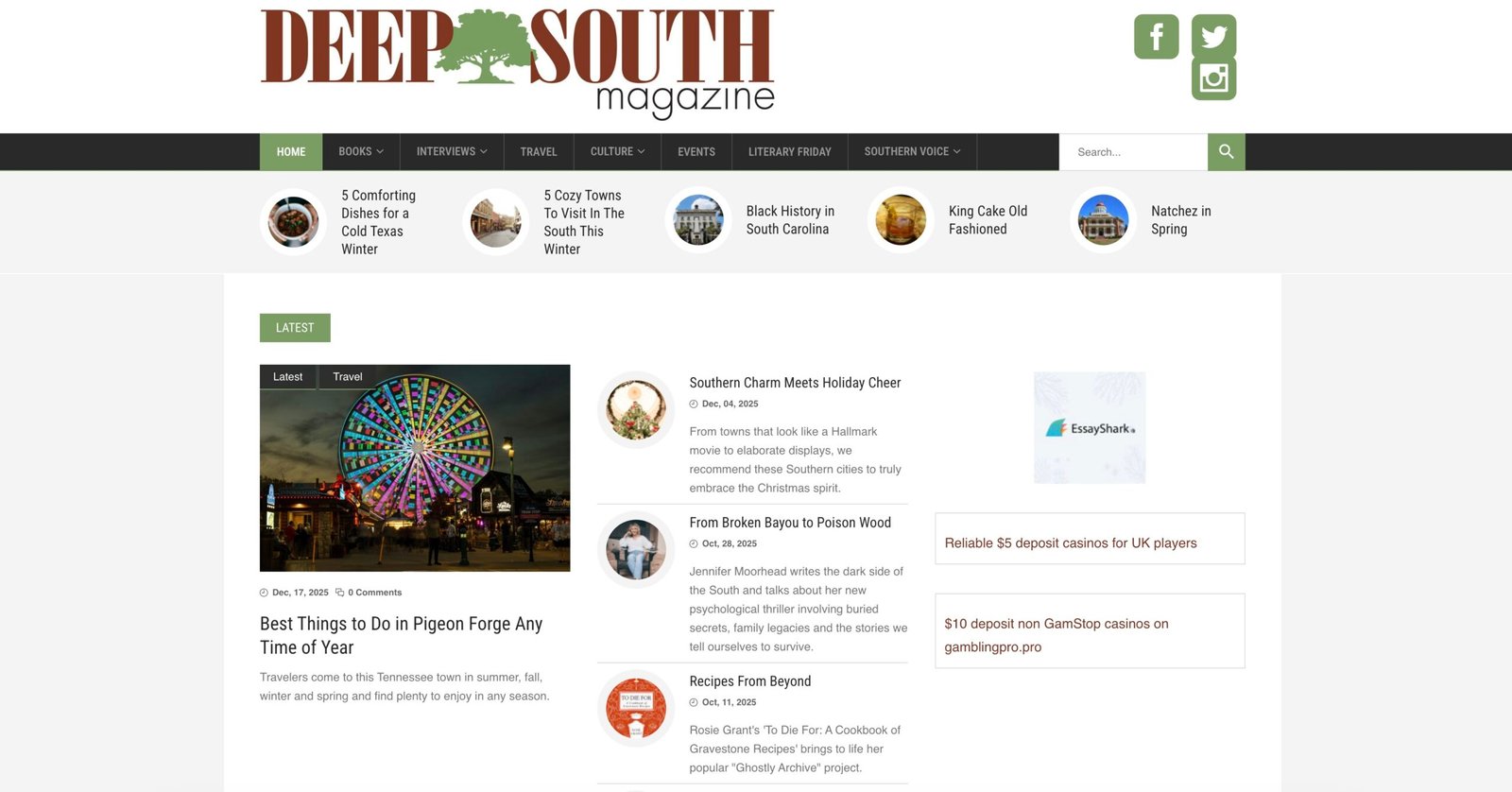
Deep South Magazine is an online magazine dedicated to Southern culture and literature. Its public “About” and site pages describe a focus on author interviews, book reviews, reading lists, literary news, and original fiction, nonfiction, and poetry published under a “Southern Voice” section. This means your pitch must connect to the American South in either content, setting, voice, or origin of the writer. :contentReference[oaicite:2]{index=2}
Practically speaking: if your story, essay, poem, review, or reported piece doesn’t have a clear Southern connection — geographic, cultural, familial, or thematic — it will usually be off-target for this publication. Their editorial identity relies on regional connection and literary tone.
- Original short fiction, flash pieces, and longer short stories.
- Creative nonfiction: personal essays, cultural reportage, travel and place-based essays tied to the South.
- Poetry (selected reading periods) and themed issues.
- Book reviews, author interviews, and reading lists focused on Southern literature and writers.
- Occasional calls for submissions and themed series. Check their site for specific calls. :contentReference[oaicite:3]{index=3}
Readers include literary readers with an interest in Southern voices, writers, festival-goers, and people who follow literary news. Editors look for craft, voice, and authentic connection to place rather than listicle-style content.
Quick tip: spend 30–60 minutes browsing the site’s recent features, interviews, and “Southern Voice” pieces to internalize tone and place-based details before you write. Open the official pages: DeepSouthMag home, About, and Submission Guidelines. :contentReference[oaicite:4]{index=4}
Section 2 · Read their submission rules (line by line)
What the submission guidelines actually say (and how to follow them)
Before you send anything, read the magazine’s submission-guidelines pages carefully and follow them exactly. Deep South publishes explicit requirements about: Southern connection, file format, simultaneous submissions, response times, and where to send your work. Failure to follow small instructions (subject line formatting, file attachments vs. in-body text) can result in immediate rejection. :contentReference[oaicite:5]{index=5}
- Southern connection: Your piece must demonstrate a Southern tie: lived experience, setting, family ties, or clear inspiration from the region. :contentReference[oaicite:6]{index=6}
- Original work: They prefer original, unpublished pieces and will not accept previously published work in many sections. Check the guideline that applies to the genre you submit. :contentReference[oaicite:7]{index=7}
- Genres and reading periods: Poetry and certain genres may be open only during reading periods — check specific calls and dates. :contentReference[oaicite:8]{index=8}
- Response times: They request at least a few months for responses due to volume; be patient and organized. :contentReference[oaicite:9]{index=9}
- Contact addresses: Use the specified email addresses (for submissions, advertising, and other categories) — always send to the right inbox. See the contact page for current addresses. :contentReference[oaicite:10]{index=10}
- Advertorial / sponsored content: If you’re offering sponsored or pre-written advertorial content, the site indicates an advertorial fee (example: $250 per post) and a separate process. Don’t conflate advertorial submission with editorial submissions. :contentReference[oaicite:11]{index=11}
Editor note: Deep South is primarily a literary magazine — that means style, voice, and craft matter more than SEO-optimized blog formats. Keep that in mind when you write, and tailor your prose to a literary readership.
Section 3 · Shape an idea that fits
Practical idea templates & sample angles that match Deep South
A good submission starts with a single clear sentence: “This piece shows readers how/why/what about [Southern thing].” Below are tested idea templates and examples you can adapt. Each template includes a quick sample pitch line you could send in an email or form.
Structure
- Begin with a crisp scene (a family meal, a place, a memory).
- Zoom out to historical or cultural context (why this place matters).
- Close with a reflection or small argument (what the reader gains).
Sample pitch line: “Personal essay about returning to my grandfather’s store in [Southern town] and what its slow decline reveals about community and resilience.”
Structure
- Start with a compelling lede (an event, a person, an object).
- Interview 2–4 local figures, include specific details and sensory reporting.
- Conclude with the larger takeaway for Southern culture or literature lovers.
Sample pitch: “Reported piece on the revival of a small-town literary festival in [state] and how it’s reshaping reading communities.”
Structure
- Lead with a strong claim about the author or book.
- Place work in Southern literary tradition (use specifics and quotes).
- Offer accessible analysis for general literary readers.
Sample pitch: “Feature & interview idea with [author] about their new novel set in [Southern place] and its treatment of family memory.”
Structure
- Follow the magazine’s reading windows and length rules.
- Submit a packet of 3–6 poems around a theme with a short cover note.
Sample pitch: “Poetry packet about migration, southern foodways, and language; 5 poems attached as requested.”
Exercise: write your one-sentence pitch now and compare it to 2–3 pieces on the site. If your sentence matches the tone and subject (Southern-focused, literary), move to the sample-building step below.
Section 4 · Build samples & a tiny portfolio
Where to publish first and how to create a credible sample
If you’re new to publishing, start small and publish 1–3 pieces on free or low-barrier platforms. This gives you a sample to link to when you submit to Deep South. Recommended platforms (use each once so we follow entity rules for the main ones): Dev.to and Medium are friendly for writers; also consider your own blog or literary community sites. :contentReference[oaicite:12]{index=12}
- Strong opening (first 200–300 words matter).
- Clean paragraphs and clear, literary voice.
- Specific details and a strong connection to Southern place/culture.
- Proof that you can finish and polish an edited piece.
If you have published previously in small journals or blogs, gather links and a short clip list. If you do paid advertorial work (note the advertorial fee page), keep that separate from your editorial samples. :contentReference[oaicite:14]{index=14}
Section 5 · How to submit: exact step-by-step
Practical submission steps, email templates, and attachments
Below is a compact “do this, in this order” submission SOP (standard operating procedure) that you can copy and paste into a note. It follows the magazine’s public guidance about emailed submissions and contact addresses. Check the live submission page for any small changes before you send. :contentReference[oaicite:15]{index=15}
Polish your piece
- Spellcheck and read aloud. Get a friend or beta reader to check for clarity.
- Format the file as a single DOCX or RTF (or in the email body if they request it).
- Include front matter: title, word count, brief tagline (one sentence), and a short author bio (2 lines).
Prepare submission email or form
- To: submissions@deepsouthmag.com (verify the address on the contact page at time of sending). :contentReference[oaicite:16]{index=16}
- Subject: Submission: [Genre] — “Short, clear title” — Your Name
- Body: 3–6 lines: greeting, one-sentence pitch (why it fits Deep South), word count, two-line bio, and link to a sample/clip list. Attach the file and paste the first 100–200 words in the email body if requested.
Exact sample email (copy-paste)
Subject: Submission: Personal Essay — "Returning to Magnolia Street" — Jane Smith

Hello Deep South editor,

Please find attached an original personal essay (1,450 words) titled "Returning to Magnolia Street." It explores a family store in small-town [state] and what the place reveals about memory and foodways in the modern South. The piece has not been previously published and is being submitted exclusively to Deep South Magazine.

Bio: Jane Smith is a writer from [city, state]. Her work has appeared at [clip link]. Website: https://example.com

Thank you for your time,
Jane Smith
[jane@example.com] | [phone optional]
Adjust the tone slightly if you’re submitting poetry or fiction; keep the attachment labeled clearly (e.g., smith_magnolia_essay.docx).
If the site lists a form, prefer the form
Sometimes the “Write for us” flow is a form instead of a direct email. Use the form if one is provided: it keeps your submission in the editor’s tracking system. If both exist, a form-based submission is usually best for first-time contributors. Always confirm on the live site which channel they prefer. :contentReference[oaicite:17]{index=17}
Section 6 · After you submit
Timelines, simultaneous submissions, and follow-up etiquette
Deep South’s pages note that response times can be long due to volume; the public record and third-party listings suggest waiting at least 8–12 weeks before expecting a reply for fiction/nonfiction submissions (some listings note up to three months). Keep your submission documented in a spreadsheet so you know when to follow up. :contentReference[oaicite:18]{index=18}
The magazine has historically accepted simultaneous submissions for some categories — but always check the live guideline you are using. If you have multiple pending places, note them and, if accepted elsewhere, immediately inform Deep South so they can withdraw your piece if needed.
If you haven’t heard in the listed response timeframe, send one polite, brief follow-up email: “Hello — I submitted ‘TITLE’ on [date]. I’m checking in on its status. Please let me know if you need anything else. Thank you.” Keep it short, courteous, and infrequent (one follow-up after the reasonable waiting period).
Section 7 · Monetization & alternatives
How to convert publication into income and other paying outlets
Important reality: many literary magazines (including this one) do not always pay standard freelance rates for fiction or poetry. Public-facing pages indicate Deep South’s editorial focus and historically the magazine has not always offered payment for literary submissions; instead, some editorial or advertorial opportunities are paid (e.g., the advertorial fee for sponsored pre-written posts). If earning immediately is your top priority, consider parallel pitching to paying outlets and using Deep South as a prestige placement. :contentReference[oaicite:19]{index=19}
- Advertorial writing: If you represent a brand or can place sponsored content, the site lists an advertorial fee and contact for advertising. That is a paid channel but separate from editorial. :contentReference[oaicite:20]{index=20}
- Freelance features: Some magazines commission paid features — these are negotiated per-piece and usually go to established freelancers.
- Use clips to win clients: A published piece in a respected literary outlet can improve your pitch to paying clients, grant committees, or paid-opportunity editors.
- Find overlapping markets: regional magazines, travel & culture outlets, literary journals that pay small fees. See curated lists like FreedomWithWriting and other “markets that pay” lists. :contentReference[oaicite:21]{index=21}
- Write short features for local tourism boards, regional lifestyle magazines, or paid literary ezines (fees vary).
- Create a paid newsletter (Substack) that repackages essays and offers subscriptions — many writers monetize their work this way.
Action plan: while you wait for Deep South responses, pitch 2–3 small paying gigs (even $75–$250) and keep writing for your own portfolio. Use your Deep South clip in freelance pitches.
Section 8 · Rejection, revision, and reuse
A calm playbook when the answer is “no”
Rejection is common and often useful. If declined, ask courteously whether the editor can share a sentence of feedback (many editors don’t have time, but some will offer a line). If they offer edits, consider revising and resubmitting only if the edits strong-fit the magazine’s voice.
1. Save the reply and timing
Record the decline, any feedback, and the date. Preserve the rejected draft for revision or different placements.
2. Consider revision for another market
Adjust the opening, local detail, and framing to fit a different magazine that targets regional travel, culture, or national literary readers.
3. Turn it into multiple small pieces
One long essay can become: (A) a short excerpt published as a blog post, (B) a short-themed poem (if relevant), and (C) a pitch to a paying outlet with a narrower hook.
Section 9 · Checklists, templates, and links
Ready-to-use checklist, templates, and a big resource list
- I read Deep South submission guidelines. :contentReference[oaicite:22]{index=22}
- I ensured a Southern connection and crafted a strong opening paragraph.
- I prepared a short two-line bio and labeled the file clearly (last_first_title.docx).
- I attached my file and pasted a short excerpt in the email body (if recommended).
- I sent to the correct inbox: submissions@deepsouthmag.com (or used their form). :contentReference[oaicite:23]{index=23}
- I recorded the submission date and planned one polite follow-up after the published response time.
Official & useful pages
- Deep South Magazine — Submission Guidelines. :contentReference[oaicite:24]{index=24}
- Deep South — Submissions (alternative path). :contentReference[oaicite:25]{index=25}
- Deep South — About. :contentReference[oaicite:26]{index=26}
- Contact (emails & social). Use it to verify inbox addresses. :contentReference[oaicite:27]{index=27}
- Poets & Writers listing: Deep South Magazine — third-party profile with reading period notes. :contentReference[oaicite:28]{index=28}
- Freedom With Writing — markets that pay — run parallel pitches for income. :contentReference[oaicite:29]{index=29}
- Dev.to — platform for publishing writing samples (friendly to technical & creative pieces). :contentReference[oaicite:30]{index=30}
- Medium — broad publishing platform for personal essays and feature-length narratives. :contentReference[oaicite:31]{index=31}