


Guide: How to Research, Write, and Pitch for DesertUSA (Beginner → Paid)
This practical guide helps you research DesertUSA’s blog, craft publishable desert-themed posts (photo essays, travel guides, natural history, local culture), prepare submission-ready materials, and explore ways to monetize your writing.
You’ll get step-by-step checklists, pitch templates, sample outlines, photo and caption rules, SEO tips for travel pieces, and a roadmap to turn one article into multiple income streams.
Section 1 · Quick facts
DesertUSA: what the site is and how it handles submissions
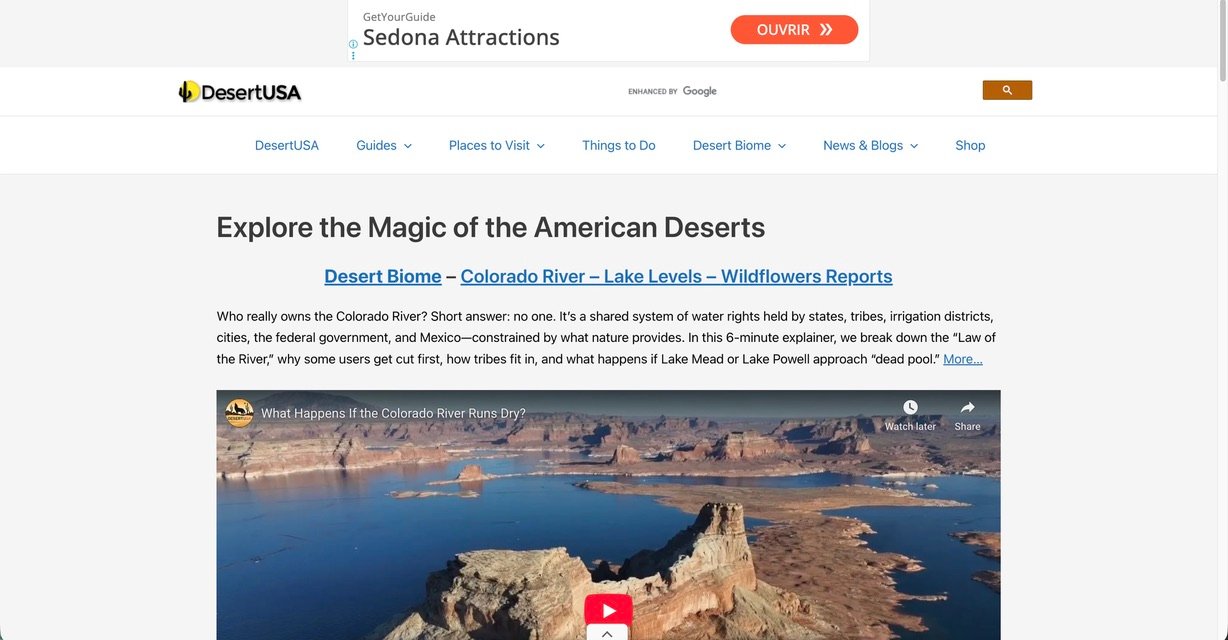
DesertUSA is a long-standing online resource focused on travel, nature, history, and culture of desert regions (primarily North American deserts). It publishes destination guides, photo essays, natural history pieces, survival tips, local culture articles, and practical travel information for desert travelers and enthusiasts.
Important — the official DesertUSA submissions page states current submission rules and policies (always read that page before you prepare a pitch). At the time this guide was researched, the submissions page included a clear note about what the site is accepting and about payment/policy for submissions; you should check the page directly for the latest status before you send anything.
Why this matters: many travel sites change submission policy, pay rates, or whether they accept unsolicited pieces. If a page says “we’re not accepting articles” or similar, do not email random editors — follow the site instructions (save your pitch and adapt it for other outlets).
Section 2 · What DesertUSA publishes — tone, topics, and format
The editorial angle and reader
DesertUSA’s strongest and most common content falls into these buckets:
- Destination & practical guides: how to plan a desert trip, where to camp, route tips, seasonal notes.
- Natural history & wildlife: plant and animal profiles, geology, ecosystems, “why this feature matters” explainers.
- Photo essays & features: rich photography with descriptive captions and local context.
- Cultural & historical pieces: stories about local communities, history, desert arts and crafts.
- Practical survival and safety tips: how to prepare for heat, keeping ice cold on desert trips, safety checklists.
Tone: factual, slightly narrative, aimed at readers who want to learn and travel safely — not pure wanderlust fluff. Articles often combine practical routing and trip planning info with natural-history detail and local color. If your piece teaches readers something useful they can apply on a trip, it has a higher chance of fitting the site.
Useful examples and archived posts on DesertUSA’s blog (good to read before pitching): their blog index, archive pages, and specific posts such as the “How to keep ice COLD in the desert” and other survival or tips posts are representative of the site’s practical bent.
Section 3 · Research & idea validation (fast)
How to find desert story ideas that editors love
Before you write, validate a topic with a 10–30 minute research loop:
- Scan DesertUSA: use the blog index and the site’s search to check whether the exact angle already exists (if it does, find gaps — newer data, better photos, updated routes).
- Search competitor & regional sites: National Park blogs, state park pages, local tourism boards — find missing or outdated practical info you can update.
- Look for seasonal hooks: monsoon-season advice, wildflower timings, fall vs. spring vehicle prep — seasonal angles travel editors like.
- Find a concrete outcome: your one-sentence value prop should start “This piece shows a desert traveler how to…” (e.g., “…plan a 3-day Grand Canyon side-canyon backpacking trip safely”.)
Quick tools to use:
- Site search (DesertUSA) — to find duplicates.
- Google: use queries like
site:desertusa.com "sand dunes" "how to"to spot overlaps. - Park websites, BLM alerts, and NPS pages for up-to-date access and permit info.
- Social listening: Instagram hashtags for the area (to find photo angles and questions).
If you can bring fresh photography, a small demo itinerary, or a short interview with a local ranger or guide, your piece moves from “repetition” into “original contribution.”
Section 4 · Writing structure & example outlines
How to structure a DesertUSA-ready article (templates + examples)
A practical DesertUSA article often follows this simple structure:
- Headline: clear, location or problem-focused (e.g., “How to Keep Ice Cold on a Desert Road Trip — 9 Tested Tips”).
- Deck / intro (50–120 words): set the scene, promise the outcome, include a one-sentence summary of who benefits.
- Quick essentials box: distance, best season, permit needs, difficulty, what to bring (bulleted). This helps readers scan quickly.
- Main sections (3–6): step-by-step or topic-by-topic (e.g., Planning → Safety → Route → Water & Food → Gear → Aftercare).
- Photos & captions: show the scene, callouts, and provide credit — captions should add facts, not just repeat the image.
- Conclusion & next steps: summary and further reading links (including DesertUSA pages you cite).
Example outline: “A day in Joshua Tree: best short hikes for photographers”
- Intro: why Joshua Tree is a photographer’s desert and what weather to expect.
- Essentials: park hours, entrance fees, best times for light, safety note on heat.
- Hike 1: Hidden Valley loop — distance, why it’s photogenic, best time to shoot.
- Hike 2: Barker Dam — tips for reflections and wildlife notes.
- Logistics: parking, crowd tips, cellphone coverage, water carry recommendations.
- Photo tips: lenses, settings, sunrise/sunset windows, ethics of photographing wildlife.
- Where to stay nearby, additional resources (park page, BLM updates).
Word targets: 1,200–2,500 words for typical guides. Use more words only if you have deep original material or multiple sample itineraries. Editors prefer clear, scannable sections and correct practical details over long wandering prose.
Section 5 · Photos, captions & image rights
The photography side — essential rules and tips
Photos matter for DesertUSA. A strong photo essay or travel guide with high-quality images gets more traction. Editors expect:
- High-resolution images: submit the largest reasonable files (check submission page for exact pixel or file-size requests).
- Original work or licensed properly: do not submit images you don’t own unless you have written permission from the creator and can attach that permission/copy.
- Descriptive captions: each image caption should say where the photo was taken, what the viewer is seeing, and why it matters (e.g., “Blooming ocotillo near mile marker 12 — peak bloom generally appears after winter rains”).
- Credit formatting: include photographer name and any usage restriction; follow the site’s required credit formatting if specified.
If you use third-party images (stock, other photographers), secure written permission and be ready to provide release documentation. If you interview a person and include their portrait, get a signed model release. Editors will ask for proof of right-to-publish if anything could be disputed.
Practical image checklist:
- Filename convention:
location-description-photographer.jpg. - Include a separate captions file or embed captions in the submission form field if requested.
- Provide a photographer bio or credit line for each image if not the author.
- If you’ve used AI-image tools for mockups, state that in the submission and follow the site’s policy (many editors require transparency).
Section 6 · Submission process & pitch templates
How to prepare a pitch & the DesertUSA submissions page
The single canonical source for DesertUSA rules is their submissions page. It lists whether they accept unsolicited submissions, what topics they prioritize, and any pay or credit policy. ALWAYS read it first and follow instructions exactly (file formats, photo instructions, contact address or form).
If the submissions page says they are not accepting articles, do not send an unsolicited full draft — instead keep your sample ready and submit elsewhere. If they are accepting pitches, follow their requested format (often a short email or submission form with: brief bio, 1–3 pitch ideas, one detailed outline, sample links, and photo availability).
Pitch template — short (email or form field)
Subject: Pitch: [Short Title] — [Location / Hook]

Hi DesertUSA editor,

My name is [Your Name]. I’m a writer/photographer who covers desert travel and natural history. I’d like to pitch a piece for DesertUSA titled:
"[Headline idea — concise and helpful]"

Angle: One-sentence summary of what the reader will be able to do after reading.
Why DesertUSA readers: two short reasons (practical hook + local authenticity).
Outline: 3–6 bullets of main sections.
Images: I have [number] original photos (RAW/JPG) and can provide captions and release.
Samples: [link to 1–3 best articles / photo essays]
Bio: 2–3 lines (experience, region, contact info).

Thanks for considering this idea — I can expand the outline into a full draft if you’re interested.
Best,
[Your Name] — [email] — [website / instagram]
Long-form pitch (if form asks for more): include a 300–400 word expanded outline, one or two representative images as low-res attachments (editors often want quick proof), and a note about any time-sensitivity (seasonal event, park closures).
Follow-up etiquette
Wait 2–4 weeks before a single polite follow-up. Keep follow-ups short, polite, and helpful (e.g., “Checking in to see if you’d like me to expand the outline into a draft — happy to adapt the angle.”). If the editor declines, ask (briefly) what they’d change and if they’d like a rewrite — this opens a constructive channel.
Section 7 · Monetization: how a single post can earn money
Ways to turn a DesertUSA-style article into income
Direct pay from DesertUSA: the submissions page discusses pay/acceptance policies. Sites vary: some pay per piece, some don’t pay but offer exposure. Use the submission rules to know whether to expect payment or treat the piece as promotional portfolio material.
If direct pay is low or not available, you can still earn from the same work by:
- Repurposing: Expand the article into a longer guide and sell it as a PDF or mini-guide via Gumroad, Ko-fi, or your site.
- Affiliate links & gear guides: publish an extended gear/packing guide on your own site with affiliate links (boots, water filters, solar chargers) — don’t put affiliate links in editorial pitches unless the editor allows it.
- Client work: use the piece as a portfolio sample to win freelance work — local tourism boards, guides, or adventure companies often hire writers/photographers.
- Workshops & talks: turn your expertise into paid workshops (photo workshops, outdoor safety classes).
- Syndication & licensing: sell or license the photos or the expanded article to other outlets, calendars, or local publications.
- Sponsored social campaigns: promote the piece via your social channels to win small sponsorships or paid social features from outdoor brands (be transparent).
Simple income math: one paid article built into a portfolio can generate freelance clients worth many times the article fee. Think of DesertUSA placements as both potential direct pay (if offered) and a trust-building credential to get higher-paying work.
Section 8 · Final checklist, sample pitch & FAQs
Final checklist before you submit
Sample short pitch (copy and adapt)
Subject: Pitch: "Keeping Ice Cold on a Desert Road Trip" — Practical Tips + Photos

Hi DesertUSA editor,

I'm [Your Name], a travel writer/photographer who specializes in desert road trips. I’d like to pitch the following short guide:

Title: Keeping Ice Cold on a Desert Road Trip — 9 Tested Tips
Angle: A concise, practical checklist with photos and product suggestions for keeping food and drinks cold during multi-day desert trips. Based on my personal testing over three desert trips across the Mojave and Sonoran regions.
Outline:
- Quick essentials (why ice melts in deserts)
- Best coolers and how to pack them
- Pre-freezing strategies and ice alternatives
- Vehicle placement and shade tactics
- Camping scenarios vs day trips
- Quick recipes and food-safety notes
Images: I can provide 8 original photos (high-res) plus short demo video clips.
Samples: [link to 1–2 related posts]
Bio: [2-3 lines — mention specific trips or credentials]
Thank you for considering this idea — I'm happy to adapt the angle or expand into a full draft.

Best,
[Your Name] — [email] — [website]
FAQ: quick answers
- DesertUSA — Submissions & contributor guidelines.
- DesertUSA Blog index. Read recent posts to match tone.
- About DesertUSA — who they are. Useful background on site scope.
- Example post: Desert Survival Tips (see practical, experience-based posts).
- Roundups of travel sites that pay writers — useful for alternative outlets and pay comparisons.