


Guide: How to Submit to Frontier Poetry — A Beginner’s Step-By-Step Handbook
This guide walks you through everything a new poet needs to prepare a strong submission for Frontier Poetry: what they publish, how to format poems and packets, how contests and fees work, rights & pay, sample cover letters, editing and submission checklists, common mistakes, and a compact SOP you can reuse every time you submit.
Section 1 · Who is Frontier Poetry?
What Frontier publishes, and who reads it
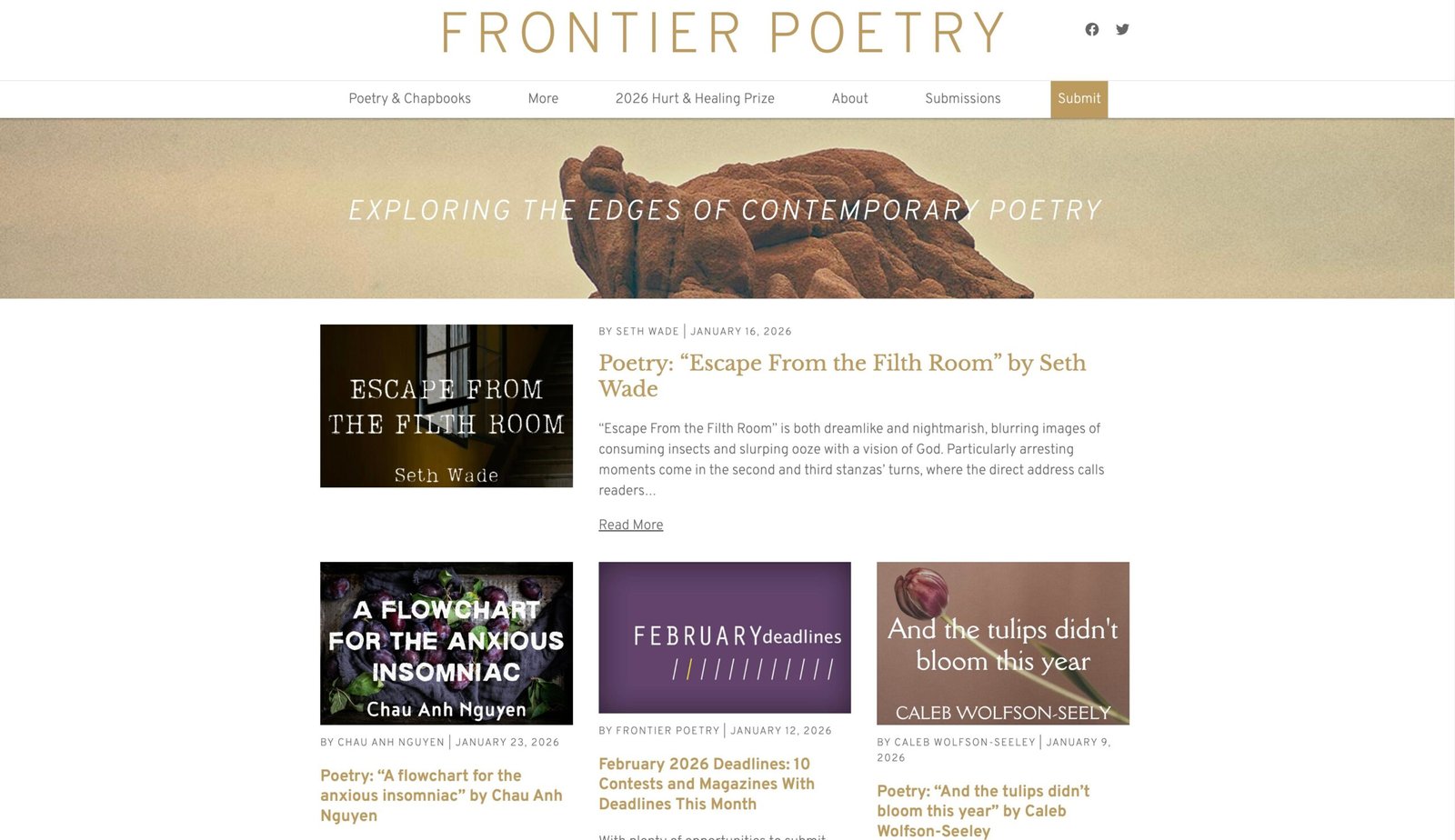
Frontier Poetry is a contemporary poetry magazine and publisher that focuses on emerging writers and new voices. It publishes poems, craft essays, interviews, and features that highlight newer poets and experimental work while also collaborating with established writers. The site is read by poetry lovers, editors, teachers, and emerging writers who follow journals and contests for discovery, craft, and publication opportunities.
Editorial focus
Frontier is explicitly oriented toward new and emerging poets. That often means welcome attention for submissions from writers with limited book-length publication records, chapbooks, or self-published works. Their mission emphasizes discovery and mentorship for poets early in their careers.
Typical reader
Readers are a mix: the small but influential world of literary editors and teachers, plus a broader community of people who follow poetry blogs, read craft essays, and hunt for signals of new writers. Publication here can help your work be noticed by other journals, contests, and agents.
| Category | What to send | Why it fits |
|---|---|---|
| New Voices & Featured Poetry | Short to medium-length poems, original & unpublished | Spotlights emerging poets & fresh styles |
| Contests & Prizes | Curated packets (3 poems typical) for themed prizes | A way to get editorial mentorship and cash prizes |
| Craft essays & interviews | Short essays, Q&A with poets, or editorial features | For writers who can reflect on craft and process |
Section 2 · Submission basics: types, fees, and pay
How Frontier accepts work (packets, contests, and pay)
Frontier accepts submissions through their official submission portal and runs multiple open calls, contests, and labs throughout the year. Common patterns: a free or paid contest entry (fees often apply for some prizes), a general New Voices submission window, and themed prize pages.
Packet size & rules
Typical contest packets ask for up to 3 poems in a single document (often capped at 5–12 pages depending on the call). New Voices and some labs allow up to 5 poems or up to 10 pages — again, check the specific call before you submit.
Fees & pay
Many Frontier prize calls charge an entry fee (commonly $18–$20 per entry for themed prizes). Frontier also publishes non-contest work (New Voices) and offers payment for published poems. The site is known to pay contributors for poems accepted.
| Submission type | Typical packet | Fee & pay |
|---|---|---|
| New Voices | Up to 5 poems / 10 pages (varies) | Generally free to submit; pay for accepted poems |
| Prize Calls | 3 poems / 5–12 pages | Entry fee (commonly $20); prizes or publication & payment |
| Open seasonal competitions | Packet rules vary; check page | Fees vary; prize winners get publication & sometimes cash |
Section 3 · Prepare your packet: formatting, presentation, and file rules
Formatting rules that keep your submission tidy and professional
Many small formatting choices make life easier for editors and readers and reduce the chance your submission will be set aside for technical reasons. Follow a minimal, consistent standard: readable font, clear titles, and one poem per page (when a call asks for it).
Document basics
Use a simple, accessible file format (PDF or DOCX) unless the call specifies otherwise. Name your file clearly: lastname_firstname_frontier_packet.pdf.
On-page presentation
Set a standard font such as 12pt Times New Roman or 11pt Georgia. Avoid ornate layout or unusual spacing. For multi-poem packets, place each poem on its own page unless the call allows consecutive pages per poem.
Header & anonymity
Some calls request no identifying information on the poem pages (for blind reading). If a contest asks for anonymity, put your cover letter or bio information in the submission form fields, not on the poem pages themselves.
File length
Respect page caps. If a contest calls for “no more than five pages” or “no more than ten pages”, that total is strict — editors expect you to follow it.
Simultaneous submissions
Frontier typically allows simultaneous submissions — but you must notify them immediately if a poem is accepted elsewhere so they can withdraw it from consideration. Keep track of where each packet is sent so you can update editors promptly.
Section 4 · Submission SOP + Templates (copy-paste friendly)
A repeatable workflow and ready-to-use templates
Use this SOP each time you submit. It’s a compact assembly line: draft → polish → packet → submit → log. Below are specific templates you can adapt for submission form fields and cover letters.
Polish the poems (1–2 weeks before submission)
Read aloud. Trim lines that feel repetitive. Check line breaks, punctuation, and image clarity. Ask a trusted reader to spot confusing lines.
Assemble the packet
Create a single document with your poems in the preferred order. Add page numbers if helpful. Save as PDF or DOCX.
Write a short cover note (for the submission form)
Frontier’s forms usually provide a bio field and a place to note which poems are included. Keep it short and factual — 1–3 sentences bio + poem list.
Submit & log
Submit via their Submittable or form link, pay the fee if requested, then add the submission to your spreadsheet with the date and fee amount.
Cover letter / submission note (short template)
Template:
Hello Frontier editors,

Please consider the attached packet of [#] poems titled "[Primary Poem Title]" for [New Voices / Prize Name]. The packet includes:
1. "[Poem Title A]"
2. "[Poem Title B]"
3. "[Poem Title C]"

I am a [brief phrase: e.g., MFA candidate / teacher / independent poet], and my work has appeared in [one-line, if any — optional]. Thank you for your time and consideration.

Best,
[Your Name]
[Optional link to website or social media]
Short bio (1–2 lines)
Keep the bio direct: your city or profession + a single credit (if any). Example: “[Name] is a poet living in [City]. Their work has appeared in [X].”
Section 5 · Contests, labs, and special opportunities
How Frontier’s contests and labs work (and how to choose which to enter)
Frontier runs a variety of prize pages and labs (for example, themed prizes like “Misfits Prize” or “Hurt & Healing Prize”, seasonal labs, and the Frontier Open). Each has its own rules for packet length, fee, and eligibility (many emphasize new and emerging writers).
Entry fees & value
Entry fees usually help pay judges, administration, and prize money. Typical fees for themed prizes are in the ~$18–$20 range per submission. If you can afford it, view contests as both a chance for cash/prize and editorial feedback.
Choosing contests
Pick calls that genuinely match your work and eligibility. If a prize is open only to certain demographic groups (for example, BIPOC-focused calls), respect those requirements and apply when eligible.
| Program | Typical rules | Why apply |
|---|---|---|
| Misfits Prize / Family & Home / Themed prizes | 3 poems, up to 5 pages; $20 fee typical | Focused theme can make your packet a better fit |
| Frontier Open | Packet sizes vary; often up to 3 poems; pay & publication for winners | Open to broad entry & good exposure |
| Fall Poetry Lab | Up to ten pages; mentorship and feedback offered | Valuable editorial feedback and community |
Section 6 · Rights, pay, and what to expect if accepted
What you’ll sign and what payment looks like
Frontier generally pays for poems they publish (they are a paying market). Accepted poets receive publication on the site and payment for the poem; exact rates are confirmed by editors per acceptance. After acceptance, editors will contact you with a rights agreement (usually non-exclusive or limited first electronic rights), payment info, and timing for publication.
Typical rights
Many web magazines request first electronic rights or first serial rights for a limited time, then may allow authors to repost. Keep a copy of the acceptance email and the exact rights offered before reposting anywhere else.
Payment logistics
Frontier pays contributors for accepted poems. Payment timing may vary (editors will specify). Keep your banking/PayPal details ready when finishing the acceptance conversation.
Section 7 · Editing, AI, ethics, and best practice
Honesty, craft care, and using AI responsibly
Editors expect accuracy about your credits and honest representation of your work. AI tools can help with drafting or suggestions but do not use them to fabricate experience or present generative material as entirely your own without rigorous revision.
AI & submissions
Some Frontier contest pages explicitly disallow AI-generated work (for example, certain open contests state that work generated by AI will be disqualified). Use AI only to brainstorm or edit in ways you can defend; the poem must be your creative work.
Editing & revision
Editors may suggest edits after acceptance — be collaborative and responsive. If they request changes that alter meaning, ask clarifying questions; preserve your core voice.
Can I submit previously published lines?
Not unless the call allows previously published work — many contests require unpublished poems. If a poem has appeared online briefly (e.g., a personal blog), check the rules and notify editors.
What about simultaneous submissions?
Frontier usually allows simultaneous submissions but requires notification if your poem is accepted elsewhere. Be prompt in notifying editors to avoid duplication.