

How to Research, Pitch, and Write for Inside Precision Medicine — A Practical Guide
This step-by-step guide shows a beginner how to learn the publication’s focus, shape story ideas that match their readers, build strong writing samples, and write a confident pitch using the publication’s editorial guidance.
Quick note: this guide references the Inside Precision Medicine editorial materials and publisher pages while showing practical templates and checklists you can reuse. If you want a plain-text pitch template or a one-page checklist to copy, use the “Quick downloads” section near the end.
1. What Inside Precision Medicine actually covers
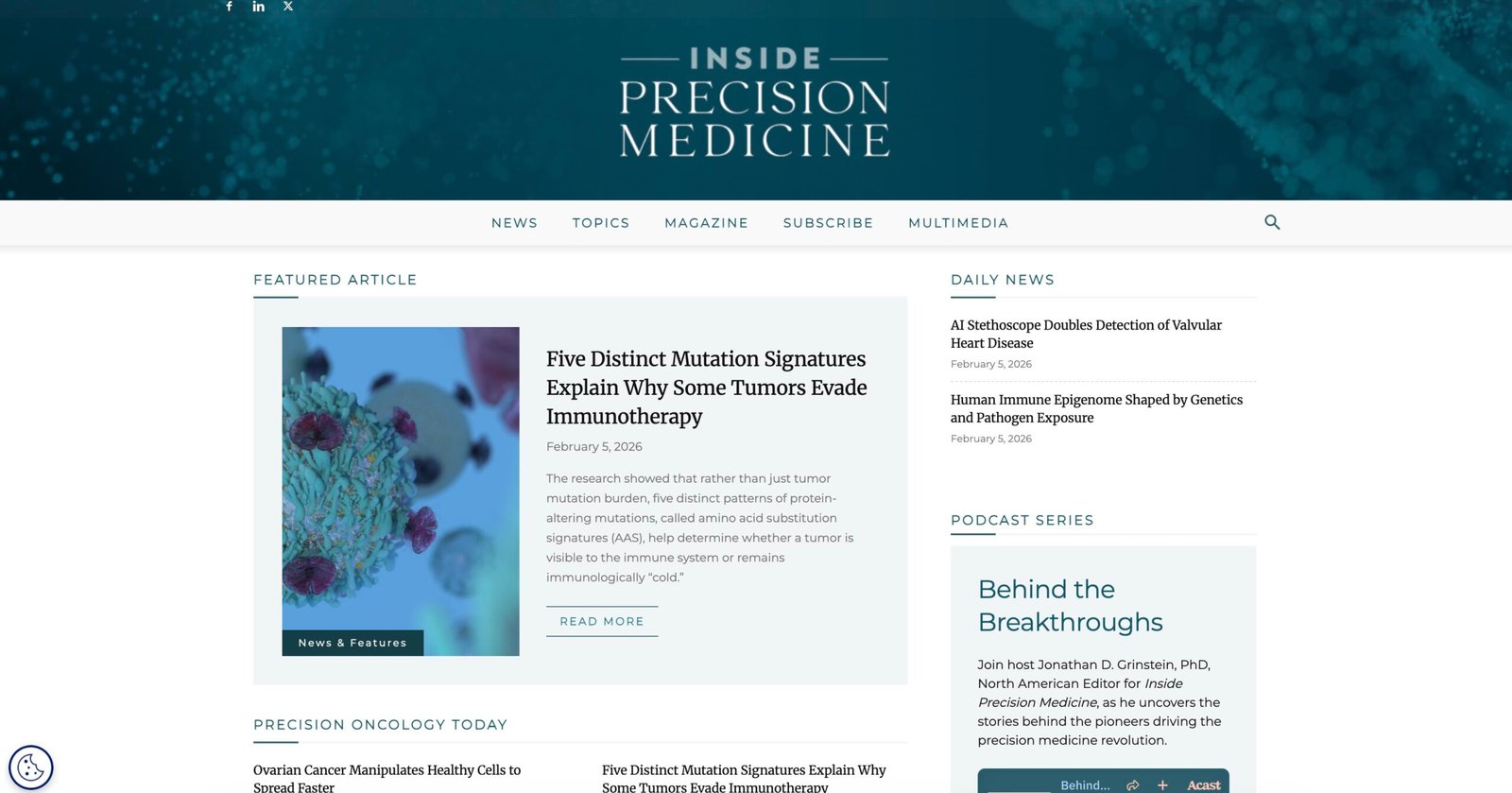
Before you pitch, learn the publication’s scope. Based on publisher descriptions and press materials, the core coverage areas include:
Core editorial areas
- Translational research — stories that connect lab breakthroughs to clinical application.
- Molecular diagnostics — testing technologies, validation, and companion diagnostics (CDx).
- Bioinformatics & clinical informatics — data pipelines, variant interpretation, decision support.
- Patient care & clinical implementation — workflows, stewardship, multidisciplinary teams.
These topic areas are included within the brand’s mission statements and press materials. :contentReference[oaicite:5]{index=5}
Related coverage you can angle into
- Regulatory and reimbursement developments that affect clinical adoption.
- Case studies showing how biomarker-driven approaches changed care patterns.
- Vendor/technology comparisons and evidence summaries (when independent and transparent).
- Workflows that reduce time-to-result or improve test accuracy.
Tip: Use the editorial-guidelines page as your source of truth for submission rules and contact instructions. Save the link https://www.insideprecisionmedicine.com/editorial-guidelines/. (If the site blocks automated crawlers, use a web browser to open the page yourself and copy the submission details into your pitch.)
2. Is your idea a publication-fit idea?
Many new writers start with technology or topic lists. Instead, lead with a reader problem. Below are three quick checks to see if your idea fits the outlet.
Check A — Does it solve a job the reader has?
Example reader jobs:
- “I must validate a new NGS panel and explain how to report analytic sensitivity to my hospital.” — pathologist
- “How do we integrate variant calls into the EHR so clinicians see actionable results?” — informatics lead
- “How can a community oncology clinic access appropriate reflex testing for biomarker-driven therapy?” — clinical operations
Check B — Is the angle specific and evidence-based?
Avoid vague topics like “Precision medicine overview.” Prefer:
- “How to run a clinical NGS concordance study for a 50-gene assay (with templates).”
- “A practical lab checklist for reducing turnaround time in liquid biopsy workflows.”
- “Three payer strategies that enabled coverage for a tumor-agnostic therapy: 2019–2024 lessons.”
Check C — Can you show data, a demo, or a real project?
Readers — especially clinicians and lab directors — trust concrete results. If you can show screenshots, datasets (de-identified), protocols, or before/after metrics, your pitch becomes much stronger.
Exercise: write one sentence that starts “This article helps X do Y by showing Z.” If that sentence is specific, your idea is close.
3. Build a small base before you pitch (practical prep)
Big trade outlets prefer writers who can deliver accurate, testable content. Follow this ladder to demonstrate competency and make editors comfortable.
Step 1 — Publish 3–5 concrete samples
Step 2 — Build a small demo project
- For lab methods, share a reproducible protocol and instrument settings (where allowed).
- For informatics, provide a small pipeline (GitHub) with sample data and expected outputs.
- For patient-care workflows, use de-identified case flows, diagrams, and measurable results.
Additional tips: keep paragraphs short; show commands, not only prose; link to primary evidence (peer-reviewed papers and official docs).
4. Step-by-step pitch workflow (compact SOP)
Treat your pitch like a short consulting brief: problem → audience → what you’ll deliver → why it matters → sample links.
Compact pitch SOP (6 steps)
- Read the editorial-guidelines page carefully. Save the editorial contact and any explicit “not accepting” notices. Use their preferred submission channel (form, email, or portal).
- Draft a one-sentence pitch. “This article shows X how to Y by doing Z — for [reader group].”
- Produce a bulleted outline (3–8 sections). Include expected figures, tables, and demo links (GitHub, slides, datasets).
- Attach 1–3 writing samples. Prefer relevant technical samples (not marketing copy).
- Include a short bio. Two lines: what you do, your qualifications, and a link to your portfolio or institutional page.
- Send via the official channel and note when you submitted. Use a simple, professional subject line: “Pitch: [short title] — [Your name]”.
Sample pitch (copy & paste)
Subject: Pitch: "A practical lab checklist to cut liquid biopsy TAT by 30%" — [Your Name]

Hi [Editor name],

I’d like to pitch a practical, evidence-backed tutorial for Inside Precision Medicine titled:
"A practical lab checklist to cut liquid biopsy turnaround time (TAT) by ~30% — workflows & metrics."

Who it's for:
Laboratory directors and molecular diagnostics teams implementing cfDNA NGS in community settings.

What it delivers:
- A short introduction to the workflow bottlenecks that drive TAT.
- A reproducible checklist and a simple tooling script to track sample status.
- A GitHub repo with a sample dataset and a template report.
- Before/after metrics from a pilot (de-identified) showing time savings.

Why it matters:
Faster, reliable TAT improves clinical decision timing for targeted therapies. This article provides operational steps labs can implement without major capital expense.

Attachments:
- Link to a full sample article I published: [link]
- GitHub demo: [link]
- Short bio: [2-line bio]

Thanks for considering this. I can deliver a full draft in 3–4 weeks if you’d like to commission it.

Best,
[Your name, credentials]
[Contact link / portfolio]
When in doubt, keep the pitch concise and outcome-oriented. Editors prefer clarity over long background sections in the initial pitch.
5. Article structure & types that work
Inside Precision Medicine publishes different formats: news analysis, technical tutorials, feature stories, interviews, and case studies. Below are practical structures you can reuse.
Technical tutorial (recommended)
- Title: specific + outcome (e.g., “How to validate a 50-gene NGS panel: step-by-step checklist”).
- Intro: explain problem, who this helps, and expected result.
- Prerequisites: lab/instrument versions, software, data.
- Main steps: 4–8 clear steps, each with code/commands or protocol parameters.
- Validation & metrics: example results and interpretation notes.
- Summary & takeaways: concise checklist and next steps.
- Resources & repo links
Feature / analysis
- Title: outcome-focused (e.g., “Why payer coverage is the missing link for tumor-agnostic therapies”).
- Lead: a single narrative example or vignette to frame the issue.
- Evidence: interviews, policy changes, data summaries.
- Expert perspectives: quotes, short interviews.
- Implications and actions: what readers can do tomorrow.
If your piece relies on research data, provide citations and links to the original studies. Editors will check claims and want transparent sourcing.
6. Money, rights, and ethics
Payment and rights vary by outlet. For trade media, some articles are paid while others are invited or contributed. Always confirm payment, exclusivity, and licensing terms before submitting a final draft.
Always confirm:
- Fee amount (flat fee vs. byline only).
- Exclusivity (exclusive for a period or first publication only).
- Right to repost (syndication, personal site reposting timeline).
- Credit and disclosure requirements (sponsored content vs editorial).
Ethics & AI
- Do not submit AI-generated content as-is. If you used AI tools, state how they were used and verify every technical claim and piece of code.
- Don’t invent metrics, case studies, or patient data. Use real, de-identified, and permissioned material only.
- Disclose conflicts of interest and relevant funding/sponsorship.
When in doubt, include a short ethics/disclosure paragraph at the end of your draft. Editors appreciate transparency.
7. Final pre-pitch checklist (copyable)
Keep a simple log of submissions (date sent, channel, editor name). This helps with polite follow-ups and re-using outlines for other outlets if needed.
8. FAQ — quick answers for beginners
A: Yes. Focus on clear, reproducible projects and time-bounded contributions (e.g., method improvements, small pilots) rather than long, unfunded clinical trials.
A: No — but your article should cite peer-reviewed evidence where relevant and use de-identified real-world examples when possible.
A: Relevance to the reader, clarity of the outcome, and proof you can deliver (samples, repo, pilot data).
A: Typically 1,200–2,500 words for hands-on tutorials; features may vary. Provide figures, code, and links to make shorter text more actionable.
9. Resources & links (useful when preparing)
Essential inside links
- Inside Precision Medicine — Editorial Guidelines (official)
- Inside Precision Medicine — Home
- GEN / Genetic Engineering & Biotechnology News — publisher family & related coverage. :contentReference[oaicite:6]{index=6}
- Publisher / Editorial board references (Mary Ann Liebert pages). :contentReference[oaicite:7]{index=7}
If the primary editorial page is temporarily inaccessible to bots, use the “contact” or “about” sections on the main site to identify the submission route. Press releases and third-party PDFs referencing the brand also point to the editorial-guidelines page; treat the official page as your final source of truth. :contentReference[oaicite:8]{index=8}
Quick templates & copyable assets
Two-line bio (template)
[Name], [role/degree]. Works as [role] at [institution]. Writes about molecular diagnostics, translational research, and clinical implementation. Portfolio: [link]
One-sentence pitch (template)
This article helps [reader] do [concrete task] by [method/result], demonstrated with [repo/pilot/data].