


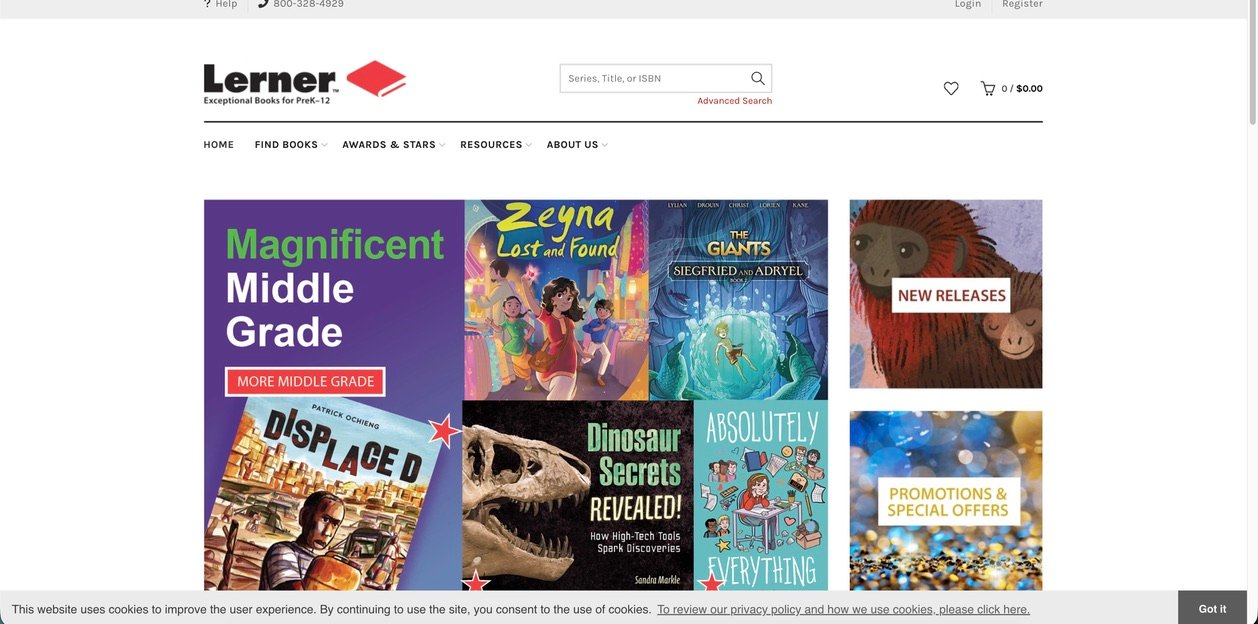
Guide: How to Work with Lerner (and earn money writing about kids’ books & education)
This guide walks you, step-by-step, through what Lerner Publishing Group is, how their submissions policy works, realistic ways to get published or paid, alternatives if direct submissions are closed, and a practical monthly plan you can follow as a beginner writer to earn money from blog posts, magazine pieces, reviews, and educational content.
It includes actionable checklists, email templates, places to publish now, and a long resources list with direct links to the Lerner site and related pages so you can research quickly.
Section 1 · Quick facts
What Lerner Publishing Group is — fast overview
Lerner Publishing Group (often shown on the site as lernerbooks.com) is one of North America’s largest independent children’s book publishers, founded in 1959 and based in Minneapolis. They publish fiction and nonfiction for PreK–12 across multiple imprints aimed at libraries, schools, and parents. :contentReference[oaicite:0]{index=0}
Picture books, early readers, chapter books, nonfiction series for classrooms, reference and curriculum-aligned content, graphic novels, and YA titles. They also operate Lerner Publisher Services (distribution and partner services). :contentReference[oaicite:1]{index=1}
The site includes About, Imprints, Press (Headlines), Contact, FAQs, and customer-service resources; it also highlights periodic news and open calls in the Press Room. :contentReference[oaicite:2]{index=2}
| Fact | Notes |
|---|---|
| Founded | 1959; family-owned; Minneapolis base. :contentReference[oaicite:3]{index=3} |
| Focus | Children’s & YA books; classroom and library markets. |
| Submissions | Generally not accepting unsolicited manuscripts — see next section for details. :contentReference[oaicite:4]{index=4} |
| Press & Open Calls | Occasional open-submission calls are announced in the Press Room (Headlines). :contentReference[oaicite:5]{index=5} |
Section 2 · Submissions policy
What Lerner’s submissions policy actually means for you
Lerner Publishing Group does not accept unsolicited submissions or queries from unagented or unreferred authors as a default policy. That means if you email a full manuscript cold to the general mailbox, it will probably not be reviewed. Instead they prefer agented or referred submissions, and they sometimes run limited open submission calls that are announced publicly. :contentReference[oaicite:6]{index=6}
- The acquisitions editors prefer manuscripts from literary agents or from creators who are referred.
- Open submission windows (rare) are the only built-in exception — they’re posted on the Press Room / Headlines page when available. :contentReference[oaicite:7]{index=7}
- Contacting marketing or customer-service addresses about submissions is unlikely to get your manuscript to acquisitions.
Publishers receive far more unsolicited manuscripts than they can evaluate. Requiring agents or referrals helps filter for projects that already have professional development, and it speeds editorial review in a busy market.
Section 3 · Real routes to work with Lerner
How writers commonly get a Lerner contract (workable options)
Below are the practical, proven paths writers and illustrators use to work with Lerner or similarly structured children’s publishers. Pick one or two and focus your energy.
Get an agent (the standard path)
Agents submit to Lerner on behalf of authors. If you want trade deals or wide distribution for picture books or middle-grade projects, querying reputable children’s book agents is the usual path. Resources: agent directories (SCBWI, Publishers Marketplace, QueryTracker), and children’s agent lists. Many Lerner acquisitions are agented. :contentReference[oaicite:8]{index=8}
Referral / editorial introduction
If you know an editor, author, librarian, teacher, or industry contact who can introduce you to a Lerner editor, that referral often opens a door. Contribute high-quality classroom resources, speak at conferences, or connect via social media to build these relationships.
Watch for open calls & special programs
Lerner announces special calls — for example themed series or partnership projects — in their Headlines / Press Room. When they post an open call, follow instructions precisely and apply during the window. :contentReference[oaicite:9]{index=9}
Partner with small presses or Lerner Publisher Services
Lerner Publisher Services provides distribution and partner publishing for smaller presses — if you are connected to an imprint that partners with Lerner, your project may reach Lerner channels. :contentReference[oaicite:10]{index=10}
Section 4 · Start earning now (writing ladder)
Build a writing ladder so you can earn money while preparing for Lerner
Because Lerner doesn’t review unsolicited manuscripts broadly, you should build platform, clips, and income streams elsewhere first. This “writing ladder” gives credibility to agents and editors and creates income while you wait.
Write paid or unpaid pieces for parenting blogs, education websites, and book-review outlets. Examples:
- School Library Journal — reviews, sometimes paid or for exposure
- Book Riot, Kirkus (indie review programs), The Horn Book (submit review queries)
- Local newspapers, community magazines, and parenting blogs (guest posts)
These clips show your voice and build a review portfolio you can show editors and agents.
Create short curriculum guides, activity sheets, or teacher resources (TES, Teachers Pay Teachers, or direct commissions). Lerner values education-minded creators; classroom materials are a natural bridge to publishers serving school markets.
Self-publishing a well-designed picture book or a nonfiction classroom series (even in small quantities) can prove concept and lead to interest from distributors or acquisition scouts. Use print-on-demand or short-run partners to create a professional sample.
| Stage | Where to publish | Why it matters |
|---|---|---|
| Start | Blog posts, local magazines, parenting sites | Build samples, voice, and a short clip list |
| Grow | Education marketplaces, freelancing platforms | Earn small fees and show curriculum experience |
| Showcase | Self-published picture book or small-press title | Provide a polished sample that shows design/editorial judgment |
Section 5 · What to write that pays
Article types and markets that pay well for children’s-book writers & reviewers
Here are article and content types that editors, schools, and parents pay for — and that build the skills Lerner looks for (clear explanation, age-appropriate voice, curriculum alignment).
Book reviews & “best of” lists
Short, well-argued reviews for parenting blogs, literacy sites, school newsletters, and Book Riot-style sites. Some outlets pay; others provide exposure. Keep reviews 400–800 words with clear takeaways for teachers/parents.
How-to / activity guides tied to books
Create craft or lesson activities that pair with a popular picture book. Sell lesson packs on Teachers Pay Teachers, or pitch them to educational blogs. This is high-value for school librarians and teachers.
Author interviews & profiles
Interview local or indie authors; publish Q&As for regional magazines, school newsletters, or online sites. These clips demonstrate editorial skill and industry connections.
Curriculum & educational resources
Lesson plans, reading guides, and nonfiction companion materials — these can be sold or commissioned by schools and educational publishers.
Section 6 · Pitching: templates & examples
Three simple email templates you can adapt
Use the templates below for: 1) agent query, 2) editor referral note, 3) guest post pitch. Keep them short, specific, and professional.
Subject: Query: Picture book manuscript — Title (age 3–7)
Dear [Agent Name],
I’m seeking representation for my picture book Title, a [word-count]-word story about [one-sentence premise]. I’m a [brief credential: teacher/illustrator/etc.] and my work has appeared at [clip or experience]. The manuscript (complete) is attached and I can send sample artwork/proposal on request. Thank you for considering — I believe this story will appeal to fans of [comparable title].
Best,
[Your name] — [web link to clips / email / phone]
Subject: Referred by [Referrer]: Brief project note
Hi [Editor Name],
[Referrer Name] suggested I contact you. I have a polished nonfiction proposal for ages 8–12 on [topic], aligned to [curriculum / standards]. I can share a 1-page proposal + sample chapter. Would Lerner be interested in seeing a brief proposal if I send it? Thanks — I admire Lerner’s work on [relevant imprint or series].
— [Your name] — [link to clips]
Subject: Pitch: Activity guide + review for [site name]
Hello [Editor],
I’d like to pitch a 900-word article: “5 classroom activities to pair with [recent picture book title]” — includes printable worksheet and short review. I’m a writer with clips at [site names]. If this sounds useful I can send a full outline and sample worksheet. Thanks for considering.
Best, [Your name] — [link to clip]
Section 7 · 90-day plan for beginners
Follow this plan to build clips, earn small fees, and approach agents/editors
- Days 1–30 — Research & write a signature clip
- Read Lerner’s About, Imprints, and Headlines pages. Bookmark them. :contentReference[oaicite:11]{index=11}
- Write one strong sample: a 700–1,000 word activity guide tied to a recent picture book or a 900-word review with useful takeaways.
- Days 31–60 — Publish & pitch local outlets
- Publish that clip on your blog, Medium, or pitch it to a regional parenting site. Start building paid clips if possible.
- Create 2 more short pieces: author Q&A (reach out to a local author) and a printable classroom worksheet.
- Days 61–90 — Package samples & approach professionals
- Gather clips into a short PDF portfolio (3–5 pieces) and create a one-page proposal for your book idea if you have one.
- Query 3 children’s agents (use standard query letter), contact 2 industry referrals, and watch Lerner’s Press Room for open calls. :contentReference[oaicite:12]{index=12}
Section 8 · Checklist, ethics, FAQ
Everything you should double-check before sending a pitch or sample
Section 9 · Resources & links
Direct links (open these in new tabs) — Lerner & related resources
- Lerner: About (company overview & submissions note). :contentReference[oaicite:18]{index=18}
- Lerner: Headlines / Press Room — watch here for open calls and news. :contentReference[oaicite:19]{index=19}
- Lerner: Our Imprints & Partners — find imprint focus and potentially imprint-specific guidance. :contentReference[oaicite:20]{index=20}
- Lerner: Contact form — for general contact and inquiries (not manuscript submissions). :contentReference[oaicite:21]{index=21}
- Lerner: FAQs — customer and site FAQs. :contentReference[oaicite:22]{index=22}
- Wikipedia: Lerner Publishing Group — company history and overview. :contentReference[oaicite:23]{index=23}
- Editor listing / contact hints (example: Amy Fitzgerald on ManuscriptWishlist) — useful to discover submission patterns for specific imprints/editors. :contentReference[oaicite:24]{index=24}
- Find your imprint and study similar titles — learn which imprint fits your age/genre. :contentReference[oaicite:25]{index=25}