


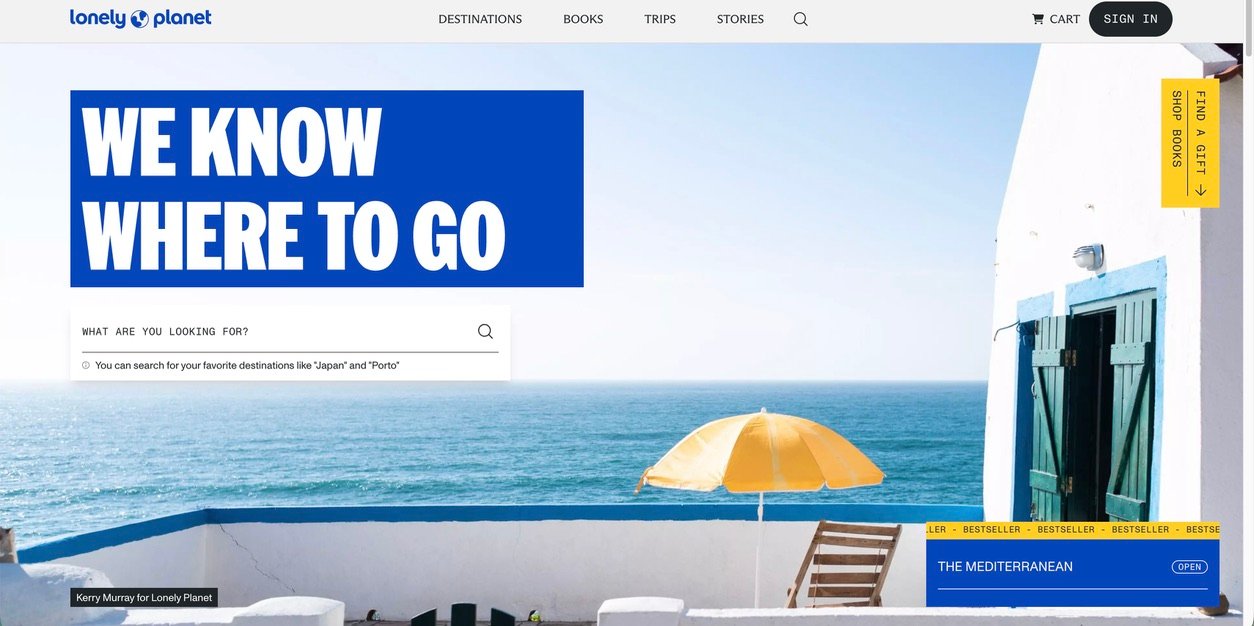
Guide: How to Pitch & Write for Lonely Planet — Step-by-Step
This guide shows, step by step, how beginners and early-career travel writers can learn the ropes and pitch work to Lonely Planet — plus how to build the portfolio and income while you grow.
You’ll get clear examples, a sample pitch, a sample bio, a checklist, and many useful links (official pages, support docs, pay roundups, and pitching resources). Read it as a practical SOP you can follow over weeks and months.
Section 1 · Understand the publisher
What Lonely Planet is looking for from contributors
Lonely Planet’s official “Contribute” page explains how the team accepts submissions and works with writers and photographers. They publish destination guides, long-form features, practical planning content, and inspiration pieces — and they work with a mix of staff and trusted freelance contributors. Read the official contributor page carefully before you pitch.
Typical items include: city/destination guides, how-to planning pieces (where to stay, how to get around), local experiences and stories, listicles with strong local value (e.g., “Best street food in X”), and long-form features that explain cultures, transport, and travel trends.
- Practical guide copy used in digital guide pages and eBooks.
- Feature journalism and travel essays.
- Local, reliable recommendations (hotels, restaurants, tours).
- Images and mapping / location-based updates.
Readers are planning trips, researching destinations, or seeking inspiration. They expect accurate practical information (open times, prices, directions), honest assessments, and clear recommendations.
When you pitch, think: “Does this help a real traveller make a better plan or decision?”
| Article type | Typical use | Key requirement |
|---|---|---|
| Destination guide / city page | Practical trip planning | Accurate directions, verified details, recent prices/links |
| Feature / long-form | In-depth stories or trends | Strong reporting, local sourcing, narrative structure |
| List / Top Things | Quick inspiration | Local expertise, fresh picks, short descriptions |
Section 2 · Fit your idea
Is your idea a Lonely-Planet-shaped idea?
Lonely Planet values useful, accurate and local-first content. Your pitch should answer a real traveller question and provide verifiable help. Use these three checks to shape your idea.
Is it useful for planning, not just pretty?
Lonely Planet’s readers want to make decisions: where to stay, how to move, what to see. If your article gives concrete options and step-by-step suggestions, it is more likely to be valuable.
Is the angle local and specific?
“Top 10 cafés in X” with fresh, local picks is stronger than “Best cafés worldwide”. Strong angles: neighbourhood-focused lists, budgets (e.g., under $10), family-friendly, or accessible travel routes.
Can you verify details and sources?
Editors expect current facts: opening hours, prices, contact details, and whether seasonal changes affect the recommendation. If you can’t verify this reliably, refine your idea.
Section 3 · Prepare yourself
Build a small travel-writing ladder before you pitch
Even experienced writers build momentum. If you’re newer, aim to publish 3–6 strong samples across your own blog or smaller travel outlets before pitching big brands. That gives editors proof you can finish a piece and fact-check.
- Self-publish on your own blog (WordPress, Ghost) or a platform like Dev.to if it’s tech-oriented, otherwise Medium or Substack.
- Write practical guides with verifiable details and images (your own or licensed).
- Keep pieces 800–2,500 words depending on depth; include location facts, directions, opening times, and contact information where relevant.
- Collect photos, map links, and concise notes you can refer to and share with editors.
- Keep a small Google Drive or Dropbox folder per destination with filenames, captions, and photographer credits.
- Link to public sources and explain how you checked each fact.
| Step | Where | Main goal |
|---|---|---|
| Start | Your blog / local sites | Build fact-checked samples with photos |
| Middle | Smaller travel blogs / regional mags | Get bylines and editor experience |
| Higher | Lonely Planet & large outlets | Flagship pieces that demonstrate authority |
Section 4 · Practical workflow
Step-by-step Lonely Planet pitch plan (for beginners)
This workflow is compact and repeatable. It works for Lonely Planet and many other travel publications.
Read the Lonely Planet “Contribute” page carefully
Visit Lonely Planet – Contribute. Note how they accept applications, what formats they prioritise (features, guides, images), and the contact or form links they provide. Follow the process exactly — editors appreciate writers who read instructions.
Choose one focused traveller & problem
Answer: “Who is this for?” Examples:
- “Budget backpackers visiting X for first-timers — 5-day plan.”
- “Families visiting Y in summer: kid-friendly activities and safety tips.”
- “Solo hikers who want a reliable route & local transport options.”
Draft a solid outline & confirm facts
Include in your outline:
- Headline idea and 1-sentence hook.
- Who it’s for (traveller type, budget, season).
- Section headings (4–6 short sections).
- Sources — links to official websites, your photos, maps, and any interviews.
Write a full sample (if required)
Lonely Planet often commissions from an established pool, and they rarely accept prewritten, on-spec pieces for website articles. As a beginner, publish at least one strong sample on your own site or a smaller outlet and link to that when you pitch.
Send the right submission (or join their contributor pool)
Use any official form or email listed on the Contribute page. If they ask to apply with a CV/portfolio, attach your best samples, short bio, and a brief outline or 1–3 pitch ideas.
Follow up professionally & reuse your ideas
Editors are busy. If you don’t hear back after a reasonable period (4–6 weeks), a short, polite follow-up is fine. If the pitch doesn’t land, adapt the idea for other outlets or refine it for a better fit.
Section 5 · Money & contracts
How contributors typically earn and what to expect
Payment for Lonely Planet work varies by project: short guide copy, longer features, image licensing, or commissioned guidebook work all have different rates and contracts. Public roundups and writer reports suggest a range rather than a single fixed rate — treat published figures as approximate and confirm with editors on offer.
- Flat fee per assignment (common for features and guide pages).
- Per-word rates for some web features (varies by outlet and experience).
- Separate payments for photography or image licensing.
- Occasionally expenses coverage (travel, local transport) for commissioned reporting — but not always.
- Estimate time for research + travel (if any) + reporting + writing + edits.
- Divide the fee by hours to get your effective hourly rate.
- If the rate is low, negotiate or use the piece as promotional portfolio work (but be honest about ROI).
| Piece type | Rough market notes* | Strategy |
|---|---|---|
| Short guide copy | Often flat fee; modest | Good for starter clips; confirm usage rights |
| Feature / long-form | Higher fee; depends on length and exclusivity | Negotiate for byline, photo credit, and reprint rights |
| Image licensing | Paid separately if you supply professional photos | Keep metadata and model/property releases ready |
Section 6 · Ethics, sourcing & AI
Honesty, local sourcing, and using AI responsibly
Lonely Planet’s credibility rests on accurate, trustworthy local information. Editors will expect you to have verified facts and to be able to defend any claims.
- Don’t submit AI-generated content as-is. AI can help brainstorming or editing, but you must verify facts and write in your own voice.
- Don’t invent quotes, reviews, or performance numbers.
- Don’t reuse copyrighted photos without permission or fail to secure releases where required.
- Verify opening times, contact details, and prices (link to official pages where possible).
- Credit local guides and sources if you quote them; secure permissions for interviews and photos.
- If you used AI for drafting, declare it if the editor asks and ensure full human editing and fact-checking.
Section 7 · Micro-SOP
Final checklist & sample templates before you pitch
Use this checklist every time you prepare a pitch. Below the checklist you’ll find sample short pitch templates (two styles) and a sample short bio you can adapt.
Sample short pitch — Practical style (for form or email)
Subject / Pitch title: “5-day budget itinerary for Lisbon with transit tips and family options”
Hi [Editor’s name],
I’m [Your Name], a travel writer based in [city/country]. I’d like to pitch a practical 1,400–1,800-word guide: “5-day budget itinerary for Lisbon with transit tips and family options.” It helps first-time visitors who want to see the city’s highlights on a family-friendly budget. Sections: 1) Quick arrival & transport, 2) Day-by-day plan with cheap eats and attractions, 3) Family-friendly activities, 4) Budget accommodation picks, 5) Practical tips & safety. I can provide 6 images (my own) and links to official opening times and transport cards. Sample published work: [link to sample]. Short bio: [1–2 lines]. Thanks for considering — I can adapt length or angle to fit your needs. Best, [Name] — [email] — [portfolio link]
Conversational pitch — Story / Feature angle
Subject / Pitch title: “How coastal fishing communities in X are reinventing sustainable tourism”
Hello [Editor],
I’d like to propose a 1,800–2,200-word feature about how local fishing communities near [place] are redesigning tourism to support livelihoods and protect marine habitats. I recently spent three weeks reporting there and can supply first-person scenes, interviews with two local co-ops, and high-resolution images. The piece will follow a clear narrative with practical notes on how travellers can visit responsibly. Published sample: [link]. Short bio: [1–2 lines]. Would this fit current commissioning plans? Thanks — [Name].
Sample short bio (one line, editable)
[Your Name] is a travel writer & photographer based in [city]. They specialise in practical city guides and slow-travel features across [region], with recent work in [publication examples]. Portfolio: [link]
Section 8 · Quick answers & resources
FAQ: Practical answers for beginners
- Lonely Planet — Contribute (official)
- How do I become a Lonely Planet writer? — Support article
- Can I write a website article for Lonely Planet? — Guidance
- Lonely Planet home — examples of stories & guides
- The Write Life — travel-writing jobs (useful marketplace list)
- Make a Living Writing — travel outlets that pay
- Freedom With Writing — pitch calls & pay roundups
- The Muse — freelance advice & job listings