


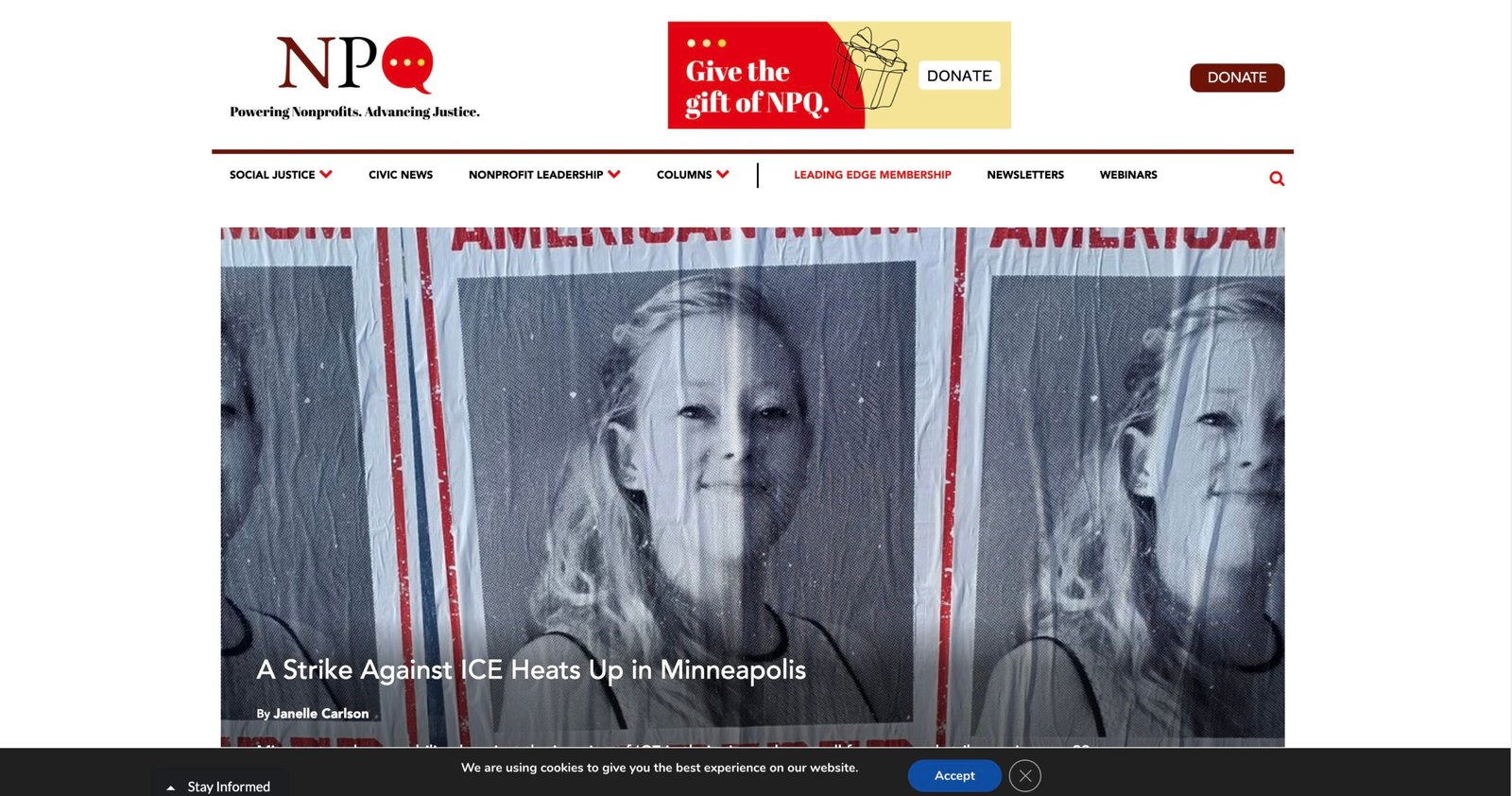
Guide: How to Write for Nonprofit Quarterly (NPQ) — Pitch, Publish, Earn
This guide walks you through everything a beginner needs to read, prepare, pitch, and publish with Nonprofit Quarterly (NPQ) — including where to send your pitch, what NPQ looks for in topics, realistic pay expectations, and a ready-to-use pitch template. Use it to write blog posts, guest articles, or magazine pieces that can earn you money and skills in civic- and nonprofit-focused journalism.
I researched NPQ’s current public submission pages, calls for pitches, and editorial policies to collect the most helpful links and practical steps. Key official pages are linked in the Resources section at the end. :contentReference[oaicite:0]{index=0}
Section 1 · Know the publication
What Nonprofit Quarterly (NPQ) looks for and who reads it
NPQ is a nonprofit news and analysis site focused on the nonprofit sector, civic life, and justice-oriented issues. Their audience is mostly nonprofit leaders, staff, funders, researchers, and activists who want evidence-based reporting, practical lessons, and thoughtful analysis. NPQ runs both web articles and a print/digital magazine. :contentReference[oaicite:1]{index=1}
What NPQ values:
- Timely reporting or clear practical lessons — pieces that explain why something matters now for organizations and communities.
- Evidence and sources — data, reports, interviews with practitioners, or replication-ready examples.
- Justice-grounded angles — NPQ often foregrounds economic, racial, climate, and health justice in coverage and calls. :contentReference[oaicite:2]{index=2}
- Readable, actionable writing — editors favor explanations that help readers adapt ideas to their work.
If your pitch answers a practical question (how to run a campaign, how to shift a funding model, how to design equitable evaluation) and shows evidence, NPQ is a reasonable target.
Section 2 · Fit your idea
Is your idea NPQ-shaped? (3 fast checks)
Before you write a full draft, test your idea with these three quick checks.
Is it timely and relevant to nonprofits?
NPQ prioritizes pieces that respond to current policy debates, sector practice shifts, leadership/management issues, or justice-focused campaigns. If your topic is evergreen, tie it to a practical problem nonprofits face today.
Can you show evidence or practitioner experience?
A strong NPQ pitch mentions interviewees, case studies, public data sources, or an organization you worked with. Even a well-documented pilot project or internal lessons learned is persuasive.
Does it speak to NPQ readers?
NPQ readers want ideas they can apply in nonprofit workplaces, policy advocacy, governance, or philanthropic strategy. If your angle helps those readers make better decisions, it’s probably a fit.
Section 3 · Build a small portfolio
Prepare 2–4 strong samples and a short demo
Editors prefer writers who can complete clear, edited pieces. If you’re new to journalism, publish 2–4 samples that show your range: a short report-style post, one how-to/practice piece, and one analysis or essay. Publish them on your blog, Medium, Dev.to (for tech-adjacent topics), or other outlets, then link them in your pitch. NPQ requests samples or links when you pitch. :contentReference[oaicite:4]{index=4}
- A clear headline and 600–1,500 words (web pieces often are shorter; magazine pieces are longer).
- At least two named sources (interview, report, or public dataset) or a documented pilot.
- Accurate links and citations — NPQ values source transparency.
- Clean formatting: subheads, bullets, and short paragraphs for readability.
- If your piece is practice-focused (e.g., fundraising strategy), include a one-page toolkit or checklist readers can use.
- If your piece is reporting, prepare a bulleted list of potential interviewees and public documents you will use.
Section 4 · How to pitch NPQ (step-by-step)
Exact actions: reading pages, assembling an outline, sending the pitch
NPQ gives clear instructions on how to submit a pitch. Their public submissions page explains how to pitch a story, asking you to pitch concisely, explain why the piece is timely, why you are the right person to write it, and to suggest sources. Pitches can be sent to submissions@npqmag.org (or use forms/calls that NPQ posts for special issues). Always check the current Submissions page before sending. :contentReference[oaicite:5]{index=5}
Read NPQ’s Submissions & Editorial pages
Open NPQ’s official Submissions page and Editorial Policies page. Note any current calls for pitches (they frequently run themed calls for magazine issues). Doing this ensures your pitch matches both tone and topical focus. :contentReference[oaicite:6]{index=6}
Select 1 focused idea and write a 2-line hook
Your hook should be one sentence that explains the central news or practical benefit. Example: “How three small community foundations redesigned unrestricted grants after the 2023 floods, and the steps other funders can copy.” Keep it tight.
Draft a short outline (3–6 bullets) and list 4 sources
Your outline should include: (1) lead / context (why now), (2) 3–4 subhead sections (e.g., background, case study, practical steps, implications), and (3) a closing takeaway. Include prospective interviewees or public reports (title + URL).
Prepare a short bio and 2–3 writing samples
Include a 1–2 sentence bio that states your role (e.g., program director at X nonprofit; freelance nonprofit writer), and links to your best work or GitHub/docs if relevant. If you have previous NPQ clips, mention them.
Email the pitch — concise subject, clear body
Send to submissions@npqmag.org (or the email provided in a call for pitches). Use a subject like: Pitch: [Short Hook] — [Your Name]. Keep the email under 350–500 words with the outline, sources, and links to samples. See the full template below in Section 7.
Polite follow-up and reuse strategy
If you don’t hear back in 2–4 weeks, one short follow-up is fine. If the pitch is declined, adapt the idea (shorter op-ed, longer magazine feature, or a how-to toolkit) and pitch elsewhere — or publish the sample on your own blog and send the updated link back later.
Section 5 · Money & rights
How NPQ typically compensates contributors — what to expect
NPQ historically pays contributors. Recent public calls and NPQ magazine announcements indicate payment for accepted contributions, sometimes in a published range (e.g., $200–$500 depending on length/item for certain special issues). Other public sources and market listings also report a common $300 figure for some web contributions. Always confirm the current rate when an editor offers assignment terms. :contentReference[oaicite:7]{index=7}
- Short web columns or “We Stood Up”-style pieces: often smaller flat fees (some calls list ~$300 for ~500 words).
- Longer magazine features or deeply reported pieces: higher flat fees (sometimes ranges up to $200–$500 for special issues, as advertised for some themed calls).
- Payment is usually a one-time flat fee (editor negotiates at acceptance).
- Estimate your hours across research, interviews, drafting, and editing; divide the fee by hours to track your effective rate.
- Use bylines as portfolio pieces to earn consulting, speaking, or further paid writing work.
- Negotiate politely if the assignment requires heavy reporting — mention expected interview/transcription time or data work.
| Piece type | Rough pay | Pitch strategy |
|---|---|---|
| Short column / first-person account | ~$200–$300 (varies by call) | Bring a strong voice + a clear anecdote; show why readers care. |
| Web feature (reported) | ~$300+ (depends on complexity) | Show sources and a clear explanatory structure. |
| Magazine feature / themed issue | $200–$500 (some calls list ranges) | Submit a tight proposal, longer outline, and evidence of reporting plan. |
Section 6 · Ethics, accuracy, and AI
How NPQ treats sourcing, anonymous contributions, and responsible AI use
NPQ’s editorial policies emphasize accuracy, source integrity, and contributor transparency. They accept anonymous contributions in some cases and outline editorial practices for corrections, anonymity, and editorial review. If your pitch involves sensitive topics or vulnerable people, explain how you’ll protect sources and verify facts. :contentReference[oaicite:9]{index=9}
- Do not make unverified claims or use anonymous quotes without editorial permission.
- Avoid promotional pieces or advocacy without transparency — NPQ expects journalistic clarity.
- Do not submit machine-generated text as a finished article without careful human verification and attribution where relevant.
- Use AI to brainstorm structures or draft interview questions but rework language and verify facts yourself.
- Run AI outputs through fact checks, attribution checks, and live verification (documents, interviews).
- Disclose when appropriate (e.g., if you used an AI tool for translation or summarization that materially shaped reporting).
Section 7 · Pitch templates and outline examples
Use these copy-paste templates: short email pitch & longer proposal
Subject: Pitch — [One-sentence hook] — [Your Name]

Hello NPQ editor team,

I’d like to pitch a [~500–900 word] piece for NPQ titled:
“[Concise headline / working title]”

Hook (one sentence): [Why this matters now — who is affected, what’s new]

Outline (3 bullets):
• Lead: [Quick context — why now]
• Body: [Case study + lessons / steps / evidence]
• Takeaway: [Practical implication for nonprofits]

Sources / reporting plan:
• [Name, title — Organization] (interview)
• [Public report or dataset — title + URL]
• [Other practitioner or example]

My bio (1–2 lines): [Role, relevant experience, publication samples with links]

Links to writing samples:
• [Link 1]
• [Link 2]

If you’d like, I can expand this into a longer magazine-style proposal.

Thank you for your time — I look forward to hearing if this is a fit.
Best,
[Your name] • [Email] • [Phone or Twitter handle]
Subject: Proposal — [Working title] — [Your Name]

Hello NPQ editors,

Proposal title: “[Working title]”

Word target: [1,500–3,000 words] — adjust per your preference

Pitch (2–3 paragraphs):
[Explain the story idea. First paragraph: the news/issue and why it matters now.
Second paragraph: angle, what you will cover, and what readers will learn.]

Reporting plan (bullets):
• Interviews: [Person A — organization — why they are authoritative]
• Documents/data: [report, dataset, URL]
• Timeline: [2–6 weeks reporting; X interviews]

Proposed outline:
1. Lead / context — set the scene with a specific example.
2. Background — existing research or policy context.
3. Case study / voices — interviews from practitioners or affected communities.
4. Practical steps / tools — what organizations can do next.
5. Closing — policy or practice implications.

Why I’m the right writer:
[1–2 sentences on relevant experience, or projects, or past reporting; link to samples.]

Attachments: [CV or clips if desired]

Estimated timeline & budget:
[If asked or relevant, give a realistic timeline for reporting and a requested fee, if NPQ’s submissions call invites fee discussion].

Thank you for considering this. I’m happy to revise the angle or scope to fit NPQ’s needs.

Sincerely,
[Your name] • [Title/Role] • [Links to samples]
Section 8 · Pre-submission checklist & FAQ
Final checks before you press send — and common beginner questions
Section 9 · Resources & direct links
Important NPQ pages and helpful extra links
- NPQ — Submissions (how to pitch & where to send pitches). :contentReference[oaicite:13]{index=13}
- NPQ — Submit an article (magazine & web contributor info). :contentReference[oaicite:14]{index=14}
- NPQ — Editorial policies and procedures (anonymity, corrections). :contentReference[oaicite:15]{index=15}
- NPQ — Example: Call for Pitches — Owning Our Economy. (Example of themed calls) :contentReference[oaicite:16]{index=16}
- NPQ — We Stood Up call for submissions (worker organizing column). Example of short-first-person calls. :contentReference[oaicite:17]{index=17}
- NPQ — Magazine/Issue submission example (Spring 2024). Shows how themed magazine calls work. :contentReference[oaicite:18]{index=18}
- NPQ — Columnist / Special series submission info (if open). :contentReference[oaicite:19]{index=19}
- NPQ homepage — read recent posts to study tone & format. :contentReference[oaicite:20]{index=20}
- Third-party market listings & pay roundups (example sources that report NPQ pay ranges). Use such pages for context but confirm directly with NPQ. :contentReference[oaicite:21]{index=21}
- The Grinder / Diabolical Plots — NPQ market listing (community-supplied submission stats). Useful for community experiences; not an official source. :contentReference[oaicite:22]{index=22}
submissions@npqmag.org (or the email given in a specific call). Confirm payment terms if the call does not list them. :contentReference[oaicite:23]{index=23}