


Guide: How to Get Paid to Write for The Dollar Stretcher (Step-by-Step)
This is a practical, beginner-friendly walkthrough that shows you how to research The Dollar Stretcher, build quick writing samples, craft a strong pitch, and submit articles so you can earn money writing about frugal living, budgeting, coupons, and everyday savings.
Where useful, this guide links to the publisher’s pages and to nearby outlets (for example DesertUSA’s submissions guide) so you can learn by example and grow your portfolio quickly.
Section 1 · Know the publication
What The Dollar Stretcher actually publishes
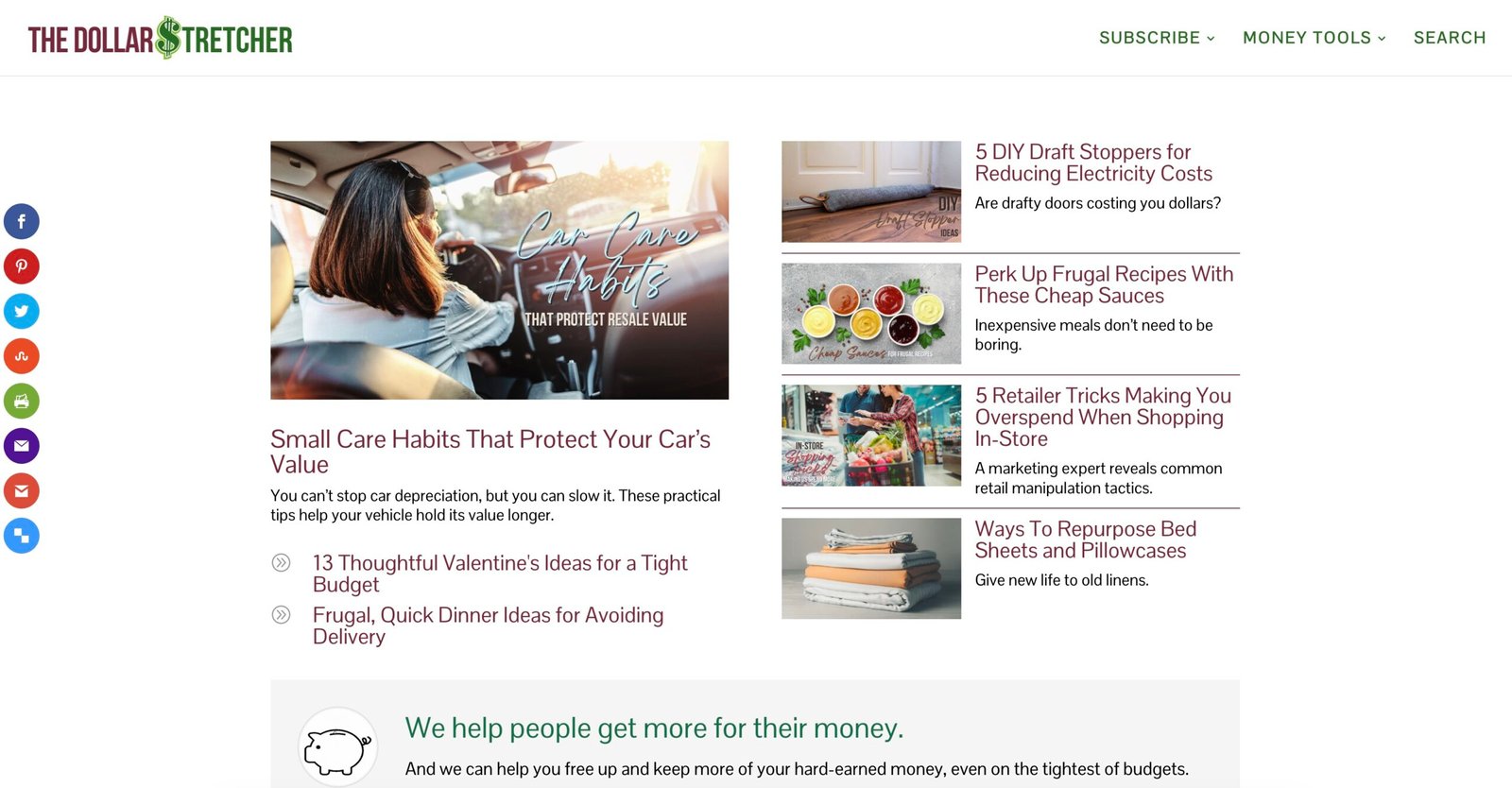
The Dollar Stretcher describes itself as a site that helps people “get more for their money” — in short, practical frugality, couponing, saving, household tips, simple budgeting, and ways to stretch daily spending. For the publisher’s homepage and general mission see their site. :contentReference[oaicite:0]{index=0}
In practice, The Dollar Stretcher publishes short-to-medium length pieces aimed at everyday readers who want practical, actionable tips rather than long technical personal finance analysis. Common post types include listicles (e.g., “10 ways to save on groceries”), how-to savings guides, coupon strategies, small DIY projects to save money, and reviews of budget-friendly products.
The typical reader:
- Household budget conscious (families, single savers, retirees)
- Prefers practical tips and immediate wins (coupons, meal planning)
- Wants short, readable articles they can act on quickly
Expect concise posts, often 600–1,200 words for web pieces. If you aim for the print-ish monthly edition or deeper features, shorter magazine-style pieces may be considered — but keep the writing practical and “to the point.”
Section 2 · What to pitch
Top article ideas that fit The Dollar Stretcher
Here are tested topic buckets that match The Dollar Stretcher’s audience. Use specific angles and include practical examples in your pitch (numbers, screenshots, receipts, or a tiny case study).
Grocery savings that actually add up
Examples: “How I cut our grocery bill by 30% in three months” (with receipts), “7 coupon strategies that work for big families”, “Shop seasonal: list + sample meal plan that saved ₹X/month.” Be specific and show results.
Household hacks & DIY replacements
Examples: “How to refinish old furniture on a budget,” “DIY cleaners that replace store brands”, “Small home fixes that delay expensive repairs”. Include step-by-step photos or short videos if possible.
Budgeting & low-cost meal planning
Examples: “A 4-week budget meal plan for under $100”, “How to batch-cook and freeze to save time and money”, “Apps and templates to automate a family budget”. Offer downloadable templates or spreadsheets (Google Sheets/GDrive link).
Coupons, cashback & loyalty strategies
Examples: “Best cashback combos for online groceries”, “Using browser extensions legally to stack discounts”, “How we combined store loyalty + coupons to save 40% on baby supplies”.
Side-income and small-scale frugal entrepreneurship
Examples: “Turning spare room clutter into $500/month”, “Make money flipping thrift-store finds — step-by-step”, “Simple services you can offer locally with almost no startup costs”.
Section 3 · Build a portfolio fast
How to create samples that get accepted
Editors want to see you can finish an article and deliver results. If you’re new, you can create quick, publishable samples in 3 places: your own blog, free platforms (Medium, Dev.to), and niche community sites that accept submissions (for practice). Use these samples as links in your pitch.
- Your own blog: Easy to control; create a clean post with images and a small table of results.
- Dev.to / Medium: Fast exposure, social validation, and easy linking.
- Guest posts on smaller personal finance blogs: Good experience with editors; use lists of paying sites to find opportunities.
- Clear headline that promises a benefit (“Save $300/month using…”).
- Actionable steps with exact numbers, receipts, or screenshots.
- Short, scannable formatting — subheads, bullets, and images.
- A small byline with your contact info and links to your portfolio or social profiles.
If you want a quick practice outlet, consider pitching travel or niche sites like DesertUSA for nature/gear stories (useful if your frugality piece ties into saving on travel or outdoor gear). DesertUSA publishes submission guidance that highlights photo requirements and article formats — a good contrast to The Dollar Stretcher’s shorter, practical pieces. :contentReference[oaicite:2]{index=2}
Section 4 · Pitch step-by-step
Exact pitch workflow + ready-to-copy email templates
Follow this mini SOP when preparing and sending your pitch to The Dollar Stretcher or similar sites.
Find the right contact & reading list
Use the site’s contact page (look for “Submit” or “Contact Us”). The Dollar Stretcher has a contact page where they direct reader queries and editorial contact points — always use their listed email or contact form. :contentReference[oaicite:3]{index=3}
Write a short pitch (150–300 words)
Include: 1) Hook sentence, 2) 2–3 bullets showing sections, 3) Link to a writing sample, 4) Your short bio (1 line). Keep it concrete.
Attach one sample or link only (do not attach large files)
Editors prefer links to live posts or Google Docs with view permissions. If you attach files, use PDFs and keep them small.
Send a short follow-up after 10–14 days
Be polite: “Did you have a chance to look at my pitch?” If no reply after 3 weeks, reuse the idea or pitch elsewhere.
Use clear subject lines. Examples:
- Pitch: “7 Ways to Cut Grocery Bills — Real family test (500–800 words)”
- Pitch: “How I Saved $200/month on Utilities — step-by-step + spreadsheet”
- Pitch: “Coupon stacking for busy parents — 800 words with receipts”
Subject: Pitch: “How I cut our grocery bill by 30% in 3 months” — 800–1,000 words
Hi [Editor Name],

I’d like to pitch a practical piece for The Dollar Stretcher:

Title: How I cut our grocery bill by 30% in three months (800–1,000 words)

Why it fits: practical, results-first tips for families trying to save now (includes receipts and a downloadable shopping checklist).

Outline:
• Quick intro + the challenge we faced
• Step 1: price comparison + shopping schedule
• Step 2: coupon & app stacking (examples)
• Step 3: meal planning + batch cooking (sample week)
• Quick checklist + download link

Sample: https://yourblog.example/grocery-savings
Bio: [One line: "I’m a parent and budget coach; my work has appeared on X and Y."]

Happy to expand the outline or send the full draft.

Thanks for your time,
[Your name] — [Twitter / LinkedIn / Site]
Section 5 · Money & pay rates
How writers commonly get paid (what to expect)
Publicly available lists and writer guides indicate that The Dollar Stretcher pays around $0.10 per published word for pieces accepted into certain publication channels, and many list it in the category of sites that pay modest flat-rate or per-word fees. Because rates can change, always verify in the editor’s communication or the site’s submission pages before pitching. :contentReference[oaicite:4]{index=4}
What this typically means in practice:
- Short web posts (600–900 words): modest flat fee or per-word payment — prepare to confirm exact amount on assignment.
- Longer or magazine-style contributions: may be paid at a higher per-word rate, but are often negotiated per piece.
- Some outlets also give contributor credits, promo, or occasional bonuses — but treat initial pay conservatively when estimating your hourly rate.
- Start by building clips; accept modest pay initially to get experience with editors.
- Track time spent writing and editing to calculate real hourly rate.
- After 3–5 paid clips, raise rates or target higher-paying outlets using your published pieces as proof.
- Confirm payment terms clearly in the assignment email.
- Ask about invoicing, payment method (PayPal/bank), and timing (net 30, etc.).
- Keep copies of all correspondence and the approved draft for records.
Section 6 · Submission mechanics
How to actually submit: contacts, forms, and attachments
Start at the site’s contact or submissions page. The Dollar Stretcher has a contact page that lists editorial contact options — use that page to find the correct channel for pitches or editor emails. If you can’t find an explicit “Write for us” page, use the “Contact Us” path and address your email to the editor with a concise pitch. :contentReference[oaicite:6]{index=6}
For other publishers that do have formal submission pages (for example, DesertUSA), follow their explicit guidelines: DesertUSA asks for specific article lengths, photo requirements, and content focus (education, wildlife, conservation for that site) — follow their format exactly when pitching that publisher. Using such editorial pages as models will teach you how to format a clean pitch. :contentReference[oaicite:7]{index=7}
- Include a short subject line as described above.
- Send a link to your sample (Google Doc with “view” link) rather than large attachments.
- If images are required, provide properly captioned, high-resolution photos (DesertUSA requires photos for many features).
- Use polite, professional language and include short bio + contact details.
Section 7 · Ethics & AI
Accuracy, image rights, and using AI responsibly
Always be honest about where info and images come from. Do not use copyrighted photos without permission — if an editor requests photos, provide ones you own or that you have explicit rights to publish (Creative Commons with attribution is sometimes acceptable, but check the editor’s rules).
AI tools can help brainstorm or fix grammar, but do not submit AI-generated drafts as-is. Editors and readers expect accurate, experience-based tips — if you used AI to help draft a section, make sure you verified every fact and rewrote the prose in your voice.
Section 8 · Micro SOP & checklist
Final pre-pitch checklist (use this every time)
Section 9 · FAQ & resources
Frequently asked questions + curated resource list
- The Dollar Stretcher – homepage — study recent posts and headlines. :contentReference[oaicite:10]{index=10}
- The Dollar Stretcher – Contact Page — use this to find editorial contact info. :contentReference[oaicite:11]{index=11}
- DesertUSA – Submissions & guidelines — example of a well-structured submissions page (photo rules & formats). :contentReference[oaicite:12]{index=12}
- Freedom With Writing – lists of paying sites — find more outlets and pay info. :contentReference[oaicite:13]{index=13}
- FreelanceWriting.com – Money & finance publication notes — background on The Dollar Stretcher’s payment notes. :contentReference[oaicite:14]{index=14}
- Dev.to — free platform to publish samples.
- Medium — quick publishing + distribution.
- ProBlogger Job Board — find paid blogging gigs.
- Be A Freelance Blogger — pitching and travel writing guides (useful for DesertUSA-style practice).
- The Write Life — freelancing and site lists.
- Upwork — short gigs if you need practice paid jobs.
- LinkedIn — maintain an author profile and link to your clips.
- GitHub — host spreadsheets, sample calculators, or downloadable resources.
- CodePen — for small interactive demos (if your article includes budgeting calculators or interactive worksheets).