


Guide: How to Pitch, Report, and Get Paid by The Markup (Data + Investigations)
The Markup is a nonprofit newsroom that investigates how powerful institutions use technology to change society. It is not a “guest post” blog. Editors don’t want promotional content. They want truth-seeking stories built on evidence.
This guide turns The Markup’s public pages, ethics rules, and real pitch calls into a step-by-step beginner course. You will learn how to (1) choose an idea that fits their mission, (2) report it ethically, (3) write it in a clear structure, and (4) pitch it in a way that makes an editor say, “Yes — let’s commission this.”
Use this as a mini SOP. Keep links open while you work. Build slowly. You don’t need a journalism degree — you need a process.
Section 1 · Understand the newsroom
What The Markup is (and what it is not)
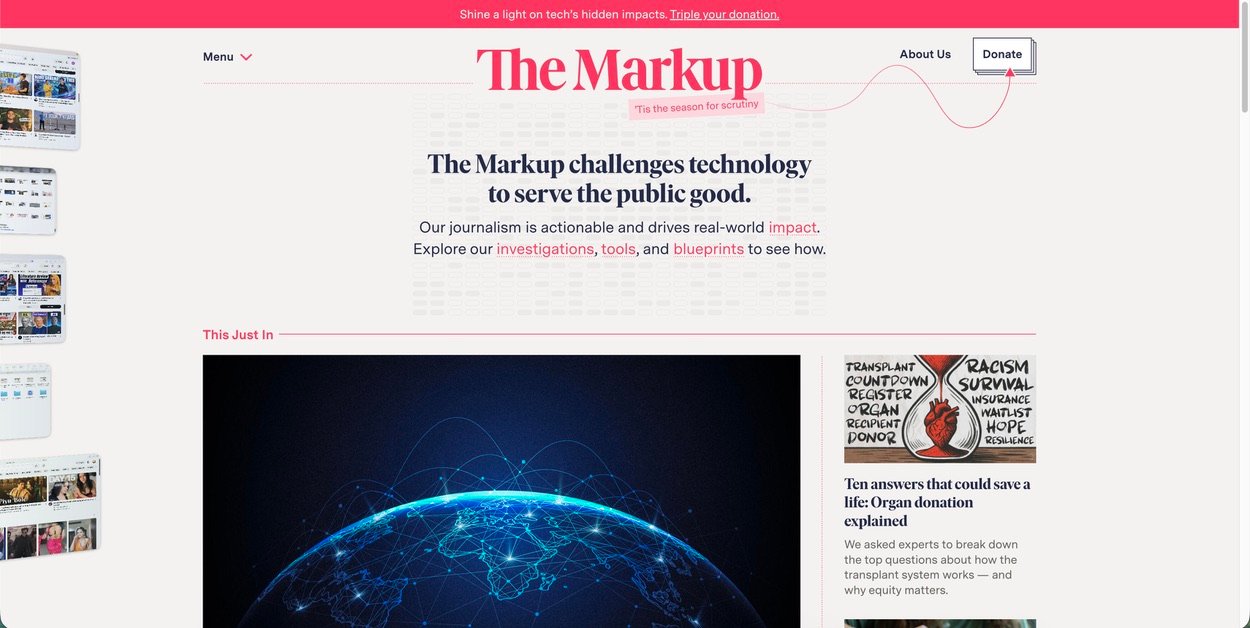
Start with the official definition. On its About page, The Markup describes itself as a nonprofit newsroom that “challenges technology to serve the public good.” They say their journalism is actionable and designed to drive real-world impact. They also explain their process: building datasets, “bulletproofing” reporting, and publishing methodology — what they call The Markup Method.
This matters because it changes what “writing for The Markup” means. You are not sending a normal guest post like “10 AI tools for marketing.” Instead, you are proposing a story that requires reporting: interviews, documents, data collection, and a clear public-interest reason to publish.
If you can summarize The Markup’s mission in one line, you can judge whether your idea fits. Try this:
- They investigate how technology is used by powerful institutions.
- They explain impacts on people, communities, rights, money, and safety.
- They show evidence (data, documents, method) so readers can verify.
Practice: write your own version of the mission in your notebook — then compare with the About page.
If your idea looks like these, it will probably fail:
- Product reviews, affiliate lists, or “best tools” posts.
- Personal diaries with no evidence or reporting.
- Opinion pieces that don’t investigate facts.
- Press releases rewritten as “news.”
- SEO-only posts written to rank, not to reveal truth.
You can still earn money with those formats elsewhere, but not in The Markup’s core mission.
| Where beginners get confused | What The Markup expects | How you adjust |
|---|---|---|
| “Guest post” mindset | Commissioned journalism + editing | Pitch a story, not a finished draft |
| General tech topics | Power + harm + accountability | Choose a specific institution, system, or policy |
| “My opinion” | Evidence, sources, and verification | Lead with documents, data, interviews |
| Vague claims | Clear methods + transparent limitations | Show how you know what you know |
Section 2 · Understand what they publish
Series, tools, and story formats you can pitch
The easiest way to understand what a newsroom wants is to look at its navigation and story “families.” The Markup publishes investigations and tool projects such as Blacklight, Citizen Browser, and Pixel Hunt. These are not “articles” in the usual sense — they are projects that mix software, data, and storytelling.
They also run editorial series, like Languages of Misinformation, that invite stories with a theme. Series are helpful because you don’t have to guess the direction — you match your idea to the theme.
- Investigation: “We found evidence that X system causes Y harm.”
- Explainer with reporting: “Here’s how X works, who benefits, and who is harmed.”
- Data story: “We built a dataset to measure X and discovered Y pattern.”
- Accountability profile: “A company/agency says X, but documents and data show Y.”
- Community impact story: “Here’s how a policy/algorithm affects a specific group.”
Most strong Markup pitches are combinations: a human story + a system + a method.
A “tool” pitch is not: “I built an app.” It is:
- A public-interest problem that needs measurement or testing.
- A method users can run themselves (like checking tracking).
- A plan to explain results without harming people’s privacy.
Study the tools pages and ask: “What would readers do with this? What action does it enable?”
| Format | What you must bring | Good for beginners? | Example links to study |
|---|---|---|---|
| Reported feature | Sources + documents + clear angle | Yes (if small + focused) | Show Your Work |
| Data-driven investigation | Dataset + cleaning + method notes | Yes (with mentor/editor) | Ethics: Data Ethics |
| Tool/project | Technical build + user value + safety | Maybe (team-up helps) | Blacklight |
| Series-themed story | Match theme + local reporting | Strong option | Languages of Misinformation |
Section 3 · Learn the Markup Method
“Show your work” like a scientist (even if you’re a beginner)
The Markup leans hard on transparency. The “Show Your Work” idea means readers can see how reporting and analysis happened — data sources, methods, limitations, and, when possible, code/datasets. As a beginner, you can scale this down: leave a clean trail (a spreadsheet, a folder of documents, systematic screenshots, a method note).
- Data sources: where your numbers came from (links, documents, FOIA, APIs).
- Method notes: how you collected, cleaned, and analyzed.
- Limits: what you cannot know, and what could be wrong.
- Repro steps: enough detail that someone else could repeat it.
Study their Show Your Work posts to see how they explain process.
You can create a mini evidence pack in 1–3 days:
- 10–30 screenshots with time/date and what they show.
- Public documents (PDFs), with the key lines highlighted.
- A tiny dataset (even 50 rows) with columns explained.
- A list of sources to interview, plus their roles.
When you attach or link this in a pitch, it signals “I can do the work.”
| Evidence type | How a beginner can collect it | How to present it in a pitch |
|---|---|---|
| Documents | Public records portals, PDFs, policy pages | Link folder + 3 bullet highlights |
| Small dataset | Spreadsheet from scraping/hand-coding | Describe columns + what pattern you see |
| Interviews | Community members + experts | Name roles (not just names) + why they matter |
| Testing | Run tools (privacy checks, ad trackers) | Explain steps so editor can reproduce |
Section 4 · Your beginner pathway
How to build a portfolio that can lead to paid commissions
The Markup can feel “too advanced” because it’s investigation-first. But you can build toward it with a ladder. Your goal is 2–4 pieces that show: (1) a narrow claim, (2) ethical sourcing, (3) evidence shown clearly.
Start by writing on your own platform (blog, Medium, Substack, or a simple Google Doc portfolio). Pick a small accountability question: local government site tracking, school ed-tech tools, job platforms, or misinformation in one language community. Write 1,200–2,000 words with sources and screenshots. That becomes your “sample.”
- Week 1: read 6 Markup stories + 2 Show Your Work posts; take structure notes.
- Week 2: do one small investigation: collect documents + screenshots; draft outline.
- Week 3: interview 2 people (one affected, one expert); write first draft.
- Week 4: publish your sample; create a “methods” appendix (even short).
After 30 days, you can pitch a similar but deeper story.
- Question design: asking the right, testable question.
- Source care: building trust, protecting identities when needed.
- Data basics: spreadsheets, filtering, simple charts (not advanced ML).
- Verification: checking claims and avoiding overstatement.
- Clear writing: short paragraphs, definitions, human examples.
You can learn everything above through practice and good editing.
| Portfolio piece idea | Evidence you can collect | Why editors like it |
|---|---|---|
| “What tracking is on our city services site?” | Network logs, screenshots, privacy policies | Concrete, replicable, public interest |
| “How an app uses biometrics at work” | Company docs, worker interviews, laws/policies | Human impact + policy + accountability |
| “Misinformation in a language community” | Examples, translation notes, interview sources | Community reporting + series alignment |
| “Audit of a school ed-tech tool” | Contracts, vendor pitches, student/teacher voices | Real-world harm + data ethics angle |
Section 5 · Finding opportunities
How beginners find the right editor, call, or path in
The cleanest beginner route is responding to a call for pitches. Calls tell you what they want, where to send it, and what they pay. If there’s no active call, you can still pitch, but do it targeted (match a reporter/editor and their beat).
- Inside The Markup (announcements, calls, process notes)
- Show Your Work (methods + bylines)
- Team page (beats, bios, contact patterns)
- Jobs (staff roles; sometimes fellowships)
- Newsletters (calls can appear here)
The tips page is for sensitive information. It explicitly says not to use tip channels for pitches or press releases.
- Pitches: send to the call email or relevant reporter/editor.
- Tips/leaks: use the tips page channels if needed.
| Opportunity type | Best for | How to approach |
|---|---|---|
| Open call for pitches | Beginners + freelancers | Follow instructions exactly; include required items |
| Targeted pitch to a reporter/editor | Intermediate writers | Match their beat; reference similar work; attach evidence pack |
| Partnership / co-reporting | Local outlets + orgs | Propose roles, credit, and method; keep scope tight |
| Jobs/fellowships | People wanting a staff path | Apply with clips + method mindset |
Section 6 · Pitching SOP
How to pitch like a professional (with real templates)
A strong pitch is a short sales page for your investigation — but it sells truth, not hype. Use the “call for pitches” model: keep it short (150–250 words), show your community connection/access, and outline your evidence plan.
Lead with a testable claim (not a topic)
Bad: “I want to write about misinformation among immigrants.”
Good: “In [city], [platform] groups are targeted with [specific scam], causing [specific harm]. I can document the pattern using screenshots, interviews, and policy gaps.”
Show access and feasibility
- You speak the language (or have a translator plan).
- You already have 1–2 community sources willing to talk.
- You know where to obtain documents (records, contracts, policy pages).
- You can capture evidence safely (screenshots, archives, logs).
Explain why The Markup is the right home
Add one line that links your idea to tech accountability + public good + evidence.
Include a short “method sketch”
In bullets: interviews + documents/data + verification + right-to-reply.
| Pitch element (must have) | What it looks like (simple) | Mistake to avoid |
|---|---|---|
| One-sentence summary | Claim + who is affected + the system behind it | Starting with “I’m passionate about…” |
| Why now | Recent change, harm, policy shift, new evidence | “This has existed forever” with no hook |
| Evidence plan | Docs + data + interviews (named by role) | Only saying “I’ll research online” |
| Access | Your community connection + language + location | Assuming the editor will find sources for you |
| Impact | What readers can do, change, demand, or understand | Ending with vague “awareness” only |
Copy-paste pitch template (150–250 words):
One-line summary: In [place/community], [specific tech/platform/policy] is [doing X], and it is causing [measurable harm] to [who].
What I’ve already seen: [2–3 concrete observations, e.g., screenshots, documented cases, public records, community reports].
Why it matters: This shows how [institution/platform] uses technology in a way that [hurts/targets/excludes] people, especially [group].
How I will report it (method sketch):
• Interview: [roles] (community members, advocates, experts, officials).
• Documents/data: [what you will obtain] (contracts, policy docs, public records, platform data).
• Verification: [how you will confirm] and what limitations I will disclose.
• Right-to-reply: I will seek comment from [company/agency] and include their response.
Why me: I am [your background], I have access to [community], and I can work in [language(s)].
Links: [2–3 best clips] + [portfolio] + [optional evidence pack link].
Section 7 · Reporting plan
How to report safely: sources, data, and right-to-reply
Markup-quality work is built on reporting discipline. Their ethics emphasize accuracy, fairness, and making significant efforts to get responses from the people and institutions you cover. Your reporting plan must include right-to-reply and documentation.
Think in three layers: human layer (who is affected), system layer (what tech/policy/company is responsible), and evidence layer (documents/data/testing).
- Never pressure sources. Explain “on the record” clearly before you start.
- For vulnerable groups, assess whether identification creates risk.
- Use calm questions: “What happened?” then “What changed after?”
For sensitive communication, learn the options on Have a Tip?.
- Save every document with date + source URL.
- Take screenshots with context (page + time + language).
- Keep a research log (what you checked, what you found, what failed).
- Separate “verified” and “unverified” notes.
| Reporting step | What to do | Output |
|---|---|---|
| 1) Define the question | Write a claim you can test and potentially disprove | One sentence + scope boundaries |
| 2) Map stakeholders | List affected people, company/agency, regulators, experts | Source list by role + contact plan |
| 3) Collect documents/data | Policies, contracts, datasets, archived pages | Evidence folder + notes |
| 4) Interview + verify | Cross-check stories; corroborate with documents | Transcript notes + verification checklist |
| 5) Seek comment | Send questions to company/agency; track attempts | Right-to-reply log (dates + responses) |
| 6) Write + show method | Explain what you did and what limits exist | Draft + methods appendix |
Section 8 · Writing structure
How to write a Markup-style story that editors can publish
The Markup’s writing is calm, precise, and evidence-led. Copy the structure (not the words). Use this repeatable flow:
Lede: start with a human moment or surprising fact
Hook with something concrete: a person’s experience, a revealing document line, a dataset pattern, or a contradiction.
Nut graf: what this story is REALLY about
In one paragraph: what is happening, who is doing it, who is harmed, and why now.
Evidence sequence: documents → data → expert → response
Build a chain of proof. Don’t dump. Guide readers through your reasoning.
Method box: show how you measured or verified
Add a short “how we did it” section. If you can’t share data, explain why.
| Section | Reader question | Your job |
|---|---|---|
| Lede | “Why should I read this?” | Give a concrete scene or surprising fact |
| Nut graf | “What is this story about?” | Summarize claim + stakes + why now |
| System explanation | “How does it work?” | Explain tech/policy in simple language |
| Evidence chain | “How do you know?” | Documents, data, interviews, verification |
| Right-to-reply | “What do they say?” | Include responses or note attempts |
| Method + limits | “Can I trust it?” | Show your work; admit constraints |
| Ending | “What now?” | Impact + actions + open questions |
Mini outline template you can reuse:
1) Lede: [human moment or shocking fact]
2) Nut graf: [what is happening, who, stakes, why now]
3) How the system works: [explain algorithm/policy/platform]
4) Evidence: [documents + data + expert interpretation]
5) Who is affected: [community voices + scale]
6) Accountability: [who is responsible; incentives; oversight]
7) Right-to-reply: [company/agency response + your follow-up]
8) Method + limits: [how you collected; what you cannot show]
9) Conclusion: [what should change; what readers can do]
Section 9 · Money + workflow
How payment, contracts, and invoicing typically work
Freelance journalism income is usually fee-based (commissioned). A call for pitches can specify rates, word count, and payment timelines; always confirm current terms with the assigning editor before you start heavy reporting.
Typical flow: pitch → acceptance/commission → scope + budget → contract → reporting → draft → edits + fact-checking → publication → invoice → payment. Your #1 money skill is scope control.
- Get the assignment in writing (email or contract).
- Confirm the fee and what it covers (word count, data work, travel).
- Confirm the deadline and revision expectations.
- Ask if there is a kill fee (payment if story is canceled).
- Understand rights: exclusivity, republishing, portfolio use.
- Estimate hours: reporting + data + writing + revisions.
- Divide fee by hours to get a rough hourly rate.
- If too low, shrink scope or pitch a smaller angle.
- Track actual time; your estimates improve fast.
| Phase | Typical work | Beginner tip |
|---|---|---|
| Commission | Confirm scope, rate, word count, deadlines | Ask: “What would make this a success?” |
| Reporting | Interviews, documents, data collection | Keep a log; save everything with dates |
| Draft | Write the evidence chain; add methods | Don’t write before you have proof |
| Edits | Editor notes, clarity, structure changes | Be flexible; edits make you better |
| Invoice | Send invoice after acceptance/final draft | Use a simple invoice template; include tax info |
Section 10 · Ethics and AI
How to stay credible: accuracy, data ethics, and responsible AI use
The Markup’s Ethics Policy is essential. It emphasizes accuracy, fairness, corrections, and data ethics. It also addresses AI: don’t use AI to replace reporting; never fabricate; never plagiarize; show your work.
- You attribute information to sources clearly.
- You keep screenshots/documents for verification.
- You describe your method and limitations honestly.
- You avoid cherry-picking and exaggeration.
- You seek comment and represent responses fairly.
- “Everyone knows…” with no evidence.
- Claims too broad to verify.
- Copying other reporting without credit.
- AI-generated story text instead of reporting.
- Publishing sensitive personal data without a public-interest reason.
| Ethics area | What it means in practice | What you should do |
|---|---|---|
| Accuracy | Facts must be verifiable; mistakes corrected | Keep a fact-check list + proof links |
| Fairness | Seek responses from those you cover | Track outreach attempts and include them |
| Data ethics | Protect privacy; describe limitations | Write a “limitations” paragraph |
| AI ethics | Don’t let AI replace reporting; disclose when relevant | Use AI only for low-risk assistance; verify everything |
Section 11 · Publishing and reuse
Republishing, distribution, and using Markup work to earn more
The Markup often encourages republication under licensing rules shown on story pages. Always follow the specific “Republish this story” instructions on the article you wrote (credits, links, no editing, etc.).
- Higher trust for future pitches to other outlets.
- Better rates because you have proof you can deliver rigor.
- Invites to panels, speaking, consulting, teaching.
- Stronger client work if you also do data/tech writing.
- Write a separate “behind the reporting” post that links to the story.
- Create checklists/templates derived from your methods (new writing).
- Pitch a follow-up to another outlet with new reporting.
- Use short excerpts + link in your portfolio (respect contract terms).
| Asset you can create | Purpose | Safe approach |
|---|---|---|
| Portfolio page | Proof for future editors | Link + 2–3 sentence summary + your role |
| Methods post | Teach + attract collaborators | Explain process; don’t paste full story text |
| Talk / workshop | Earn via speaking | Use findings; attribute; respect privacy |
| Next pitch | Earn more writing | New angle + new reporting, not a rewrite |
Section 12 · Finish strong
Final checklist, FAQ, and a giant link library
Use this section when you’re ready to pitch or start reporting. Your goal is not to “sound smart.” Your goal is to be clear, fair, and verifiable.
FAQ
- Core pages: Homepage, About, Team, Ethics, Privacy, Tips, Inside The Markup, Newsletters.
- Show your work: Show Your Work, The Markup GitHub.
- Tools to study: Blacklight, Pixel Hunt, Citizen Browser.
- Series examples: Languages of Misinformation, Still Loading, Working for an Algorithm.
- Model call: Call for pitches (2024).
- External learning: GIJN, IRE, ProPublica Data Store, Signal, Creative Commons.