


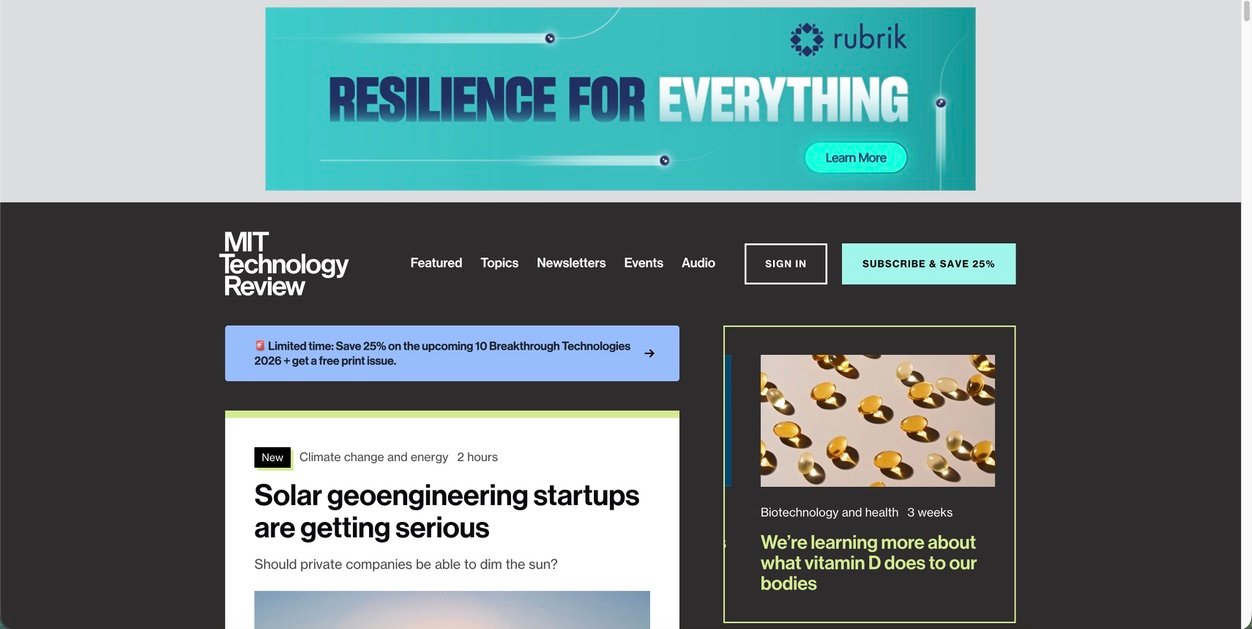
Guide: How to Pitch and Write for MIT Technology Review — A Practical SOP for Beginners
This long guide helps you (step-by-step) to research MIT Technology Review, shape stories that fit its editorial voice, prepare publishable samples, pitch with confidence, and understand how writers have been paid. Use it as a practical checklist and notebook while you prepare pitches. Key external resources are included at the end.
Quick note: MIT Technology Review sometimes runs open calls for pitches and has editors who occasionally invite freelancers to contribute — and public reports list typical freelance pay in the $1–$2/word range for features, but rates vary by piece and experience. Always confirm in writing with the commissioning editor. :contentReference[oaicite:1]{index=1}
Section 1 · Understand the publication
What MIT Technology Review publishes and who reads it
MIT Technology Review (often called MIT TR or Technology Review) focuses on technology’s impact on society — not just product news. Typical pieces include deep reporting on AI, biotech, materials, hardware, climate tech, privacy & policy, and narratives that explain why a technology matters to business, government, and people. The publication mixes breaking reporting with long-form features, explanatory essays, and sharp opinion pieces aimed at intelligent general readers and professionals who want to understand the implications of technical change.
Editors at Technology Review have explicitly invited pitches for narrative features, investigations, profiles, and essays that have a strong technology angle — the emphasis is on reporting and storytelling that connects technical details to real-world effects. Public editorial calls and editor notes confirm they seek “story ideas” with an explanation of why readers should care and how the writer will tell the story. :contentReference[oaicite:2]{index=2}
- Features / narrative journalism: 1,500–4,000 words, deep reporting, multiple sources.
- Investigations: data / interviews / documents showing systemic impact.
- Profiles: people who shape tech or are affected by it.
- Analysis & explainers: clear explainer with implications for policy/business.
- Reviews & short news: quick pieces about major new advances.
Readers include:
- Technologists and engineers who want context beyond specs.
- Policy makers and business leaders who need clear implications.
- Educated general readers curious about the world-changing effects of tech.
Write so that a smart non-specialist can understand the technical bits and the human consequences.
Section 2 · Fit your idea
Is your idea the right shape for Technology Review?
Before you craft an outline, apply three quick filters. If you pass all three, your idea is worth pursuing.
Does it connect a technology to a clear human or policy consequence?
Technology Review looks for the “so what”. Ask: who is affected, how, and why now? If your idea is purely “how X works,” add a section showing consequences — cost, ethics, productivity, inequality, regulation, safety, etc.
Can you show reporting or exclusive access?
Strong pitches include at least one data source, document, company contact, or an expert willing to speak on record. If you can’t show sources, plan a short experiment or a demonstrable dataset.
Is the timing right?
A pitch is stronger if there’s news momentum: policy hearings, product launches, regulatory decisions, or new research. If it’s evergreen, argue why it matters now (emerging trends, new risks, overlooked effects).
Section 3 · Prepare your portfolio
Build 3–5 strong samples that prove you can report
Editors will ask: have you done the work before? If not, create demonstrable work. That means published articles, data projects, interview clips, or documented experiments. Aim for at least one long sample (2,000+ words) and 2–4 shorter pieces (700–1,200 words) that show reporting skill.
- Your own blog (with a clear byline and GitHub links for data/code).
- Platforms like Dev.to, Medium, or Substack for data explainers.
- Local or trade publications, smaller outlets, or newsletter clips.
Make sure each sample contains sources, links, and — if applicable — code or data repos.
- Headline that states the story’s impact.
- Nut graf: one paragraph explaining what you did and why it matters.
- Reporting: interviews, data, quotes with attribution.
- Context & implication: brief analysis and next steps.
- Links and repository: attach raw data or code when possible.
If you have academic or technical experience but not journalism clips, convert a project into a narrative: explain the experiment, interview an affected user or policymaker, and show broader significance. Editors care about the reporting process — show it.
Section 4 · A practical pitch workflow
How to prepare, write, and send a pitch that editors read
This is a compact SOP. Save it as a checklist and use the templates below.
Find the editor (or pitch form) and read any public call
Technology Review sometimes runs open calls for pitches and editors will occasionally post specific themes or contact info on social. If you find a live call, target your pitch to that theme. Otherwise, find the commissioning editor who covers your topic area (examples include editors for AI, biotech, climate, etc.). Public posts by editors and past calls provide clues about what they want. :contentReference[oaicite:4]{index=4}
Write a short, tightly focused pitch — one page max
Editors are busy. A great pitch has: 1–2 sentence hook, 2–3 sentence nut graf (“why readers should care”), a short outline (3–6 bullets of sections or reporting), and one paragraph about your reporting plan and sources. Include links to any samples and your CV or Writer page. If you have exclusive documents or contacts, say so briefly.
Include logistics up front
State your availability, estimated word length, whether you can travel for interviews, and whether you need an advance for reporting costs. If you have a target publication date (for tie-ins), say it. Editors appreciate clarity.
Polish subject lines and first sentence
Use a clear subject line: “Pitch — Feature: [Headline idea] — [Topic area]” or “Pitch for Technology Review — [Short headline]”. Start the email with a one-sentence hook that could stand alone — editors skim that first.
Send the pitch and keep notes
Send to the editor and to any submission form if one exists. Keep a log with date, contact, pitch text, and follow-up date. If you don’t hear back in 2–3 weeks, send a short polite follow-up (one line, no nagging). If you get a “no”, use editor feedback and repurpose the idea.
Subject: Pitch — Feature: “[Working headline]” — [Topic area]
First sentence (hook): One sentence that explains the surprising or urgent fact.
Nut graf (2–3 sentences): What the story is about, who is affected, and why it matters now.
Outline / reporting plan (4 bullets):
- Section 1 — quick setup and stakes.
- Section 2 — reporting/data/interview #1.
- Section 3 — implications/analysis.
- Section 4 — conclusion and resources.
Sources & exclusives: List names or documents you can access.
Samples: Link to 2 writing samples & your writer bio (one-line).
Timeline: Estimated word count, availability, needs (e.g., travel or data costs).
Thanks,
[Your name — with a one-line credential like “freelance reporter covering AI & biotech” and link to portfolio]
Section 5 · Money side
How writers get paid and how to think about rates
Public reports (writer roundups and freelance market guides) commonly list MIT Technology Review’s freelance rates in the range of roughly $1 to $2 per word for experienced freelancers working on feature-length pieces — but there is variation depending on the route (news vs feature vs commissioned investigation), the writer’s experience, and the project’s budget. Always confirm exact pay with the commissioning editor before you accept an assignment. :contentReference[oaicite:6]{index=6}
- Per-word fee: Common for features and long-form pieces.
- Flat fee: Smaller pieces or commission projects may be a flat fee.
- Advance + final: For long investigations, editors may offer an advance to cover reporting costs.
- Staff or staff-adjacent roles: Longer-term contracts differ from freelance pieces.
- Estimate hours: research, reporting, interviews, travel, writing, and edits.
- Divide the offered fee by your hours to get your hourly rate.
- Negotiate if the effective hourly pay is below your minimum.
If the assignment requires major travel or legal/document review, ask for an explicit expense allowance.
| Piece type | Rough pay | Strategy |
|---|---|---|
| Short news / quick explainers | Lower per-word or flat fee | Good for first clips and building a relationship |
| Feature-length reported piece | $1–$2 / word (reported range) | Require solid reporting and sources — aim for exclusives |
| Investigations / series | Negotiated (may include advance) | Negotiate expense coverage and timeline |
Section 6 · Ethics, AI & verification
How to stay trustworthy: sourcing, verification, and AI rules
Trust is the currency of high-quality journalism. Technology Review expects accurate sourcing, transparent verification of claims, and clarity about the limits of your knowledge. Don’t publish anything you can’t support with a document, a credible source, or reproducible data.
- Unverified stats or anonymous assertions without clear sourcing.
- Passing off AI-generated analysis as reporting without strong verification.
- Plagiarism or unattributed reuse of other outlets’ reporting.
- Misrepresenting access, status, or exclusives.
- Use AI for brainstorming or summarizing long reports — but check every fact.
- Use it to speed editing, but not to fabricate quotes or facts.
- If you use AI to generate code or data analysis, always run and document the code yourself.
Section 7 · Final pre-pitch checklist
Micro-SOP you can run before hitting send
Section 8 · FAQ, sample templates & resources
Frequently asked questions, sample emails, and a long resources list
Subject: Pitch follow-up — “[Working headline]”
Hello [Editor name], following up on the pitch I sent on [date] about “[headline idea]. I’d be glad to supply more reporting notes or a short sample opening. Thanks for considering it. — [Your name]
- How to pitch MIT Technology Review — (link provided by user; check for current editor notes) — (If accessible, this is the primary pitch guide many editors reference.)
- WritersInTheGrove — paid writing resources (user-provided)
- Editor notes / posts by Rachel Courtland (editor) about pitching Technology Review. :contentReference[oaicite:11]{index=11}
- Listing: MIT Technology Review seeks pitches (I-79 Media) — includes reported rates. :contentReference[oaicite:12]{index=12}
- Health Journalism freelance market guide — Technology Review entry — advice on pitching and what editors expect. :contentReference[oaicite:13]{index=13}
- FreedomWithWriting — tech publications that pay (includes TR notes). :contentReference[oaicite:14]{index=14}
- OnePitch — how to pitch MIT Tech Review (case study). :contentReference[oaicite:15]{index=15}
- WhoPaysWriters — crowdsourced rates for many outlets (search “Technology Review”). :contentReference[oaicite:16]{index=16}
- Dev.to — publish technical explainers and samples
- Medium — publish long-form explainers and build a portfolio
- CodePen — host small demos (for technical explainers)
- GitHub — share notebooks, data, and reproducible code
- LitWorth / Substack lists of paying publications. :contentReference[oaicite:17]{index=17}
- CreativeWritingNews — call for pitches (archival; check dates) . :contentReference[oaicite:18]{index=18}
- Freelance writing networks & pitching roundups
- Submittable — sometimes used for submission forms (check specific calls)
- MuckRack — find reporters and editor contacts