

How to Write for BookBrowse — A practical, step-by-step guide for beginners who want to publish reviews, join the reviewer program, and earn money
This long-form guide walks you from “what BookBrowse is” through “how to write a review that fits their style”, to the exact application, sample preparation, pitching, and realistic ways to turn reviews into money and long-term writing opportunities.
What BookBrowse is, and who reads it
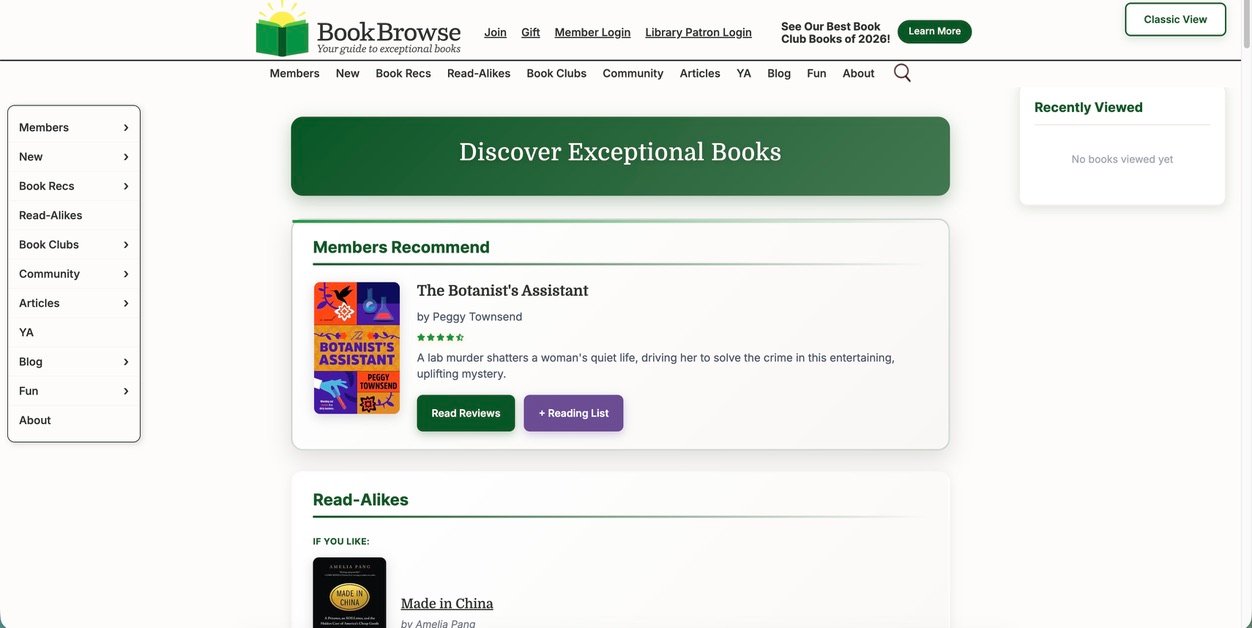
BookBrowse is a long-established reading-focused publication and membership community that publishes book reviews, “beyond the book” essays, reading guides, author interviews, and curated recommendations for readers and book clubs. It runs a digital magazine called The BookBrowse Review and offers members additional content such as archived issues, reading lists, and free-e-book opportunities.
Typical BookBrowse reader
The readers are engaged book-lovers and book-club hosts who value thoughtful, readable reviews and contextual “beyond the book” pieces. They want to know not just whether a book is worth reading but what they will get from it — themes, settings, questions to discuss, and how it fits into a reading group or larger conversation.
What BookBrowse publishes
- Concise, crafted book reviews (often ~600 words, but variable).
- “Beyond the book” essays that expand on themes or provide deep reading context.
- Reading guides for book clubs and curated lists by theme.
- Author interviews, features and occasional paid contributor pieces for the site and magazine.
Quick practical takeaway: because BookBrowse emphasizes useful, readable criticism and club-level context, your review should help a small reading group decide whether to read the book — and what they might discuss.
Is your review or article shaped for BookBrowse?
Before you write, ask: Who will use this piece? If the answer is a casual browser, an editor, or a reading group leader, that changes the structure. BookBrowse favors reviews that entertain, orient, and add context rather than long exhaustive academic summaries.
Choose a clear angle
Good angles: “Why readers who like X will love (or dislike) this book”, “What this book gets wrong about Y”, or “How to lead a 60-minute discussion of this book with your book club.” Avoid generic ‘plot-summary first’ approaches.
Decide form & length
BookBrowse suggests review lengths around 600 words as a guideline, but the key is to be concise and meaningful: shorter tight reviews are better than long, rambling pieces. “Beyond the book” essays will be longer and more interpretive.
Have evidence: scenes, quotes, & context
Use short quotations and concrete plot or setting details to support your opinion. Give examples rather than generalizations. Think in terms of “This passage shows X because…” — that makes your review both lively and defensible.
Add a ‘beyond the book’ thought
BookBrowse likes reviews to have an opinion or contextual hook: local history, an author’s background, a related nonfiction subject, or book-club prompts. This turns a review into a resource.
The key facts you must know before you apply
BookBrowse runs a reviewer application process and asks applicants to submit original, well-crafted sample reviews. They remind applicants to study the style of their published reviews and apply only when their writing fits BookBrowse standards.
Common requirements from the application page
- Read BookBrowse reviews and confirm your samples match their standard before applying.
- Submit only your original writing — do not submit content generated by AI or copied from others.
- Provide 1–3 sample reviews (BookBrowse asks for sample reviews of at least ~300 words).
- Be ready to write a “beyond the book” piece in addition to the review for each assignment.
- Review frequency: many reviewers write approximately one review per month and receive a byline plus modest payment (details are agreed per piece).
Acceptance rate & competition
BookBrowse receives many applications; public commentary from their editorial blog notes that they receive “hundreds of applications a month” and accept a very small fraction (under 1% of recent applicant pools, according to their editorial post). This means the bar is high — but there are clear actions you can take to improve your chances.
Practical implication: because competition is stiff, apply only when your samples are polished and clearly match BookBrowse style. Use their published reviews as a model — not generic “review templates”.
Step-by-step structure & a practical template you can reuse
Below is a recommended structure that mirrors the way BookBrowse reviews tend to behave: short, purposeful, and enriched with context and reading-group value.
Recommended structure (a working template)
| Section | What to include | Approx. words |
|---|---|---|
| Lead / Hook | 1–2 sentences that capture the book’s appeal or central tension | 40–80 |
| Setup | Short summary of premise, setting, and context (no spoilers) | 80–120 |
| Analysis | Key strengths or weaknesses with short evidence (quotes/scenes) | 200–300 |
| Beyond the book | Contextual idea, reading group angle, or comparison (why it matters) | 120–180 |
| Bottom line & rating | Final recommendation and who will like it; 1–2 lines | 40–60 |
Write it like this — real example (short)
Lead: In The Old Orchard, a compact novel of family and memory, the author offers sly domestic observations that slowly reveal a larger moral consequence.
Setup: Set in a New England town, the novel follows three siblings gathering for a summer that re-opens old wounds — the narrative moves between past and present with a careful, melancholic tempo.
Analysis: The novel’s strengths are its precise sentences and small, revealing scenes — a single picnic, an argument over a photograph — that illuminate the characters. A minor weakness is that certain plot turns feel telegraphed; yet the writing often redeems the predictability.
Beyond the book: Readers who like Anne Tyler or Elizabeth Strout will find much to savor; book clubs can discuss whether memory softens or hardens our judgments — consider asking members to bring one family story to compare.
Bottom line: A subtle, humane read that rewards close attention. Recommended for readers who like quiet moral fiction.
Tone & voice
BookBrowse likes reviews that sound knowledgeable but approachable. Avoid academic jargon; be specific and conversational. If you have subject expertise (history, family studies, medicine), use it selectively to illuminate the book, not to show off.
Avoiding spoilers
If you must reference a major plot twist, warn the reader and confine spoilers to a short, clearly labelled block. For most reviews, you don’t need to reveal endings to make your point.
Quotations & evidence
Use short quotations (one sentence or a line) and always explain why the quote matters. Keep quotes to a minimum and use them to support a specific claim.
Exactly what to prepare for the reviewer application
BookBrowse’s reviewer application page asks applicants to read their guide and submit original sample reviews that match BookBrowse’s standard. They also request that you do not submit AI-created text and that samples are your own published or unpublished work. Reviewers typically write one review a month and receive a byline and a modest payment for pieces they publish.
Checklist: What to include with your application
- 3 polished sample reviews: Preferably published on your blog, Medium/Dev.to, or included as clean docs — at least one should be in the BookBrowse style and about ~500–700 words.
- Short bio: 1–2 sentences: who you are, reading interests, and any relevant expertise (e.g., “I teach modern US history” if applying to review historical nonfiction).
- Links: To your writing samples, portfolio, and social profiles (optional), plus any book-club leadership experience or editorial work.
- Contact information: email, location (country), and availability.
- Disclosure of conflicts: If you have a relationship with the author or publisher, note it.
How to make your sample reviews stand out
- Mirror BookBrowse style: Read 5–10 published BookBrowse reviews in the last year and adopt similar length, rhythm, and “beyond the book” thinking. Editors will compare your voice to their house style.
- Show editorial polish: Short paragraphs, tight sentences, and clean formatting. Use headers sparingly; let the review flow as readable prose.
- Provide a meaningful ‘beyond the book’ paragraph: A single focused paragraph that adds reading-group value will make your sample look like a full BookBrowse submission.
- Proof & test your links: If you link to other content (author interviews or sources), make sure links work and are relevant.
Where to submit
Use BookBrowse’s official reviewer application form to apply. The form lives on their site and includes instructions and fields for sample links and bio. Apply only after you have polished and formatted your samples. Apply here: BookBrowse Reviewer Application.
Template copy for your application bio (editable)
Bio template:
Jane Q. Reader is a freelance editor and book-group leader based in [City/Country]. She focuses on contemporary fiction and historical memoir and has led over 60 book-club discussions. She has written for [your blog/medium/other] and enjoys helping readers find books that spark conversation.
How reviewers get paid and how to turn reviews into income
BookBrowse provides reviewers with a byline, editorial exposure, and a modest per-piece payment. Payment levels are variable and negotiated or set by the editor for assignments. BookBrowse’s reviewer posts and FAQ language describe the arrangement as a modest payment plus other contributor benefits (exposure, copies of books, member features).
Two realistic money models you can pursue
1) Direct payments & assignments
Write for BookBrowse (or similar publications) and earn the per-piece fee. Use those clips to approach other outlets that pay per review or feature, and to raise your freelance rates for commissioned pieces, author spotlights, or copyediting.
- Pros: steady editorial practice, byline credibility.
- Cons: modest per-piece pay; not enough alone for full-time income unless you scale to many outlets.
2) Portfolio → Products → Diversify
Use published reviews as portfolio assets to sell higher-value services: paid book-club facilitation, premium reading guides, Patreon or Substack newsletter, paid workshops, or editing for authors. Combine per-piece fees with these higher-margin services.
- Examples: sell a downloadable discussion guide for $5–10; host a paid online meetup for $10 per attendee.
Practical earning roadmap (first 12 months)
- Months 1–3: Publish 5–8 strong samples on your blog / Medium / local press. Apply to BookBrowse when you have 3–5 BookBrowse-style samples.
- Months 4–6: If accepted, produce 1–2 BookBrowse pieces. Use bylines to approach other niche outlets (library blogs, local newspapers) that pay small fees.
- Months 7–12: Create a small product (book-club guide or paid newsletter) and pitch your BookBrowse credentials to promote it. Begin charging for curated reading lists or paid facilitation.
Note: Many sites that pay reviewers do so at modest rates. To make reviewing financially worthwhile, treat it as both direct income and—more importantly—a means to build credibility and paid services.
Honesty, attribution, and BookBrowse’s stance
BookBrowse emphasizes original writing and explicitly requests applicants not to submit AI-created content. They also stress not to plagiarize others’ work. As with most editorial roles, your reputation matters: always disclose any conflicts (e.g., friendship with the author, paid promotions) and be transparent about what you received (advance copy, review copy).
What not to do
- Do not submit AI-generated drafts as your own work.
- Do not copy text or analyses from other reviews.
- Do not invent credentials or experience you do not have.
Safe & productive use of AI
- Use AI as a brainstorming or editing assistant only — then rewrite and verify everything.
- Run grammar checks with tools, but ensure the final voice is yours.
- Do not use AI to produce the core analysis or “beyond the book” insights.
Golden rule: Be prepared to defend every key assertion in your review — as if an editor or author might ask you about it in a conversation.
Copyable templates and a final pre-apply checklist
Pre-apply checklist
- I have read the BookBrowse guide for reviewers and 5–10 recent reviews.
- I have 3 polished sample reviews (one in BookBrowse style, 300–700 words each).
- I have a concise bio and links (GitHub not required — links to blog/Medium are fine).
- I will only submit original writing (no AI-generated text as-is).
- I will fill the BookBrowse reviewer application form at the official page.
Application message / pitch template
Subject: Reviewer application — [Your Name] — samples enclosed
Body:
Hello BookBrowse editors —
I’m [Name], a [brief line about what you do: e.g., “freelance editor and book-club leader”]. I read and enjoyed BookBrowse’s recent reviews and would like to apply to join your reviewer pool. Attached are three sample reviews (links) that match the tone and structure of your site. My experience includes [briefly list relevant experience]. I can review approximately one title per month and am available for “beyond the book” essays or reading guides. Thank you for your consideration.
Best wishes,
[Your full name] — [email] — [location]
Editing checklist before you submit a sample
- Check spelling, punctuation, and grammar (read out loud).
- Ensure paragraph length is short and readable (2–4 sentences per paragraph).
- Limit spoilers — add a clear spoiler note if needed.
- Include a 1–2 line ‘beyond the book’ paragraph for context.
- Confirm all links and quotes have sources or page numbers (if applicable).
Answers to frequent beginner questions + curated links
Essential links (open these & keep them handy)
- BookBrowse — Home & magazine.
- How to Write a Good Book Review — BookBrowse editorial guide.
- Reviewer Application & guidelines.
- The BookBrowse Review — current & archived issues.
- Free Books to Request (member program) — check membership benefits on BookBrowse (links subject to change).
- BookBrowse Community / Reader Forum — see what readers discuss and what questions are popular.
- Get Paid to Read — editorial note (applications / acceptance rate guidance).