


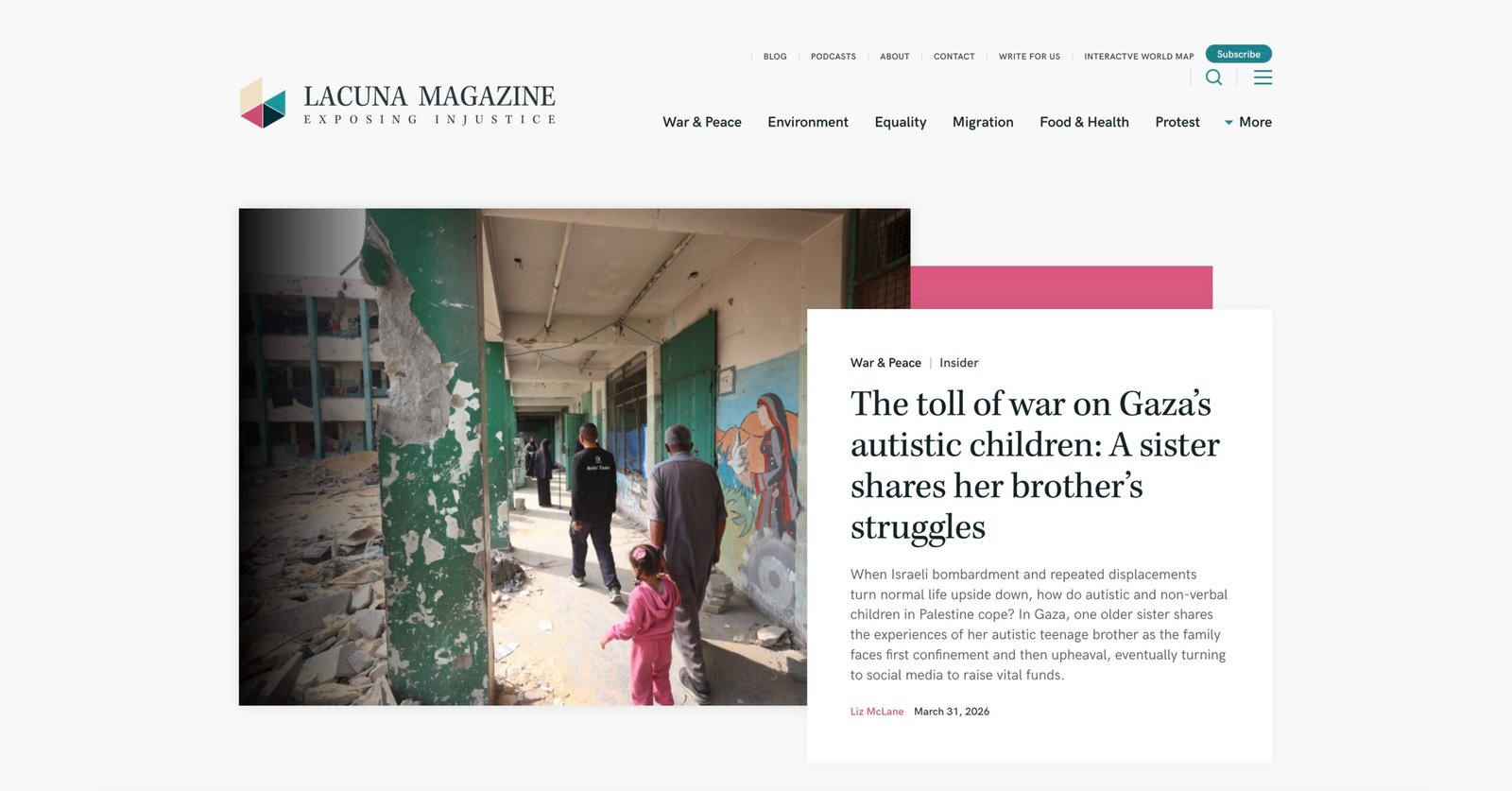
How to write for Lacuna — a beginner’s, step-by-step guide
This long-form guide will take you from research to pitch to publication at Lacuna. It focuses on practical steps, example templates, ethics for reporting on sensitive topics, and how to use Lacuna’s opportunities like their writing competition and student roles to build a portfolio.
Read, copy the templates, and adapt the sample outlines and checklists. The goal is that after following this guide you can produce a clear pitch and submit a professional, ethical piece that fits Lacuna’s remit.
Section 1 · Know the magazine
What Lacuna is and what they publish
Lacuna Magazine is an online publication that focuses on human-rights-oriented journalism, longform pieces, creative writing and commentary that “challenges indifference” and examines the structures behind injustice. Read their About and editorial pages to understand the tone and scope before you submit: they publish journalism, comment, interviews, fiction, reviews, multimedia and photography as long as it connects to human-rights themes and is accessible to a wide readership.
Key practical points:
- Lacuna welcomes unsolicited submissions and proposals from both new and established writers, artists and photographers (their “Write for Lacuna” guidance explains this). Keep that page open while preparing your pitch.
- The magazine is produced by the Centre for Human Rights in Practice (University of Warwick), which explains the focus on rights, justice, migration, and related policy and cultural stories.
- They run a regular Lacuna Writing Competition and student opportunities — excellent entry points for newer writers seeking editorial feedback and visibility.
Open these Lacuna pages right now while you plan: Want to write for Lacuna?, About Lacuna, Writing Competition.
Section 2 · Read actual Lacuna work
Reverse-engineer published pieces (do this before you pitch)
Before pitching, read at least 3–6 recent pieces that are close to your idea. Look for:
- Article structure (headline, deck, intro, sections, conclusion).
- How the author uses evidence: interviews, reports, statistics, personal testimony.
- Tone: Lacuna often balances compassion and analysis — avoid sensationalism.
- Multimedia: note how images, audio or links are used to support a story.
- Their Blog & archive shows competitions and news pieces.
- Browse topical tags like Migration, Justice, and Economy.
- Pick recent editorial features and note the word length and sourcing style.
- Structure and pacing — how long are sections, where are pull quotes placed.
- How context is provided: when authors use a short explainer paragraph for policy background.
- Use of empathy and witness testimony — note consent language and attribution style.
Section 3 · Find a Lacuna-shaped idea
From topic to tight story — three checks
Lacuna prefers pieces that examine human rights issues in a way that illuminates policy, lived experience, or cultural framing. Make your idea fit Lacuna by passing these three quick tests:
Specificity beats breadth
Pick a concrete question (e.g. “How do asylum delays affect children’s schooling in X region?”) rather than a wide theme like “immigration”.
Evidence matters
List the people, public reports, NGOs or datasets you’ll quote. If you can’t access at least 3 verifiable sources, the piece will feel thin.
Consent, harm, anonymity
If you plan to publish testimony from vulnerable people, plan how you’ll get consent, whether names must be changed, and how you’ll describe potential harm.
Section 4 · Build proof & samples
What to prepare before you submit
Lacuna editors will want to see you can finish a piece and write carefully about rights. Prepare:
- One full published sample — put a 1,000–2,000 word piece on your blog, Medium, Dev.to or another outlet. Preferably on a related topic (justice, migration, protest, rights) and including at least one interview or report citation.
- Two short clips (400–800 words) — short essays, explainers or reviews that show your range.
- Source list — a short bibliography for your pitch listing primary sources, NGOs, reports, and who you plan to interview.
- Work examples — if you have multimedia (photos, audio), make a small gallery or sound file with clear permissions and captions.
Editors look for accuracy, clarity and the ability to source sensitive material responsibly. A demonstrated history of careful reporting (even on a small blog) is better than zero clips.
Section 5 · How to pitch (step-by-step)
Fill the submission fields with confidence
Lacuna’s “Want to write for Lacuna?” page explains they welcome unsolicited submissions and proposals. Use their contact/submissions flow (their site links to submission instructions and contact emails). Below is a practical, copy-pasteable pitch SOP and templates you can adapt.
Subject line (email) / Pitch title
Keep it short, explicit: Pitch: ‘How asylum case delays affect children’s schooling — proposed feature (1200–1500 words)’.
Opening paragraph
One short paragraph that explains the story and why Lacuna readers should care. Example:
This piece examines how delays in asylum decisions in [country/region] have disrupted school attendance for refugee children. I will use interviews with three families, statistics from [NGO/report], and school records to show the long-term educational impact and propose practical policy fixes.
Bulleted outline
Give a 6–8 bullet outline showing the arc: intro, background, case studies, data, analysis, conclusion. Editors want to see structure.
Sources & logistics
List the people and reports you’ll interview/quote and say when you can turn the piece around. Attach links to your best samples and your short bio.
Finish: short bio + contact
Two-line bio (who you are, where you write/what you do), links to 1–3 writing samples, and a contact phone/email. If you have institutional affiliation (student, researcher), include that.
Sample pitch & outline
Copy this and adapt — ready to paste into an email
Subject: Pitch: “Delays in asylum decisions and school attendance — feature (1200–1500 words)”
Hello Lacuna editorial team,

I’d like to pitch a 1,200–1,500 word feature for Lacuna on how delays in asylum decision-making in [country/region] are affecting refugee children's schooling and long-term prospects.

Why this fits Lacuna:
• The story combines human testimony, policy analysis and educational data — it connects personal rights to structural policy.
• Lacuna readers will benefit from clear reporting that explains the policy choices and practical impacts.

Outline:
1. Lead: short case study of a child/family missing school due to asylum delays.
2. Policy background: how current immigration case timelines work and why they have lengthened.
3. Data: statistics from [NGO/report, link] showing trends in attendance, attainment.
4. Interviews: teachers, NGO worker, one parent — voices showing day-to-day impact.
5. Analysis: how policy choices link to harms and what changes have been proposed.
6. Conclusion: practical policy steps and ways readers can support advocacy.

Sources & timing:
• Planned interviews: [Name, role, org] — I have contact details for two local NGOs willing to help.
• Documents: [report link], [government guidance link].
• I can deliver a first draft in 3–4 weeks.

Bio:
[Two-line bio, 1–2 sample links (blog/clip), contact email/phone]

Thanks for considering this idea — I’m happy to adapt length or focus to fit editorial needs.

Best,
[Your name]
Section 6 · Ethics, consent & safety
Writing responsibly about people and rights
Human-rights reporting often involves vulnerable people. Editors will look for evidence you can report safely. Important rules — follow them strictly:
- Get explicit, recorded consent for interviews. Keep email or audio confirmation if possible.
- Offer anonymity if speaking openly could cause harm; explain the reasons in your notes to the editor.
- If you promise anonymity, keep identifying details out of the published piece.
- Check for any ongoing legal matters (court cases, investigations) that restrict publication of names or details.
- Verify sensitive claims with at least one official document or a credible NGO source if possible.
- Flag to the editor any risk that could trigger legal or safety issues.
Section 7 · Student roles & writing competitions
How to use Lacuna’s programs to get published
Lacuna runs competitions and sometimes recruits student artists or interns. These are low-friction ways to get editorial feedback and a byline. Practical steps:
- Enter the Lacuna Writing Competition if you’re eligible — follow the submission email/address rules listed in the announcement.
- If you’re at the University of Warwick (or a partner institution), watch for paid student roles and placement opportunities announced on Lacuna’s blog.
- Use writing competitions as disciplined practice — they force you to produce a finished piece under a deadline, which editors value.
Follow the competition rules exactly (subject line, file naming), and submit polished fiction or journalism that fits Lacuna’s themes. Winning or shortlisted pieces often get editorial attention and may lead to commissioned work.
Section 8 · Money, rights & republishing
Will Lacuna pay? What to expect about rights
Smaller independent magazines differ in payment practices. Lacuna’s public pages emphasise editorial support, competitions and student roles; some opportunities may be unpaid fellowship or competition-based prizes while others can be commissioned. If payment is essential for you, ask about fees before accepting an assignment, or use competitions and student roles as stepping stones toward paid commissions elsewhere.
When you submit a pitch ask about: payment (if any), rights (first rights vs. exclusive), and if you can republish on your site after an exclusivity period. Keep these terms in writing.
If Lacuna offers specific paid roles (e.g., student artist commissions or paid internships), the job announcement will include payment details. Use the contact or jobs pages to ask specific payment questions before you sign a contract.
Section 9 · Final checklist + sample outlines
Everything to tick off before you hit send
Two sample outlines (copy and adapt)
- Hook: a vivid vignette (200–250 words).
- Context: what policy/phenomenon caused this (200 words).
- Evidence: 2–3 interviews + 1 NGO report (300 words).
- Analysis: explain mechanisms and consequences (250 words).
- Conclusion: practical next steps and resources for readers (150–200 words).
- Open with a short case study and question the piece answers.
- Provide background and recent policy changes.
- Present data or FOI findings (charts, if available).
- Deep reporting: interviews across stakeholders.
- Comparative context: another country or region (short).
- Implications and advocacy options; signposting to NGOs.