


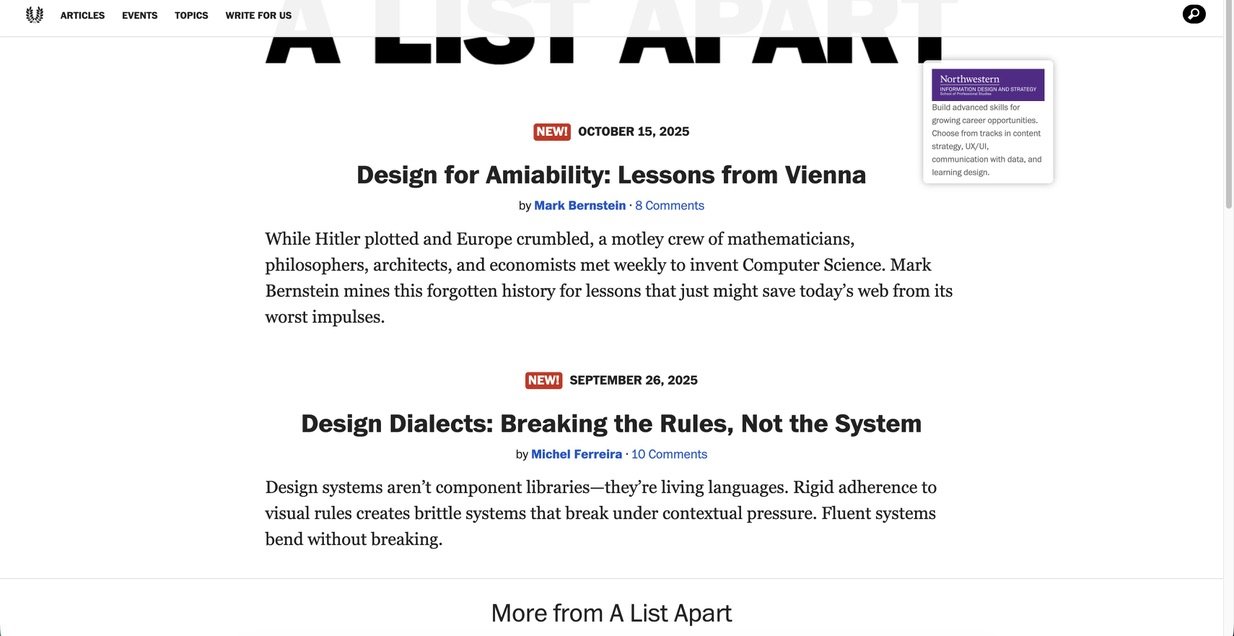
Guide: How to Get Paid to Write for A List Apart (Step by Step)
A List Apart is one of the most respected magazines in web design and development. This guide walks you, in plain language, through understanding the site, choosing the right idea, writing a strong draft, and submitting to AListApart.com — even if you are still a beginner writer but already interested in the web.
You will learn what A List Apart (ALA) publishes, how to structure articles that fit their style, how to use their official contributor page at alistapart.com/about/contribute/, and how to turn one accepted article into more money and reputation over time.
Section 1 · Understand the publication
What A List Apart actually wants from writers
A List Apart has been publishing since 1997. It focuses on “the design, development, and meaning of web content” — not just coding tricks. You can see this clearly on their about page: alistapart.com/about/.
Instead of pure “how-to” tutorials, ALA favours: thoughtful essays, case studies, standards discussions, UX and content strategy, design systems, accessibility, and ethics. Your article is expected to be deeper than a quick blog post.
Based on their archive and about pages, they care about:
- Web standards & accessibility
Semantic HTML, inclusive design, progressive enhancement, WCAG, cross‑browser behavior.
Browse: Accessibility articles. - UX & interaction design
Designing flows, forms, error states, navigation, interaction patterns.
See: Design topic. - Content strategy & writing for the web
Voice and tone, content models, editorial workflows, IA (information architecture).
Visit: Content Strategy. - Front‑end development
CSS architecture, responsive design, progressive enhancement, design systems, performance.
Browse: Development topic. - Process, teams, and ethics
Remote collaboration, design leadership, inclusive teams, research practice.
Before pitching, read their Contribute page. They explain what they publish and what they expect from you as a writer.
The typical ALA reader is:
- An intermediate‑to‑senior web designer, developer, UX professional, or product person.
- Comfortable with basic web tech and interested in principles, patterns, and reasoning, not only code.
- Busy, but willing to read a long piece if it changes how they think or work.
ALA articles feel like mini‑chapters of a book rather than quick blog posts. They are clear, opinionated, and often refer to research, standards, or established practices.
| Article type | Good ALA fit? | Why / why not | Better angle for ALA |
|---|---|---|---|
| “How to make a button in HTML” | No | Too basic, pure tutorial, easily found elsewhere. | “Designing accessible, resilient buttons across browsers and devices.” |
| “CSS Grid responsive gallery tutorial” | Maybe | Needs deeper framing; otherwise just a tutorial. | “What CSS Grid teaches us about content‑first responsive design.” |
| “Why dark patterns hurt conversions” | Yes | Ethics + UX + business impact. | Add case studies, research, and practical guidelines to avoid dark patterns. |
| “Our journey to a design system” | Yes | Process, systems thinking, organization‑level insight. | Include failures, decisions, and reusable lessons, not just a success story. |
Section 2 · Fit your idea
Is your idea an A List Apart–shaped idea?
ALA is not a general “guest post” site. They want ideas that change how professionals think about the web. Use these checks before you even draft a pitch.
Does your idea go beyond a quick tip or trick?
ALA pieces usually explore why and what it means, not only “how”. Ask yourself:
- Does my idea reveal a pattern, principle, or mental model?
- Will this still matter in 1–3 years, not just this month?
- Could this help teams or orgs, not only one developer?
If your idea is only “10 CSS tricks you didn’t know”, it’s probably not right for ALA. But “Why CSS layout systems failed our design process (and how we fixed it)” could fit.
Is there a clear audience and real problem?
Define your reader as a specific professional. For example:
- “UX designers creating accessible forms for government sites.”
- “Content strategists planning multi‑language knowledge bases.”
- “Front‑end teams migrating from pages to design systems.”
Then finish this sentence: “They struggle because…”. If you can’t name a sharp problem, your idea may be too vague.
Can you bring lived experience, data, or examples?
Strong ALA pieces often include:
- Real projects you worked on (or studied) and what you changed.
- Research, usability tests, analytics, or user interviews.
- Connections to W3C specs, WCAG, UX research, or design theory.
If you only have a personal opinion with no examples or research, build a small experiment or read more before pitching.
Section 3 · Anatomy of an article
How A List Apart articles are structured
A List Apart doesn’t force a single template, but many of their articles share a similar rhythm. Browse a few recent pieces at alistapart.com/articles/ and you will notice this pattern.
- 1. Hook & problem
A short opening that describes a situation readers recognize: a broken process, a recurring frustration, or a surprising observation. - 2. Context & background
Explain why this problem matters: to users, to teams, to the web. Mention existing ideas or common advice. - 3. Main argument or model
Present your key idea: a framework, principle, or new way to see the problem. - 4. Detailed sections
Each section explores part of the model: examples, diagrams, short code snippets, research findings. - 5. Objections & limits
What might not work? What trade‑offs exist? Show nuance. - 6. Conclusion & next steps
Summarize the shift in thinking and give readers a few concrete actions to try.
Article length is often 2000–4000 words, sometimes more.
Read at least three real ALA articles from different topics and outline them:
- Pick any longform piece from /articles.
- For each, write down the heading structure (H2/H3s) in a note.
- Highlight where they:
- Introduce the main argument
- Show examples or case studies
- Handle objections or edge cases
- Connect to broader standards or ethics
You will quickly see the “magazine essay” style: clear but deep, opinionated but well‑supported.
| Element | Purpose | Tips for you |
|---|---|---|
| Title | Signals argument and audience. | Combine a concrete topic + shift in thinking. Example: “Designing Error Messages That Actually Help Users (and Your Team).” |
| Intro | Pulls reader into a real situation. | Start with a story, question, or vivid example — not with definitions. |
| Subheadings | Guide the argument step by step. | Think of them as mini‑chapters. A reader should understand your article just by scanning headings. |
| Examples | Make ideas concrete. | Use screenshots (or describe visuals accessibly), code snippets, user quotes, or simple diagrams. |
| References | Show that you did your homework. | Link to specs, research, usability studies, or classic ALA pieces that relate. |
Section 4 · Prepare yourself
Build skills & portfolio before you pitch
You can submit to ALA as a relatively new writer, but your chances improve a lot if you first build a small base: some published posts, a clear topic, and comfort with longer pieces. Think of it as a three‑rung ladder.
- Write 3–7 posts on your own blog, Medium, or Dev.to.
- Focus each piece on one idea, not broad lists:
- “What usability testing taught me about error messages.”
- “How we simplified our navigation IA on a small SaaS site.”
- “A content strategy checklist for UX microcopy.”
- Practice:
- Clear introductions
- Logical headings
- Examples from your work or side projects
These become your “writing samples” and help you discover your voice.
- Submit to other UX / dev blogs that accept guests, such as:
- UX Collective (uxdesign.cc)
- Smashing Magazine – Write for us
- Community publications on Medium UX.
- Accept editorial feedback and learn to revise.
- Collect 2–3 strong, edited articles you’re proud of.
Now you are no longer “just a beginner” — you are a contributor to recognizable outlets, ready to aim at ALA.
| Stage | Where you publish | Main goal |
|---|---|---|
| Practice | Personal blog, Dev.to, Medium | Get used to finishing longform posts and explaining ideas clearly. |
| Grow | Smaller or mid‑sized web/UX sites | Learn editorial process, build confidence, collect “clips”. |
| Stretch | A List Apart and similar magazines | Write deeper, more ambitious essays with long‑term impact. |
Section 5 · Practical workflow
Using the A List Apart “Contribute” page step by step
ALA explains their process on alistapart.com/about/contribute/. Use that page as the “official” source. Use this section as an easy step‑by‑step translation.
Read the “Contribute” page slowly (don’t skip)
Go to /about/contribute/. You will usually find:
- What kinds of articles they want right now.
- How to submit (pitch vs. full draft, email vs. form).
- What information to include: bio, topic description, why it matters, samples.
- Notes about rights, editing process, and payment.
Make a short bullet list of their key expectations. You will use those bullets as a checklist while preparing your pitch.
Draft your article idea with the ALA reader in mind
On paper or in a doc, answer:
- Who is the reader? (job role, level, type of org)
- What’s happening in their world? (new tools, constraints, trends)
- What’s the main problem? (confusion, conflict, missed opportunities)
- What’s your core argument? (“We should stop doing X and start doing Y because…”)
Turn this into a 3–5 sentence “idea paragraph” that clearly states your argument and why it matters now. You will reuse this in your pitch email or form.
Create a working outline (not just a topic)
Most editors prefer outlines over vague ideas. Sketch an outline like this:
- Title (working): Aim for clarity first, cleverness later.
- Intro: 2–3 bullet points about the story or scene you will open with.
- H2 #1: State the current situation or misconception.
- H2 #2–4: Each section develops part of your argument, with notes on:
- Examples you’ll use
- Any data or research you’ll cite
- Small diagrams or code snippets (if relevant)
- H2 #5: Limitations, trade‑offs, what this doesn’t solve.
- Conclusion: Main takeaway and 2–3 next steps for the reader.
Keep it concise. Editors judge whether the idea fits and whether the structure looks solid.
Prepare your samples and short bio
Gather links to:
- 2–4 of your best articles (even if on your own blog or Dev.to).
- Your portfolio or LinkedIn, if it shows relevant work.
- Any talk recordings or slides (optional but helpful).
Then write a 2–4 sentence bio that focuses on your work in the web: what you do, who you serve, and what you care about (standards, UX, content, etc.). No need to oversell; show genuine interest in the web and its users.
Submit according to the instructions on the site
ALA may ask for:
- A full draft
- Or a detailed pitch + outline
- Sent via email or through a form
Follow whatever they ask exactly. Include:
- Your working title
- Your idea paragraph
- Your outline
- Short bio
- Links to 2–4 relevant samples
Keep the tone professional but human. Show you understand ALA’s mission and audience.
Wait, then respond well to feedback
Top magazines receive many pitches. It may take weeks to hear back. If they:
- Say yes with edits: Treat the editor as a partner. Ask clarifying questions, revise on time, and explain any major disagreement calmly.
- Request a different angle: Adjust your outline and re‑pitch with the new direction.
- Say no: Thank them. You can adapt the piece for another site, or refine your idea and try again later with a new concept.
Section 6 · Money & career
How you earn money and long‑term value from A List Apart
ALA is a professional publication and pays for accepted work, but exact rates and terms can change. Use the information on their Contribute page and any contract they send as your final source.
Here, we focus on the big picture of earning with ALA: direct pay, reputation, and indirect income over time.
- Payment per article
ALA pays professional rates per accepted piece. The exact number may depend on length, complexity, and current budget. - Payment schedule
Normally, you’ll receive payment after acceptance or publication, as defined in your agreement. - One‑off vs. ongoing
You’re usually paid per article, but if you build a strong relationship, you may be invited to write again as new topics fit your expertise.
Think of each ALA article as both a paycheck and a long‑term “career asset”.
- Credibility
You can say: “My work has been published in A List Apart.” This helps when pitching clients or applying for product / UX / dev roles. - Networking
Your article may be shared by respected people in the industry, leading to talks, consulting, or collaborations. - Higher rates elsewhere
Once you have an ALA byline, other sites and clients are more likely to pay senior‑level fees for articles, UX writing, or consulting.
So even if one article doesn’t make you rich, it can raise your market value for years.
| Value type | What you get | How to maximize it |
|---|---|---|
| Direct payment | Cash per accepted article. | Plan realistic hours; track your time to see your effective hourly rate. |
| Social proof | Trusted logo & link in your portfolio. | Add your ALA article to your site, LinkedIn, and pitches; explain what it’s about. |
| Authority | Recognition as a thinker in your niche. | Speak at meetups, write follow‑up posts, and reference your ALA piece as a base. |
| Opportunities | Invitations for talks, projects, or other writing. | Make it easy to contact you; include a portfolio or site in your author bio. |
Section 7 · Ethics & AI
Research, originality, and using AI tools safely
ALA’s reputation comes from high editorial standards. They expect original thinking, proper research, accurate references, and honest storytelling. AI writing tools are common now, but they don’t remove your responsibility.
- Plagiarism
Copying from articles, books, or docs without proper credit is never acceptable. ALA editors and readers can often detect this. - AI‑generated drafts pushed as your own thinking
If you paste unedited AI output, it will usually sound generic and shallow. - Invented data or case studies
Don’t make up statistics or user quotes. If you don’t have data, either find real research or describe your experience clearly as anecdotal. - Promotional content
ALA is not a place for product pitches, affiliate links, or marketing disguised as education.
Being caught with dishonest work can close doors at ALA and elsewhere.
- Brainstorming & outlining
You can ask AI to suggest angles, metaphors, or questions readers might have. Always choose and rewrite in your own voice. - Language polishing
If English is not your first language, AI can help clean grammar or simplify sentences. You still decide what to say. - Code helpers & examples
If your article includes code, you can experiment with AI suggestions — but you must run, test, and understand every line before including it.
Final rule: you are the author ALA is publishing; AI is only a tool, like a spellchecker or calculator.
Section 8 · Micro‑SOP
Final checklist before you send your A List Apart pitch
Use this as a short SOP every time you submit to AListApart.com. Tick each item honestly.
Section 9 · Quick answers
FAQ: beginners writing, publishing, and earning with A List Apart
- Ask a friend to review your draft.
- Use tools like Grammarly or AI for grammar polishing (but keep your own ideas).
- Read more ALA articles to absorb their style.
- You want to build a career around (UX, design systems, accessibility, content strategy).
- Companies are willing to pay for (consulting, training, audits, writing).
- Have room for future talks, workshops, or a course.
- About A List Apart – mission and focus
- Contribute – official submission guidelines & contact
- Browse all A List Apart articles
- Accessibility topic archive
- Content strategy topic archive
- Design topic archive
- Development topic archive
- To compare other paying tech publications: Smashing Magazine – Write for us , SitePoint – Write for us .