

How to Use CLMP Calls for Submissions — A Practical Guide for Beginners
This step-by-step guide shows you how to find publisher calls, prepare strong submissions, use CLMP’s resources, and build a submission strategy so you can publish short pieces, essays, poems, or book-length manuscripts and start earning or building a portfolio.
I include links to CLMP pages (calls, directory, submission portal), examples of member calls, a pitch template, and a final checklist. Everything is written for beginners.
Section 1 · What CLMP is
CLMP in one sentence — and why that matters to you
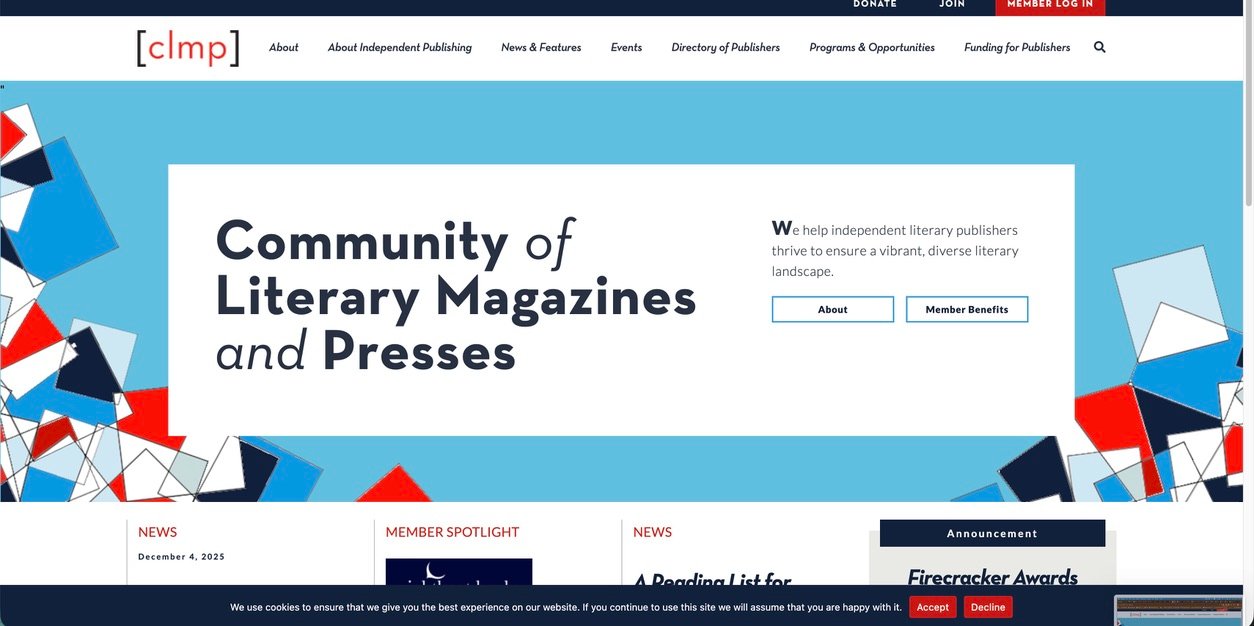
The Community of Literary Magazines & Presses (CLMP) is a membership organization that supports independent literary magazines and small presses — and collects information that helps writers find opportunities, submission windows, and publisher contact points. See the CLMP homepage for context and mission details. CLMP.org.
For writers, CLMP is useful because it centralizes calls for submissions, publishes job and deadline listings, and provides a searchable directory of the presses and journals that are active and accepting work. Use CLMP’s lists as a curated starting point — then always follow the publisher’s own site for the most up-to-date rules.
Treat CLMP listings as a discovery layer — they point to publisher pages and specific calls. After you find a promising call on CLMP, open the publisher’s page and read their submission guidelines (word counts, fees, exclusivity, rights, and reply times).
Section 2 · Where to find calls
CLMP pages, the Submittable portal, and direct publisher pages
Use three main routes to find open submission windows:
CLMP’s Calls for Submissions page
Go to CLMP Calls for Submissions. It lists many member calls and provides quick filters. This is the easiest way to scan currently open magazines and presses.
CLMP Submission Portal (Submittable)
Many small presses and journals accept work via Submittable. CLMP links to the central CLMP Submittable portal: clmp.submittable.com/submit. Searching Submittable lets you submit directly to publishers using a single account.
Publisher pages and member open-submission posts
CLMP’s directory links to publisher homepages. Once you pick a journal, read its own guidelines — many member pages include “open submission” posts such as the ones linked below in Section 7.
Section 3 · Vetting a call
Exactly what to check before you send your work
Every call has details that matter. Before you spend time tailoring a submission, read and confirm these items:
| What to check | Why it matters | Where to find it |
|---|---|---|
| Submission window dates | Sends only while open — some calls have short windows | At top of call entry on CLMP and on publisher page |
| Genre & word count | Rejects often come from wrong length/genre | Call text / guidelines |
| Simultaneous submissions policy | Tells if you can submit elsewhere while under consideration | Look for explicit wording: allowed, not allowed, or silence |
| Pay, fees, and rights | Some journals pay, others don’t; be careful with rights language | Payment & rights section in call or in the publisher’s “submissions” page |
| How to format & submit | Follow their exact requirements (file type, subject line, bio) | Call listing or Submittable entry |
Search previous issues
Read a few recent issues or published pieces to match tone and expectation. If a journal publishes experimental work, don’t submit a safe, generic story — tailor it.
Check the small print for fees
If a call asks you to pay an entry fee, check what that fee supports. Some contests fund awards, others are used by organizations for operations — decide if it’s worth it.
Section 4 · Prepare your materials
Samples, bios, author pages, and a tidy submission packet
Publishers expect clear, tidy, and well-labeled files. Have these assets ready:
- The piece — cleanly formatted (PDF or DOCX as specified).
- Short bio (1–2 sentences) and a longer bio if asked.
- Author photo (if requested) — professional or simple headshot.
- Work samples links (live links to published work, blog posts, or GitHub for hybrid creative-tech projects).
- Cover letter / pitch (short and focused). Template in Section 8.
- Use standard fonts (serif/sans-serif), 11–12pt body size.
- Double-space prose unless the call asks for single spacing.
- Number pages and include your name in header or filename.
- Remove extra comments or track-changes markup from files.
Section 5 · How to submit
Forms, Submittable, email submissions, and what to expect
Most CLMP-listed calls use one of three submission methods:
- Submittable — centralized platform (recommended; receipts and status updates).
- Email — often needs a specific subject line and attachments labeled correctly.
- Publisher web form — proprietary web forms that request the same materials.
- Confirm attachments open on your device (no corrupted files).
- Confirm your contact email is spelled correctly.
- Attach a short bio/author note if requested — keep it fact-based.
- Note the reply timeline and whether they claim to give compensation.
Section 6 · Money & rights
How writers can earn from journals, chapbooks, and contests
Payment varies wildly: some literary magazines pay modest honoraria, some offer contributor copies only, and some contests or chapbook prizes include cash or publication with royalties.
- Flat fee (one-time payment for the piece).
- Prize or contest award (lump sum + publication).
- Contributor copy / author copy (no cash; physical book or issue).
- Royalties (for books; rare for journals).
Always confirm payment details in the call or in the publisher’s contract.
- Track submission dates and outcomes in a spreadsheet (publication, rejection, revise & resubmit).
- If paid, record payment, invoice info, and tax details.
- Use accepted pieces to build paid work: anthologies, freelance, or speaking.
Section 7 · Example calls (real CLMP member pages)
Open-submission posts and how to read them
Below are example calls I found on CLMP that illustrate the variety of open submission posts. Click each to see how they structure details like dates, genres, and how to apply.
Fiction Call — member page
Example: Call for Submissions! Fiction 2025. Notice the “Submission Period” dates and the requirement to submit from completed manuscripts — always match your materials to the publisher’s ask.
Book manuscript / Chapbook
Example: Book Manuscripts! — CLMP member page. Book and chapbook publishers often run year-round or seasonal reading periods; follow their submission notes carefully for manuscript length and sample pages.
Art & student submissions
Example: General ART Submissions (student-focused). Some calls are targeted to college students or special groups — check eligibility before submitting.
Theme issue call
Example: Call for Submissions: PARA/SOCIAL. Theme issues often accept multiple genres — adapt your piece to the theme instead of submitting something off-voice.
Rolling submissions
Example: Stirring — rolling submissions. Rolling calls accept work year-round until closed — check turnaround and whether simultaneous submissions are allowed.
Section 8 · Pitch & cover letter templates
Short, copyable templates you can use right away
Paste and edit the text below for your email submissions (subject lines vary, so follow the call):
Subject: Submission — [Title] — [Genre] — [Your Name]

Hello [Editor Name / Journal Team],

Please find attached my [genre] submission, “[Title],” for your [season/year] reading period.
Length: [word count]. (If requested: previously unpublished / exclusive / simultaneous allowed.)

Short bio (25 words):
[One sentence about what you do and a writing credit or link to your author page.]

Work samples:
[Link to published work or personal website — 1–3 examples]

Thank you for considering my work.
Best,
[Your Name]
[Email] | [Website / Twitter / Instagram optional]
Replace bracketed fields. Keep it short — editors prefer clarity and correctness.
Title: [Proposed Title] — [Concise tagline — one sentence]

Overview / Elevator pitch (2–3 sentences):
[What the piece is about and why the journal's readers will care.]

Why this fits your call:
[Connect topic/tone to the journal's theme or issue call in 1–2 lines.]

About me:
[1–2 sentences: relevant experience, previous publications (if any), or an author website link.]

Attachments:
- Manuscript (DOCX / PDF) — [word count]
- Author bio (50 words)
- Author photo (if requested)

Thank you,
[Your Name] — [Contact email]
If the call asks for an outline or sample pages, attach them and reference them in this pitch.
Section 9 · Final checklist & next steps
Use this before submitting to any CLMP-listed call
- Pick three calls from CLMP and tailor your submissions this week.
- Use the Submittable portal where offered for easier tracking.
- If rejected, save editor notes (if any) and revise for the next call.
Resources & links
CLMP & other helpful pages (open these now)
- CLMP — Calls for Submissions
- CLMP — Homepage & Programs
- CLMP Submittable portal
- Directory of Publishers (CLMP)
- Firecracker Awards (CLMP)
- Jobs with Publishers — CLMP
- Example: Call for Submissions! Fiction 2025
- Example: Book Manuscripts (member)
- Example: General Art Submissions (student)
- Example: Theme call — PARA/SOCIAL
- Example: Stirring — rolling submissions