


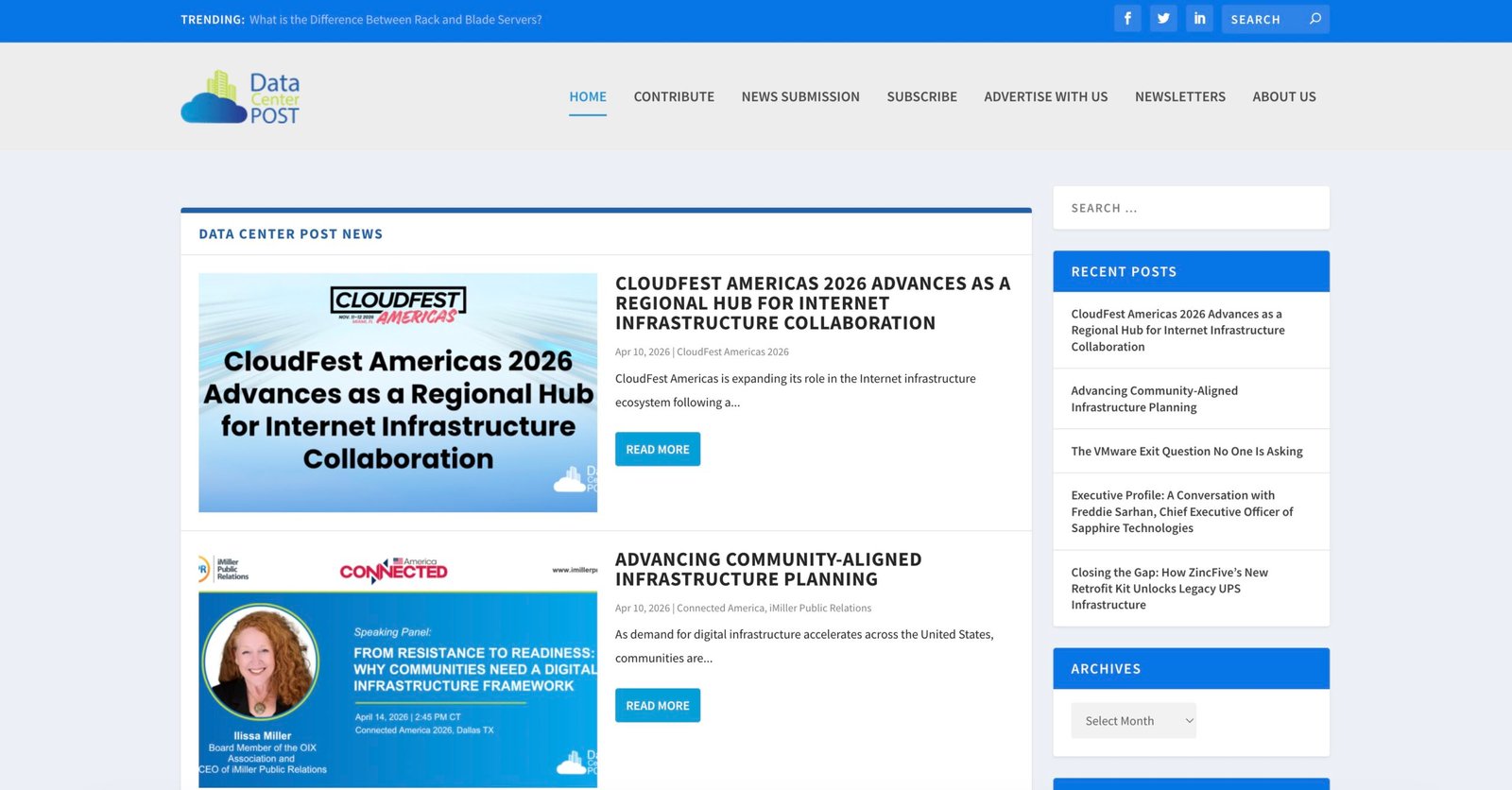
Guide: How to Write for Data Center POST — Step-by-Step (Beginner to Publish)
This guide walks you through everything a first-time contributor needs to know to prepare, write, and submit a publishable post to Data Center POST. It includes pitch templates, an editorial checklist, formatting and image guidance, a repurposing plan (turn one post into many), and a large list of helpful links to research. :contentReference[oaicite:0]{index=0}
Section 1 · The basics
What Data Center POST really wants from contributors
Data Center POST (DCP) is a peer-contributed news and insight site focused on data centers, cloud, hosting, connectivity, and related infrastructure. Their content mix includes technical explainers, vendor-neutral perspectives, product/market news written with a viewpoint, event coverage, and short how-to posts for IT and data-center managers. :contentReference[oaicite:1]{index=1}
Important editorial rules from the official contribution guidance: contributors must be subscribed, pieces must be data-center related (cloud, hosting, connectivity, vendor solutions), posts should be educational rather than promotional, and the minimum length is 300 words. Photos and videos are acceptable; links are allowed (but keep them limited — the site asks for a maximum of around 3). :contentReference[oaicite:2]{index=2}
Primary readers: data center managers, senior IT operations staff, CTOs/CIOs, infrastructure providers, and vendor product teams. These readers value practical takeaways, vendor-neutral insights, and clear technical context.
Use direct, professional American English. Keep paragraphs short. Avoid salesy language and overt marketing claims. Explain why something matters to operations, risk, cost, or design decisions.
| Type of post | When to use | Why it works |
|---|---|---|
| Short insight / op-ed (300–800 words) | Timely reactions to news, product trends | Fast to read, high share potential |
| How-to / practical guide (800–2,500 words) | Explain a workflow (e.g., liquid cooling pilot) | High utility for operations teams |
| Company profile / interview | Executive POV with context | Humanizes vendors and strategies |
Section 2 · Idea & angle
How to choose an idea they’ll actually publish
DCP favors ideas that: (1) solve an operations problem, (2) explain a recent technology or regulatory change, or (3) put vendor news into practical context for managers. Think “What can a data-center manager do differently after reading this?” not “This product is great.” :contentReference[oaicite:4]{index=4}
Ask: what will the reader do differently?
Examples: “How to reduce PUE with a low-cost DCIM audit”, “5 steps to vet a colocation provider for disaster recovery”, or “Edge cooling options for micro data halls”.
Don’t be vague — narrow the scope
Instead of “Data center efficiency”, write “Reducing chiller usage in a 1–3 MW co-located facility using aisle containment and new controls”.
Back claims with numbers or a demo
Include before/after metrics, monitoring screenshots, or links to a GitHub script or small dataset. DCP editors prefer content grounded in real projects.
Explain benefits without marketing speak
If you mention a vendor, explain the technical trade-offs and how a buyer would evaluate it against alternatives.
Section 3 · Gather proof & media
What to prepare before you write
The stronger your evidence, the more likely an editor will accept your post. Prepare: a short bio and photo, 1–2 supporting images (high-resolution), any graphs or before/after metrics, links to relevant documentation or repos, and — if applicable — a short video or demo. The DCP contribution rules explicitly allow photos and videos and request a contributor bio/photo. :contentReference[oaicite:5]{index=5}
- Use high-resolution images (no logos as the contributor photo).
- Prefer photos that show real hardware or screenshots of monitoring dashboards.
- Provide captions and alt text for accessibility.
- Share sample metrics (PUE, inlet temp, kW) where possible.
- Link to code / scripts on GitHub or to an anonymized dataset.
- If confidentiality prevents sharing numbers, describe measurement method and expected ranges.
Short reminder: avoid sharing sensitive customer data, exact locations of critical infrastructure, or any details that would breach policies or security. Editors may ask you to redact specifics before publication.
Section 4 · Write it — structure & craft
Practical article structure that editors love
A tight structure helps both readers and editors. Below is a flexible template you can adapt for a 700–1,800 word post or expand for a longer how-to. Use headings and short paragraphs — editors at DCP prefer crisp, practical language.
- Headline: Clear benefit + subject (e.g., “How to Cut Data Center Cooling Costs with 4 Low-Cost Steps”).
- Standfirst / deck (1–2 lines): Why it matters and who should read it.
- Intro (100–180 words): Concrete problem, one-sentence result, and a short list of what the article covers.
- Step/Section 1–N: Each section is 150–400 words with examples, metrics, and a short code/config snippet if relevant.
- Short conclusion: Recap the result and next steps readers can take.
- Author bio + links + social handles: 1–2 sentences; include company Twitter/LinkedIn handles.
Use inline links to standards, RFCs, or vendor docs (max ≈3 links per post as a rule of thumb for clarity). Use <pre> / <code> tags for short config examples. Keep long code in a linked gist or GitHub repo rather than pasting massive blocks in the post.
Example — short “how-to” outline
- Intro: Why many colos overspend on cooling; audit results summary.
- Step 1: Install three temperature sensors and baseline data for 7 days.
- Step 2: Identify hotspots and airflow recirculation with smoke test / thermal camera.
- Step 3: Implement simple fixes (blanking panels, minor CRAC adjustments).
- Results: Show before/after kW and PUE impact (if available).
- Checklist & next steps: Ongoing monitoring and when to scale to advanced solutions.
Section 5 · Submitting your post
Step-by-step: from draft to submission
Data Center POST provides a submit/news or contribute page with their guidelines and asks contributors to subscribe and supply a bio and photo. The submission flow is: prepare your article and media, visit the submission page or email contributions as stated on the site, and follow the field requirements. Editors may contact you for edits. :contentReference[oaicite:6]{index=6}
Subscribe and read the rules
Subscribe to the DCP newsletter (many editorial processes give priority to subscribers) and carefully read the contribution instructions. Open both the “Contribute” and “Submit News” pages while drafting. :contentReference[oaicite:7]{index=7}
Fill the fields: bio, photo, social handles
Prepare a short bio (name / title / company), a headshot (no logos), and include both your Twitter handle and the company’s Twitter handle if available — DCP requests both. :contentReference[oaicite:8]{index=8}
Attach supporting materials
Attach up to one additional high-res photo (no logos) and links to video or GitHub as needed. Keep inbound links limited (DCP guidance suggests 3 max). :contentReference[oaicite:9]{index=9}
Submit and be ready to edit
After submission, watch your inbox; editors may request clarifications or shorter wording. DCP offers editing and drafting services (contact editor@datacenterpost.com for paid drafting help). :contentReference[oaicite:10]{index=10}
Section 6 · After publish: promotion & repurposing
Turn one post into reach and recurring value
Publication is the start — promotion and repurposing multiply value. Once your post is live, share the link with your network, paste it into LinkedIn with a short thread, and post the key takeaways on Twitter/X. DCP typically promotes posts via social channels and newsletters, so coordinate a cross-posting plan (don’t publish identical long-form content elsewhere until any exclusivity period is clarified with the editor). :contentReference[oaicite:11]{index=11}
- Short LinkedIn article summarizing the post (500–800 words).
- Thread of 6–8 tweets sharing concrete steps or metrics.
- One-slide PDF infographic for sales or internal sharing.
- Record a 5–12 minute video summarizing the findings and link back to the post.
- If you’re writing on behalf of a vendor, make sure PR approves the final copy and coordinate social amplification.
- Use short pull-quotes from the post to craft social posts that link back to DCP (traffic helps authors).
Section 7 · Ethics & editing
What to avoid — and editorial best practice
DCP wants educational material, not press releases. The contribution page explicitly discourages sending plain press releases — instead, reframe news into analysis: explain why a product or contract matters, how it affects operations or procurement, and what trade-offs a buyer should consider. Editors will return items that read like marketing collateral. :contentReference[oaicite:12]{index=12}
- Making unverified claims or exaggerating performance numbers.
- Using marketing phrases like “best-in-class” without evidence.
- Posting confidential client data without permission.
- Submitting content that is too salesy or purely promotional.
- Attribute quotes and link to public sources when referencing studies or market numbers.
- Offer clear next steps or a reproducible measurement method for technical results.
- Disclose conflicts of interest (e.g., “I work for vendor X”).
Section 8 · Final checklist & pitch templates
Copy-paste checklist and sample pitch you can use today
Sample short pitch (for the submission form or email)
Subject: Contribution: “How we cut cooling kW by 12% — a low-cost audit” (for Data Center POST)
Body: Hi — I’m [Your Name], [role] at [company]. I’d like to contribute a short how-to for operations managers showing how a focused DCIM audit and minor airflow fixes reduced cooling kW by ~12% at a 1.2MW colo. The post includes before/after metrics, photos of measurements, and an anonymous dashboard export. I attach a 150–250-word deck and my 1-line bio (plus headshot). Thanks for considering — I’m happy to adapt to DCP style. — [your name and Twitter/LinkedIn handles]
contributions@datacenterpost.com in article bylines or contact areas — that address is useful to know when coordinating paid editing/drafting services. :contentReference[oaicite:14]{index=14}
Section 9 · FAQ & Resources
Quick answers and a curated reading list to use while you write
- Contribute (official guidelines & contributor requirements). :contentReference[oaicite:16]{index=16}
- Submit News (upload/submit page). :contentReference[oaicite:17]{index=17}
- About Data Center POST (editorial focus & team). :contentReference[oaicite:18]{index=18}
- Data Center POST home page (recent posts & categories). :contentReference[oaicite:19]{index=19}
- Research: energy-efficient data center design — ScienceDirect (use for background on cooling & efficiency).
- DCP: Issues Data Centers Face and How to Overcome Them (recent deep explainer). :contentReference[oaicite:20]{index=20}
- DCP: Hyperscale procurement & AI-era considerations (useful for procurement pieces). :contentReference[oaicite:21]{index=21}
- DataCenterPost company profile (directory).