


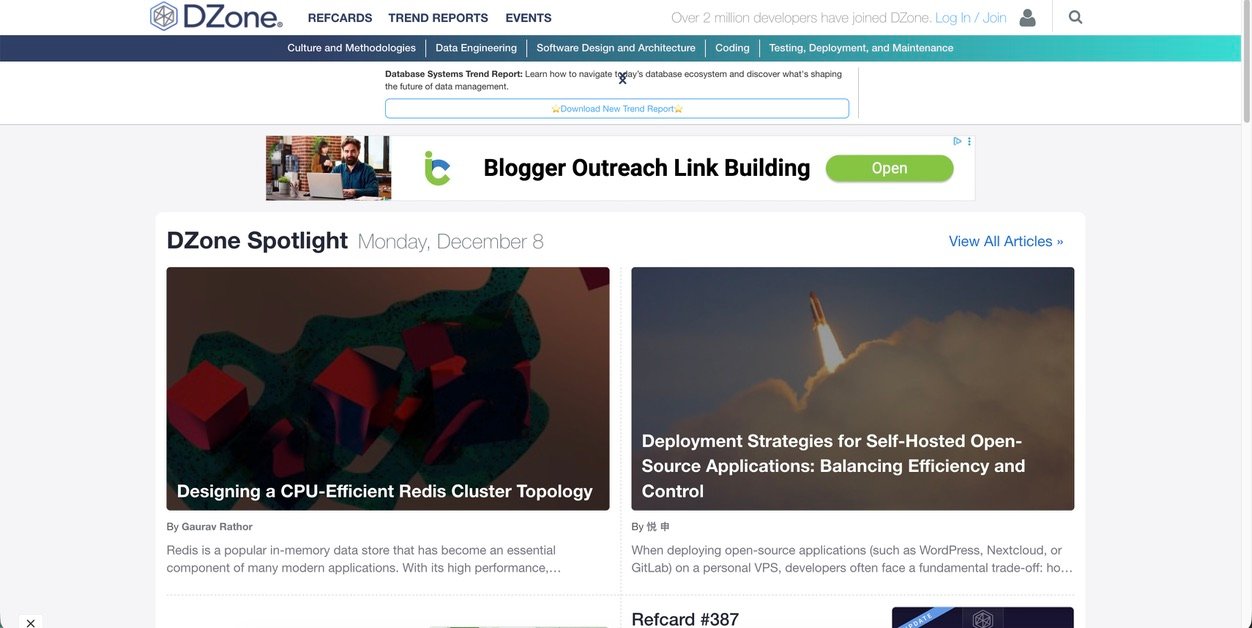
Guide: How to Write for DZone (Writers Zone) and Earn Money (Step by Step)
This guide is built for beginners who want to write developer-friendly content for DZone. You will learn how to pick the right topic, format your post in DZone’s editor, pass moderation, and use your byline to build income through paid opportunities and portfolio-driven clients.
Your “home base” page is here: DZone Writers Zone. Start there, then keep this guide open in another tab while you write. I will also link the most important official pages again and again so you do not get lost.
Important: DZone is a developer knowledge site. They publish technical tutorials, guides, and commentary. They are strict about quality, originality, and what counts as “non-promotional” content. You will learn the rules, then you will learn a simple writing workflow that makes editors trust you.
Section 1 · Understand the platform
What DZone really is (and what it is not)
DZone is a developer-focused publishing platform. Think of it as a place where software professionals come to learn: how to build, how to deploy, how to test, and how to make systems work better. DZone is not the best home for generic blogging, lifestyle writing, or marketing-only content.
The two must-read official pages before you write anything are: Article Submission Guidelines and the Official DZone Style Guide. You should keep both open while you draft.
Most successful posts have 3 things:
- A real developer problem (slow builds, failing deployments, confusing APIs, scaling issues).
- A tested solution (code that runs, commands that work, steps that reproduce the result).
- A clear outcome (what is faster, safer, cheaper, simpler, or more reliable after your fix).
If you can say, “I tested this on my setup and I can show you the exact steps,” you are already writing in the right direction.
DZone is strict about “fit.” Common rejection reasons include:
- Pure marketing pages (product-page style writing, promo language, affiliate-style content).
- Off-topic content (topics not tied to software development practice).
- Thin posts (too short, too generic, no examples, no proof, no learning value).
- Unoriginal writing or copied code/text (even “rewritten” content can be plagiarism).
If your article feels like an ad, it will likely fail moderation. If it feels like a helpful engineer wrote it, you are safe.
| Lane | What it is | Where it lives | Best for beginners |
|---|---|---|---|
| Community Articles | User-contributed posts moderated by DZone | Post an Article · Writers Zone | Yes: build portfolio, learn the editor, get a byline |
| DZone Publications | Paid writing opportunities (Trend Reports, Refcards) | Refcards · Trend Reports | Yes, but usually after you prove quality with public writing |
| Events + Video | Talks, webinars, recordings, learning sessions | Events | Optional: great later when you build confidence |
Now let’s make this practical. You will not “write for DZone” by guessing. You will write for DZone by matching your idea to their rules, then using a repeatable structure. That is what Section 2 is for.
Section 2 · Fit your idea
Is your idea a DZone-shaped idea?
If you want your post accepted, your topic must match the DZone editorial goal: help developers do real work better. DZone’s official guidelines explain what is accepted and what is not. So your first habit is simple: before you write, scan the Submission Guidelines and the Style Guide.
Now, use the following “DZone idea filter.” If you pass these checks, you can confidently invest time in a full draft. If you fail these checks, you should reshape your idea before writing 2,000 words.
Does it solve a real developer problem?
Write one sentence: “This post helps developers do X so they can achieve Y.” If you cannot write that sentence, your idea is still too vague.
- Bad: “An introduction to Kubernetes.”
- Good: “How to debug CrashLoopBackOff in Kubernetes using logs, events, and probes.”
- Bad: “Microservices are great.”
- Good: “How to reduce latency between microservices with caching and better timeouts.”
DZone readers love “how-to” posts because they can apply them the same day.
Is it written for the DZone audience?
DZone is read by software professionals around the world. So you should write like you are explaining to a colleague. That tone is directly recommended in the Style Guide.
- Short paragraphs.
- Clear steps.
- Define acronyms the first time (example: “Application Programming Interface (API)”).
- Less fluff, more proof.
Is your angle specific (and not a copy)?
DZone already has many posts. Your job is to add something new: a new workflow, a new comparison, a new debugging story, or a new example project.
- Pick a specific tool + scenario (example: “GitHub Actions + Docker multi-stage builds”).
- Add constraints (example: “works in a locked-down enterprise network”).
- Show numbers or outputs (example: build time before vs after).
Before pitching yourself into a long draft, search DZone for your keyword, and check similar posts. If your idea is identical, change the angle.
Can you prove it with working code or steps?
The fastest way to earn editor trust is proof: a repo, a sample project, clear commands, screenshots, logs, or test results.
- If you teach code, show code.
- If you teach DevOps, show commands + config + output.
- If you teach architecture, show diagrams + trade-offs + examples.
If you do not have proof, build a tiny demo first, then write from that demo.
Does it avoid “marketing content”?
DZone says they do not publish content that is marketing material or purely self-promotional. So you must write with the reader-first mindset:
- Teach the concept and workflow first.
- If you mention a tool, mention alternatives and trade-offs.
- Avoid “buy now” language, and avoid product-page tone.
You can still build your brand, but do it through helpful education and an honest author bio.
Does it meet the “basic publishability” rules?
Use the official Submission Guidelines as your final gate:
- Write in English.
- Hit the minimum length (DZone states a minimum word count in guidelines).
- Be original, and cite sources when you quote or depend on external facts.
- Do not submit AI-generated content as a “finished draft.”
If you treat this list as non-negotiable, you avoid 90% of beginner mistakes.
| Your idea | Better “DZone angle” | What to show (proof) |
|---|---|---|
| “Intro to Docker” | “Shrink Docker images using multi-stage builds (with measured size results)” | Dockerfile + before/after image size + build time |
| “What is CI/CD?” | “CI/CD pipeline checklist: common failure points and fixes” | Sample pipeline YAML + failing log + fix |
| “Java basics” | “Avoid these 7 Java concurrency mistakes (with mini examples)” | Short code snippets + explanation + safer pattern |
| “Kubernetes overview” | “Troubleshoot readiness/liveness probes without guessing” | kubectl commands + YAML + events output |
Section 3 · Prepare yourself
Build your base: profile + samples + “editor trust”
Many beginners think the “secret” is writing fancy words. It is not. The real secret is building a small base that makes your writing believable: a clear profile, a few proof-based samples, and a repeatable structure.
Start here: Become a Contributor. That page is your overview of how DZone supports writers and contributors. Then read the Writers Zone: Writers Zone.
You do not need a big resume. You need a clear story: what you build, what you know, and what you like teaching.
- Add a real photo or a clear avatar.
- Add a one-line specialty (example: “DevOps, Docker, and cloud cost controls”).
- Link your GitHub, LinkedIn, or portfolio (if you have them).
- Write a short bio in simple English (2–4 lines).
Why this matters: editors and readers trust posts more when they can understand the writer’s background.
Simple bio formula:
- Line 1: “I build/maintain X.”
- Line 2: “I write about Y (specific topics).”
- Line 3: “Here is my GitHub/portfolio.”
Example bio you can copy and customize: “I’m a backend developer who builds Java and PostgreSQL services. I write practical guides on performance, debugging, and reliable deployments. Portfolio: (link).”
Before you attempt a “big” DZone post, write smaller practice posts that follow a tested structure. Your goal is to show you can explain a workflow end-to-end.
- Pick problems you already solved (even small ones).
- Document your steps while you solve them (this becomes your outline).
- Include code, commands, outputs, screenshots, or diagrams.
- End with a summary + next steps.
You can publish practice posts on your own blog, GitHub README, or a writing platform. Then submit your best versions to DZone after you improve clarity.
| Trust signal | What it looks like in a DZone article | How a beginner can build it |
|---|---|---|
| Hands-on proof | Commands + output, code + results | Build a tiny demo project and test everything |
| Clarity | Short paragraphs, clean headings, defined acronyms | Follow DZone’s Style Guide |
| Correct formatting | Proper headers, code blocks, centered images | Use Formatting Guide |
| Originality | Your own explanation + your own examples | Write from your project notes, not from other blogs |
| Integrity | Links for quotes, references section, no copied text | Use Plagiarism + citations |
Now a key beginner move: choose your article “shape” before writing the full draft. DZone has an official page listing their article formats. Open it now and keep it in a tab: DZone’s Article Types.
Beginner-friendly DZone article shapes:
- Tutorial: step-by-step with code and a clear final result.
- Guide: a structured checklist + explanation + common pitfalls.
- Opinion / commentary: only if you can back it with experience and examples.
- Reference / cheatsheet: short sections, tables, “if X then Y” decisions.
Section 4 · Practical workflow
Step-by-step DZone writing + submission workflow (beginner SOP)
This section is the heart of the guide. If you follow this workflow exactly, you can produce DZone-ready articles consistently. You will also avoid the common beginner mistakes: messy formatting, unclear headings, weak intros, and missing proof.
Keep these official pages open while you follow the steps: How to Submit a Post to DZone, How to Format Articles for DZone, and Submission Guidelines.
Pick one clear reader and one clear outcome
Write this at the top of your notes (do not skip):
- Reader: “This is for (who)…”
- Outcome: “After reading, they can (do what)…”
Example: “This is for backend developers who use PostgreSQL. After reading, they can find and fix slow queries using EXPLAIN, indexes, and safe query rewrites.”
This single sentence keeps your article focused. When you feel lost while writing, come back to it.
Write a “DZone intro” (simple and direct)
DZone readers do not want long stories before the point. Your intro should do 4 things in 6–10 lines:
- Name the problem (what hurts).
- Say why it matters (cost, time, reliability, users).
- Say what you will do in this post (steps).
- Say what they will have at the end (result).
Intro template you can copy:
- “When X happens, you usually see Y symptom. In this guide, we’ll do A, B, and C to fix it. By the end, you’ll have D.”
Keep it confident but friendly, like you are explaining to a colleague (this is recommended in DZone’s Style Guide).
Build (or rebuild) a tiny demo that proves your steps
Many beginner posts fail because the author wrote “theory,” not a tested workflow. Fix this by building a tiny demo.
- For a code tutorial: a minimal repo (example: one folder, one README, one run command).
- For DevOps: a reproducible config + a command list (example: Dockerfile + compose file + logs).
- For cloud: a safe minimal config + cost warning + cleanup steps.
Write your steps while you build. Those steps become your headings. This is the easiest way to create an honest, original article.
Create the outline using DZone-friendly headings
DZone’s formatting guide explains that headings should follow hierarchy: H2 sections, then H3 subsections, then H4 if needed. You do not need to memorize HTML—use the DZone editor’s toolbar. See: How to Format Articles for DZone.
Beginner outline template:
- H2: The problem (symptoms and why it matters)
- H2: Setup (tools, versions, assumptions)
- H2: Step-by-step fix (3–7 steps)
- H2: Common mistakes (what breaks and why)
- H2: Final checklist + summary
This outline works for most technical topics. It also helps you reach a solid length without filler.
Write the body with a repeating pattern (the “explain + show + prove” loop)
Use this micro-structure for each step:
- Explain: what you are about to do, and why.
- Show: the command, code, or config.
- Prove: the output, result, screenshot, or expected change.
Example:
- Explain: “We will check container logs to confirm the error.”
- Show:
docker logs <container> - Prove: “You should see XYZ error. If you see ABC, follow the alternate step.”
This loop makes your article feel practical, not theoretical. It also reduces reader confusion.
Format inside DZone correctly (save moderation time)
DZone editors review a lot of posts. Bad formatting slows everything. So follow their formatting instructions: Formatting Guide. The big beginner rules are:
- Use proper headers (don’t bold random lines as fake headings).
- Use code snippets for inline code and code blocks for multi-line code.
- Center most standalone images and avoid messy inline images.
- Keep paragraphs short (2–5 lines most of the time).
If you are not sure how to insert code blocks and choose the language, the formatting guide shows it step by step.
Use clean titles (AP-style capitalization + clarity)
DZone’s formatting article mentions headline capitalization and even suggests a title capitalization tool. The bigger point is: write a title that is clear and specific.
- Bad: “Kubernetes Tips”
- Better: “Top 7 Kubernetes Debugging Steps When Pods Keep Restarting”
- Bad: “CI/CD Guide”
- Better: “CI/CD Pipeline Checklist: 12 Common Failures and How to Fix Them”
A good DZone title tells the reader exactly what they will learn.
Add links the “right way” (helpful, not spammy)
Links are good when they help the reader verify facts and go deeper. Bad links feel like promotion. Use links for:
- Official documentation (example: language docs, cloud docs).
- Tools you mention (example: GitHub Actions docs).
- Sources for quotes or specific claims.
- References section at the end (optional but helpful).
Avoid stuffing links to your own product pages. If you must mention your tool, do it once, and give alternatives. The article should still be valuable without your tool.
Run the “DZone clarity pass” before submitting
Do these checks quickly:
- Replace “we” with “you” sometimes to keep it direct (but don’t overdo it).
- Define acronyms once (example: “CI/CD” the first time).
- Remove jargon words that do not add meaning (DZone’s Style Guide warns about jargon).
- Confirm every code block runs (or say exactly what environment is needed).
- Add a short “common problems” section to prevent support comments.
This is how you write content that feels professional and gets shared.
Submit to DZone correctly (moderation workflow)
This is the “button clicking” part. Follow the official guide: How to Submit a Post to DZone. The general flow is:
- Go to Post an Article.
- Paste or write your post in the editor.
- Use the toolbar to clean formatting (headings, code, images).
- When ready, click the option to submit for moderation.
- Select the best matching topics/zones for your post.
- Confirm you are the author and that your content is original.
Moderation can take time (especially during high volume). So don’t panic. Use that waiting time to draft your next article. That is how you build momentum.
| Writing part | What you should do | Official help page |
|---|---|---|
| Choose format | Pick tutorial/guide/opinion with the right structure | DZone’s Article Types |
| Format headings | Use heading hierarchy (H2, H3, H4) | Formatting Guide |
| Add code blocks | Use code snippets + code blocks and choose language | Formatting Guide |
| Submit | Submit for moderation, choose zones, confirm authorship | How to Submit |
| Avoid rejection | Follow rules: originality, no promo, min length, English | Submission Guidelines |
Section 5 · Money side
How you actually earn money with DZone (realistic paths)
Let’s be honest and practical. Many platforms help you publish, but not all platforms pay for every post. DZone has multiple paths that can lead to income: some are direct (paid writing opportunities), and some are indirect (your byline becomes your marketing, without writing marketing content).
Your best “money plan” is usually a mix:
- Direct pay: DZone Publications (paid opportunities for Trend Reports and Refcards).
- Indirect pay: clients, freelance work, consulting, jobs, speaking.
- Long-term pay: repurpose your DZone work into a portfolio, newsletter, course, or product (outside DZone).
DZone has a paid publications arm: Refcards and Trend Reports. Their contributor material describes these as paid writing opportunities.
Your beginner plan: publish strong public DZone articles first, then express interest for publications work. Start at: Become a Contributor, and read: How to Write for DZone Publications (Trend Reports and Refcards).
How to qualify faster:
- Write 3–6 high-quality DZone posts in a clear niche (example: Kubernetes + observability).
- Make your posts “publication-level” (clean structure, verified steps, strong references).
- Show you can write long form (many publication pieces are longer than standard posts).
- Be easy to work with (respond to edits, accept feedback, fix issues quickly).
Think of DZone Publications as “magazine writing” inside the developer world. If you want direct pay, this is the most official route.
Even if your first DZone posts are not paid directly, they can earn you money by making people trust you. A DZone byline can help you win:
- Freelance writing clients (other tech sites, SaaS blogs, agencies).
- Developer services clients (consulting, audits, implementation).
- Job opportunities (your posts prove skill and communication).
- Speaking invites (later, when you build confidence).
Simple byline monetization setup:
- Add one line in your author bio: “I help teams with (topic).”
- Link to a portfolio page on your website (one page is enough).
- On that portfolio page, embed or link your DZone posts as proof.
- Add a clear CTA on your portfolio page: “Book a call” / “Email me” / “Hire me.”
This is “soft marketing” and usually safer than trying to promote inside the article body. Your article stays educational, and your bio handles the business part.
| Income path | What you publish | Where the money comes from | Beginner action this week |
|---|---|---|---|
| Paid Publications | Refcards / Trend Reports (assigned projects) | Compensation for publication content | Read the publication guide + publish 1 strong public post |
| Freelance writing | DZone portfolio posts + pitches elsewhere | Other sites pay you (per article / per word) | Create 2 writing samples (with code + proof) |
| Consulting / services | Technical how-to posts | Companies hire you for implementation | Add a “services” line in your bio + a contact link |
| Jobs | Deep tutorials, debugging stories | Hiring teams value your communication | Write one “problem → fix → result” post |
Now here is the beginner-friendly “money ladder” you can follow without stress:
- Month 1: Publish 2–3 posts that show proof (code + output). Learn DZone formatting and rules.
- Month 2: Publish 2 more posts. Tighten niche. Improve clarity. Collect links in a portfolio page.
- Month 3: Apply for publication work (if that route fits you), and pitch other paying outlets using your DZone links.
Section 6 · Ethics & AI
Very important: AI rules, plagiarism, and honest citations
This section protects your reputation. If you follow it, you avoid the two fastest ways to get rejected: (1) AI-generated content submitted as “final,” and (2) plagiarism or weak attribution.
Start with the official rules: Submission Guidelines, Style Guide, and What Is Plagiarism? How to Avoid It and Cite Sources.
DZone’s submission rules explicitly reject AI-generated submissions as publishable content. So treat AI like an assistant, not an author.
- Safe use: brainstorm outlines, generate a checklist, rewrite a sentence for clarity.
- Safe use: grammar checks and readability improvement (you still rewrite in your voice).
- Unsafe use: generate full paragraphs and submit without heavy rewriting and testing.
- Unsafe use: generate code you did not run and verify.
If you use AI at all, your responsibility is still full: you must verify every command, every code block, and every claim. Your name is on the article.
The DZone plagiarism guide explains the basics: do not copy, do not “thesaurus rewrite,” and do not steal structure without adding original thinking.
- Write in your own words from your own demo notes.
- If you quote a sentence, add a source URL near the quote.
- If you depend on a specific claim, link the source.
- You can add a small “References” section at the end (clean and professional).
Best beginner habit: every time you open a browser tab to learn something, paste that link into a “Sources” list while drafting. Then you can place the best links naturally in your article.
A beginner-friendly “citation recipe” you can reuse:
- If you quote: add the link immediately near the quote.
- If you paraphrase: write it fully in your own words, then add a “Learn more” link.
- If you use code from docs: link the official docs and explain what you changed.
- If you include numbers: link the source (benchmarks, surveys, release notes).
Also note: if you plan to republish content elsewhere, or submit content that was previously posted, you must follow DZone’s rules about original authorship and proper handling of syndicated content. Always read the latest rules in: Submission Guidelines.
Section 7 · Micro-SOP
Final checklist before you submit to DZone
Use this checklist every time. It is a small habit that creates a big result: fewer rejections, faster approvals, better reader trust.
Section 8 · Quick answers
FAQ: Beginner questions about writing for DZone + link library
- Writers Zone (main hub)
- Become a Contributor
- Article Submission Guidelines (must read)
- The Official DZone Style Guide
- DZone’s Article Types (choose the right format)
- How to Submit a Post to DZone (moderation workflow)
- How to Format Articles for DZone (headings, code blocks, images, videos)
- Plagiarism + how to cite sources
- Post an Article (editor)
- Refcards (publications)
- Trend Reports (publications)
- How to Write for DZone Publications (paid opportunities)
- DZone Events (learn + network)
- Purdue OWL Grammar (recommended by DZone style guidance)
- Education First English Grammar Guide
- Capitalize My Title (headline capitalization helper)
- VS Code (write and test code easily)
- GitHub (host demo projects)
- Docker (common dev workflow tool)
- Kubernetes Docs
- GitHub Actions Docs
- Java Documentation
- Python Docs
- Node.js Docs
If you want a simple action plan right now, do this: (1) pick one small developer problem you solved, (2) build a tiny demo again, (3) write a 1,200–1,800 word tutorial using the “explain + show + prove” loop, (4) format it using the DZone formatting guide, and (5) submit it for moderation. Then repeat. That is how you grow fast.