


Guide: How to Write for Investopedia (Step‑by‑Step)
This comprehensive guide shows you how Investopedia works, what kinds of topics and formats perform well, how to prepare evidence-backed drafts, and practical pitching and follow-up tactics so you can get published or build a contributor relationship. It is written so a beginner can follow it and so a practitioner can use it as an SOP.
You will get: an editorial checklist, a step-by-step pitch SOP, source & compliance rules, sample headlines & outlines, plus a big resource list of outlets and submission pages.
Section 1 · What Investopedia is
Audience, mission, and editorial stance
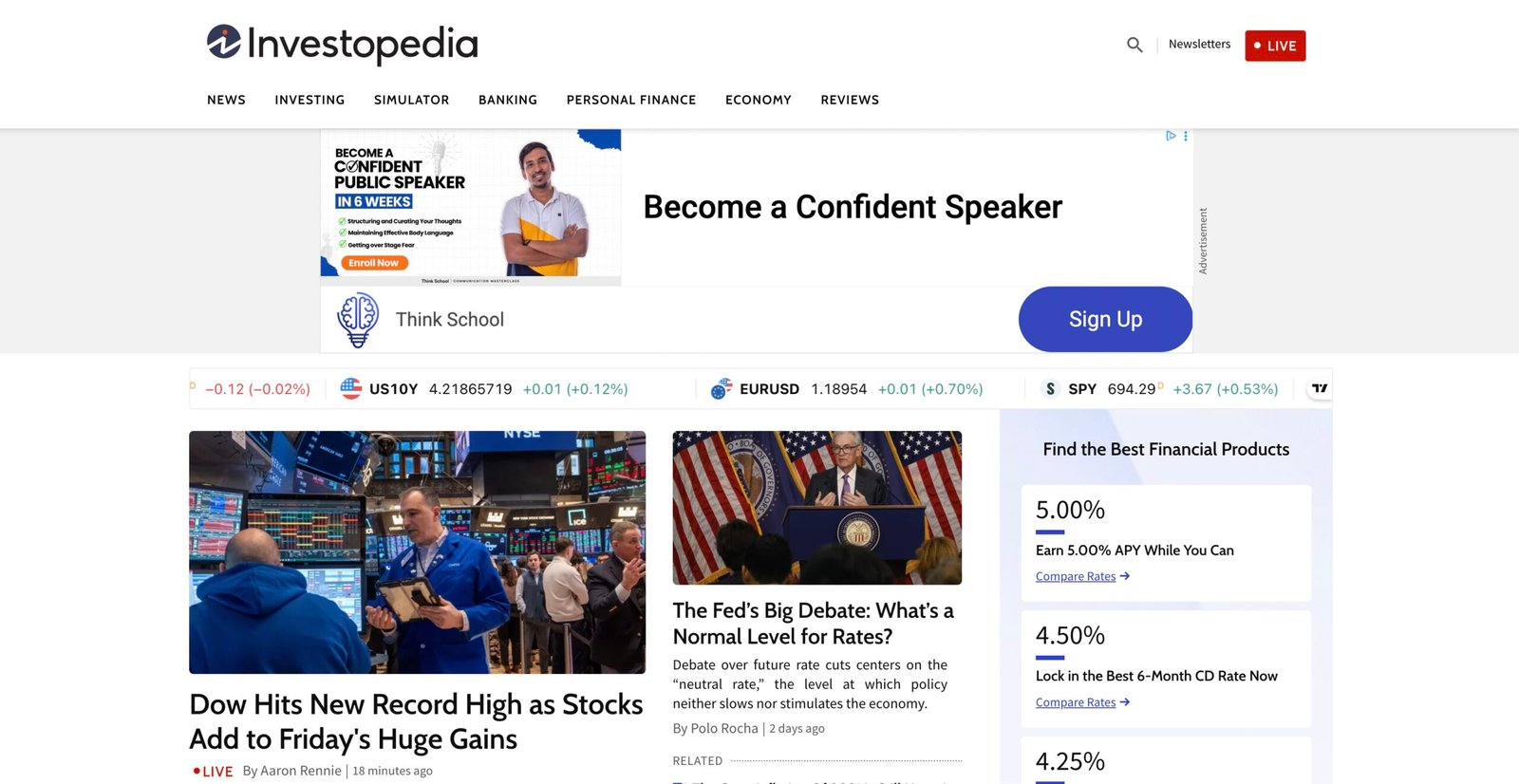
Investopedia is one of the world’s largest finance education sites: it publishes accessible explainers, in-depth how‑tos, market coverage, and a huge financial dictionary. Their public About Us page explains their mission to improve readers’ financial outcomes and notes that content is produced by a mix of editorial staff and expert contributors.
Key takeaways about the audience:
- Readers include retail investors, professionals, students, and advisors looking for clear, accurate, actionable financial information.
- They expect sourced data, references to official filings or regulator sites, and transparent assumptions when numbers are shown.
- Because finance advice can affect money decisions, Investopedia emphasizes accuracy, ethical journalism, and editorial review.
Section 2 · What Investopedia expects
Contributor types, tone, and editorial requirements
Investopedia publishes work from in‑house editors and a large network of expert contributors — subject-matter experts, credentialed professionals, and experienced financial writers. You can browse contributor profiles on their Contributors hub to see examples of bios and article types.
Editors look for pieces that are: accurate, well-sourced, clearly structured, and useful to the Investopedia reader. Good submissions usually include primary sources (SEC filings, government data, official studies) and explain jargon plainly.
Important editorial rules are set out in Investopedia’s policy and editorial pages (see Legal & Editorial Policies and the editorial contacts page). They emphasize corrections, disclosure, and working with qualified reviewers for technical subjects.
Section 3 · Shape an Investopedia-friendly idea
Picking topics and angles that work
Does it answer a money question?
Investopedia articles usually solve a practical problem: explain an investing concept, compare product choices, walk through tax or retirement planning steps, or show how a tool or data source is used. Your idea should start with the reader’s decision — “Should I do X? How do I do X?” — not with broad theory.
Is the angle specific and evidence-backed?
Pick a clear angle: for example, “How to withdraw from a Roth IRA in early retirement without penalties,” not “Roth IRAs explained.” Aim for examples, numbers, and links to official sources (IRS, SEC, company filings).
Can you bring a credential, data, or firsthand case?
Credibility is huge: cite your CFA, CFP, academic research, or company experience when relevant. If you lack deep credentials, show a tested demo, calculations, or reproduce a data point from an original source.
Section 4 · Prepare writing samples
Build a portfolio that proves you can meet Investopedia standards
- Your own blog or Medium — long form explainers with source lists.
- LinkedIn articles and Dev.to for technical/quant pieces.
- Other finance outlets: Seeking Alpha, Kitces, Advisor Perspectives, NerdWallet — they accept contributors and show editing standards similar to Investopedia.
These samples should include inline links to primary sources and show how you handle citations and assumptions.
- Clear headline and one-sentence value proposition.
- Short paragraphs, headings, and numbered steps where useful.
- Primary sources for every factual claim (IRS, SEC, Fed, paper, company site).
- Data tables, screenshots, calculations, or a linked spreadsheet when numbers are shown.
- Author bio that mentions relevant credentials or experience.
| Sample type | Best for | Length |
|---|---|---|
| Explainer (how something works) | Dictionary/term or product explainer | 800–2,000 words |
| Deep tutorial / walkthrough | Step-by-step tax, portfolio construction, or modelling | 1,500–3,500 words |
| Data-backed analysis | Original research, comparisons, or surveys | 1,500–4,000+ words |
Section 5 · Pitching workflow (practical SOP)
How to pitch Investopedia or reach the right editor
Unlike some publications, Investopedia does not publish a ubiquitous “write for us” public form for all freelance pitches; they work with staff editors, a contributor network, and subject-matter experts. The safest, most professional ways to connect are:
- Use the official contact channels on Investopedia’s site (see About and Legal/Editorial pages).
- Send a concise pitch email to editorial contacts such as
inv_editorial@investopedia.com(listed in policy pages) or the press contact for media enquiries; include short bio, 1–3 ideas and an outline, and links to samples. - Find the relevant senior editor on LinkedIn or via the Investopedia contributors page and politely introduce yourself with your one‑sentence proposition and a sample link.
Prepare a one-paragraph hook + 3-line outline
Hook (1–2 sentences): Who the reader is, the problem, and the concrete result. Then add a short outline with 4–6 headings and a sample link.
Include your credibility signals
In 1–2 lines list credentials (CFA/CFP), relevant experience (“10 years as an equity analyst”), or previous high‑quality bylines. Editors move fast — give them the signals.
Attach or link to a full sample
If possible, link to a full published sample (not a Google Doc) that demonstrates sources, calculations, and clarity. If the sample is behind a paywall, provide a PDF or direct excerpt.
Email, follow-up, and reuse
Send a short email, wait 2–3 weeks, then send a polite one-line follow up. If you don’t hear back, adapt the idea for another outlet (Seeking Alpha, Kitces, NerdWallet) and keep building clips.
Section 6 · Money, rights & editorial process
What to expect on payment, ownership, and editing
- Investopedia commissions and exact rates are negotiated per assignment; public signals suggest paid contributor opportunities but rates vary widely by topic and writer experience.
- Some financial outlets pay per piece; others use revenue-share or syndication arrangements. Always confirm rate and rights before you start.
Investopedia has an editorial review process that includes subject-matter reviewers for technical topics and legal/FTC disclosure checks for content that mentions products or services. Their policy page explains how readers can report errors and how editorial corrections are handled.
| Item | Advice |
|---|---|
| Negotiation | Ask about fee, payment timing, and whether payment covers follow‑ups or later updates. |
| Reuse rights | Clarify whether Investopedia wants exclusive first publication, and how you can republish after (many outlets allow repost after a period). |
| Disclosure | Disclose conflicts of interest and sponsorships; Investopedia follows FTC disclosure guidance for product mentions. |
Section 7 · Compliance & Sourcing checklist
Exact checks you must run before submitting
Finance writing carries real risk for readers. Treat this checklist like law.
- Primary sources: link to SEC filings, published academic studies, central bank or regulator data, company press releases, or official statistics wherever possible.
- Numbers transparency: publish the exact dates for price/data pulls, currency, and the source (e.g., “S&P 500 close, 2026-02-01, source: Yahoo Finance”).
- Methodology: if you run calculations, include formulas, a worked example, and a spreadsheet link or appendix.
- Conflict disclosure: declare if you own the securities mentioned or have direct relationships with product providers.
- Reviewer review: for technical topics consider suggesting an expert reviewer (name, title) to help the editor verify details faster.
Section 8 · Final pre-pitch checklist
Micro-SOP: Ensure your pitch & draft are editor-ready
Section 9 · FAQ + Templates
Quick answers and ready-to-use templates
Subject: Pitch — "[Short headline]" — 1-sentence hook

Hi [Editor Name],

I hope you’re well. I’m a [credential/role] with experience in [area]. I’d like to pitch: "[Short headline]" — [1-sentence hook: who, problem, result].

Outline (short):
1) [H2 heading]
2) [H2 heading]
3) [H2 heading]

I can publish a draft of ~1,500–2,500 words. Sample: [link to published sample].

Would you be interested in seeing a full outline or a draft? Thanks for your time.

Best,
[Your name] — [short bio with link]
Subject: Re: Pitch — "[Short headline]"

Hi [Editor Name],

Just checking whether you had a chance to review my pitch. I’m happy to share a draft or adapt the angle if helpful. Thanks again for considering it.

Best, [Your name]
Section 10 · Resources & links
Investopedia pages and other useful finance outlets
- Investopedia — About Us (mission, editorial team, press contact)
- Investopedia — Contributors hub (profiles and examples)
- Investopedia — Legal & Editorial Policies (corrections, editorial standards, contacts)
- Investopedia — Support / Contact Form (site support and enquiries)
- Seeking Alpha — Article submission guidelines (investing analysis platform)
- Kitces — Guest post & contribution process (financial planning community)
- NerdWallet — Editorial guidelines (personal finance publisher)
- Seeking Alpha — Become a contributor
- Forbes — Contributor programs & Councils (various contributor routes)
- Advisor Perspectives (financial advisor-focused guest posts)
- Bloomberg (large financial news org — for career context)
- MarketWatch (market news & analysis)