


How to Pitch & Publish for Landscape Architecture Magazine (LAM): A Beginner’s Guide
Use this friendly, step-by-step guide to research LAM, shape a pitch that editors will read, build publishable samples, and submit via their official channels. It’s structured so even a first-time writer can follow and produce a professional pitch and article.
Wherever we state facts about LAM’s editorial rules or contact points, we include direct references and links so you can verify the source. Read those pages before you pitch. Everything marked as a “source” below corresponds to the magazine’s website or official contact pages.
Section 1 · Publication basics
What Landscape Architecture Magazine (LAM) is — and who reads it
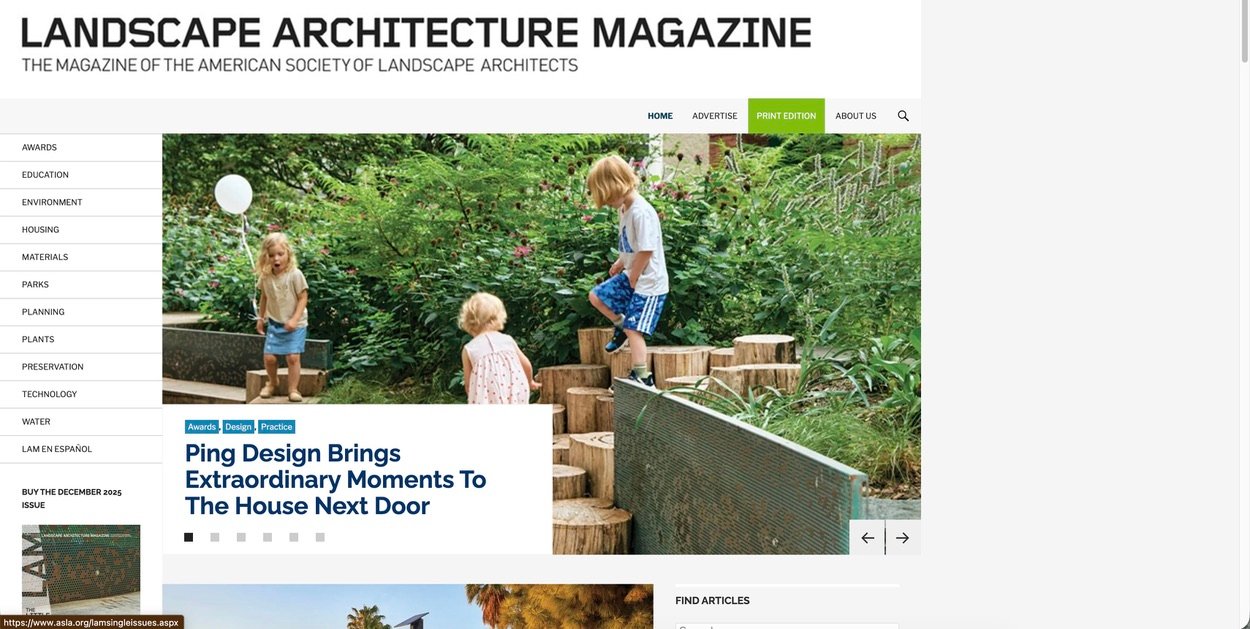
Landscape Architecture Magazine (LAM) is the flagship publication associated with the American Society of Landscape Architects (ASLA). It publishes reporting, essays, project profiles, design criticism, practice-focused pieces, and features that matter to landscape architects and allied professionals. :contentReference[oaicite:0]{index=0}
LAM’s audience is primarily practicing landscape architects, designers, planners, students, and professionals interested in design, policy, planting, climate adaptation, and public space. If your writing helps those readers — with real projects, documented processes, or informed criticism — it may be a fit.
Articles commonly appear in sections like:
- Features / long-form project stories
- Now / short, timely reporting or industry updates
- Design criticism & opinion essays
- Practice & business pieces about firm management, contracts, and maintenance
- Planting & ecology stories, technology, and tools
Readers expect:
- Accurate, sourced reporting and clear attribution
- Photographs, plans, or illustrations to show project outcomes
- Context about process, budgets, maintenance, and outcomes
- Writing grounded in practice — not only theory
Section 2 · Shape your idea
Does your story fit LAM? Three practical checks
Before you write the whole piece, check your idea with these three fast questions. If you can answer yes to all three, you have a pitchable LAM idea.
Does the story have a clear professional audience?
Who benefits? (e.g., municipal planners, planting designers, park managers, students, firm principals). If you can name a reader, the piece will be easier to focus.
Is the angle specific and timely?
Avoid generic “what is X” pieces. Prefer: “How X firm resolved Y maintenance issue in Z park” or “A step-by-step for retrofitting stormwater features in narrow urban sites.”
Can you show evidence or a project?
Projects, before/after photos, interviews with clients, drawings, cost ranges, lessons learned — these are what editors value most.
Section 3 · Prepare before you pitch
Build 2–4 clean samples and a documented demo
LAM editors are more likely to accept contributors who have proven they can finish a complete, well-documented piece. That doesn’t mean you need prior LAM clips — it means you should have 2–4 strong samples (published on your blog, local outlets, or industry sites) that show you can produce clear reporting, publishable photos, and responsible sourcing.
- A clear headline and short deck (1–2 lines).
- Intro that sets the problem or question: who, what, where, why now.
- At least one concrete project, interview, or data point.
- Photos or sketches you have permission to use (or your own images).
- Links to documents, plans, or websites that back claims.
LAM uses photos and plans heavily. Prepare at least 6–12 high-resolution images for a feature (with captions and photographer credits). If you don’t own the images, secure written permission or plan to have the editor arrange photography — but be explicit about which images you can supply. Editors will ask about image rights early.
| Sample type | Where to publish | Why it helps |
|---|---|---|
| Project profile (1,000–1,800 words) | Your blog / local design outlet | Shows reporting and project storytelling |
| Short practice tip (400–800 words) | Devoted blogs, local trade newsletters | Shows concise, actionable writing |
| Photo essay or annotated plan | Portfolio website / Instagram with long captions | Demonstrates visual storytelling and captions |
Section 4 · Pitch workflow
Step-by-step LAM pitch plan — and a copyable template
LAM’s official “Pitch Your Story” / contribute page outlines how they prefer queries and explicitly notes that they do not accept sponsored content. Before you email or use a form, read that page carefully. :contentReference[oaicite:2]{index=2}
Read the official contribute / pitch page
Open: Pitch Your Story to LAM. Take notes: which sections are they highlighting, are there restrictions, and how do they ask you to send ideas? Keep that page open while you draft. :contentReference[oaicite:3]{index=3}
Decide your lead angle and one-sentence pitch
Write a single-sentence pitch that answers: Who is the reader? What will they learn? Why now? Example: “This story shows park managers how a small-city pilot reduced irrigation costs by 40% using native meadow retrofits — with before/after maintenance data and planting plans.”
Prepare a compact outline
Your pitch should include a 4–6 bullet outline (intro, 3–4 subheads, conclusion), links to your samples, and an image availability note. Keep it succinct — editors read lots of queries.
Use a clear subject line & send to the right contact
LAM lists editorial contacts on their site. Where possible, send pitches to the editor or the general submissions contact listed on LAM’s contact page. Example email: lam@asla.org (verify on the site before sending). :contentReference[oaicite:4]{index=4}
Follow submission rules and avoid sponsorship language
Do not offer sponsored content or paid placement; LAM explicitly does not accept sponsored content. If your story involves a vendor or firm, be transparent about funding or relationships. :contentReference[oaicite:5]{index=5}
Subject: Pitch — [Short title] — [City, Project or Topic]
Hello [Editor Name],

My name is [Your name]. I’m a [designer/landscape architect/journalist] based in [city]. I’d like to pitch a [feature / Now / project profile] titled: “[Short headline].”

One-sentence summary:
This story shows [who] how [what outcome], using [project or data], and includes [photos/plans/interviews/maintenance data].

Outline (short):
• Intro: 2–3 paragraphs setting the problem and why it matters now.
• Case study: [Project name, location — who built it, year]
• Details: design decisions, plant palette, construction/maintenance notes, costs (if available)
• Lessons & takeaways: three actionable points for practitioners.

Why this matters:
• [Two short bullets with evidence or sources]

Links to writing samples:
• [link 1 — project profile]
• [link 2 — short practice tip or photo essay]

Images:
• I can provide [#] high-res photos (captions + photographer credits), annotated plans, and contact info for the lead designer.

Bio:
[2–3 line bio — practice, job title, relevant experience]

Thanks for your time. I’d be happy to draft a full length story if you’d like to see a first sample.

Best,
[Your name] — [email] — [phone] — [website/portfolio]
Section 5 · Money, terms & reuse
How contributors are typically paid — and rights to expect
LAM is a professional magazine associated with ASLA. Payment practices for magazines change and are often negotiated per assignment. A variety of public summaries suggest LAM has paid professional rates in past years, and there are third-party reports that discuss payment practices; however, editors will confirm pay when they accept a pitch or commission an article. Always confirm payment and rights with the editor before you accept an assignment. :contentReference[oaicite:6]{index=6}
- Is pay a flat fee or per-word rate?
- When is payment issued (on publication, on invoice, X days)?
- Who retains rights — exclusive, first serial, or non-exclusive?
- Are there travel or photography reimbursements?
- One-time print & online rights: magazine publishes, you retain long-term reuse rights after an agreed period.
- Exclusive rights: editor may ask for temporary exclusivity until publication.
- Repost rules: ask the editor if and when you can repost on your site — get it in writing.
Section 6 · Ethics, sources & images
Image credits, permissions, ethics, and sponsored content rules
LAM’s contribute page explicitly states that they do not accept sponsored content. That means if a project is funded or promoted by a vendor, firm, or sponsor, you must be transparent and the editor may decline or request heavy disclosure. Always declare funding sources and relationships in your pitch. :contentReference[oaicite:7]{index=7}
- Provide photographer credit and contact info for permissions.
- Supply captions: who, where, what, year, and any key construction notes.
- If using photography by others, attach written permission or be clear the editor must arrange rights.
- Provide primary sources for technical claims: maintenance reports, municipal budgets, plant lists, contracts.
- List interviewees, job titles, and contact info for verification.
- Retain transcripts or notes — editors may request verification.
Section 7 · Micro-SOP before sending
Pre-send checklist and polite follow-up
Use this checklist for every pitch. It makes your email clearer and reduces the chance an editor will ignore it because of missing info.
Section 8 · FAQs & resources
Quick answers and useful links to read now
- Pitch Your Story — LAM contribute page. :contentReference[oaicite:11]{index=11}
- LandscapeArchitectureMagazine.org — homepage & issues. :contentReference[oaicite:12]{index=12}
- LAM Contact / About page (editor emails & staff). :contentReference[oaicite:13]{index=13}
- LAM Goods & recent features (examples of editorial style). :contentReference[oaicite:14]{index=14}
- Recent LAM article example: Holiday gift guide (shows format & credits). :contentReference[oaicite:15]{index=15}
- Third-party writeup on pitching LAM (useful context). :contentReference[oaicite:16]{index=16}