


Guide: How to Research, Pitch and Get Published on National Geographic — Travel & Your Shot
This long, beginner-friendly guide shows you how to research the National Geographic Travel site, learn the tone and format editors want, build a small portfolio, prepare strong pitches for writing and photography, and — importantly — where to find submission forms and community tools like Your Shot.
Use this as a practical road map: read the official pages, prepare demos and samples, and follow the quick SOP and templates below.
Section 1 · Understand the publication
What National Geographic Travel actually is (and why that matters)
National Geographic Travel is an editorial brand focused on destinations, culture, nature, and deep storytelling that combines first-class photography with reporting and vivid service journalism (destination guides, how-to stories, features, and visually-driven essays). Editors prize reporting, unique angles, strong photography, and original reporting that connects place to people, science, conservation, or culture.
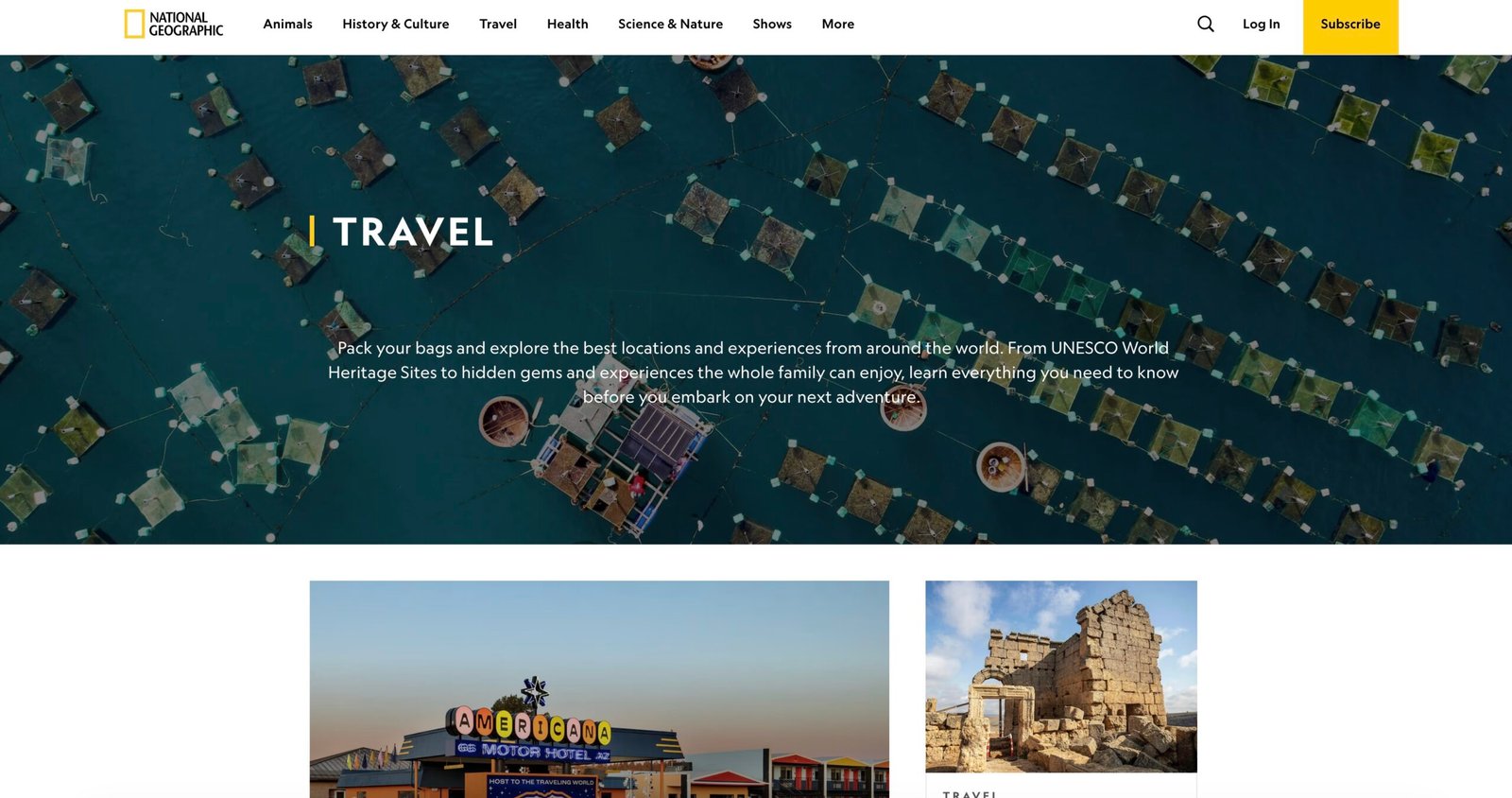
Tip: The homepage reveals topical priorities (seasonal lists, “Best of the World”, destination guides). Read several current Travel feature and guide pages to feel the tone and depth. Open the Travel homepage to see how they present stories visually.
Section 2 · Official pages & community tools
Key pages to read first (always bookmark)
Start here — read and keep these pages open while you build your pitch:
- National Geographic — Travel (main page) — to learn current editorial focus and recent features.
- Contributor Submission Guide — instructions for contributors (especially photographers).
- Your Shot (community photography) — a place to share and be noticed by Nat Geo editors and community curators.
- Your Shot FAQ — rules, challenges, and hashtag guidance.
- Secrets of a Travel Writer — Nat Geo’s piece with practical tips for storytelling and assignments.
They show tone, structure, submission process, and community entry points. The Contributor Submission Guide is where you learn file formats, caption rules, and contact points for photography packages. Your Shot is an editorial pipeline: many photographers are noticed there first.
Section 3 · Choose the right idea
How to shape National Geographic–worthy story or photo ideas
National Geographic favors stories that do at least one of the following well:
- Report an under-told angle about place, people, or conservation.
- Use strong photography to reveal an environmental or cultural truth.
- Provide practical, well-researched guidance (destination guides, logistics) combined with story-rich reporting.
- Is it local + specific? (e.g., not “Japan” but “kintsugi artisans in Kanazawa”).
- Is there reporting to do? (interviews, climate data, local voices, context).
- Are there strong images? (photo plan or access to photographic sources).
- Can you show a practical result? (how readers can go, what they should expect, do’s & don’ts).
- “How a coastal community is adapting its fishing methods to rising sea levels” — reporting + photos + local quotes.
- “A photographer’s week documenting migratory patterns of [species], and why it matters” — photo essay + science context.
- “A practical guide to visiting X UNESCO site responsibly (permits, times, photography rules)” — service journalism + conservation note.
Section 4 · Build samples & portfolio
How to prepare writing and photography samples editors will respect
Before you pitch National Geographic, have published samples that show narrative skill or photographic excellence.
- 3–5 published pieces (blogs, local magazines, or strong posts on platforms like Medium or Longreads).
- One long-form sample (1,500–3,000 words) showing reporting, on-the-ground detail, quotes, and context.
- Research notes and a short CV: travel experience, languages, local contacts, reporting access.
- An online portfolio (website, Instagram professional account, or Your Shot gallery) with 15–30 your best images.
- Strong captions and location data — Nat Geo values story + context in captions.
- Model & property release examples (if people-centric), and a short note about how you captured access (guides, permits).
Section 5 · How to pitch (email + form templates)
A step-by-step pitch workflow and templates you can reuse
Follow this compact SOP when you’re ready to pitch a story or photo package. If the Contributor Submission Guide gives a form, follow it exactly — some pages accept email queries, others want formal packages.
- Match the desk: know which NatGeo desk (Travel, Adventure, Photography, Science) you’ll pitch to.
- Keep it short: subject line (6–10 words), 3–6 line summary, 5-line bulleted outline, sample images or sample link, and your byline info (1–2 lines).
- Attach or link samples: an online longform piece for writers or a web gallery / Your Shot link for photographers.
- Follow file rules: image sizes, captions, and metadata per Contributor Submission Guide when asked. Editors sometimes ignore emails that fail basic specs.
Subject: Pitch: [Short angle] — [Location] (concise)
Hello [Editor Name],

I’d like to pitch a [feature / travel guide / photo essay] for National Geographic Travel:

Title (working): [A specific, descriptive title]
Angle (1–2 sentences): [What makes this urgent/unique?]
Why NatGeo?: [Why this suits NatGeo readers; 1 sentence]
Structure (bulleted):
  • Intro: [what the story opens with]
  • Reporting sections: [3–4 bullets]
  • Photo plan: [main-images/cover idea]
Samples:
  • My long sample: [link to 1 long published sample]
  • Portfolio / gallery: [link to portfolio or Your Shot]
Bio: [1–2 lines: where you report/photograph, past credits]
Availability: [dates, access, flexibility]
Thanks for considering this — happy to send a fuller outline or images.

Best,
[Your name] — [website] — [phone]
Subject: Photo essay pitch: [short angle] — [location]

Hello [Photo Editor Name],

I’d like to propose a photo essay documenting [topic] in [place]. Short pitch:
  • What: [one-sentence summary]
  • Why now: [news/seasonal/unique access]
  • Visual approach: [how you'll shoot — people, landscapes, details]
Links / attachments:
  • Contact sheet / gallery: [link to 10–20 best images or Your Shot album]
  • Captions + micro-notes: [sample captions for 3 images]
  • Bio + credits: [1–2 lines, equipment, rights you represent]
I can provide high-resolution files per your submission guide (specs), and I have model/property releases if needed.

Thanks for your time,
[Your name] — [site / Instagram / Your Shot link] — [email / phone]
Section 6 · Photography: Your Shot & editorial pathway
How Your Shot works, community routes, and technical checklist
Your Shot is Nat Geo’s community photography platform where contributors share images, take part in challenges, and sometimes get selected for site features or “Your Shot” galleries. It’s an excellent visibility pipeline for emerging photographers.
- Create a Your Shot profile and upload your best sets (follow the Your Shot FAQ for rules).
- Enter monthly hashtag challenges; editors and curators look through challenge submissions.
- Write informative captions — Nat Geo editors prize story details, location data, and context, not just a pretty picture.
- Link your best Your Shot photos to a personal portfolio to include in pitches.
- Image resolution: upload highest reasonable resolution you’ll provide (editors request hi-res on assignment).
- Metadata: include location, date, lens, and short caption with why/how shot was made.
- Releases: have model/property release forms ready for subjects if people are identifiable.
- File naming: use clear names (e.g., place_YYYYMMDD_caption.jpg).
Section 7 · Money, rights, and alternatives
What to expect for pay, licensing, and other ways to monetize travel work
Payment for major Nat Geo Magazine assignments tends to be professional (magazine rates), but exact fees vary by desk and assignment. Digital features and smaller online packages may have different structures. For photographers, editors sometimes buy exclusive or non-exclusive image rights — read the contract carefully.
- Fees vary widely: magazine features generally pay more than single web stories.
- Nat Geo may license images for editorial use; photo licensing income depends on contract terms.
- Always ask: is the fee for writing OR does it include image licensing? If both, get clear terms in writing.
- Use a Nat Geo byline as a portfolio asset to win freelance clients, speaking gigs, or teaching gigs.
- Turn a photo series into a print sale, fine-art offering, or stock portfolio (mind Nat Geo exclusivity rules).
- Sell related micro-products—local guides, Lightroom presets, or short paid newsletters.
Section 8 · Legal, ethics & AI
Rights, releases, and honest work — what you must never do
National Geographic is a respected global brand — they expect editorial honesty. Never invent quotes or facts. Never submit content that violates copyright or lacks releases where required.
- Model releases for identifiable people (signed, dated, stored as PDFs).
- Property releases when required (private property, works of art, trademarks).
- Correct captions and location names; mislabeling can lead to retraction.
- Keep raw files and shoot logs in case editors ask for verification.
- AI can help brainstorm, but do not submit AI-generated prose or captions as your own reporting without heavy verification and editorial permission.
- If you used AI to draft captions or text, disclose it to editors and verify every fact yourself.
Section 9 · Micro-SOP: final checklist before you send the pitch
One-page checklist to use before clicking send
Section 10 · Resources, links & research list
Links to help you research quickly (open these tabs now)
- National Geographic — Travel (site homepage)
- Contributor Submission Guide — caption data, shipment, contributor instructions
- Secrets of a Travel Writer — NatGeo advice on assignments & storytelling
- Your Shot topic page — community & photo challenges
- Your Shot FAQ — rules and challenge info
- Best of the World / Yearly lists