


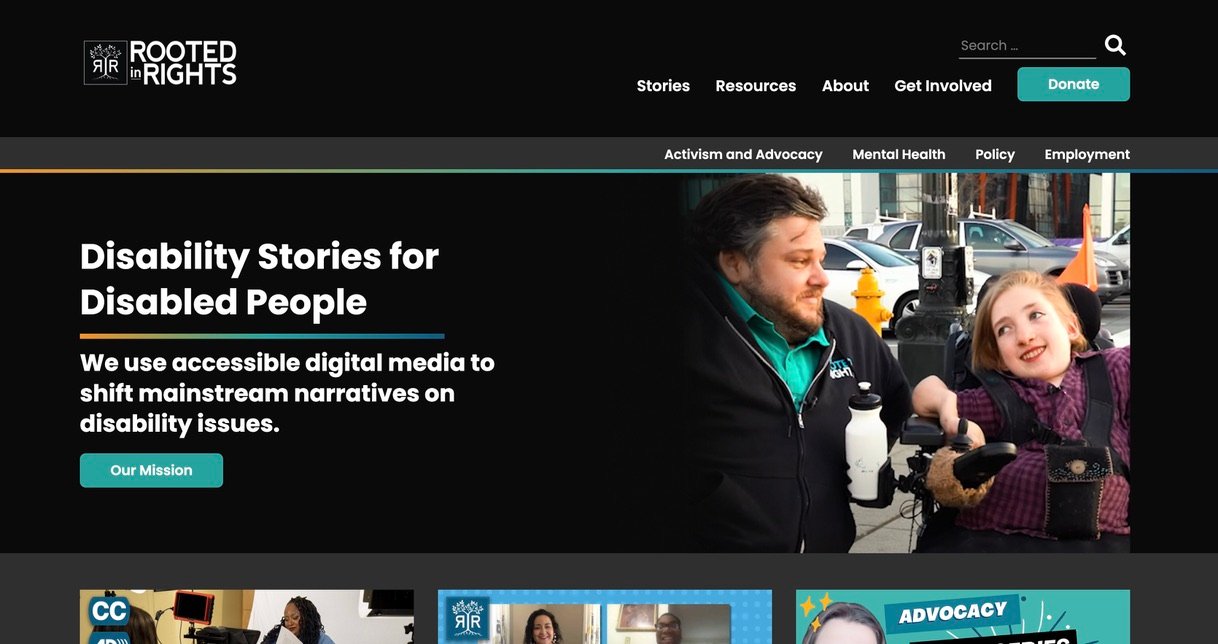
Guide: How to Get Paid to Write for Rooted in Rights (Step by Step)
This guide shows you exactly how to pitch and write for Rooted in Rights — even if you are a beginner writer. It is written like a simple SOP: you can follow it like a checklist.
Rooted in Rights’ blog exists to amplify authentic perspectives of disabled writers, with a strong focus on disability rights and disability justice. They also welcome supported storytelling when a disabled person wants to share their story via an interview or Q&A format.
You will learn how to: (1) pick a topic that fits, (2) write a pitch editors can say “yes” to, (3) turn the pitch into a clean draft, (4) avoid common mistakes (like being too vague, too promotional, or unsafe with facts), and (5) earn money and grow your writing career using this byline.
Section 1 · Understand the publication
What Rooted in Rights really is, and what the blog wants from writers
Rooted in Rights uses accessible digital media to advance the dignity, equality, and self-determination of people with disabilities. They produce stories, resources, trainings, and media. Their values strongly include accessible digital content (captions, audio description, image descriptions, transcripts) and person-centered storytelling (“nothing about us without us”). Learn more here: Mission, Vision, Values.
The blog is specifically a platform for disabled writers, with a strong focus on disability rights and disability justice. They welcome different formats: reported and investigative articles, op-eds, creative nonfiction, personal essays, interviews, and short fiction. They also accept supported storytelling (interview/Q&A) for disabled folks who cannot write the piece themselves. See the official pitch rules here: Submit a Blog Idea.
Most successful pieces combine 3 layers:
- One clear human story (your lived experience, or an interview story).
- One bigger rights context (policy, access barriers, discrimination, healthcare, housing, work, transportation, media).
- One “so what” (what readers should understand, change, demand, or do next).
Rooted in Rights explicitly asks writers to interweave personal insights with broader cultural and disability rights/justice issues. To understand their purpose in plain language, read: Letter from our editor.
Before you pitch, read a few real examples:
- #AccessIsLove (access + community)
- Denied Rides Cut Deep (transportation access)
- Valuing Activism of All Kinds (advocacy + reflection)
- Chemically Sensitive People & Social Distancing (supported storytelling example)
- Disability Rights in Haiti (supported storytelling example)
Then explore categories to see what’s already covered: Topics list (Accessibility, Policy, Media, Employment, Transportation, and more).
| Format | Best for | What to include | Beginner tip |
|---|---|---|---|
| Personal essay | Lived experience + meaning | One moment, one barrier, one learning | Write like you are explaining to a smart friend |
| Op-ed | Clear argument + action | Strong claim + 2–4 reasons + ask | Keep one “main sentence” repeated in simple words |
| Reported piece | Systems + proof | Sources, numbers, quotes, context | Start small: 2 interviews + 3 trusted sources |
| Interview/Q&A | Supported storytelling | Clean Q&A, short intros, respectful language | Use 8–12 questions max; edit for clarity, not identity |
| Short fiction | Truth through story | Clear scenes, disability reality, no inspiration-porn | Keep it grounded; focus on access and dignity |
Section 2 · Fit your idea
Is your idea a “Rooted in Rights-shaped” idea? (Fast decision test)
Beginners usually fail because they pitch something that is: too general (“disability is important”), too promotional (“my product”), unsafe (“medical advice”), or already covered. This section fixes that problem.
Are you (or your storyteller) disabled?
Rooted in Rights accepts pitches from people who identify as disabled. You are not required to disclose your disability publicly to pitch, but your pitch is meant to come from a disabled perspective. If you are doing supported storytelling (interview/Q&A), the disabled person should remain centered as the storyteller.
- ✅ Disabled writer pitching their own piece
- ✅ Supported storytelling with a disabled storyteller (Q&A / interview)
- ❌ Submissions from non-disabled writers (not accepted)
Action: If you are unsure how to frame supported storytelling, read these example posts: Chemically Sensitive People and Haiti.
Does your idea connect to disability rights or disability justice?
Rooted in Rights wants pieces with strong emphasis on disability rights and/or disability justice. That means your story should connect to: access barriers, discrimination, policy, community integration, healthcare, housing, education, employment, transportation, media, safety, or other systems.
Use their Topics list to see the landscape: Topics. For quick inspiration, open a few: Accessibility/Access Needs, Policy, Employment, Transportation, Media, Mental Health.
Is it something they explicitly do NOT want?
These are common rejection reasons. Avoid them early:
- ❌ Product or service promotions / advertisements
- ❌ Poetry or artwork submissions (for the blog pitch system)
- ❌ Political partisanship or content about international conflicts (organizational funding limits)
- ❌ Previously published pieces elsewhere (they want original work)
- ❌ Unsafe misinformation (especially medical/legal advice)
Action: If your draft includes medical or legal claims, rework it into: “This is lived experience” + “what systems did / didn’t work” + “where readers can learn more safely” (link to trusted sources, not “I prescribe advice”).
Is your angle new (or at least fresh) for their blog?
Rooted in Rights prioritizes timely pitches that do not overlap with previously published pieces. So you must do a quick overlap check.
- Pick 1–2 close topics (example: transportation + access needs).
- Search the blog via Topics and open 6–10 recent posts.
- Write your “fresh angle” in one sentence (example below).
Fresh angle examples:
- “What happens when paratransit rules ignore chronic illness flare days — and what policy fix would actually help.”
- “How caption quality affects Deaf community access on short-form video apps — a practical creator checklist.”
- “A disabled worker’s view: the hidden cost of ‘return to office’ rules on access needs and employment.”
“My Rooted in Rights piece is about [specific barrier], told through [story format], and it connects to [rights/justice issue] by showing [impact + what should change].”
If you can write that clearly, your pitch is already 50% stronger than most beginner pitches.
Section 3 · Prepare yourself
Build a small base before pitching (samples + research + accessibility)
You can pitch Rooted in Rights as a beginner, but you still need a “base”: a clear idea, proof you can finish a draft, and a respectful approach. This section gives you a simple base-building workflow.
Do this once, and your pitch quality jumps immediately:
- Open the main blog hub: Blog.
- Open Topics: Topics list.
- Pick 2 topics you care about, and read 5 posts per topic.
- For each post, write 4 notes: Hook, Core problem, Evidence (or lived detail), Ending (what changed / what is asked).
Recommended beginner-friendly topics to start: Accessibility/Access Needs, Employment, Transportation, Media.
Rooted in Rights strongly values accessible digital content. Even if you are “only writing text,” you should show accessibility thinking.
- Use headings (H2/H3) that make sense when skimmed.
- Keep paragraphs short (screen-reader friendly).
- If you include images: add alt text and/or captions.
- If you include videos: include captions and a transcript if possible.
- Explain acronyms and avoid dense jargon.
Use their resource hub: Access That and explore: Guide to Creating Accessible Videos.
Now: build the simplest possible “proof” that you can finish a piece. Rooted in Rights accepts “ideas” and also “on spec drafts” (completed drafts). So you can build confidence by writing a 500–900 word draft even before pitching.
| Base item | What you make | Time | Why it matters |
|---|---|---|---|
| Pitch notes | 10 story notes from existing posts | 1 day | You learn tone + structure fast |
| Mini outline | 6 headings + 1 sentence each | 30 minutes | Editors like clear structure |
| On-spec draft (optional) | Complete 500–900 word article | 1–2 days | You can submit as “Draft” in the form |
| Accessibility check | Headings, short paragraphs, alt text | 20 minutes | Matches their values + builds trust |
Section 4 · Practical workflow
Step-by-step pitch plan (use this exact process)
This is the “do it exactly like this” section. If you follow these steps, you will produce a pitch that is: clear, respectful, rights-focused, and easy for the editor to evaluate.
Open the submission page and copy the rules into your notes
Start here: Submit a Blog Idea. In your notes, copy these key constraints (so you don’t forget):
- Must be written by disabled writers (or supported storytelling).
- Must emphasize disability rights and/or disability justice.
- Must be original (not previously published elsewhere).
- No product/service promotions, no poetry/artwork, no partisan politics/international conflicts.
- Standard word count ~500 words (you can pitch longer, but be clear).
- Pay is sliding scale; minimum $400.
- Pitches accepted globally; writing must be in English.
Then read: Letter from our editor to understand tone and how to craft a pitch.
Pick ONE format and ONE main point (don’t be “multi-topic”)
Many beginner pitches fail because they try to cover everything: “accessibility + healthcare + work + media + education.” That becomes unclear. Rooted in Rights editors need one clean main idea.
Pick one format:
- Personal essay
- Op-ed (argument + ask)
- Reported/investigative
- Interview/Q&A (supported storytelling)
- Short fiction
Pick one main point:
- “This policy harms access needs in this specific way.”
- “This system excludes disabled people and here’s what should change.”
- “This stigma causes harm; here’s what the public misunderstands.”
Do a quick overlap check (10 minutes)
Rooted in Rights prioritizes timely pitches that do not overlap with already published pieces. So do this fast overlap check:
- Open Topics: Topics.
- Open your closest topic (example: Transportation).
- Scan recent post titles and open 3–5 posts.
- Write your “difference sentence”: “My piece is different because…”
Your “difference sentence” should be specific: not “I have a unique story,” but “I’m showing how X policy works in practice for Y access needs, with Z evidence.”
Write your pitch in 2–3 paragraphs using the 5Ws + H
In their editor letter, Rooted in Rights recommends including the: who, what, where, when, why, and how in 2–3 paragraphs. Here is a beginner-friendly template you can copy and fill.
Pitch Paragraph 1 (hook + who/what):
“I’m pitching a [format] about [specific disability rights/justice issue], told through [my experience / an interview / reporting]. The core story is [one sentence hook]. The main people involved are [who].”
Pitch Paragraph 2 (why/how + bigger context):
“This matters because [why it matters in rights/justice terms]. I will connect the personal story to [policy/system/culture]. I plan to include [evidence: 1–2 sources / 1–2 interviews / a timeline / a specific barrier].”
Pitch Paragraph 3 (structure + timeliness + accessibility plan):
“The piece will be ~[word count] words and include sections: [6 short headings]. It is [time-sensitive / evergreen]. I will use accessible formatting (clear headings, short paragraphs; alt text if images).”
If your pitch is time-sensitive, you must say why (example: new rule, new deadline, new event, new barrier). Their form also asks: “Is the topic time-sensitive?” so decide before you submit.
Choose “Idea” or “Draft” (and pick the smartest option)
The submission form asks if you are pitching an idea or a completed draft. Choose based on your confidence:
- Choose “Idea” if you want editor guidance before writing the full draft.
- Choose “Draft” if you have a strong on-spec piece ready and you want faster evaluation.
Beginner recommendation: If you can write a clean 500–900 word draft quickly, “Draft” can work well because it proves execution. But if your topic is sensitive or complex, “Idea” first can prevent wasted effort.
Submit via the official form (and keep a copy)
Use the form here: Submit a Blog Idea. It collects your name, pronouns, email, subject, location, idea/draft choice, time sensitivity, and your pitch text (or file upload).
- Paste your pitch directly OR upload a Word document.
- Before clicking submit, copy your text into your notes (so you can reuse it).
- If the form is inaccessible, they provide the email: blog@rootedinrights.org.
Realistic expectation: They state they may not reply to all pitches due to volume, but you are welcome to pitch again. So keep a pitch log.
Example subjects:
- Pitch: Access needs and “return to office” — a disabled worker’s view + policy fix
- Pitch: Transportation denial patterns — what “Denied Rides” looks like in practice (personal + data)
- Pitch: Caption quality on short video apps — a Deaf creator checklist for real access
Section 5 · Money + career
How you earn money from Rooted in Rights (and how to earn more after)
Rooted in Rights pays on a sliding scale, with a minimum payment of $400, and notes a standard word count of 500 words. This is important because it means: even short, strong pieces can be paid well.
- Payment is not “per view.” It’s for the story you deliver.
- The minimum ($400) is a floor, not a promise of the same amount for every piece.
- Because the standard is ~500 words, your job is to make every paragraph do real work.
- They publish a limited number of works per month, so timelines can vary.
Treat it like professional writing: you pitch → you get accepted → you submit a draft → you revise → you publish → you get paid.
- Use your Rooted in Rights byline as a portfolio clip (proof you can publish professionally).
- Pitch related topics to other paying outlets (magazines, newsletters, advocacy sites).
- Turn one story into a “series”: same topic, different angle (policy → workplace → media).
- Offer services: sensitivity reading, accessibility writing, captions/transcripts, interview-based storytelling.
Simple strategy: publish 1–2 strong Rooted in Rights pieces, then pitch bigger outlets with those as your proof.
| Goal | What to do | Why it earns money |
|---|---|---|
| Get your first acceptance | Pitch 1 clear idea with strong outline | Fastest path to paid assignment |
| Improve your rate | Pitch stronger angles + cleaner drafts | Editors trust you; future assignments become easier |
| Build long-term income | Repurpose the topic into other pitches | One research effort → multiple paid articles elsewhere |
Section 6 · Ethics & safety
Very important: respectful language, safe facts, and honest writing (including AI)
Rooted in Rights is built on trust, dignity, and safety. This section is here to protect you, protect readers, and protect the publication.
- Rooted in Rights respects that identity and language are personal; they will not edit how you refer to yourself.
- Write in a way that avoids “inspiration porn” and pity framing.
- Be careful with generalizations: say “some,” “many,” “in my experience,” when needed.
- If you write about another person, get consent and confirm how they want to be described.
If you’re unsure about language, use their mission/value pages as guidance: Mission, Vision, Values.
- Avoid unverified medical/legal advice. If you mention health or law, link to trustworthy sources and keep it informational.
- Do not make accusations you cannot support.
- Rooted in Rights is non-partisan; avoid promoting or opposing political candidates/campaigns.
- Avoid spam and self-serving content; no promotions of products/services.
Their public conduct expectations are stated here: Social Media Conduct. Use that page as an “ethics compass” while writing.
Now let’s talk about AI. You can use AI tools, but only in safe ways. Your name is on the piece. Your credibility matters.
- Do not generate a full draft and submit it without deep human rewriting and verification.
- Do not let AI invent facts, quotes, “studies,” or legal/medical claims.
- Do not copy other writers’ language and “paraphrase” with AI.
- Do not generate disability community language you do not understand.
If AI produces something you can’t defend confidently, remove it.
- Brainstorm 10 possible headlines; pick 1 and rewrite it in your own voice.
- Ask for outline options; choose one and adjust to your story.
- Use AI as a “clarity editor” to simplify sentences after you write.
- Use it to create a checklist (accessibility, fact-checking) and then follow it.
Final rule: AI can assist, but you must remain the author and verifier.
Section 7 · Micro-SOP
Final pre-submit checklist (copy/paste ready)
Use this checklist every time you submit to Rooted in Rights. It helps you stay calm and professional.
Section 8 · Quick answers
FAQ for beginners + resource library (lots of links)
- Rooted in Rights (home)
- Submit a Blog Idea (official)
- Letter from our editor (pitch guidance)
- Mission, Vision, Values
- Blog
- Topics (browse what’s covered)
- Access That (resources hub)
- Guide to Creating Accessible Videos
- Social Media Conduct (ethics + safety)
- Storytellers
- Documentaries
- Team
- Contact
- #AccessIsLove (example)
- Denied Rides Cut Deep (example)
- Valuing Activism of All Kinds (example)