


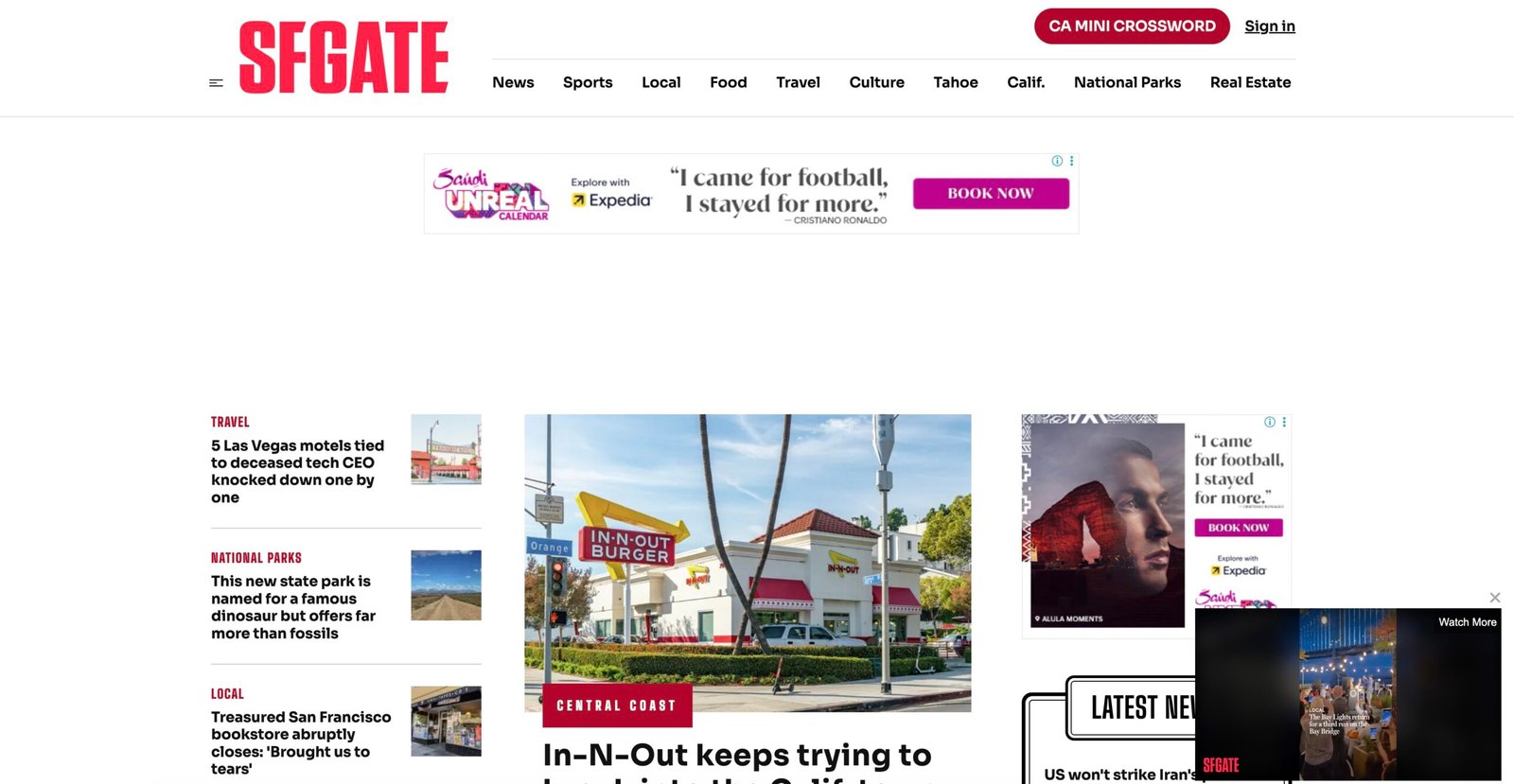
Guide: How to Pitch, Write, and Earn Money Writing for SFGate
This step-by-step guide helps a beginner learn how SFGate works, how to find ideas that fit their editorial needs, how to prepare strong pitches and samples, where to send pitches or tips, and basic expectations about pay and workflow.
The guide collects official pages and public resources so you can follow exact links and contact points. Read the “Key sources” section below after this HTML to see the main pages used.
1 · Understand SFGate & its audience
SFGate is a regional and state-focused online news and culture site that covers Bay Area news, California stories, food, travel, culture, sports, and more. Its readers range from local Bay Area residents to Californians and travelers who want trustworthy local reporting and lively features.
- Local reporting & breaking news about the Bay Area and California
- Food & restaurant coverage, city guides, and pop culture features
- Regional travel pieces (California parks, Lake Tahoe, Central Coast)
- Explainers, lifestyle, and occasional investigative reporting
Readers expect local relevance, trustworthy facts, and practical information (where to eat, what to do, local politics, and regional travel tips).
Tip: Spend 30–60 minutes browsing SFGate’s home and section pages — especially the vertical you want to write for (Food, Travel, Culture, Local, Sports). Notice the tone: conversational, place-aware, and fact-forward.
2 · What kinds of pieces SFGate publishes
SFGate publishes a mix of reported news, short service pieces, deeply reported features, lists, long-form narratives, food writing, travel guides, and personal essays with a local angle. As you prepare ideas, pick one format and one audience.
- Local breaking or explained news — requires reporting and sources
- Food & restaurant stories — reviews, trend pieces, staff roundups
- Travel & parks — places to visit, planning guides, destination stories
- Features & human-interest — long reads about local people or cultural trends
Start with service journalism — short practical how-tos, neighborhood guides, listicles (e.g., “5 small SF cafes with great outdoor seating”), or well-sourced local trend pieces. These often have faster turnaround and are accessible to skilled local writers.
| Type | Length & Format | What editors look for |
|---|---|---|
| Short service / list | 400–900 words | Clear tips, recent facts, quick reporting, local quotes |
| Feature / long-read | 1,200–2,500+ words | Original reporting, interviews, strong narrative arc |
| Travel guide | 800–1,800 words | Up-to-date logistics, pricing, personal experience & photos |
Editors value verifiable reporting. Even a “list” gets attention if it includes fresh reporting or firsthand visits.
3 · Shape an SFGate-ready idea (3 checks)
Use these three quick checks to know if an idea will interest SFGate editors.
Does the idea matter to people living in the Bay Area or Californians planning to visit? If not, find a local hook (a SF venue, a local policy change, a regional data point).
Can you add original reporting (an interview, a FOIA stat, an experiment) or offer a genuinely useful how-to (hours, costs, step-by-step)?
Do you have access to sources, firsthand visits, or data? If you’re writing a food piece, can you visit a restaurant or get review quotes? If not, partner with someone who can.
Exercise: Write one sentence that starts: “This SFGate story explains how to…” — if the sentence names a real problem local readers face, your idea is close.
4 · Build samples & a demo before pitching
Editors like to see evidence that you can finish a piece and that your prose is clear. Before pitching, prepare at least 2–3 strong writing samples and one short sample (a draft or published piece).
- Your own blog (hosted or a free platform)
- Medium, Substack, or local community sites
- Local newsletters, community papers, or college outlets
- Strong, local lede (first paragraph connects to a person/place/event)
- Short, scannable paragraphs with quotes or data
- Clear sourcing: name people, link to documents, show dates
- At least one photo or visual you own or licensed
If you have a portfolio, include links to published pieces and to any social proof (e.g., shares, newsletter mentions, or editor feedback).
5 · How to pitch: emails, tip forms, and newsroom contacts
SFGate offers multiple pathways to pitch or send tips: a contact/tips form, editorial staff emails, and public posts by section editors. Use the right channel.
- Contact / tips form — use SFGate’s official contact/tips form for news tips or story ideas (this is often the fastest way to enter the newsroom workflow).
- Editorial staff emails — SFGate publishes newsroom staff and roles; identify the editor for your section (Food, Culture, Travel) and send a short pitch to that editor.
- Direct pitch to section leads — for features, consider emailing section editors with your outline and sample links.
Pro tip: Look up the staff list and find the editor with the closest remit — addressing the right editor increases your odds of a response.
A short, effective pitch structure (email or form)
- Subject: Short + clear, e.g. “Pitch: Bay Area eco-market that cut waste — 900–1200 words”
- One-sentence hook — why it matters to readers now
- Two-sentence summary — what you’ll report and what sources you have
- Outline / structure — 4–6 headings or a bulleted flow
- Samples & bio — 1–2 links and one-sentence bio (past reporting or local ties)
- Availability & timeline — how long to deliver a draft, and when you can interview sources
Keep it short — editors read many emails. If asked for a full draft, submit a tight, well-sourced draft with photos and captions.
6 · Money: rates, payment expectations, and what to ask
Public reports and writer roundups suggest that rates for SFGate freelance pieces can vary; some editors and public listings have reported mid-hundreds per piece for certain assignments (it varies by length, reporting complexity, and section). Always confirm payment in writing before you start a commissioned assignment.
- Short local service pieces are often lower-fee assignments.
- Longer features requiring reporting and multiple interviews command higher fees.
- Some editors can negotiate higher pay depending on experience and scope.
- Ask whether the story is paid and what the range is
- If paid, ask about payment method and timeline (e.g., 30–60 days after invoice)
- Confirm rights — whether SFGate requires exclusive rights or allows reposting after a period
If you see public reports of exact rates, treat them as approximate — always get confirmation from the editor or contract before accepting work.
7 · Legal, ethics, and AI: what you must do
When writing for a reputable regional outlet, follow basic reporting ethics: attribute sources, avoid fabricated quotes, confirm facts, and disclose relevant conflicts of interest. If you use AI tools, always verify every factual claim and run code, data, or quotes through real verification.
- Do not invent quotes, statistics, or case studies
- Do not publish text or photos you do not own or have permission to use
- Do not rely on AI-generated reporting without verification
- Attribute all interviews and data
- Keep notes and consent for interviews (date, name, affiliation)
- Preserve raw reporting: dates, emails, and recordings if permitted
SFGate’s reputation rests on trust. If you cannot defend every line in a live conversation with an editor, rework the piece until you can.
8 · Checklist & sample pitch templates
Short email pitch (subject line + body)
Subject: Pitch — How X neighborhood revived its small bookstores (900–1,200 words)

Hi [Editor Name],

One-sentence hook: After two years of pandemic closures, a cluster of small bookstores on [neighborhood] revived local reading culture by partnering with schools and hosting rooftop readings.

What I'll do: I’ll report on three bookstores, interview owners and one district librarian, and provide practical tips for other neighborhoods looking to replicate the model.

Outline:
• Lede: scene-setting visit + owner quote
• Background: pandemic challenges + data point
• Case studies: 3 shops (visits + quotes)
• How it works: partnership tactics, costs, volunteers
• Takeaway: step-by-step starter checklist

Samples: [link to published sample 1], [link to sample 2]
Bio: I'm a Bay Area freelance reporter who covers food & community projects. I can deliver a finished 1,000-word draft in 10 days.

Thanks for considering — happy to adapt angle for your readership.
Best,
[Your name] — [phone] — [link to portfolio]
Longer pitch template (feature with sources)
Subject: Pitch — Investigating the rise of "micro-brew farm stands" in [County] (1,500–2,200 words)

Hi [Editor],

Hook: Small-scale brewers are pairing tasting rooms with on-site vegetable stands and direct-to-consumer CSAs; I can show why this model is growing and who benefits.

Reporting plan:
• Interviews: 6 people (2 brewers, 2 farmers, 1 county agritourism official, 1 customer)
• Documents: county agritourism permits + sales data (I have contact at county office)
• Photos: I will supply 8–10 original photos and captions

Outline:
• Lede + human scene
• Trend analysis + context (sales & permits)
• Case studies of two farms/breweries
• Economics & implications for rural tourism
• How-to for towns considering pilot programs

Samples & bio: [links]
Timeline: I can complete first draft in 3 weeks.
Compensation: Is this a paid assignment? If so, please share the typical fee range.

Thank you for your time.
Best,
[Your name] — [email] — [phone]
Customize these templates to your tone and to the SFGate editor you are contacting.
9 · Resources & direct links (open these before you pitch)
Open the pages below in new tabs and keep them while you craft your pitch.
- SFGate — homepage (read current headlines & sample style)
- About SFGate — history & newsroom overview
- Contact & newsroom staff — editors and emails (use to find section editors)
- SFGate “Write to us” / tips pages (where available)
- Hearst (SFGate owner) — corporate page about SFGate
- SFGate — Wikipedia (history & context)
- Freelance listings & reported pitch emails (examples & reported rates)
- SFGate Food section — sample headlines & tone
- SFGate Travel — sample guides & park stories
Tip: Save the staff/contact page and copy the editor email or role before you write — always address your pitch to the right editor and mention you read their recent pieces (cite one or two recent SFGate posts in your pitch).