


Guide: How to Submit and Earn from The Razor (step-by-step)
This guide walks beginners through everything needed to craft, submit, and (where applicable) get paid for short fiction or creative nonfiction at The Razor — the literary magazine produced by Gotham Writers Workshop.
You’ll get a clear checklist, sample pitch/outlines, notes on rights and pay, links to examples, and a copy-ready submission SOP so you can confidently send your next piece. (All key facts below reference The Razor’s official pages.) :contentReference[oaicite:0]{index=0}
Section 1 · What the magazine is
Who The Razor is, and what they publish
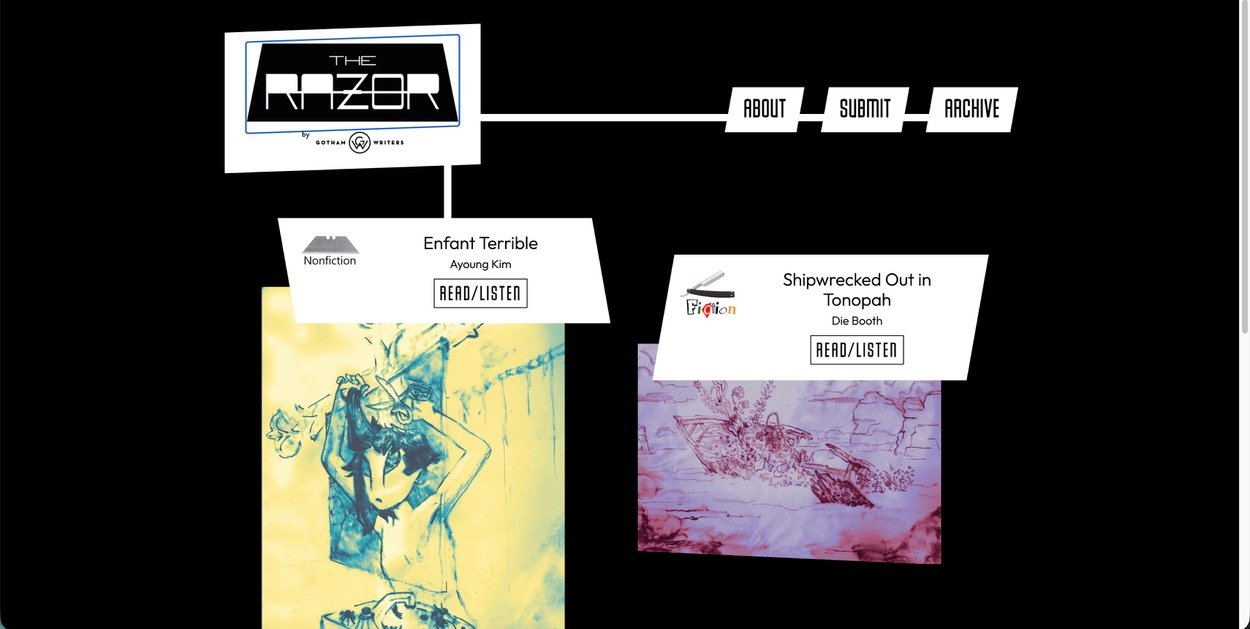
The Razor is a literary magazine produced by Gotham Writers Workshop. It publishes short-form literary pieces — specifically, two pieces each month: one fiction and one nonfiction — making it a focused venue for short stories and creative essays. :contentReference[oaicite:1]{index=1}
Expect polished short fiction and creative nonfiction, often personal, intimate, or formally inventive. Many published pieces are under 2,000 words and prioritize voice and tight structure. Read live examples on their site to sense tone and length. :contentReference[oaicite:2]{index=2}
The audience includes readers of contemporary short fiction and creative nonfiction — people who enjoy carefully crafted small works and storytelling experiments. The magazine is also associated with the Gotham Writers community, so readers may include students, teachers, and workshop participants. :contentReference[oaicite:3]{index=3}
Section 2 · Submission basics
Pay, rights, simultaneous submissions, and timing
Important at-a-glance rules (straight from The Razor’s official pages):
- Payment: The Razor pays $100 per accepted piece. :contentReference[oaicite:5]{index=5}
- Rights: They request first publication rights; after your piece is in their archive (often after a short exclusive period), you may republish with credit to The Razor. :contentReference[oaicite:6]{index=6}
- Simultaneous submissions: The Razor accepts simultaneous submissions but asks you to notify them if the work is accepted elsewhere. Some pages indicate “no multiple submissions” at certain windows — always check the current guidelines on the site at submission time. :contentReference[oaicite:7]{index=7}
- Form-only submissions: Do not send pieces by direct email. Use their submission form. :contentReference[oaicite:8]{index=8}
- Open windows: The Razor posts their submission windows and any special calls on their About/Submit pages and social accounts — check those pages for current open/closed status. :contentReference[oaicite:9]{index=9}
- Payment is a flat fee per accepted piece (confirm exact terms with the editor at acceptance). :contentReference[oaicite:10]{index=10}
- Think of this as a paid micro-publication: the cash is immediate, the byline and editing can be the longer-term value.
First publication rights mean The Razor is credited as the first publisher. Usually, after the piece appears and any exclusive window ends, authors are allowed to include it in portfolios, anthologies, or personal sites, but always check the specific acceptance email or contract. :contentReference[oaicite:11]{index=11}
Section 3 · Shape an idea
What kinds of pieces make sense (and how to choose one)
The Razor runs short, tightly edited works. Because they publish only two pieces a month, pieces that stand out usually have:
- A distinct voice or narrative perspective.
- Concise structure: a clear beginning, a resonant moment or turning point, and a tidy emotional or formal closure.
- Original detail: sensory specifics, small scenes, or surprising images that linger after a short read.
If you write creative nonfiction, make sure facts are accurate and, when relevant, verifiable to the best of your ability. The Razor has emphasized honesty and accuracy in nonfiction submissions. :contentReference[oaicite:13]{index=13}
Pick one sharp moment or scene
You don’t need to cover a lifetime. Pick a scene (300–1200 words) with emotional focus and build around it. If your piece grows beyond the magazine’s typical length, consider trimming or submitting a flash piece instead.
Give it a clear thread
Use a line of tension (a mystery, a regret, an argument) to guide readers. Every paragraph should push toward the core image or revelation.
Section 4 · Drafting a magazine-ready piece
Practical writing steps: from draft to submission copy
Follow these steps to tighten your work before you open the submission form.
One-room edit
Remove everything that does not support the central scene or idea. Cut adjectives and tangents. Ensure every sentence moves the piece forward.
Line-edit for rhythm
Read the piece aloud. Fix awkward phrasing, balance sentence length, and ensure your sentences have musical variety.
Fact-check & clean identifiers
If nonfiction includes dates, places, or names, verify them. If you want blind reading (recommended), remove your name or identifiers from the story text. The Razor reads blind. :contentReference[oaicite:14]{index=14}
Get a second pair of eyes
Share with a trusted reader or a writing group (Gotham classes are an option if you’re seeking workshop feedback). Use specific asks: “Tell me where you lost interest” or “Which sentence didn’t land?”
Section 5 · Filling the submission form
Step-by-step: what to enter and how to present it
The Razor uses a web submission form (hosted via Gotham/WritingClasses). Here’s a walk-through of the typical fields and how to answer them. Use the official form link: submission form. :contentReference[oaicite:16]{index=16}
| Field | What to put |
|---|---|
| Genre / Select fiction or nonfiction | Choose the correct genre. If you’re unsure, pick the dominant mode and note hybrid elements in the note box. |
| Title | Clear, not gimmicky; short is fine. The editor may change the title later. |
| Submission (paste your piece) | Paste final, edited text. Avoid author-identifying details inside the body. Tip: paste as plain text to avoid stray markup. |
| Author bio (100 words max) | 2–3 lines: one-sentence subject line about who you are and where to find your work (website or Twitter). Keep it humble and factual. |
| Note box | If needed, add context: pronunciation of unusual names, permission for images, or a short line about simultaneous submissions. Keep it one paragraph. |
- Do not email your submission unless the site explicitly says so; The Razor deletes emailed submissions. :contentReference[oaicite:17]{index=17}
- If the form requires an account (Gotham/WritingClasses), create one ahead of time to avoid last-minute friction. :contentReference[oaicite:18]{index=18}
- Attach nothing unless the form asks for attachments (images or special formatting notes).
Section 6 · After you submit
What to expect: responses, timelines, and next steps
Response times vary. Online reports from submission trackers suggest average response windows for small lit mags can range from several weeks to a few months; The Razor’s acceptance and rejection times can reflect editorial workload and submission volume. For specifics, check their pages and social feed for announcements about open windows or backlog. :contentReference[oaicite:19]{index=19}
Be patient for at least 4–8 weeks. If they specify “we will contact you only on acceptance,” respect that. If you must withdraw a simultaneous submission after acceptance elsewhere, inform The Razor immediately as requested on their pages. :contentReference[oaicite:20]{index=20}
- You’ll receive a publication offer and payment details (confirm fee and rights in writing).
- Expect editing queries — be ready to respond courteously and promptly.
- Ask about reprint rights and timelines for posting the piece on your own website. :contentReference[oaicite:21]{index=21}
Section 7 · Final micro-SOP (copy-ready)
Copy this SOP and use it every time you submit
Use the mini-SOP below as your checklist. Paste the whole block into a scratch note and tick off each item before hitting submit.
Section 8 · FAQ & Resources
Quick answers and a big resource list
- The Razor — Submit (official). — Key payment & rights info. :contentReference[oaicite:29]{index=29}
- The Razor — Homepage. — Read recent issues and artifacts. :contentReference[oaicite:30]{index=30}
- The Razor — Submission form (WritingClasses). — Use this to submit; create an account if required. :contentReference[oaicite:31]{index=31}
- Example: “The Easy Parts”. — Read for voice & structure. :contentReference[oaicite:32]{index=32}
- Example: “Yield”. — Another model piece to study. :contentReference[oaicite:33]{index=33}
- Example: “Playing With Fire”. — Tone & brevity illustration. :contentReference[oaicite:34]{index=34}
- Duotrope listing. — Community-submitted stats and wait-time signals. :contentReference[oaicite:35]{index=35}
- Round-up: pay & how to submit. — Secondary summary of The Razor’s guidelines. :contentReference[oaicite:36]{index=36}
- The Razor on X / Twitter. — For live announcements on openings/closures. :contentReference[oaicite:37]{index=37}