


Guide: How to Get Paid to Write for Shelterforce (Step by Step)
This beginner-friendly guide shows you how to pitch, report, write, and publish with Shelterforce — and how to turn one accepted pitch into steady paid work.
Everything here is built around the official instructions on How to Write for Us.
Section 1 · Start here
What Shelterforce is (and what kind of writing fits)
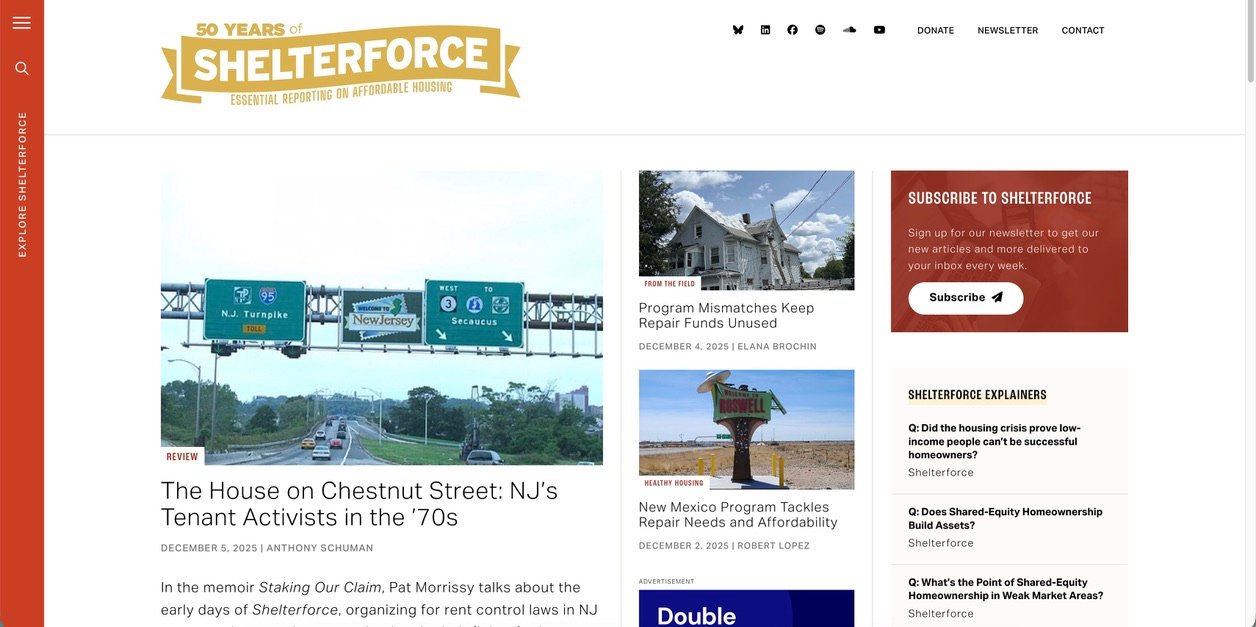
Shelterforce publishes writing about housing, community development, and neighborhood change. Think of it like a smart, field-facing magazine: part journalism, part practical learning hub, and part conversation space for people working on the ground. Start at the homepage to understand the tone and the type of stories they publish: shelterforce.org.
A beginner can absolutely pitch Shelterforce if you do two things: (1) you choose a topic that fits their beat, and (2) you show the editor you can bring real reporting, real voices, and real value (not generic “housing is important” summaries). This guide turns that into step-by-step actions.
Write for people who need clarity, not hype:
- Housing advocates, tenant leaders, organizers, and community builders.
- Policy folks, researchers, journalists, and students learning the field.
- Practitioners: nonprofit staff, public agencies, developers, planners.
Your writing should help them make decisions (what works, what fails, what to try next), and it should respect the lived reality of residents.
- Clear angle: one core question the story answers.
- Strong sourcing: residents + practitioners + documents.
- Field usefulness: lessons others can reuse.
- Specificity: place, policy, numbers, timeline, who is affected.
If your draft feels like it could apply to any city, it is too general. Shelterforce wants real places + real people + real decisions.
| Writing format | What it is | Best for beginners? | What you must include |
|---|---|---|---|
| Reported feature / story | Original reporting with multiple sources | Yes (if you plan well) | Interview plan, documents, clear “why now” |
| From the Field | Practical lessons from doing the work | Yes | What you tried, what failed, what you learned |
| Opinion / op-ed | Argument + evidence + recommendations | Yes (if evidence is strong) | Thesis, proof, what should happen next |
| Explainer / analysis | Make complex policy understandable | Yes | Examples, links, definitions, trade-offs |
Section 2 · The rules
What Shelterforce says “yes” to (and what gets rejected fast)
Most beginner pitches fail for one reason: they are too vague. Shelterforce is very clear that they want specific pitches with a strong angle and a clear sense of how you will report or support the piece.
- Clear premise: one sentence that makes the editor curious.
- Why now: a change, trend, vote, funding shift, ruling, crisis, or deadline.
- Reporting plan: who you will interview and what documents you will use.
- Field relevance: what the story teaches beyond one place.
- Voices that matter: residents + on-the-ground workers, not only officials.
If you can show sources + documents + scene, you already look professional.
- Generic summaries like “Housing affordability is a problem in America.”
- Pure promotion (your nonprofit, your company, your product) without reporting value.
- No interviews, no documents, no evidence — just opinions and vibes.
- Topics that ignore resident impact, equity, and power.
- Rewriting what 20 other outlets already wrote, with no new angle.
If your pitch reads like a press release, it will likely be rejected.
| What you want to do | What Shelterforce prefers | How to adapt (beginner-friendly fix) |
|---|---|---|
| Write a broad overview of “homelessness” | Specific program/policy impact + reporting | Choose one place + one change + 3 sources + 2 documents |
| Promote your project | Field lesson that others can reuse | Write “From the Field”: what worked, what failed, what others should do |
| Hot take op-ed | Argument + evidence + recommendations | Add data + links + counterarguments + practical solutions |
| Rewrite another article | New reporting or new perspective | Interview residents/organizers + bring documents or on-the-ground details |
- Reported story pitches: Use the reported-story pitch email listed on How to Write for Us.
- Op-eds & From the Field: Use the opinion / From the Field email listed on that same page.
- Still unsure? Check the site’s contact page for general direction: Contact.
Section 3 · Idea engine
How to find Shelterforce-worthy story ideas (even as a beginner)
Shelterforce does not need “another general housing article.” They need stories that show how housing and community development works in reality: the systems, the trade-offs, the human impact, and the lessons for other places. Here is a reliable beginner method to generate strong pitch ideas in 45–90 minutes.
Start with a real decision (not a topic)
Pick one decision that someone is making right now: a city council vote, a funding allocation, a zoning change, a voucher rule update, a redevelopment plan, a tenant action, a court case, a disaster recovery plan.
- Decision → who wins/loses → why → what evidence exists → what changes next.
- That chain becomes your pitch structure.
Use Shelterforce’s own archive like a “syllabus”
Open Shelterforce search and type a keyword you care about (example: eviction, vouchers, zoning, CLT). Read 3 recent posts, then write one sentence:
- “What’s the next chapter of this story?”
- “What do we still not understand?”
- “What changed in the last 6–12 months?”
Start here: Search Shelterforce
Look for “implementation gaps”
Housing policies often look great on paper, but fail in implementation. These gaps create powerful stories. Examples of gaps you can look for:
- A voucher program exists, but landlords refuse to lease.
- Funding is allocated, but projects stall in permitting.
- Tenant protections exist, but enforcement is weak.
- New units are built, but displacement rises nearby.
A pitch becomes strong when you show how you will document the gap.
Do “document-first reporting” (beginner superpower)
If you’re shy about interviews, start with documents. Editors love document-based pitches. Collect 3–6 items like:
- Meeting agendas/minutes, housing authority plans, budgets, audits.
- Public dashboards, FOIA releases, evaluation reports, court filings.
- Policy memos, grant awards, RFPs, procurement timelines.
Then pitch: “Here’s what the documents show, and here’s who I will interview to explain it.”
| Idea source | What to capture | Easy beginner deliverable |
|---|---|---|
| City/agency meeting | The decision, timeline, public comments | 1-page pitch with 3 interview targets + 2 documents |
| Tenant/organizer campaign | Demands, power dynamics, what changed | From the Field or reported story with resident voices |
| New report/data release | Key findings + what it misses | Explainer with evidence + local example |
| Program “success story” | How it works + costs + limits | Practical case study with trade-offs |
Section 4 · Preparation
Build your base before you pitch (so editors trust you)
You do not need a journalism degree to pitch Shelterforce. But you do need to show you can finish a piece, handle sources responsibly, and write clearly for a smart audience. This section gives you a simple “trust stack” that you can build in 2–4 weeks.
- Step 1: Publish 2–3 strong samples (on your blog, Medium, or Substack).
- Step 2: Show one “mini-reporting” sample: 2 interviews + 3 links.
- Step 3: Build a one-page “clips” page (Google Doc is fine).
- Step 4: Pitch Shelterforce with a clear plan + proof you can write.
Your samples don’t need to be perfect. They need to show clarity + structure + follow-through.
- A strong headline + 2–3 sentence lead.
- Clear subheadings (so editors see structure).
- At least 5 credible links (gov, research, program docs).
- One short quote from a real person (even email interview).
- A “What this means” section with practical takeaways.
If you can do this on your own blog, you can do it for Shelterforce.
| Portfolio item | Time to create | Why it increases acceptance odds |
|---|---|---|
| 2 simple explainers (1200–1800 words) | 3–5 days | Proves you can teach complex ideas clearly |
| 1 mini-reported post (2 interviews) | 4–7 days | Shows you can handle sources and real-world detail |
| Clips page (links + short bio) | 1 hour | Makes it easy for editors to evaluate you fast |
| Pitch outline with reporting plan | 2–3 hours | Shows professionalism and reduces editor risk |
Section 5 · Pitch SOP
Pitch templates + reporting plan (the exact structure editors prefer)
Treat this section like your “Shelterforce pitch operating system.” If you follow it, you will automatically avoid the most common beginner mistakes: vague ideas, missing sources, unclear relevance, and unrealistic reporting plans.
One-sentence premise (the “hook”)
Write one sentence that includes: place + tension + why it matters. Example structure:
- “In [Place], [policy/program] is failing because [reason], and the consequences for residents are [impact].”
This makes an editor instantly understand what your story is.
Why now (a real trigger)
Editors need a reason to publish this now. Use one clear trigger:
- A new law, rule, or budget.
- A new report or data release.
- A court case, crisis, or deadline.
- A community action or organizing win/loss.
“No one has written about this yet” is not enough. Show why this moment matters.
Reporting plan (your credibility engine)
Your reporting plan should list:
- 3–6 people you will interview (roles, not only names).
- 3–8 documents you will use (links if possible).
- 1–2 scenes you can describe (meeting, walk-through, court, site visit).
A pitch with a strong reporting plan feels safe to editors.
The “field lesson” (why Shelterforce readers care)
Shelterforce readers want lessons that travel. Answer:
- What can other places learn from this?
- What mistake should others avoid?
- What policy detail actually changes outcomes?
If you can write this clearly, your pitch becomes “Shelterforce-shaped.”
| Pitch component | What to write | Simple example |
|---|---|---|
| Premise | Place + tension + impact | “Voucher holders in X wait 4 months due to inspections.” |
| Why now | Trigger event | “New funding rules + rising backlog in 2025.” |
| Reporting plan | People + documents + scenes | “Residents + inspectors + records + council meeting.” |
| Field lesson | Transferable takeaway | “Process design matters more than funding alone.” |
Section 6 · Writing
Write a Shelterforce-ready draft (structure, tone, and clarity)
Once a pitch is accepted, your job is to deliver a draft that is: clear, accurate, human, and useful. The trick is to use a consistent structure so the editor can “see the story” quickly. Below is a beginner-friendly structure you can copy for most Shelterforce pieces.
- Lead: 2–4 paragraphs. Place + people + tension + what’s at stake.
- Nut graf: one paragraph that explains why this story matters now.
- Context: policy/program background in simple words.
- Reporting: scenes + quotes + documents + what they show.
- Trade-offs: what is complicated, who disagrees, what’s uncertain.
- Lessons: what other places should learn or copy.
- Closing: what happens next + what readers can watch for.
- Write like you are explaining to a smart friend who is new to the field.
- Avoid jargon or define it once (then use plain language).
- Use short paragraphs (2–4 sentences) and clear subheadings.
- Show evidence with links and documents, not “people say.”
- Respect residents: avoid stereotypes, avoid “poverty porn,” avoid blame language.
If your draft feels balanced, grounded, and specific, it will be easy to edit.
A simple paragraph recipe (works for housing/policy writing)
When you feel stuck, use this three-part paragraph recipe:
- Claim: what is true (in one sentence).
- Evidence: quote, document, data, or example (with link).
- Meaning: what this implies for residents and the field (one sentence).
| Draft element | Beginner mistake | Better approach |
|---|---|---|
| Lead | Starts with abstract problem | Start with a person, place, and concrete tension |
| Policy explanation | Jargon dump | Define once, then translate into plain language |
| Quotes | Only officials | Include residents + practitioners + outside expert |
| Evidence | No links, no documents | Add 5–12 credible links throughout |
| Ending | Stops suddenly | Explain what happens next and what readers should watch |
Section 7 · Quality
Editing, fact-checking, and publishing (a mini newsroom workflow)
To get repeat assignments, you must be easy to edit. That means: clean structure, accurate claims, good links, and fast revisions. Use this simple workflow before you submit a draft (it saves you and the editor time).
Clarity pass (reader experience)
- Does the lead make the story clear within 20 seconds?
- Do headings match what’s inside each section?
- Are paragraphs short and readable?
- Did you define jargon the first time it appears?
If a reader can’t follow, the editor will ask for big changes.
Evidence pass (trust and proof)
- Every number needs a source link.
- Every claim needs a quote, document, or example.
- Check dates, names, spellings, titles, and locations.
- Replace “many” and “often” with specifics or remove them.
This pass is what separates professional writing from blog fluff.
Fairness pass (balance and harm reduction)
- Did you include the voices most affected (residents)?
- Did you avoid stereotypes and blame language?
- Did you give the relevant institution a chance to respond (if needed)?
- Did you avoid exposing vulnerable people to risk?
This pass protects your sources and your reputation.
Submission pass (make it easy for editors)
- Include a short note: what changed since the pitch (if anything).
- Provide a short “sources list” at the end (docs + interviews).
- Provide photo credits if you include images.
- Be ready to revise quickly and politely.
Editors love writers who communicate clearly and meet deadlines.
Section 8 · Money + career
How you actually earn money (and how to turn one byline into more work)
Shelterforce commissions freelance pieces; confirm the fee and terms with the editor when your pitch is accepted. Your real goal is not only a single payment — it is building a repeatable writing income system. This section shows how to think like a professional contributor.
- Outcome 1: the article fee (confirmed per assignment).
- Outcome 2: a strong clip for future pitches and jobs.
- Outcome 3: relationships with editors and sources.
- Outcome 4: spin-offs: talks, consulting, newsletters, local outlets.
One strong Shelterforce clip can raise your credibility across the housing/community development field.
- Deliver clean drafts on time. Revise quickly and politely.
- Send 2–3 follow-up pitch ideas based on your reporting process.
- When you interview someone, ask: “What’s the next story you wish someone would cover?”
- Keep a list of sources and documents for future reporting.
Repeat work usually comes from reliability, not luck.
| Income lever | What you do | Why it works |
|---|---|---|
| Assignment fee | Confirm pay terms after pitch acceptance | Direct writing income |
| Portfolio leverage | Use your Shelterforce clip in future pitches | Raises your acceptance odds elsewhere |
| Expert positioning | Share the clip with your field network | Attracts speaking and consulting offers |
| Series building | Pitch follow-ups that deepen the same issue | Turns one story into multiple paid pieces |
Section 9 · Roadmap
A simple 30-day plan to go from zero → first Shelterforce pitch
If you want to stop overthinking and start pitching, follow this 30-day plan. You will end the month with: (1) a portfolio sample, (2) a clear Shelterforce-style pitch, and (3) the confidence to follow up and keep going.
Study the beat + pick one focus area
- Read the homepage and 5 recent posts: Shelterforce
- Choose one focus area: eviction, vouchers, zoning, tenant power, CLTs, public housing, homelessness response.
- Create an “idea notebook” with 10 possible story angles.
Collect documents + identify sources
- Collect 3–6 documents related to one story idea.
- List 6 interview targets (roles): residents, organizers, program staff, officials, researchers.
- Write a 1-page outline: premise, why now, reporting plan, field lesson.
Write one strong sample (mini-reporting)
- Publish a 1200–2000 word piece on your blog/Medium/Substack.
- Include at least 5 credible links and at least 1 interview/quote.
- Use headings and a “What this means” section.
Pitch Shelterforce + follow up professionally
- Re-read the submission page: How to Write for Us
- Send one strong pitch (using the templates below).
- Track it. If no reply after a reasonable time, send one polite follow-up.
Section 10 · FAQ + links
FAQ for beginners + a link library (so you can learn faster)
Section 11 · Copy/paste templates
Pitch Idea Bank + subject lines + email templates (beginner-friendly)
If you get stuck, use this section like a worksheet. Pick a pitch idea, plug it into the template, and send it to the correct inbox listed on How to Write for Us (reported stories vs opinion/From the Field). Always re-check the latest instructions on How to Write for Us.
A starter bank of 12 pitch angles (with click-to-search links)
Important: these are shapes, not full pitches. Your job is to localize them to a real place and to real documents/sources. Open the search links to see what Shelterforce has already covered, then aim for “what changed” or “what’s missing.”
| # | Pitch angle (fill in the blanks) | Start reading |
|---|---|---|
| 1 | Eviction prevention policy exists, but tenants can’t access it because ___ (bottleneck story) | Search: eviction |
| 2 | Voucher lease-ups are delayed by ___ (inspection backlog, landlord reluctance, admin churn) | Search: voucher |
| 3 | Public housing repairs: why the backlog persists even after funding increases (systems + accountability) | Search: public housing |
| 4 | Tenant organizing changes a policy decision (resident power + governance) | Search: tenant organizing |
| 5 | Supportive housing outcomes: what data shows vs what the public believes (myths vs evidence) | Search: supportive housing |
| 6 | Zoning reform passes, but affordability does not follow — the missing mechanism is ___ (implementation gap) | Search: zoning |
| 7 | Community land trust grows, but scale is limited by ___ (finance, acquisition, governance) | Search: community land trust |
| 8 | Health-housing partnership: clinic + housing provider model reduces ___, but costs ___ (health intersection) | Search: health |
| 9 | Arts-led development improves place, but displacement risk rises — how the community is responding (arts intersection) | Search: arts |
| 10 | Disaster recovery housing: who is still waiting and why (policy, procurement, eligibility) | Search: disaster |
| 11 | Data and transparency: what public dashboards hide (measurement, incentives, accountability) | Search: data |
| 12 | “From the Field”: what we tried, what failed, what we learned, and what others should do differently | Search: From the Field |
Subject lines that editors actually open
- Pitch: [Place] + [tension] + why it matters for the field (reported story)
- Reported story pitch: “Voucher lease-ups are stalling in [City] — here’s why, and what the records show”
- From the Field: “What we learned running [program] in [place]: 5 lessons for practitioners”
- Op-ed: “Opinion: [policy] won’t work unless we fix [implementation detail]”
Copy/paste: Reported story pitch template (email)
To: [Use the reported-story pitch email from shelterforce.org/how-to-write-for-us]
Subject: Pitch: [Place] + [Tension] + why it matters for housing/community development

Hi Shelterforce team,

I’m pitching a reported story about: [1 sentence summary].

Why now:
- [What changed? new rule, funding shift, deadline, court decision, data release, resident action]
- [Why the field should care — the lesson beyond one city]

What the story will reveal (clear “so what”):
- [Reader takeaway #1]
- [Reader takeaway #2]
- [Reader takeaway #3]

Reporting plan:
- Documents I’m already reviewing: [link 1], [link 2], [link 3] (and more available)
- People I plan to interview (roles): [role], [role], [role], including affected residents
- Scenes I can report: [meeting, site visit, court, neighborhood walk, program intake, etc.]

What makes this different from existing coverage:
- [How it adds a new angle, new evidence, or new voices]

My background + samples:
- [1–2 lines about your experience]
- Samples: [link], [link], [link]

Thank you for considering — happy to adjust the angle or scope to fit upcoming themes.

Best,
[Your name]
[City/region]
[Phone / website / portfolio link]
Copy/paste: From the Field / Op-ed template (email)
To: [Use the opinion/From the Field email from shelterforce.org/how-to-write-for-us]
Subject: [From the Field / Op-ed] [Your clear thesis in 10–12 words]

Hi Shelterforce editors,

I’d like to submit an idea for [From the Field / Op-ed] about: [one sentence].

The core argument / lesson:
- [Thesis]
- [Evidence #1 with a link]
- [Evidence #2 with a link]
- [What practitioners should do differently]

Outline (6–8 bullets):
- [Section 1]
- [Section 2]
- [Section 3]
- [Section 4]
- [Conclusion + practical recommendations]

My connection to the topic:
- [Your role or lived experience — be specific]
- [Any potential conflicts of interest — disclose clearly]

Samples:
- [link], [link]

If the idea fits, I can deliver a draft by: [date] and revise quickly with feedback.

Thank you,
[Your name]
Pro tip: after you hit “send,” paste your pitch into a personal tracker (Google Sheet or notebook) with date, inbox, and status. This simple habit prevents confusion and helps you follow up politely without spamming.