


Guide: How to Get Paid to Write for New Internationalist (Step by Step)
This long, practical guide walks you through how to plan, pitch, and write articles for NewInternationalist.org and the print magazine – even if you are a beginner writer who just cares about justice, climate, human rights or global politics.
You’ll learn what New Internationalist is, what kind of stories it publishes, how its pitch form works, what they pay (including the typical rate of around £0.27 per word for commissioned pieces), and how to use your New Internationalist bylines to earn more money from journalism, blogging, and guest posts elsewhere. :contentReference[oaicite:1]{index=1} Everything is broken into small, clear steps – think of this as a ready-to-use SOP you can follow.
Section 1 · Understand the publication
Who (and what) is New Internationalist?
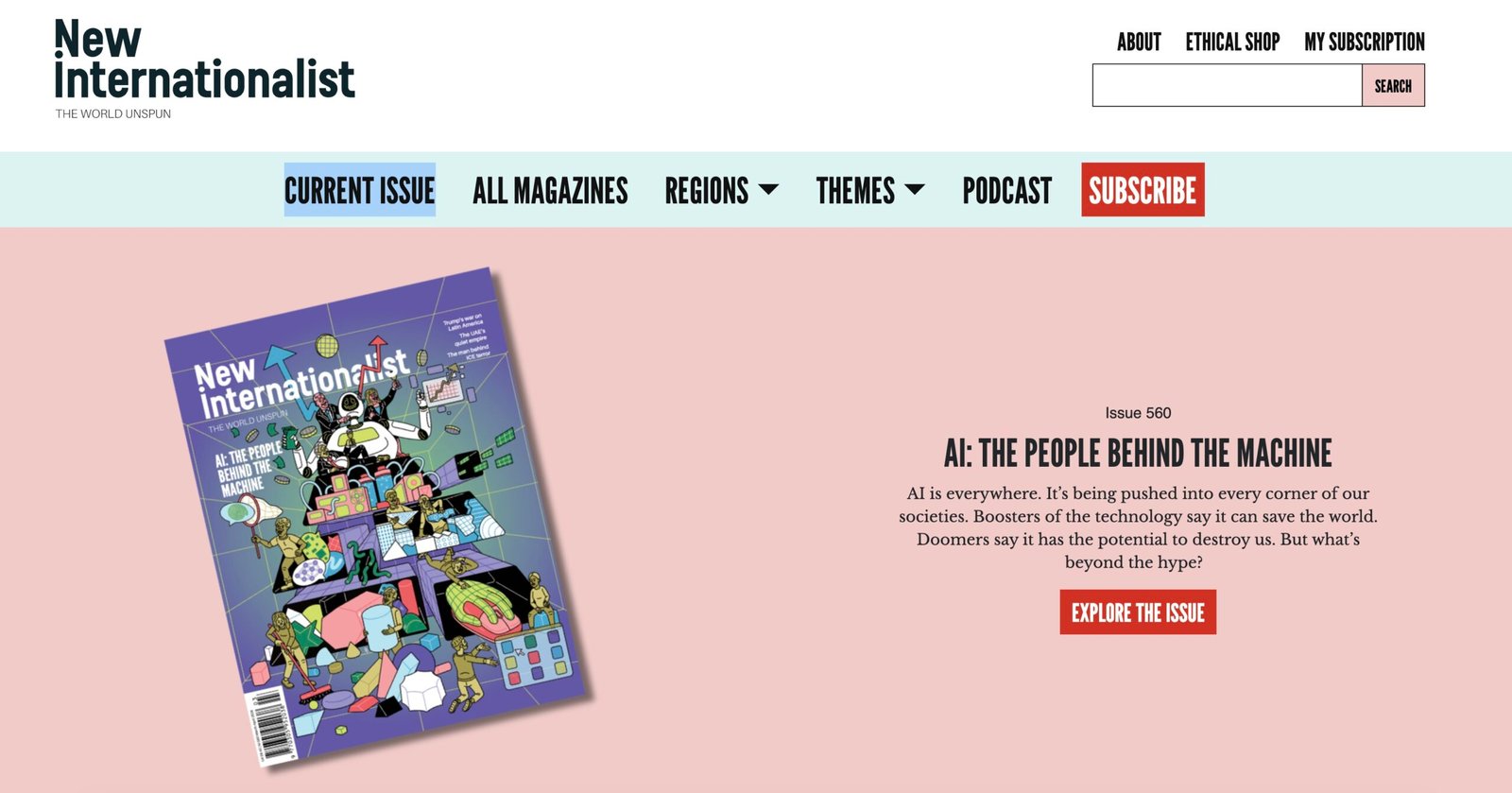
New Internationalist (often shortened to NI) is an independent magazine and website based in Oxford, UK. It has spent over 50 years reporting on world poverty, inequality, human rights, and environmental justice, with a reputation for progressive, thoughtful journalism that gives a human face to complex global issues. :contentReference[oaicite:2]{index=2}
NI is published by a multi-stakeholder co-operative and run day-to-day as a worker-run co-op with a non-hierarchical structure. Its strapline is “The World Unspun” – the opposite of spin and PR. That’s the tone you’re writing for: clear, honest, critical but constructive stories that help readers understand how power, money, and resistance work in the real world. :contentReference[oaicite:3]{index=3}
The magazine appears roughly six times a year in print, and the website publishes web-only features, opinion pieces, columns and news. It has won awards from Amnesty International UK and the Utne Independent Press Awards for its international coverage. :contentReference[oaicite:4]{index=4}
Its mission, in simple language, looks like this:
- Cover stories the mainstream media sidestep – especially in the Global South.
- Expose unjust power structures – corporate greed, colonial histories, state violence.
- Highlight resistance and alternatives – social movements, co-ops, climate justice campaigns, local victories. :contentReference[oaicite:5]{index=5}
- Platform marginalized voices – activists, community organizers, and writers outside the usual media centres.
Your article has to fit into this project. It should help readers understand why something unfair is happening and what people are doing about it.
The typical NI reader is:
- Politically engaged – they care about climate justice, human rights, global inequality.
- Curious and critical – they want nuance, not propaganda.
- Often involved in activism, NGOs, unions, community groups, or progressive politics.
- International – NI has readers and co-op members around the world, not just in the UK. :contentReference[oaicite:6]{index=6}
So your job is not to explain that “poverty is bad” – that’s obvious to them. Your job is to dig into the “how” and “why” and “what now”.
| Type of piece | Where it appears | Typical focus | Useful for |
|---|---|---|---|
| Magazine feature | Print + web | Deep dives (2,000+ words) on a theme like elections, borders, or climate debt. | Experienced reporters with time for interviews and strong analysis. |
| Web feature | NewInternationalist.org | 800–2,000 word investigative or analytical stories with clear news hooks. :contentReference[oaicite:7]{index=7} | Freelancers building a portfolio of global-justice journalism. |
| Opinion / commentary | Web | Sharp, well-argued takes on current events, grounded in lived experience or expertise. | Activists, scholars, or local journalists with a strong point of view. |
| Short reports, blogs, Q&As | Web / special sections | Quick-turnaround pieces tied to protests, elections, trials, or new research. | Writers on the ground or closely following a movement. |
Section 2 · Fit your idea
What New Internationalist publishes – and how to shape an NI-style idea
Many beginners start with: “I want to write about climate change / racism / feminism.” That’s a good instinct, but it is still too wide. New Internationalist wants specific, reported stories, not broad essays on “why capitalism is bad”.
Use these checks to turn a broad topic into a New Internationalist-shaped idea.
Is there a clear injustice, power imbalance, or clash?
NI stories almost always revolve around power: who benefits, who pays, who is silenced. Ask yourself:
- Who has power in this situation (state, corporation, militia, landlord, patriarchal structure)?
- Who lacks power (workers, Indigenous people, migrants, women, queer communities, poor communities)?
- What concrete thing is happening? (land grab, eviction, new law, violent crackdown, polluting project, union busting, surveillance tech).
If you can’t find a specific event or mechanism, your idea may still be too broad.
Do you have access to voices & examples others might not?
New Internationalist has a long tradition of platforming writers and communities from the Global South and frontline struggles. They are especially interested if you can provide:
- Voices from movements and grassroots organizations.
- Quotes from people impacted by policies – not just policy experts.
- Stories from under-covered regions, or new angles on better-known issues.
If you live in or have strong connections with a place ignored by Northern media, that can be a big strength. :contentReference[oaicite:9]{index=9}
Is there a news hook or timely reason for this story now?
Editors receive many pitches. Giving them a news hook makes it easier to say yes. Examples:
- An upcoming election or referendum.
- A new trade deal, mine, mega-project, or climate policy.
- A court case, protest wave, or strike.
- Anniversary of a coup, uprising, or previous campaign.
NI also runs thematic issues (for example, on democracy, media freedom, borders). Look at the recent and upcoming themes on their site and see if your story fits. :contentReference[oaicite:10]{index=10}
Can you summarise the story in one simple sentence?
Try this template: “This piece will show how [group] in [place] is resisting / affected by [policy or crisis] – and what it reveals about [bigger system].” If you can write that cleanly, your idea is probably focused enough.
Does it belong in New Internationalist (and not somewhere else)?
Some ideas fit better elsewhere: hyper-local UK politics with no global angle, or pure lifestyle pieces. Ask yourself:
- Does this clearly involve global justice, inequality, or human rights?
- Would the story be interesting to a reader in another country?
- Does it question dominant narratives or expose something hidden?
If the answer to these is “yes”, you’re likely in NI territory. If not, you might pitch it to a different outlet or your own blog instead.
Section 3 · Prepare yourself
Build a beginner-friendly foundation (before or alongside pitching NI)
Good news: you don’t need a famous CV to write for New Internationalist. In fact, many of their writers are freelancers, activists or local journalists who had to fight to get their voices heard. :contentReference[oaicite:11]{index=11} But you do need to show that:
- you can finish a serious article,
- you understand basic journalistic structure, and
- you can be trusted with sensitive topics.
This section shows how to build that foundation, step by step, even if you’re starting from zero.
- Create a small blog (WordPress, Ghost, Substack, or even a free platform).
- Write short (1,000–1,500 word) pieces on issues you know from your life or region.
- Focus on clarity over fancy language: simple sentences, strong verbs, vivid examples.
- Practice basic structure: lead, nut-graph (the “why this matters”), body sections, ending.
You can also publish on community platforms that welcome new writers, like Medium, openDemocracy (especially their sections on democracy and environment), or local news outlets that accept commentary.
Pick 3–5 recent New Internationalist pieces and reverse-engineer them:
- What does the first paragraph do? (Hook? Scene? Question?)
- Where do they clearly state the core argument or question?
- How often do they quote sources vs explain background?
- How do they end – with a call to action, a quote, an image, a question?
Pay special attention to multi-page features in the print magazine (you can see descriptions and covers on magazine shops like Pics & Ink and in NI’s own archive).
| Stage | Where you write | Goal | Example actions |
|---|---|---|---|
| Practice | Own blog, Medium, community outlets | Get comfortable finishing articles and finding angles. | Write about a local protest, a workplace issue, or a policy affecting your community. |
| First paid clips | Small paying outlets, local news, niche sites | Learn to work with editors, deadlines, fact-checking. | Use pitch lists like Freedom With Writing’s round-ups. :contentReference[oaicite:13]{index=13} |
| Flagship pieces | New Internationalist & other global-justice magazines | Produce serious features that you can keep showing for years. | Pitch NI with the workflow in Section 4; also consider similar outlets like Inkl or Positive News (for solutions-oriented stories). |
Section 4 · Practical workflow
How to pitch New Internationalist using their submissions form
New Internationalist does not want random attachments emailed to editors. Their “Write for us” page points you to an online editorial submissions form where you send pitches (not finished articles) for both the magazine and website. :contentReference[oaicite:14]{index=14}
According to the form, they “typically pay £0.27 per word” and ask you to keep your pitch under about 300 words. :contentReference[oaicite:15]{index=15} Below is a beginner-friendly workflow for using that form effectively.
Read the “Write for us” page – slowly
Go to newint.org/write-for-us. Take notes on:
- What types of pieces they’re currently emphasizing (features, web-only, news analysis, etc.).
- Any themes or beats they list – for example social justice, global inequality, environment, tech politics. :contentReference[oaicite:16]{index=16}
- Instructions about how to structure your pitch or what details to include.
Create a small document called “NI pitch notes” and keep it open while you work through the next steps.
Draft your pitch: 4 mini-paragraphs
They don’t want a full article attached, but they do want enough detail to judge the idea. Use this simple structure (adapt it to match the form fields):
- Para 1 – Hook + headline idea. One or two sentences with the news hook and your core angle. Example: “In northern X, villagers are blocking the construction of a mega-dam backed by British investors. This piece will show how their fight exposes the hypocrisy of UK climate finance.”
- Para 2 – What’s new? Explain what is original: new documents, under-reported location, overlooked group, or connection between issues.
- Para 3 – Reporting plan. Mention who you will interview (activists, workers, experts), what places you’ll visit (or report from), and any data or reports you’ll use.
- Para 4 – You. A couple of lines about who you are and why you can tell this story (location, language skills, activism, professional experience, or previous writing).
Aim for 200–300 words maximum – short, precise, and concrete.
Choose the right slot: print feature vs web feature vs opinion
From the market listing summaries and NI’s own site, you can see that typical online pieces run around 800–2,000 words, while magazine features may be longer and more ambitious. :contentReference[oaicite:17]{index=17} When you pitch, signal roughly where you see the piece:
- “I see this as a 1,500-word web feature.”
- “This might work as part of a bigger magazine issue on X.”
- “This is a shorter 900-word opinion piece based on my experience as a union organizer in Y.”
Editors can always adjust the length or format, but this shows you’ve thought about their needs.
Fill in the editorial submissions form carefully
On the submissions form you’ll usually be asked for:
- Your name, email, and (optionally) social media links.
- A short biography (you can reuse from your “Para 4 – You”).
- Your pitch text (pasted into the box – no PDFs unless requested).
- Links to any previous work – your best 2–4 pieces, not everything you’ve ever written.
Double-check spelling and links; if your links are broken, it quietly signals “this person may be sloppy with facts too”.
Use the contact page only for the right reasons
New Internationalist also has a general contact page. Don’t use this to send random pitches – the editors direct you to the submissions form for a reason. Good uses of the contact page:
- Clarifying a conflict-of-interest question.
- Checking the right person to send photos or artwork if they’ve already commissioned you.
- Reporting a problem with the submissions form (e.g. it’s broken for your browser).
Keep any message short and respectful; editors are busy but human.
Follow up – gently – and recycle unused pitches
If you haven’t heard back after, say, 3–4 weeks, you can send a polite follow-up: one short paragraph asking if they had a chance to look at the pitch and whether it might be a fit for upcoming issues.
If a pitch is rejected or you don’t hear back, don’t throw it away. Adapt it:
- Change the angle slightly for another outlet – many climate and justice-focused magazines pay similar rates.
- Rework it as a post for your own site to build your audience.
- Use your notes and research later when a new news hook appears.
Section 5 · Money & rights
How much you can earn – and how to treat NI as a career asset
On its editorial submissions page, New Internationalist states that they “typically pay £0.27 per word”. Outside market guides confirm similar rates for 800–2,000 word pieces. :contentReference[oaicite:18]{index=18} That’s a strong rate compared with many online outlets.
Let’s walk through what this means in practice, and how to think about it as part of a wider income strategy.
- 800 words × £0.27 ≈ £216
- 1,200 words × £0.27 ≈ £324
- 1,800 words × £0.27 ≈ £486
Exact fees can vary depending on the length, complexity and whether it’s a print feature or web-only, and NI will confirm the rate when they commission you. Treat these numbers as a rough picture, not a contract.
A New Internationalist byline is valuable beyond the immediate payment because it shows that:
- You can handle complex global topics.
- You’ve passed fact-checking and editorial standards for a respected indie outlet. :contentReference[oaicite:19]{index=19}
- You are serious about justice-focused work, not just generic content writing.
Writers often use NI clips to:
- Pitch other international outlets and NGOs.
- Apply for journalism grants, fellowships, or awards.
- Offer content consulting or training for campaigns and non-profits.
| Scenario | What you earn now | How you can leverage later |
|---|---|---|
| One 1,200-word NI feature | ~£324 (before tax) | Use as flagship clip in pitches to other magazines, NGOs, or think tanks. |
| Series of three linked pieces | ~£900–£1,000 total, depending on length | Turn into a mini-portfolio on a region or topic (e.g. policing, extractivism, debt). |
| NI + other paying outlets | Side income that can grow to a major chunk if combined with freelancing, copywriting or NGO work. | Market yourself as a “journalist specialising in X” instead of a generic writer. |
Section 6 · Ethics & safety
Writing about justice, conflict and inequality – safely and responsibly
By design, New Internationalist covers high-stakes issues: authoritarian governments, corporate abuse, gender and racial violence, land struggles, wars, and more. That means your writing has to meet a high standard of accuracy, fairness, and safety – for you and your sources.
Their policy pages emphasize editorial independence, fact-checking and strong ethical commitments. :contentReference[oaicite:20]{index=20} Here are practical rules you can use as a beginner.
- Do not make claims you can’t back up with evidence (reports, documents, reliable witnesses).
- Do not invent quotes or “composite characters”.
- Do not lift paragraphs from other outlets or reports without attribution.
- Do not put sources at risk (e.g. naming a whistle-blower who could face reprisals) without careful discussion with editors.
- Do not use AI tools to fabricate interviews, locations, or statistics.
New Internationalist has a reputation to protect; if they sense dishonesty or sloppiness, they are unlikely to work with you again.
- Use AI helpers to brainstorm possible angles or questions, then cross-check everything against real sources.
- Ask tools to suggest simpler wording for complex sentences, but keep your own voice.
- Use AI to draft an interview guideline, but conduct and transcribe the real interview yourself.
- Use mapping tools, open data and NGO reports to flesh out context – and cite them properly.
Final rule: if you wouldn’t feel comfortable showing your working notes and sources to an editor, re-check your piece until you would.
| Area | What to watch out for | What to do |
|---|---|---|
| Sources at risk | People facing state or corporate intimidation. | Discuss anonymization or pseudonyms with editors; never promise secrecy you can’t technically keep. |
| Images & photos | Re-using photos without rights or consent. | Use images with clear rights or work with NI’s photo editors; get consent where needed. |
| Legal risk | Defamation, incitement, or contempt of court. | Avoid calling individuals “criminals” without convictions; describe evidence and allegations instead. |
| Emotional load | Covering trauma, violence and injustice can be heavy. | Build supportive routines, peer networks and breaks; your wellbeing matters too. |
Section 7 · Micro-SOP
Pre-pitch checklist: are you ready to hit “Submit”?
Use this simple checklist every time you prepare a pitch for New Internationalist (or any similar magazine). Print it, tick it, or copy it into your notes app.
Section 8 · Quick answers & extra resources
FAQ + links to keep learning (and earning)
- Pitch faster-turnaround opinion pieces to local outlets or niche online media.
- Offer blog posts or case studies for NGOs and grassroots campaigns (many have small budgets for good writing).
- Write paying pieces for other justice-focused outlets listed in market round-ups from sites like Freedom With Writing or The Write Life, which list magazines paying $200–$500+ per article. :contentReference[oaicite:22]{index=22}
- Week 1: Read 5–10 NI articles on topics you care about; take notes on structure and tone.
- Week 2: Choose one local or personal justice issue. Write a 1,000-word blog post about it and publish it on your own site or a platform like Medium.
- Week 3: Draft two NI-style pitches using the 4-paragraph method (hook, what’s new, reporting plan, why you).
- Week 4: Show your pitches to a friend or writing group, revise, then send your strongest one via the NI submissions form.
- New Internationalist – Write for us (official contributor page)
- New Internationalist – Editorial submissions form (pitch here)
- New Internationalist – Contact page
- New Internationalist – About & mission (“The World Unspun”) :contentReference[oaicite:24]{index=24}
- New Internationalist – Policies and editorial standards :contentReference[oaicite:25]{index=25}
- New Internationalist – Magazine issues archive
- Our most-read articles from 2024 – see what resonates with readers :contentReference[oaicite:26]{index=26}
- Introducing the New Internationalist relaunch – design & editorial shift
- New Internationalist – digital back issues (Exact Editions) :contentReference[oaicite:28]{index=28}
- New Internationalist – recent issues & covers (Pics & Ink)
- New Internationalist – Action & campaigns section (good for sensing their activism-adjacent tone)
- 14 Calls for Pitches Directly from Editors – Freedom With Writing :contentReference[oaicite:30]{index=30}
- Magazines that pay $0.50–$1+ per word – LitWorth markets list :contentReference[oaicite:31]{index=31}
- Get Paid to Write Articles: 15 Publications that Pay $500+ – The Write Life :contentReference[oaicite:32]{index=32}