


Write Paid Blog Posts Using the Vonage Developer Platform — A Beginner’s Guide
This long-form guide takes you from zero to a publishable, monetizable article idea built around Vonage Communication APIs. You’ll learn what the platform offers, pick profitable article angles, build working demos, write strong outlines and pitches, and turn one demo into multiple paid pieces. Practical steps, examples, and useful links are included.
Quick: Vonage (Developer) provides APIs for voice, SMS & messaging, video, verification, and conversations — plus SDKs and docs to help you prototype quickly. :contentReference[oaicite:0]{index=0}
Section 1 · Platform primer
What the Vonage Developer site gives you (quick tour)
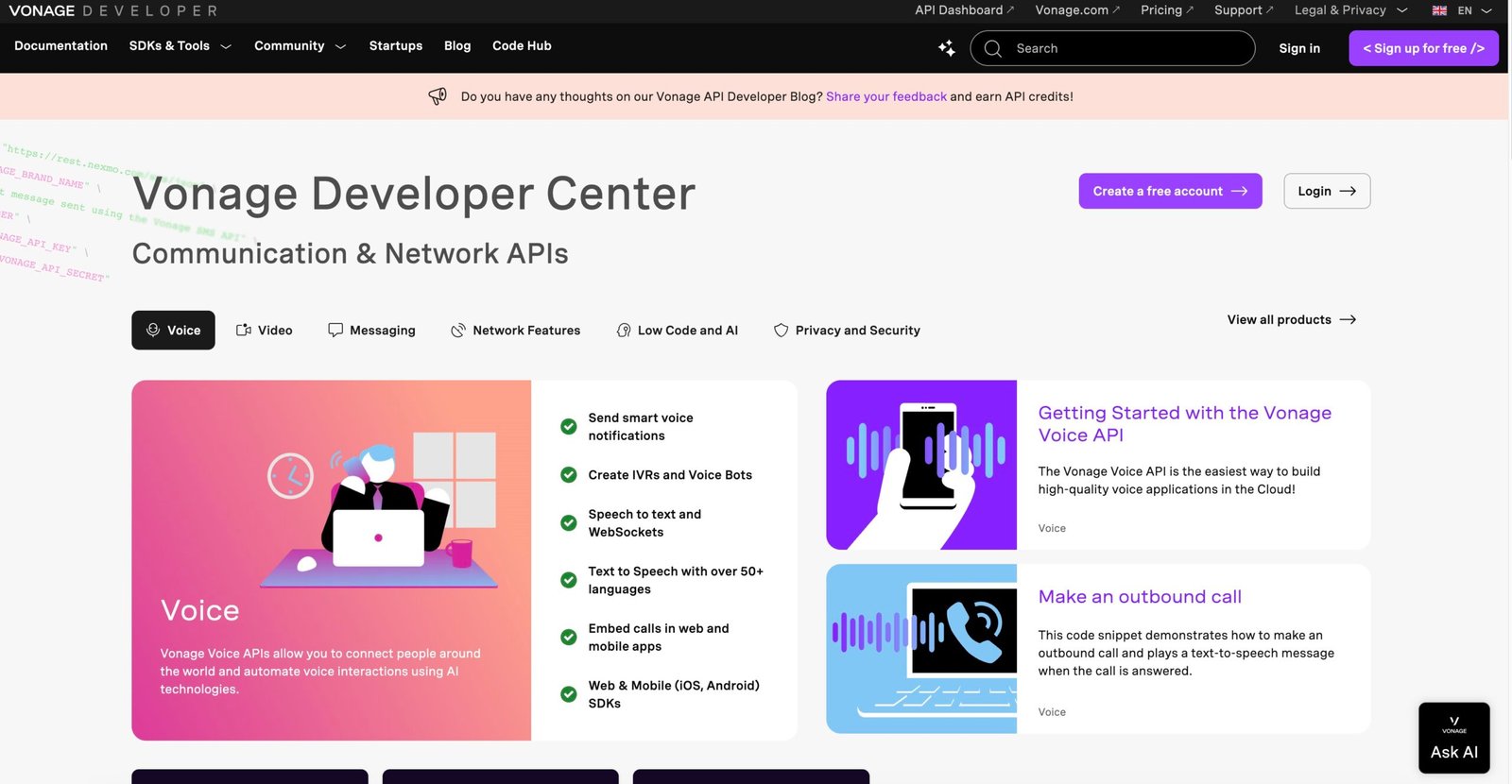
Vonage’s developer portal collects API docs, SDKs, quickstarts, and a developer blog you can read for ideas and examples. Key API families you will see as a writer are: Messages (SMS, WhatsApp, RCS, MMS), Voice, Video, Verify (2FA), and Conversations. :contentReference[oaicite:1]{index=1}
Use this API when your article demos sending SMS, WhatsApp messages, or integrating multiple channels. Great for examples like “Send invoices via WhatsApp” or “Send SMS reminders after a failed payment.” :contentReference[oaicite:2]{index=2}
Use Voice to show calling flows, IVR prototypes, call recording, and handling incoming call webhooks. Good for tutorial posts that include server-side webhook receivers. :contentReference[oaicite:3]{index=3}
Quick facts you can cite in your articles: the developer portal has a “Getting Started” guide (accounts, API keys, JWT authentication, and webhooks) — read it and link it when you explain authentication steps. :contentReference[oaicite:4]{index=4}
| API | Best for | Quick demo idea |
|---|---|---|
| Messages API | SMS/WhatsApp/Multichannel | Invoice reminder via WhatsApp with media |
| SMS API | Transactional SMS | OTP / appointment reminders |
| Voice API | Calls & IVR | Create a simple voice menu and record an answer |
| Video API | WebRTC & video apps | Embed a 1:1 video chat demo |
| Verify API | Two-factor auth | Send & check an OTP for login |
Section 2 · Choose an idea that sells
Article angles editors and audiences love
A strong Vonage-focused article solves a concrete job: “How do I add 2FA to my signup flow?” or “How do I send order updates via WhatsApp?” Keep it specific, show step-by-step code, and include a runnable demo or GitHub repo.
Angle 1 — Practical tutorial with demo (high chance to get accepted)
Example: “Build a serverless OTP login using Vonage Verify and Netlify Functions”. Include sample code, webhook handling, and a security note.
Angle 2 — Integration walkthrough (good for product-focused blogs)
Example: “Send WhatsApp booking confirmations from a Node.js backend using Vonage Messages API”. Add screenshots and example responses.
Angle 3 — Deep-dive or best practices (good for authoritative posts)
Example: “Designing reliable webhooks: retries, idempotency, and security with Vonage voice and messages webhooks”. Use diagrams, sample logs, and a checklist.
Angle 4 — Product + case study (higher pay if real numbers)
Example: “How Acme improved delivery confirmations using WhatsApp (Vonage Messages) — a 23% increase in open rates”. Editors like real metrics; get permission to publish numbers.
Pro tip: Practical tutorials with code + a live demo or GitHub repo are the most reusable — you can reuse one demo across multiple pitches (tutorial, newsletter thread, short how-to, conference talk).
Section 3 · Build the demo (a reproducible minimal project)
Step-by-step: make something you can link to
Editors and readers want to click “Try it.” Build a small repo (Node, Python, or plain JS) that implements the core flow you describe. Example: a tiny Express app that sends an SMS and receives webhook callbacks.
- Create a free Vonage account and take note of API key/secret or application credentials. (Follow the Getting Started guide.) :contentReference[oaicite:5]{index=5}
- Decide which API you’ll use: Messages (for WhatsApp/SMS), Verify (for OTP), Voice (for calls), Video (for WebRTC).
- Keep the demo minimal: 1 page, 1 server route, clear README and environment variables.
- Publish to GitHub and include a short live demo (Glitch, Replit, or Vercel if possible).
- Document how to run it locally and what credentials are needed (don’t publish secrets).
Explain JWT vs API key usage briefly — the Vonage Getting Started guide covers authentication and webhooks; link it in your article when you describe how to generate JWTs or set callback URLs. :contentReference[oaicite:6]{index=6}
Example: “Use a server-side route to sign a JWT for client WebRTC sessions” — include the code and a short explanation of scopes/permissions.
Minimal Node example: send an SMS
Include a runnable code snippet like this in your article (boilerplate):
// server.js (minimal example - Node + express + vonage-node SDK)
const express = require('express');
const bodyParser = require('body-parser');
const Vonage = require('@vonage/server-sdk');

const app = express();
app.use(bodyParser.json());

const vonage = new Vonage({
  apiKey: process.env.VONAGE_API_KEY,
  apiSecret: process.env.VONAGE_API_SECRET
});

app.post('/send-sms', (req, res) => {
  const to = req.body.to; // e.g. '+14155551212'
  const from = 'AcmeInc';
  const text = req.body.text || 'Hello from Vonage!';
  vonage.message.sendSms(from, to, text, (err, responseData) => {
    if (err) return res.status(500).json({error: err});
    res.json(responseData);
  });
});

app.listen(3000, () => console.log('Server running on http://localhost:3000'));
Note: the code above is an illustrative snippet — link to the official SDK docs and mention SDK installation and secure storage of keys. For Messages API specifics (channels and features), see the Messages docs. :contentReference[oaicite:7]{index=7}
Demo extras that add value
- Show request/response logs and sample webhook payloads.
- Include a simple front-end form to trigger the demo (1 HTML file).
- Provide curl examples (readers like copy-paste).
- Offer a “next steps” section (e.g., “How to secure your webhook with signatures”).
Section 4 · Writing the article
Structure that editors expect (and readers love)
An editor-friendly tutorial usually follows this flow: short hook, one-sentence promise, prerequisites, setup, step-by-step guide (with code), tests & verification, wrap-up with next steps and references. Use headings, short paragraphs, and code blocks. Include a GitHub link early in the article.
- Title + short one-line promise: what the reader will build.
- Why it matters: real-world use case & when to use it.
- Prerequisites: account, SDK, node/python versions.
- Setup: minimal steps to run the demo locally.
- Step-by-step code: small chunks verified to work.
- Test & verify: how to confirm success.
- Security & production notes: limits, retries, costs.
- Conclusion & Next Steps: suggestions for further reading or productionizing.
- All code runs (link to working GitHub); include sample credentials instructions.
- Include screenshots, sample responses, and a short video/gif if helpful.
- Keep paragraphs short and explain jargon with inline links to docs.
- Send a working sample or link in your pitch (editors appreciate that).
Sample article title ideas (headline test)
- “Send WhatsApp Booking Confirmations with Vonage Messages & Node.js”
- “Add Secure SMS 2FA Using Vonage Verify in 15 Minutes”
- “Build a Serverless Call-Back Flow with Vonage Voice and AWS Lambda”
- “Embed 1:1 Video Chat Using Vonage Video API (WebRTC) — A Beginner Guide”
Sample pitch template (paste into submission form)
Subject: Pitch — "Add Secure SMS 2FA Using Vonage Verify in 15 Minutes"

Hi [EditorName],

I'd like to pitch a practical tutorial for [Publication]. The piece shows how to implement SMS-based two-factor authentication using Vonage Verify from account setup to verifying codes in a Node.js app.

Outline:
- Why 2FA matters and when to use Verify (1 short para)
- Prereqs: Vonage account & Node.js (with links)
- Step 1: create Verify request (code + curl)
- Step 2: receive and confirm code (demo server)
- Step 3: production notes (rate limits, costs)
- GitHub repo: https://github.com/you/vonage-verify-demo
- Estimated length: 1200–1800 words. I can have a full draft in 7–10 days.

Samples of my previous work:
- https://yourblog.example/article-1
- https://dev.to/you/sample-tutorial

Thanks for considering this,
[Your Name] — [Short bio]
Tip: Paste your compact outline into the pitch — editors want to see a clear plan more than a 500-word essay.
Section 5 · Pitch, publish & monetise
Where to pitch and how to get paid
There are tiers of outlets you can target: small dev blogs and company blogs (fast acceptance, small/no pay), mid-tier developer publications (e.g., Dev.to, freeCodeCamp News — sometimes paid via tips), and established outlets or brand blogs (higher pay). Company developer blogs like Vonage’s own blog sometimes accept guest posts or community contributions — read their contributor guidelines and the developer blog for examples of tone and topics. :contentReference[oaicite:8]{index=8}
- Pitch paid technical outlets (check pay rates on submission pages).
- Offer the demo as a downloadable template or mini-course.
- Use the article as a portfolio sample to win consulting or freelance gigs.
- Repurpose the content into a short video or paid newsletter (Substack/Patreon).
- Show a working sample link or GitHub repo in your pitch.
- Be concise in your pitch and mention reader benefit in one line.
- Offer to supply screenshots and test steps; mention how long it will take to deliver a full draft.
How to use a Vonage blog mention to earn more
- Publish on Vonage’s developer blog or a similar reputable site (if accepted) — it raises your profile. :contentReference[oaicite:9]{index=9}
- Use that byline to approach higher-paying publications or to advertise freelance services.
- Bundle the tutorial with a paid consulting offer: “I’ll implement this for $XXX”.
Small warning: never publish secrets or live API keys. In public repos, always load credentials from environment variables and provide mock examples in the repo’s README.
Section 6 · SEO, headlines & social hooks
Make your article discoverable and linkable
Editors and readers love clear, searchable headlines. Use keywords the reader will type: “Vonage”, “Verify”, “WhatsApp”, “SMS 2FA”, “Vonage Messages”. Put the main keyword in the title and the first 100 words. Add a short meta-description and shareable image for social posts.
- “How to [achieve X] with Vonage [API name] — [result]”
- “[Number] steps to add [feature] with Vonage Messages (WhatsApp, SMS)”
- “From zero to working demo: build [feature] using Vonage [API]”
Shareable social hooks
Two-line social post: start with the benefit, include a short code snippet or screenshot GIF, and a link to the demo. Example:
“Want to send WhatsApp booking confirmations in under 30 minutes? Here’s a tiny Node demo using Vonage Messages — includes code & live demo. [link]”
Tip: add an open graph image (screenshot + title) to your article so when it’s shared on Twitter/X or LinkedIn it looks professional.
Section 7 · Micro-SOP (repeatable checklist)
Turn one demo into multiple paid posts in a month
- Day 1–2: Build the demo, test locally, push to GitHub with clear README.
- Day 3: Draft the full tutorial (1200–2000 words) and add screenshots.
- Day 4: Polish and add security/production notes; prepare pitch outline.
- Day 5: Send pitches to 3–5 outlets (Vonage dev blog, mid-tier tech blogs, your own blog with an email list).
- Day 6–12: Revise per editor feedback, deliver final artifacts, and promote on social.
- Repeat: repurpose the content into a short video + a paid newsletter issue.
- Working demo + GitHub link
- All code runs and uses environment vars
- Screenshots, logs, and expected results
- Security caveats & rate-limit notes
Section 8 · Resources & links
Official docs, blog posts, and useful references
This resource list includes the most useful Vonage pages you will link to in your article and other writing resources you can cite or learn from.
- Vonage Developer Home — guide, quickstarts, and API links. :contentReference[oaicite:10]{index=10}
- Vonage Documentation Index — reference pages for each API. :contentReference[oaicite:11]{index=11}
- Messages API overview (SMS, WhatsApp, RCS). Great when describing multichannel messaging. :contentReference[oaicite:12]{index=12}
- SMS API reference. Useful for transactional SMS examples. :contentReference[oaicite:13]{index=13}
- Voice API docs. Use when writing about calls, IVR, and webhooks. :contentReference[oaicite:14]{index=14}
- Getting Started guide — authentication, apps, webhooks. Must-read before you explain setup. :contentReference[oaicite:15]{index=15}
- Vonage Developer Blog — examples and announcements. Useful for finding current topics and tone. :contentReference[oaicite:16]{index=16}
- How to write technical blog posts — Vonage blog advice for authors. Helpful for structure and audience advice. :contentReference[oaicite:17]{index=17}
- Vonage Verify (2FA) product page — good for background and feature notes. :contentReference[oaicite:18]{index=18}
- Conversations API — for multi-modal conversations across channels. :contentReference[oaicite:19]{index=19}
- Programmable Video docs — use for WebRTC/video examples. :contentReference[oaicite:20]{index=20}
Other helpful writing & pitching resources (not Vonage):